
 No.14 Waihuan Road, CBD, Zhengzhou, China
 +86-18703635966

No.14 Waihuan Road, CBD, Zhengzhou, China
+86-18703635966
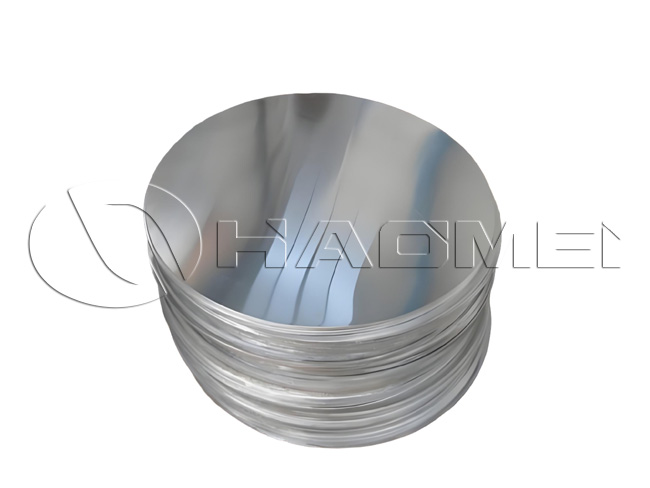
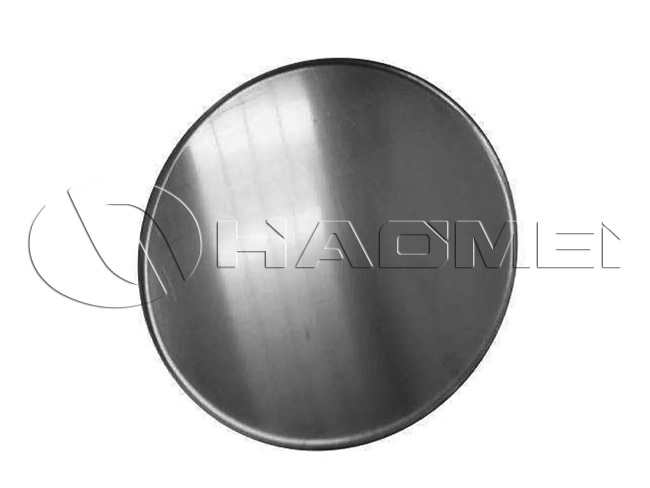
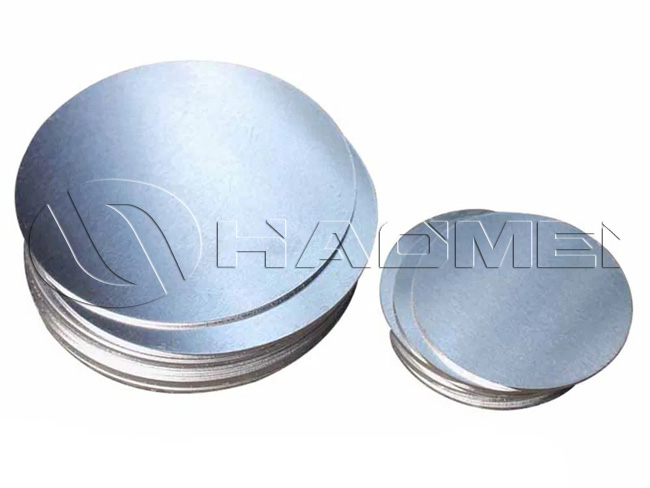
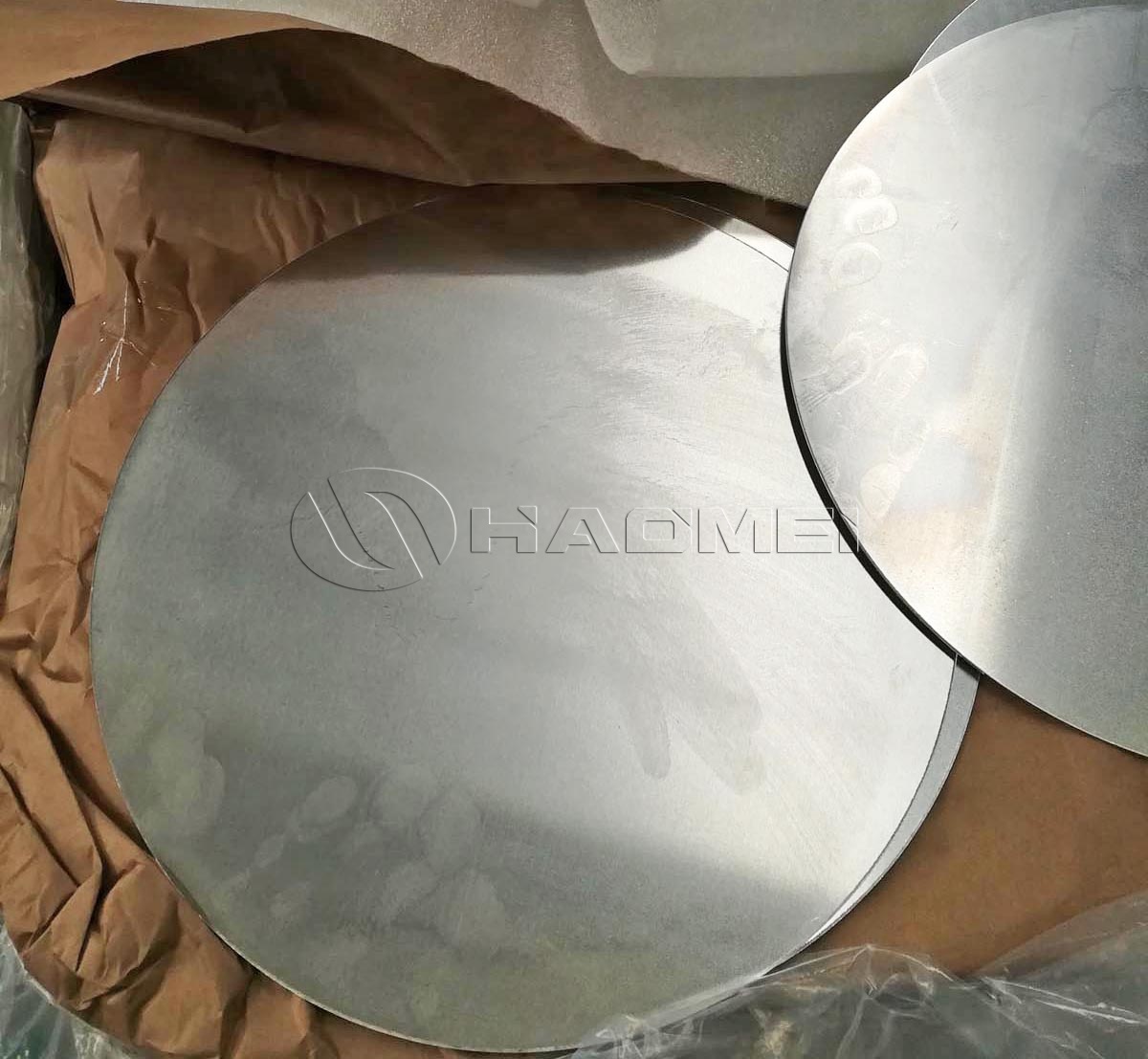
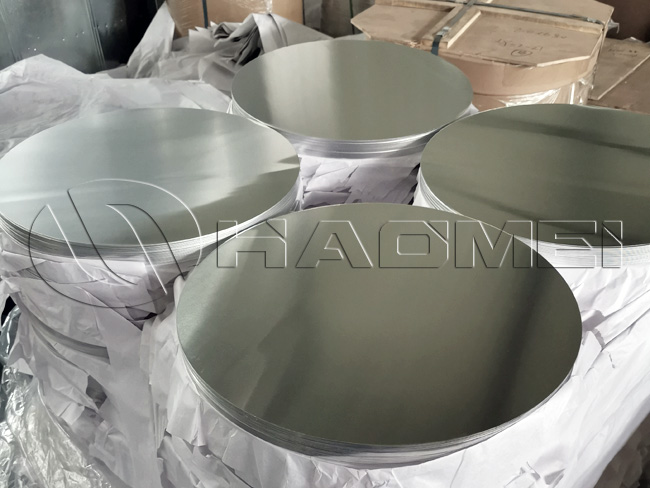
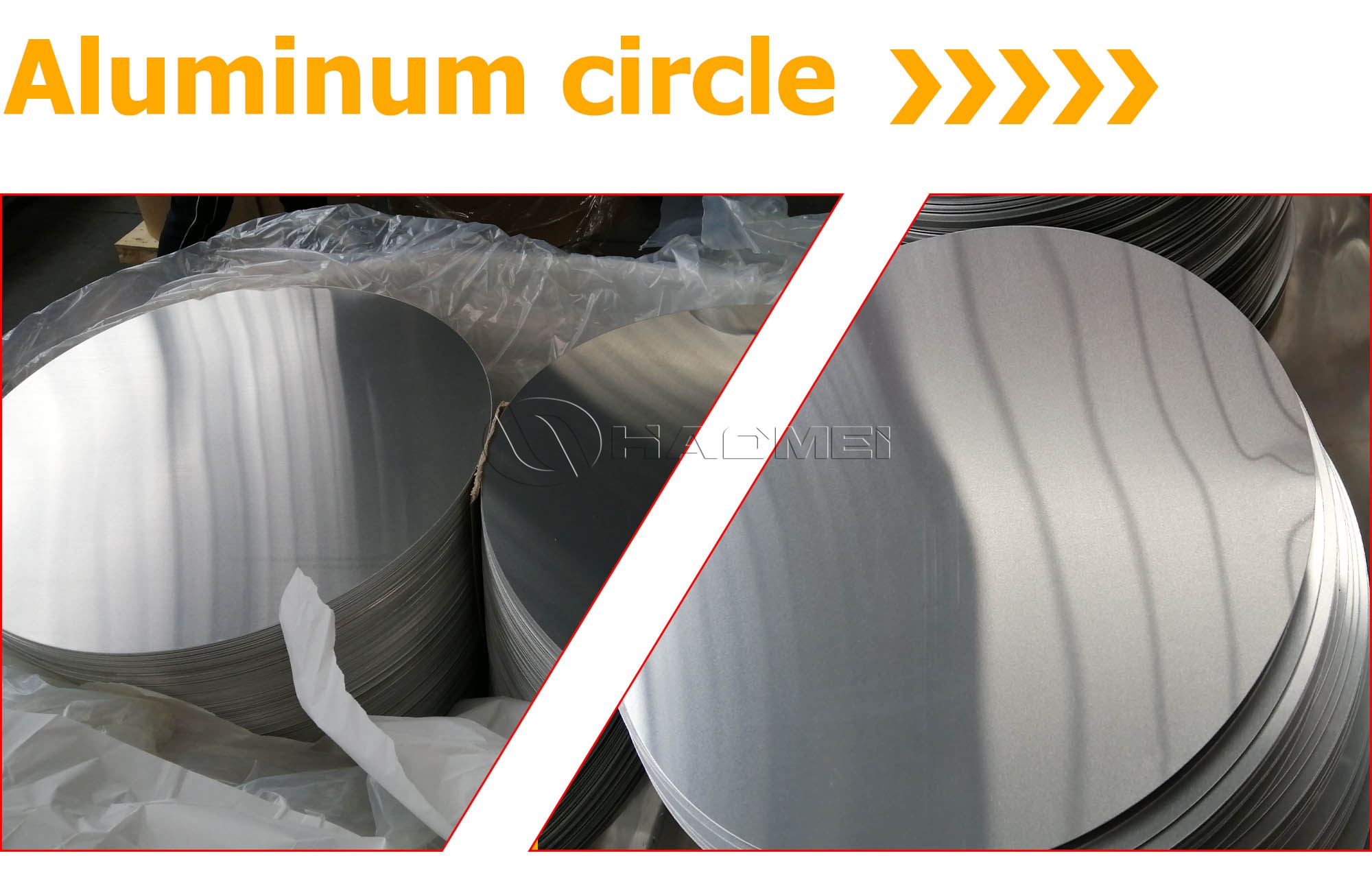
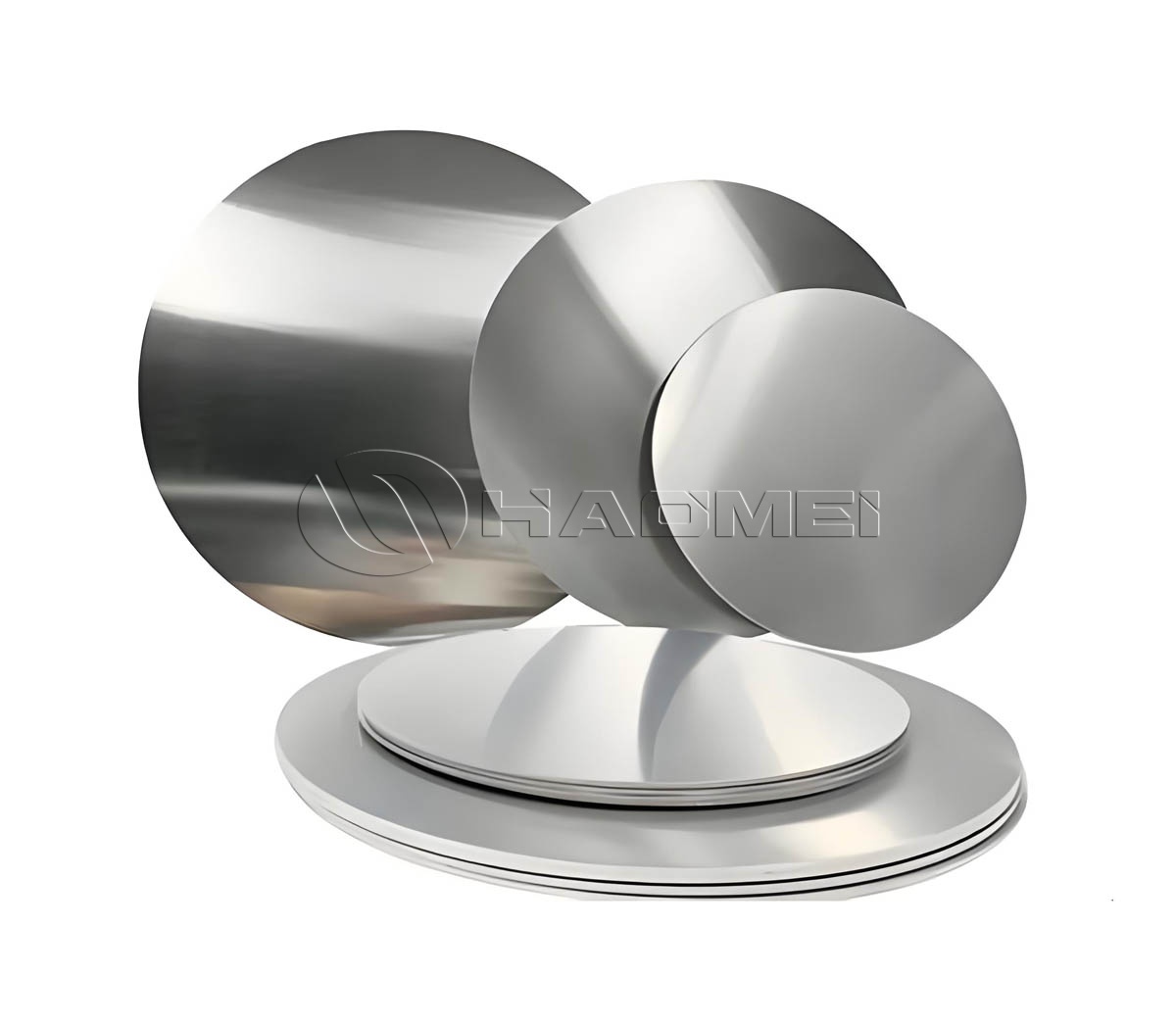
As a manufacturer of aluminum circles and discs, we supply pressure cooker bottom raw materials designed for stable forming, reliable thermal conductivity, and consistent surface quality. Our aluminum circle discs are produced from selected aluminum coil through controlled rolling, slitting, blanking, annealing, inspection, and protective packaging processes.
For pressure cooker manufacturers, the bottom material affects more than the appearance of the finished product. It directly influences deep drawing performance, bottom flatness, heat transfer, bonding quality in composite bases, and production yield. A properly specified pressure cooker bottom aluminum circle helps reduce cracking, wrinkling, uneven deformation, and surface defects during cookware manufacturing.
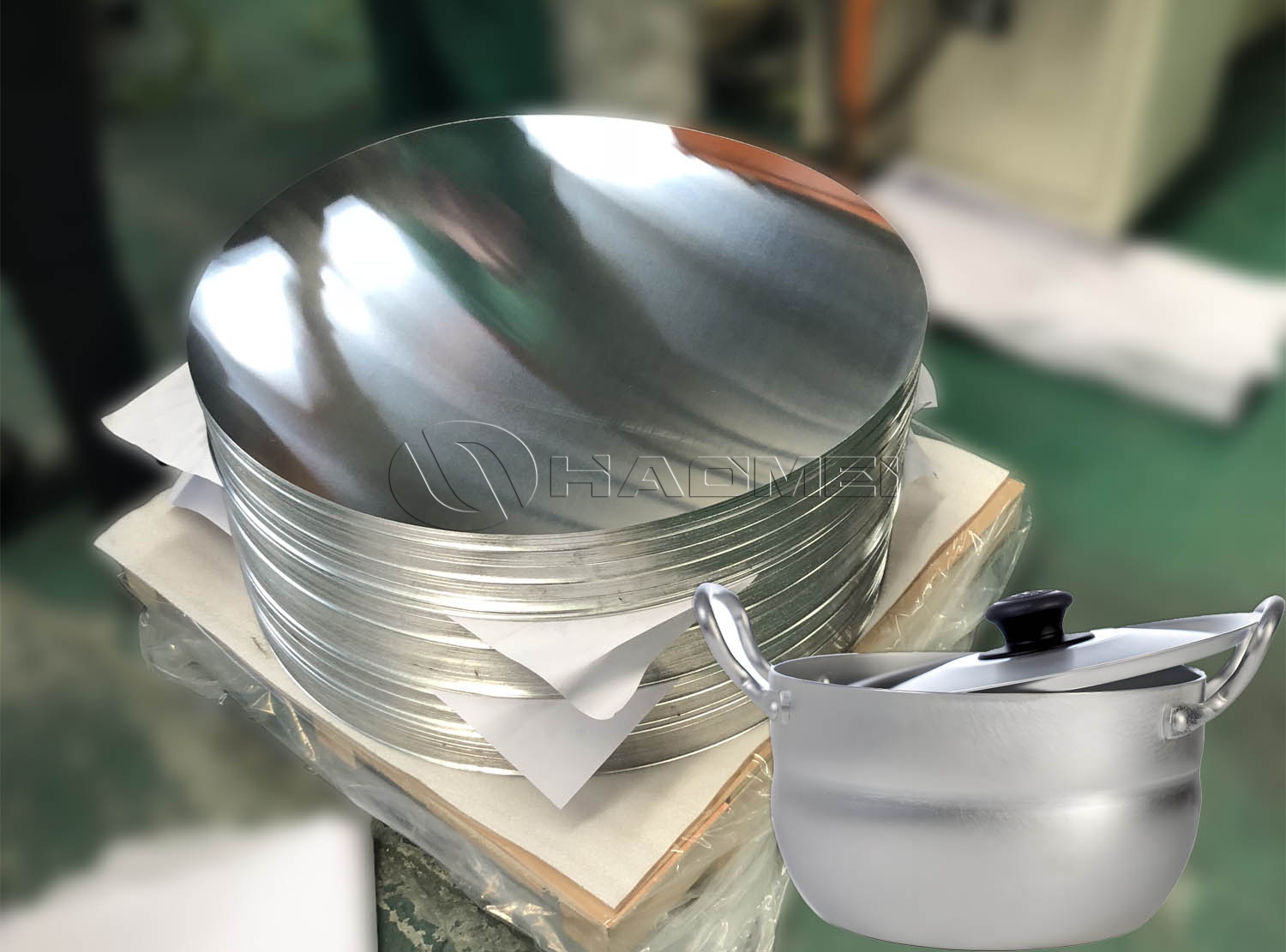
An aluminum circle for a pressure cooker bottom is generally used as the formed base material or as the aluminum heat-conducting layer in a multi-layer cookware structure. Aluminum provides high thermal conductivity, relatively low weight, good formability, and good resistance to normal kitchen corrosion conditions.
In conventional pressure cooker production, the aluminum disc may be deep drawn into the cooker body and bottom in one process or in several drawing stages. For stainless steel pressure cookers with encapsulated or impact-bonded bases, an aluminum disc can serve as the heat-spreading core between stainless steel layers. In induction-compatible constructions, the aluminum layer is commonly combined with a magnetic stainless steel layer or another ferromagnetic component. The aluminum disc itself is selected primarily for heat distribution and forming consistency.
Our production process focuses on maintaining stable mechanical properties across batches. This is important because pressure cooker bottom forming often involves high drawing ratios, trimming, spinning, coining, and bonding operations. Variations in temper, grain structure, thickness, or burr condition can affect downstream processing efficiency.
The alloy selection depends on the pressure cooker design, forming method, thickness requirement, and whether the disc will be used as a single aluminum component or as part of a composite base. We manufacture cookware aluminum circles in commercially common grades including 1050, 1060, 1070, 1100, and 3003.
The 1050, 1060, and 1070 series aluminum discs are widely used where high aluminum purity, strong thermal conductivity, and excellent deep drawing performance are required. These grades are suitable for many aluminum pressure cooker bodies and bottoms, especially where a soft annealed temper is needed for deep forming.
Alloy 3003 contains manganese and offers higher strength than pure aluminum grades while retaining good formability. A 3003 aluminum circle is often selected for cookware parts requiring improved rigidity, better dent resistance, or more stable performance in medium-depth drawing and bottom forming operations.
We confirm alloy chemistry through incoming material control and production documentation. For export orders, chemical composition, mechanical properties, and dimensional tolerance can be supplied according to the agreed standard and inspection requirement.
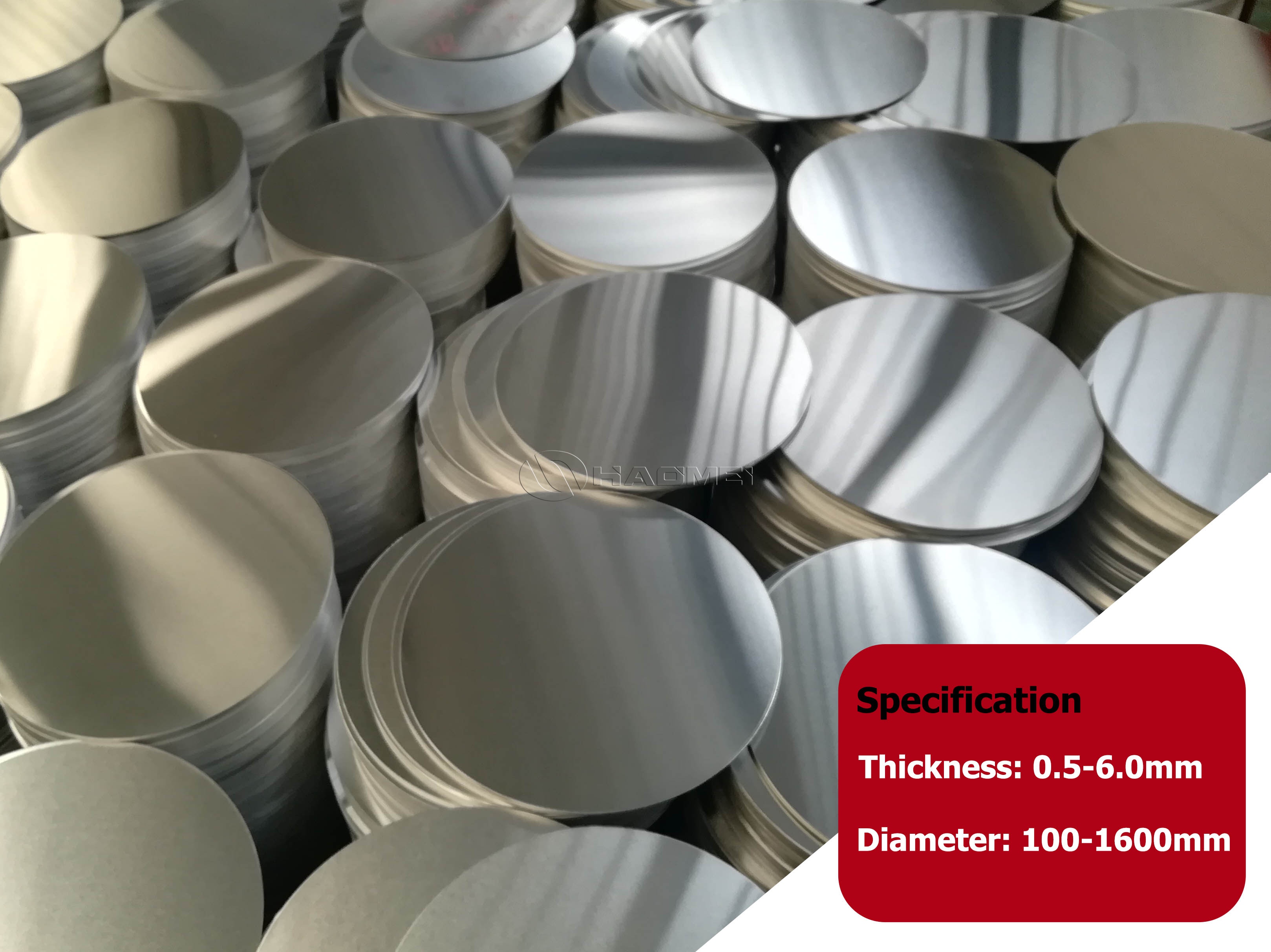
The following table shows typical specifications for pressure cooker bottom raw material aluminum circles. Final values can be adjusted according to the customer's drawing, tooling condition, and forming process.
| Parameter | Typical Range or Option | Notes |
|---|---|---|
| Alloy | 1050, 1060, 1070, 1100, 3003 | Selected according to drawing depth and strength requirement |
| Temper | O, H12, H14 | O temper is commonly used for deep drawing |
| Diameter | 100 mm to 1,200 mm | Larger sizes available subject to thickness and equipment capability |
| Thickness | 0.50 mm to 6.00 mm | Common pressure cooker bottom range: 2.00 mm to 5.00 mm |
| Diameter tolerance | Typically +/-0.5 mm to +/-2.0 mm | Based on disc diameter and customer specification |
| Thickness tolerance | According to agreed standard | Controlled by coil gauge and inspection process |
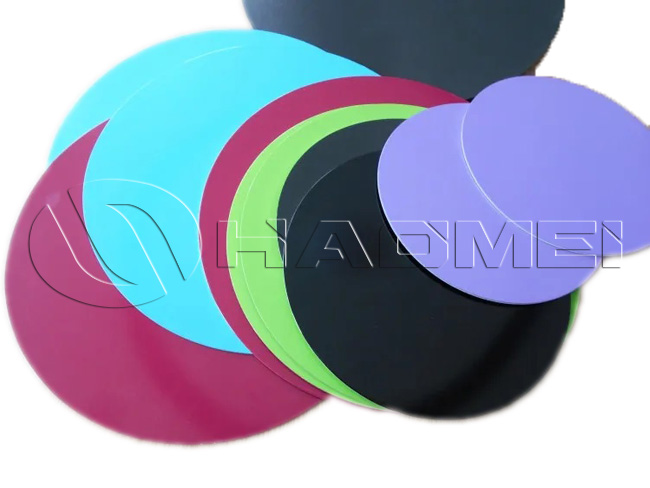
| Surface finish | Mill finish, bright finish, brushed, coated on request | Surface must suit subsequent polishing, coating, or bonding |
| Edge condition | Smooth, low burr, no sharp edge | Important for automatic feeding and drawing operations |
| Flatness | Controlled according to thickness and diameter | Critical for composite base assembly and stamping |
| Production method | Cold rolled or hot rolled blanking | Determined by alloy, thickness, and application |
| Packaging | Paper interleaving, plastic protection, pallets | Export packaging available |
Temper is one of the most important factors in the performance of an aluminum disc for pressure cooker manufacturing. An overly hard disc may crack near the wall-to-bottom transition during deep drawing. A disc that is too soft for the intended structure may deform excessively during handling, trimming, or subsequent assembly.
For deep-drawn pressure cooker bodies, O temper aluminum circle discs are frequently preferred because annealing improves elongation and reduces the risk of edge cracking. Our annealing process is controlled to achieve a uniform material condition throughout the disc. This helps maintain consistent drawing behavior from the center to the outer edge.
For pressure cooker bottom plates requiring higher stiffness, H12 or H14 temper may be considered depending on the forming depth. We work from the customer's forming sequence, target hardness, and final product requirements to recommend a practical temper range. Test samples can also be prepared for die trials before volume production.
Pressure cooker bottom material must have a clean, uniform surface because surface defects may remain visible after polishing, anodizing, coating, or mechanical finishing. They may also interfere with bonding when the aluminum disc is used in a layered base.
Our inspection process checks for common defects such as scratches, rolling marks, oil stains, oxidation spots, dents, edge cracks, and excessive burrs. For cookware applications, we pay close attention to the blanking edge. A smooth edge supports efficient automatic stamping and reduces the possibility of cracking initiated from a damaged disc perimeter.
The required surface standard should be confirmed before production. Some customers require standard industrial mill finish, while others need a controlled bright surface for visible cookware components. We can also provide products from our Aluminum Circles for Cookware range when the application includes frying pans, saucepans, stockpots, and other formed kitchenware.
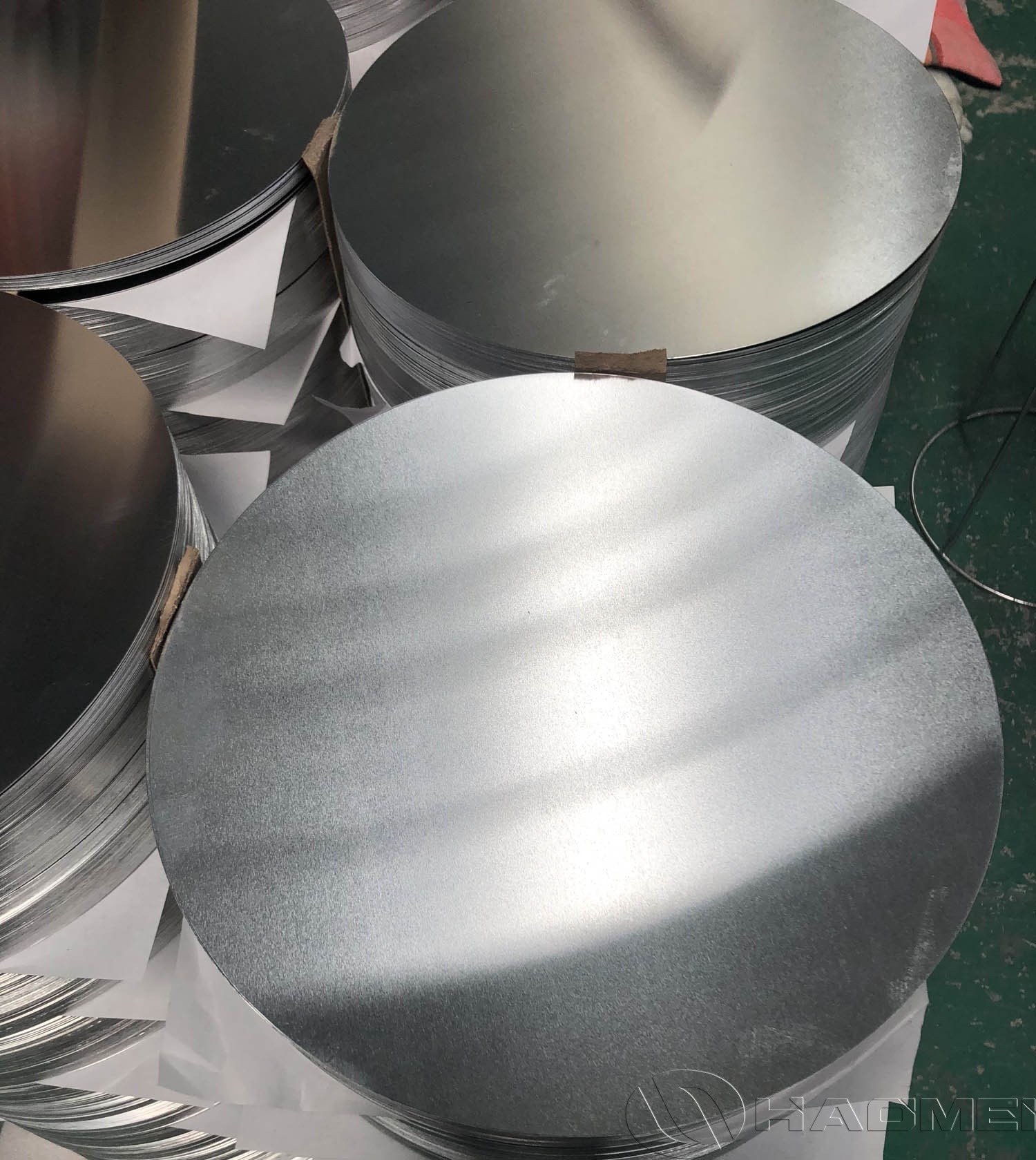
Both hot rolled and cold rolled aluminum discs can be used in cookware production, but their selection should be based on the final forming requirement. Hot rolled material is often preferred for thicker gauges and demanding deep drawing applications because of its favorable grain structure and stable forming performance.
Our Hot Rolled Aluminum Circle products are suitable for customers producing heavy-gauge pressure cooker bodies, bottom plates, and cookware components that require consistent deformation during multi-stage drawing. Cold rolled discs are also available for applications where thinner material, a smoother surface, or tighter gauge control is the priority.
Before production, we evaluate the required diameter, thickness, alloy, temper, surface finish, and drawing depth. This enables us to match the rolling route and blanking process to the actual manufacturing conditions rather than supplying a generic disc specification.
Our aluminum circle disc production begins with qualified aluminum coil selected according to the agreed alloy and temper. The coil is processed through slitting and blanking equipment to produce circles with controlled diameter and edge condition. Depending on the order, material may be annealed before or after blanking to meet the required formability.
Key manufacturing controls include:
Alloy verification and coil traceability.
Thickness monitoring during incoming inspection and production.
Accurate die selection for diameter control.
Burr inspection after blanking.
Annealing control for O temper and deep drawing requirements.
Surface inspection under appropriate lighting conditions.
Flatness checks for larger diameter and thicker discs.
Protective export packaging to prevent moisture and handling damage.
For larger orders, we maintain batch identification so that production records can be traced to the relevant coil, processing conditions, and final inspection results. This supports consistent procurement for pressure cooker factories operating continuous stamping lines.
To receive an accurate quotation and technically suitable material recommendation, customers should provide the key production details. The minimum specification normally includes alloy, temper, thickness, diameter, surface requirement, and intended application.
For deep-drawn pressure cooker bodies, it is useful to provide the drawing depth, number of drawing stages, lubrication method, and any historical cracking issues. For composite bottoms, customers should specify the bonding process, aluminum layer thickness, stainless steel grade, and finished base configuration. These details help us determine whether a pure aluminum grade or a 3003 aluminum circle is more appropriate.
We can supply trial quantities for tooling validation and then proceed to regular production after confirmation of forming performance. Our factory supports customized dimensions, including non-standard diameters, thicknesses, and packaging configurations for export customers.
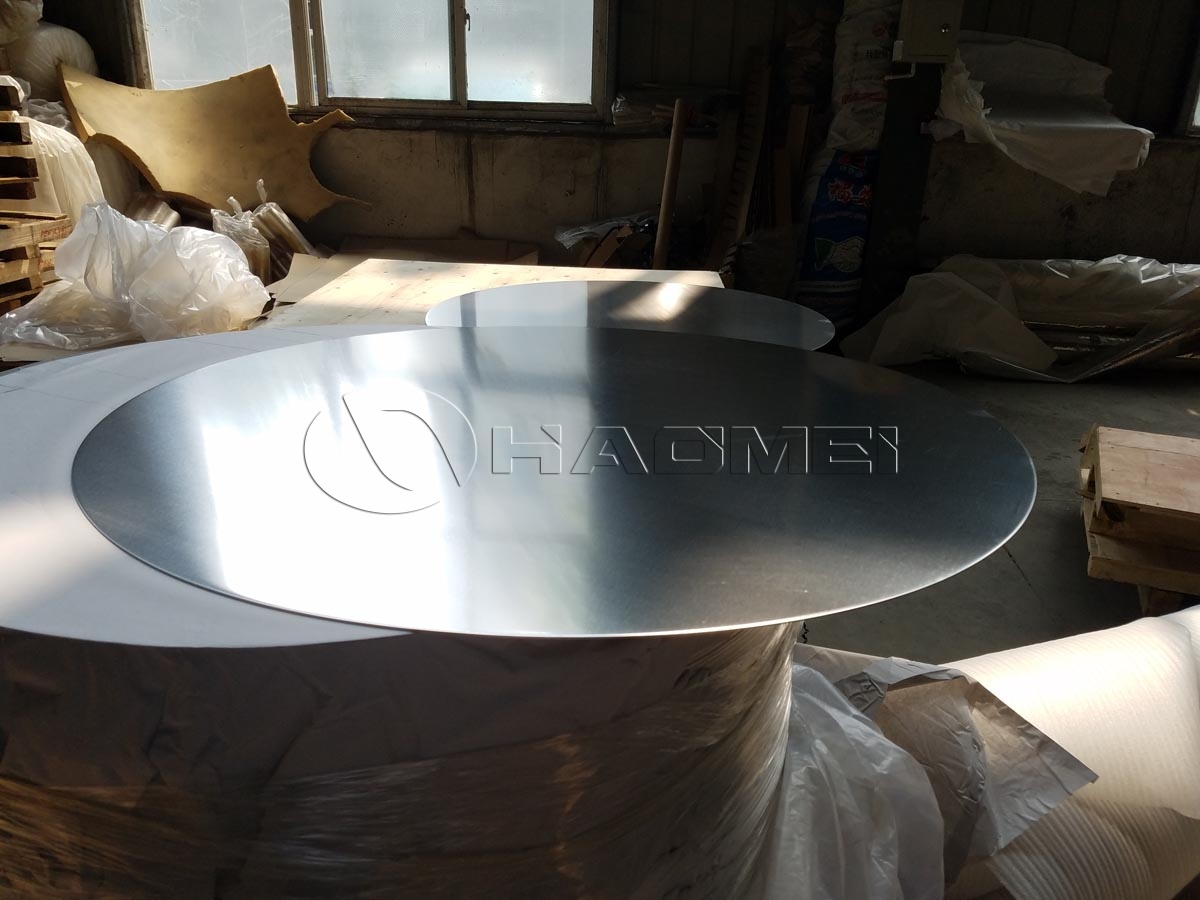
Pressure cooker bottom aluminum circles are normally packed with paper interleaving or protective film between layers to minimize surface abrasion. Discs are then placed on strong wooden pallets or export-grade platforms, secured with protective wrapping, and marked with product identification details.
Packaging can be adapted for manual handling, automated feeding, or container loading requirements. For customers receiving multiple disc sizes, separate labeling and pallet arrangement help simplify warehouse identification and production scheduling.
Pressure cooker bottom raw material aluminum circles require controlled alloy selection, stable temper, clean surface quality, accurate dimensions, and reliable deep drawing behavior. As an aluminum circle manufacturer, we produce cookware discs for pressure cooker applications with specifications tailored to forming, bonding, and heat-distribution requirements.
Whether the requirement is a soft 1060 aluminum disc for deep drawing or a stronger 3003 aluminum circle for a reinforced cookware bottom, our factory can provide material matched to the customer's production process, technical standard, and export packaging needs.

Office Address:
No.14 Waihuan Road, CBD, Zhengzhou, China
Contact Us
HAOMEI Aluminum offer an custom aluminum circle for you!
whatsapp: +86-18703635966
Email: sales@alummc.com
Email: alummc@hotmail.com
Request Free Sample & Quotation
Copyright © 2026 By HAOMEI Aluminum CO., LTD. All Rights Reserved. Sitemap
 +86-18703635966
 sales@alummc.com
 8618703635966
