
 No.14 Waihuan Road, CBD, Zhengzhou, China
 +86-18703635966

No.14 Waihuan Road, CBD, Zhengzhou, China
+86-18703635966
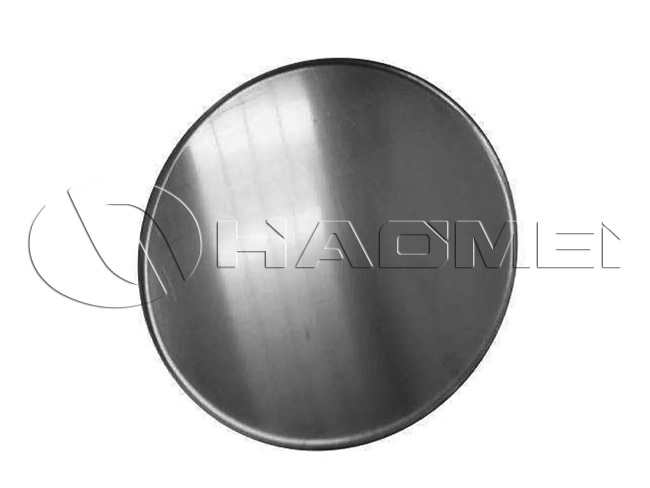
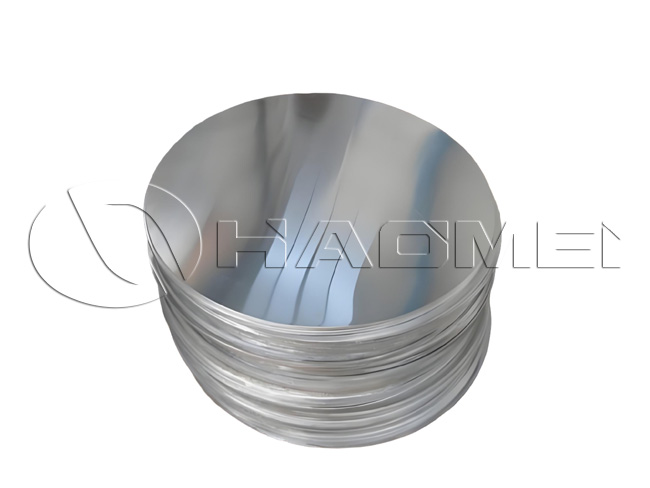
As an aluminum circle manufacturer for cookware production, we regularly help pan factories select between 3003 aluminum circle and 1050 aluminum circle materials. Both alloys are widely used as cookware aluminum disc blanks, but they have different mechanical properties, forming behavior, thermal conductivity, and cost structures.
The correct choice depends on the pan design, manufacturing route, wall thickness, depth, surface treatment, and target market. In general, 1050 aluminum circles are preferred where high thermal conductivity and excellent deep drawing performance are required. 3003 aluminum circles are selected when higher strength, better dent resistance, and improved shape retention are more important.
This guide compares 3003 and 1050 aluminum circles for pans from a manufacturing perspective. It is intended for cookware factories, importers, and purchasing teams evaluating aluminum blanks for frying pans, saucepans, stockpots, and pressed cookware bodies.
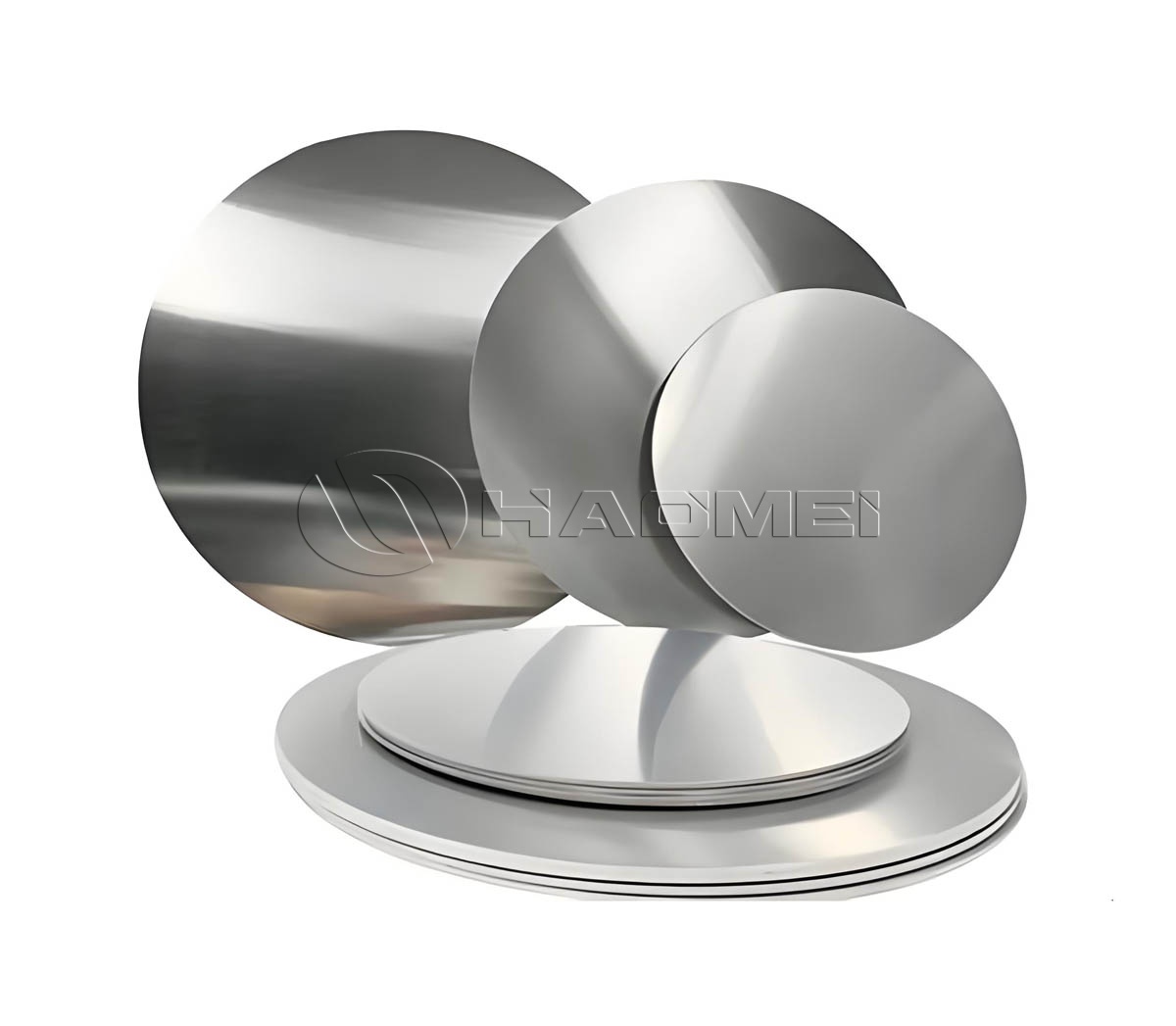
1050 is a commercially pure aluminum alloy containing a minimum of 99.5 percent aluminum. It belongs to the 1000 series and is known for high ductility, good corrosion resistance, and efficient heat transfer. Because of its softness and stable formability, 1050 aluminum circle material is widely used for drawn and pressed cookware.
3003 is an aluminum-manganese alloy in the 3000 series. Its manganese addition increases strength compared with 1050 while maintaining good workability. A 3003 aluminum circle is often used for cookware that requires more rigidity, such as thicker frying pans, shallow pans with formed rims, and applications where resistance to handling dents is a priority.
At our production facility, both alloys can be supplied as cold rolled or hot rolled aluminum circles. Material selection is coordinated with the cookware forming process before blank diameter, temper, and surface condition are confirmed.
The difference between 1050 and 3003 begins with alloy composition. The higher purity of 1050 supports heat conductivity and ductility. The manganese content in 3003 provides additional mechanical strength.
| Element | 1050 Aluminum Circle | 3003 Aluminum Circle |
|---|---|---|
| Aluminum | Minimum 99.50% | Balance |
| Manganese | Maximum 0.05% | 1.0% to 1.5% |
| Iron | Maximum 0.40% | Maximum 0.70% |
| Silicon | Maximum 0.25% | Maximum 0.60% |
| Copper | Maximum 0.05% | Maximum 0.20% |
| Magnesium | Maximum 0.05% | Maximum 0.10% |
The composition ranges may vary slightly according to the applicable standard, order specification, and production requirements. For cookware applications, we provide mill test documentation where requested and verify alloy identification before slitting and blanking.
Mechanical properties influence how an aluminum circle behaves during pressing, spinning, drawing, trimming, and handle assembly. Temper selection is as important as alloy selection. For example, O temper is usually suitable for deep drawing, while H12 or H14 may be selected where greater stiffness is needed.
| Property | 1050-O Aluminum Circle | 3003-O Aluminum Circle | Relevance for Pans |
|---|---|---|---|
| Tensile strength | Approximately 65 to 95 MPa | Approximately 95 to 130 MPa | 3003 offers greater body strength |
| Yield strength | Approximately 20 to 35 MPa | Approximately 35 to 55 MPa | 3003 better resists permanent deformation |
| Elongation | Approximately 25% to 35% | Approximately 20% to 30% | 1050 generally supports deeper drawing |
| Thermal conductivity | Approximately 227 W/m.K | Approximately 193 W/m.K | 1050 transfers heat more efficiently |
| Corrosion resistance | Excellent | Very good | Both are suitable for cookware processing |
| Formability | Excellent | Good to excellent | 1050 is more forgiving in severe drawing |
Values shown are typical references and can vary with thickness, temper, coil origin, and testing conditions. Pan manufacturers should confirm the final properties against their drawing depth and tooling design.
For deep drawn cookware, 1050 aluminum circles usually provide the widest processing window. The alloy is soft, ductile, and less likely to crack when a flat blank is transformed into a deep saucepan, stockpot, or bowl-shaped pan body. It also performs well in multi-stage drawing when suitable lubrication and tooling clearance are used.
A 1050 aluminum circle is particularly appropriate for:
Deep drawn saucepans and stockpots.
Lightweight frying pans with formed sidewalls.
Cookware bodies requiring multiple drawing operations.
Products that receive anodizing or non-stick coating after forming.
High-volume press production with demanding draw ratios.
3003 aluminum circles can also be deep drawn, especially in O temper, but the higher strength requires more controlled processing. Drawing force is generally higher, and tooling parameters should be adjusted to prevent wrinkling or edge cracking. For shallow or medium-depth pans, 3003 often delivers reliable results while improving rigidity.
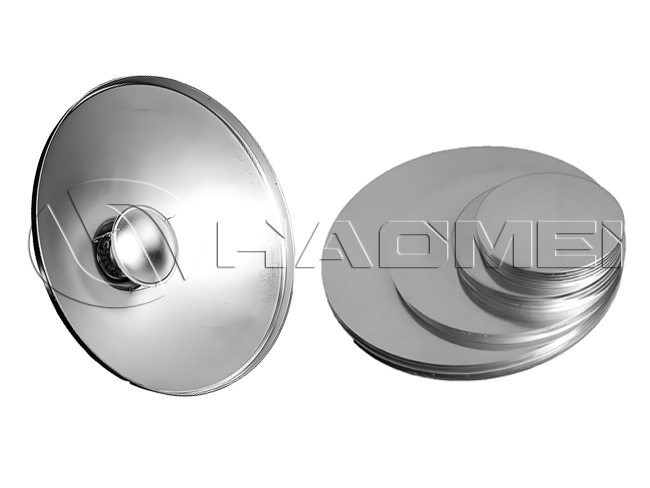
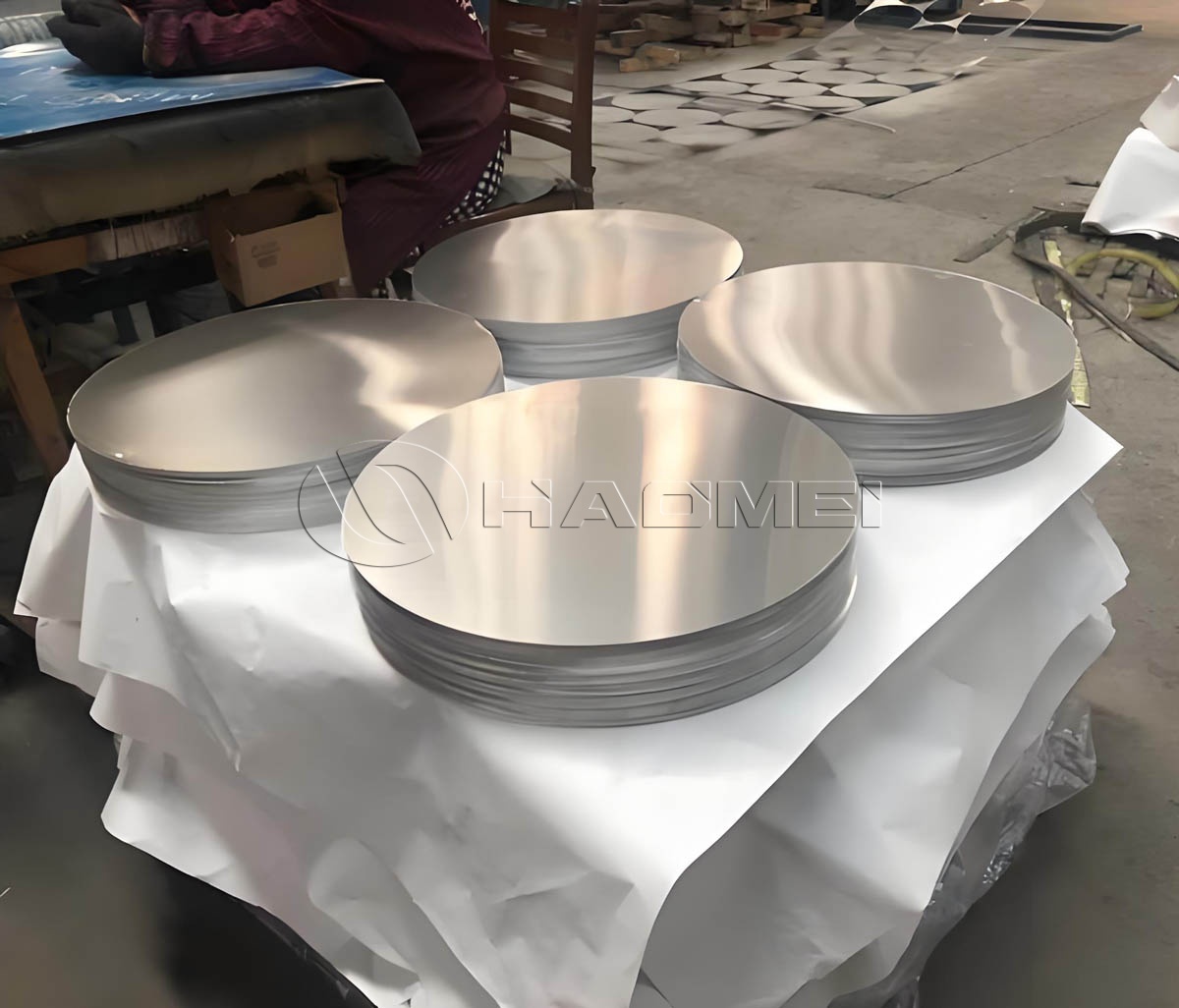
For customers producing multiple cookware categories, we can supply Aluminum Circles for Cookware in alloy and temper combinations matched to each forming process.
Heat conductivity is an important factor for aluminum circles for pans because it affects heating speed and temperature uniformity. 1050 has higher aluminum purity and therefore transfers heat more efficiently than 3003. This makes 1050 a practical choice for cookware designs where rapid response and even heat distribution are key product requirements.
However, thermal performance is not determined by alloy alone. Pan thickness, base geometry, coating system, induction plate design, and bonding processes all influence cooking behavior. A thicker 3003 aluminum circle may provide better temperature stability than a thinner 1050 blank, even though 1050 has higher inherent conductivity.
For standard non-induction cookware, 1050 is frequently selected for the main pan body. For induction-compatible pans, aluminum may be combined with a stainless steel induction disc or other magnetic base construction. In these cases, 3003 can be advantageous when the cookware design needs additional mechanical support around the bonded base.
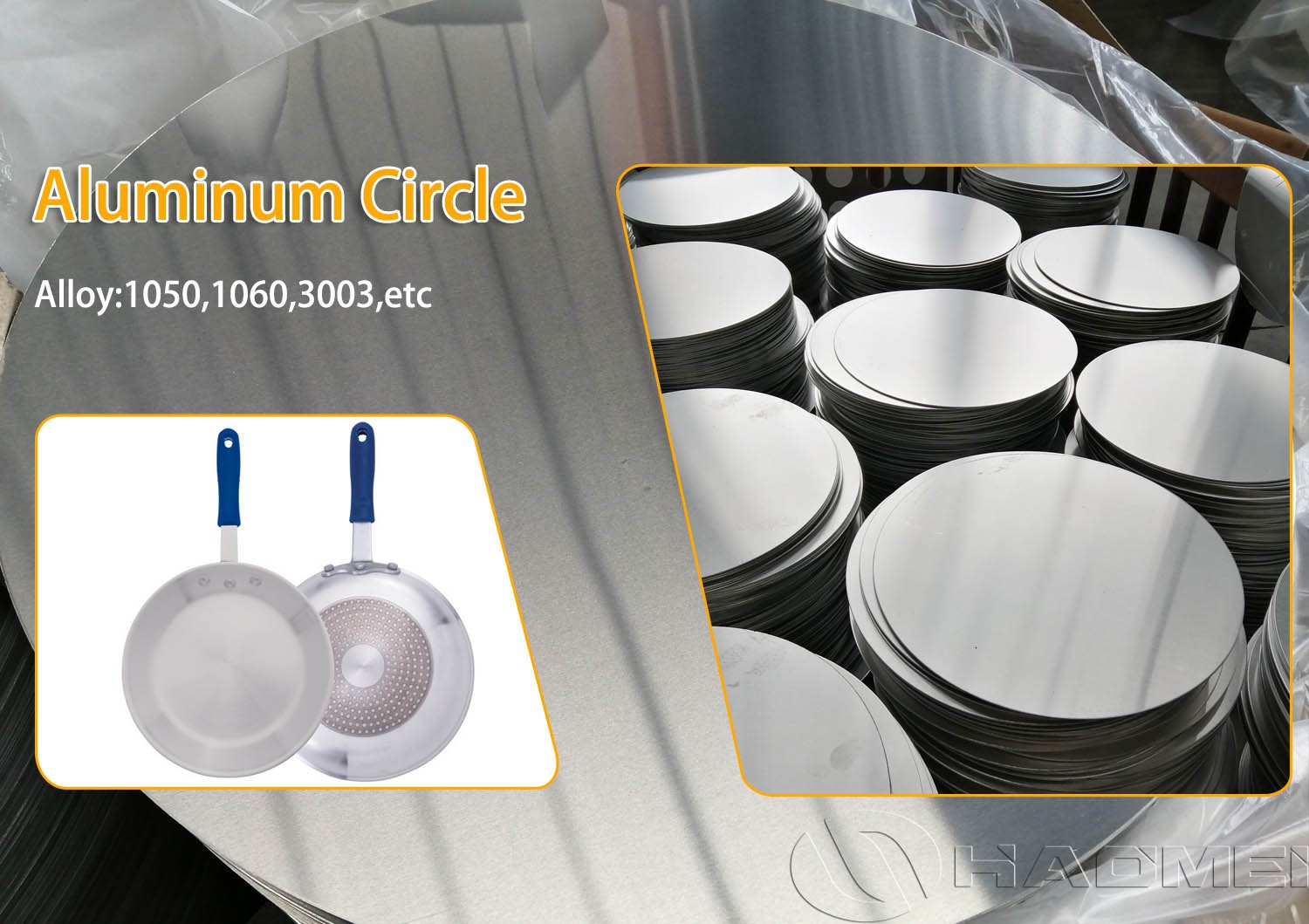
3003 aluminum circle material is stronger than 1050 under comparable tempers. This difference is relevant for frying pans, grill pans, and cookware that may be subject to repeated handling, stacking, transport, or commercial use.
The higher strength of 3003 helps the pan body retain its profile after forming. It can reduce the likelihood of dents during downstream processing and improve resistance to deformation in thinner-wall designs. For pans with broad flat bases, formed pouring lips, or reinforced rims, 3003 is often a suitable option.
By comparison, 1050 is softer and easier to form, but it is more susceptible to dents if the cookware wall is very thin. This does not make 1050 unsuitable for pans. It means thickness and structural design should be selected carefully. Many successful cookware products use 1050 circles with sufficient gauge and properly designed rims.
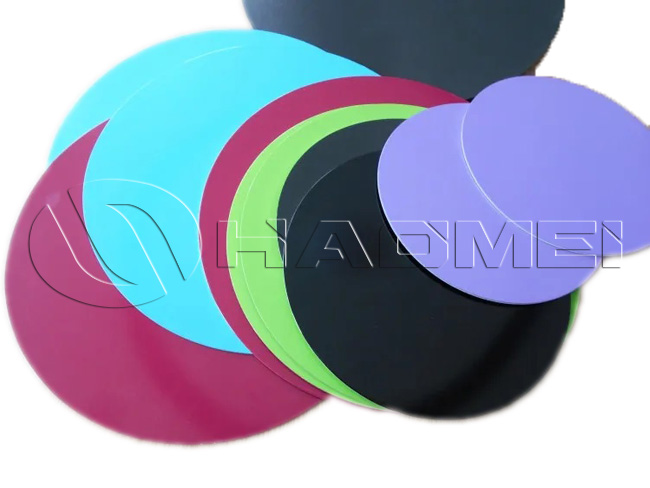
Both 1050 and 3003 aluminum circles can be prepared for non-stick coating, ceramic coating, anodizing, polishing, and painting. Surface quality is especially important because defects in the blank can remain visible after forming or may affect coating adhesion.
As a manufacturer, we control surface condition through coil selection, leveling, blanking, protective handling, and inspection. Cookware aluminum discs can be supplied with a smooth mill finish suitable for coating preparation. For applications requiring enhanced appearance, surface requirements should be defined in advance, including allowable scratches, oil level, edge condition, and flatness.
For non-stick pan production, customers commonly request an O temper aluminum circle with clean surface quality and burr-controlled edges. During blanking, consistent edge quality supports stable feeding and reduces the risk of defects in subsequent drawing or spinning operations.
The following table shows common production ranges for aluminum circles used in pan manufacturing. Final specifications should be determined by the cookware drawing process and finished product design.
| Parameter | Typical Supply Range |
|---|---|
| Alloy | 1050, 1060, 1070, 1100, 3003 |
| Temper | O, H12, H14, H16, H18 |
| Thickness | 0.50 mm to 6.00 mm |
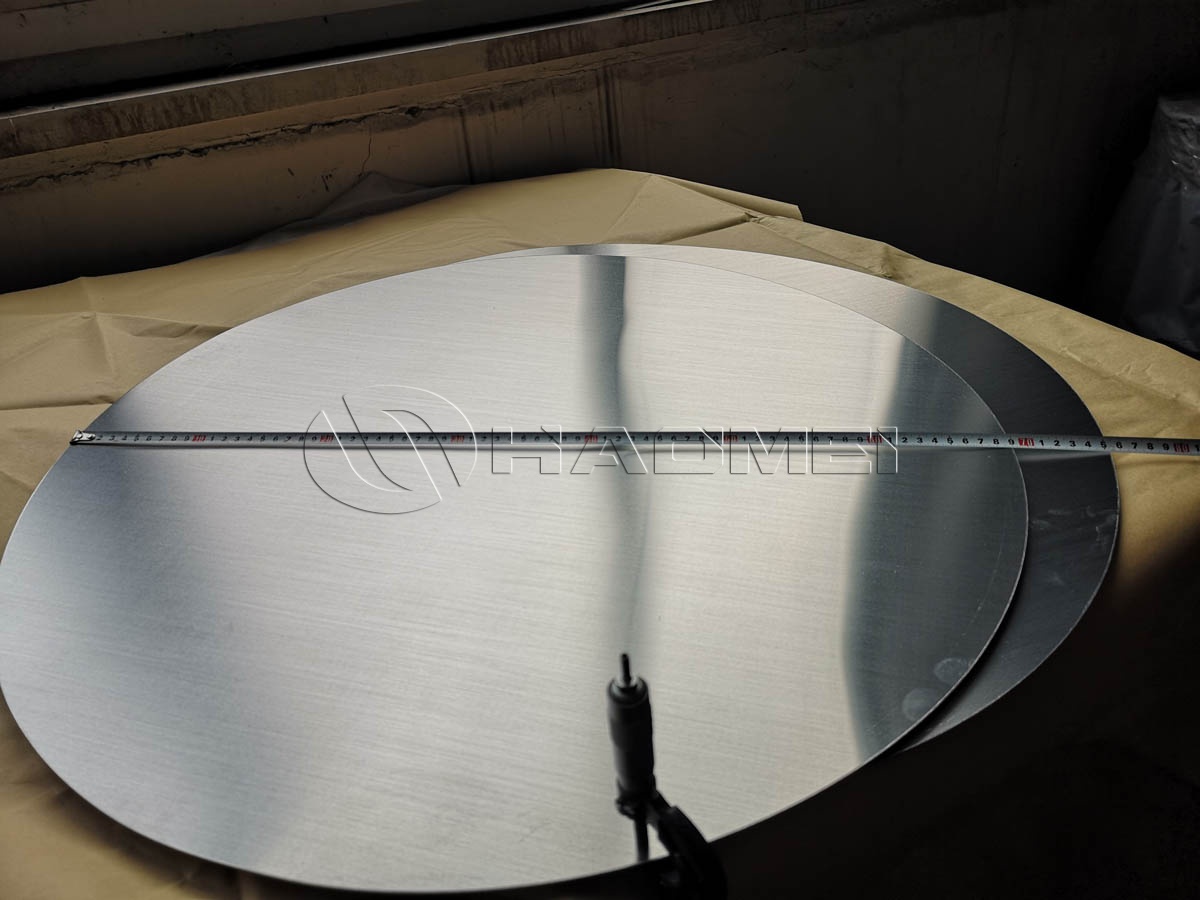
| Diameter | 100 mm to 1,200 mm |
| Diameter tolerance | According to agreed drawing and blanking requirement |
| Surface | Mill finish, smooth surface, coating-ready finish |
| Edge condition | Deburred or controlled burr direction upon request |
| Production route | Cold rolled or hot rolled |
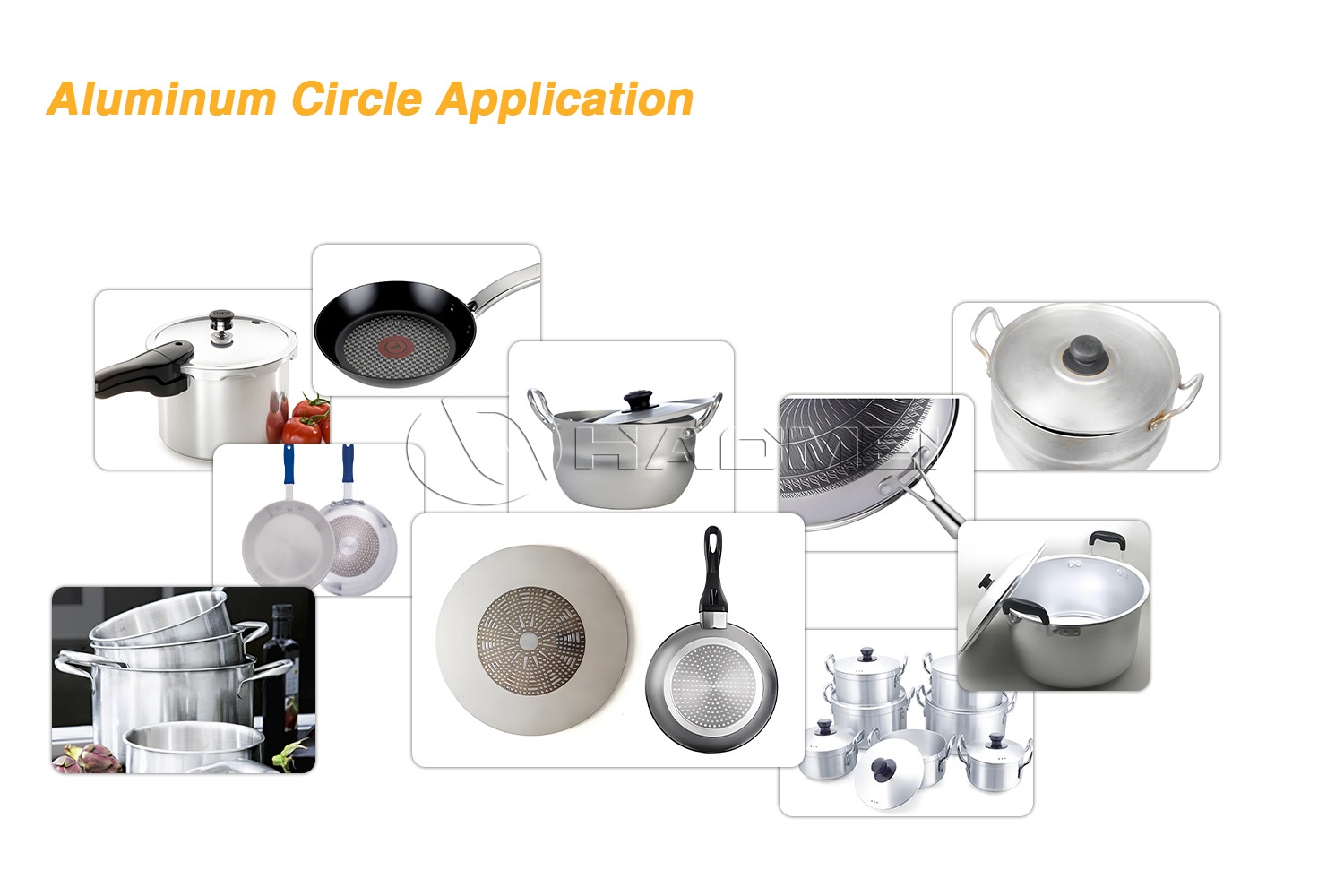
| Application | Frying pans, woks, saucepans, stockpots, pressure cookware |
For heavy-gauge cookware or products requiring improved grain structure and forming consistency, a Hot Rolled Aluminum Circle may be considered. Hot rolled material is often preferred for deeper drawing and thicker cookware bodies because of its stable metallurgical characteristics.
There is no single alloy that is best for every pan. The preferred material depends on the product's performance priorities and manufacturing method.
Choose 1050 aluminum circles when the main requirements are high heat conductivity, maximum ductility, easy deep drawing, and economical production of lightweight cookware. It is a strong option for deep drawn pots, saucepans, and conventional non-stick frying pans.
Choose 3003 aluminum circles when the pan requires higher strength, better dent resistance, improved shape retention, or a more rigid body. It is well suited to shallow frying pans, thicker cookware, formed-rim products, and designs that require more structural durability.
In many cases, pan manufacturers evaluate both alloys through trial production. We recommend testing the selected aluminum circle diameter, thickness, and temper on actual tooling before approving high-volume supply. This approach confirms drawing performance, coating results, final geometry, and material yield.
Our factory produces aluminum circles for pans with controlled alloy composition, consistent thickness, clean surfaces, and dimensional accuracy. We support cookware producers by reviewing blank size, drawing depth, temper, and downstream processing requirements before production.
For an effective material selection, provide the pan drawing, finished dimensions, target thickness, forming process, surface treatment, and annual volume. Based on these parameters, we can recommend whether a 1050 aluminum circle or 3003 aluminum circle is more suitable for the intended cookware application.
Selecting the correct aluminum disc at the beginning of the project helps improve forming yield, maintain pan quality, and control total manufacturing cost.

Office Address:
No.14 Waihuan Road, CBD, Zhengzhou, China
Contact Us
HAOMEI Aluminum offer an custom aluminum circle for you!
whatsapp: +86-18703635966
Email: sales@alummc.com
Email: alummc@hotmail.com
Request Free Sample & Quotation
Copyright © 2026 By HAOMEI Aluminum CO., LTD. All Rights Reserved. Sitemap
 +86-18703635966
 sales@alummc.com
 8618703635966
