
 No.14 Waihuan Road, CBD, Zhengzhou, China
 +86-18703635966

No.14 Waihuan Road, CBD, Zhengzhou, China
+86-18703635966
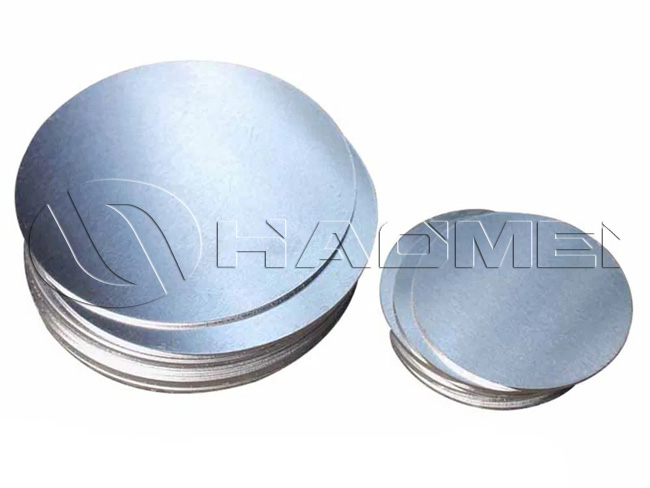
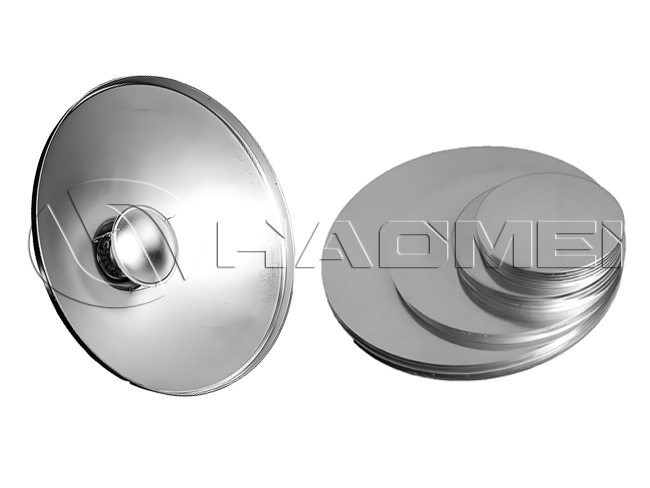
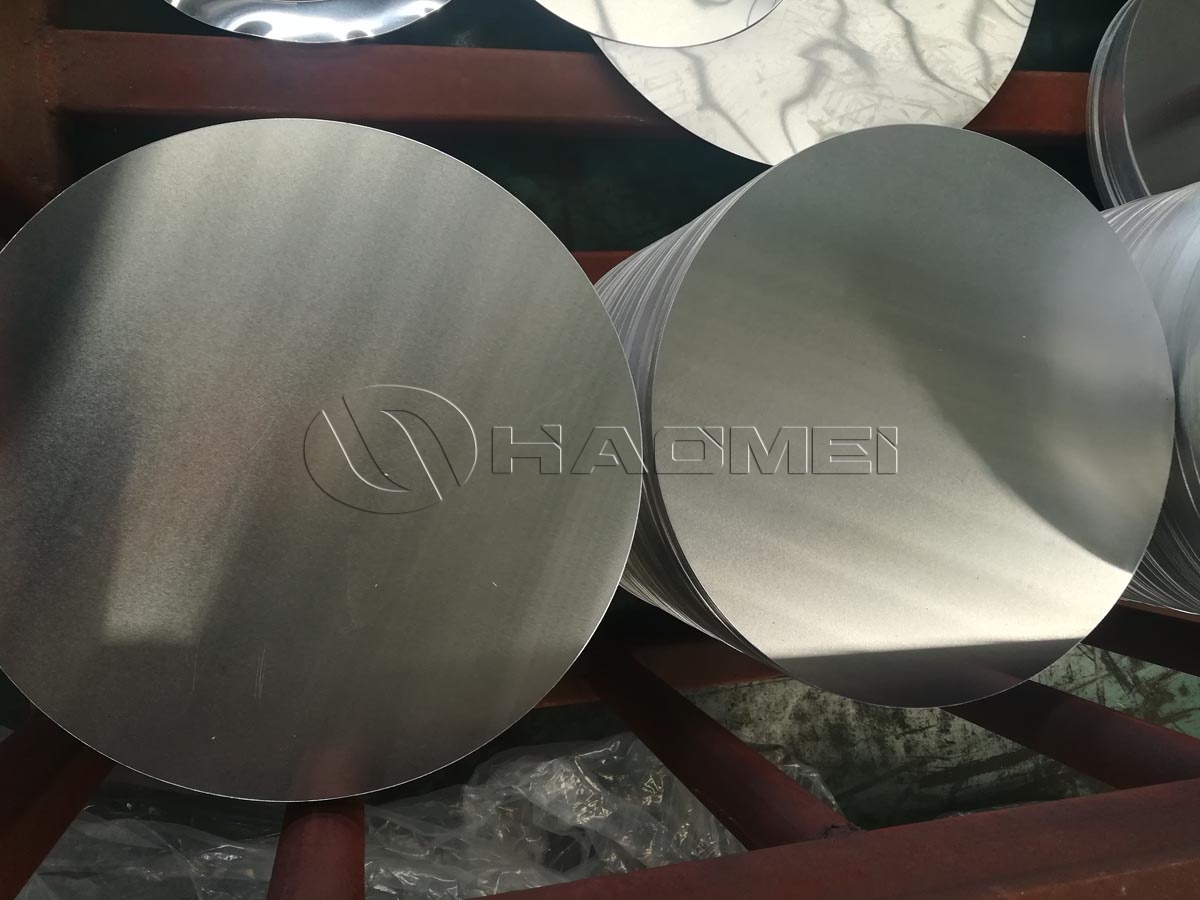
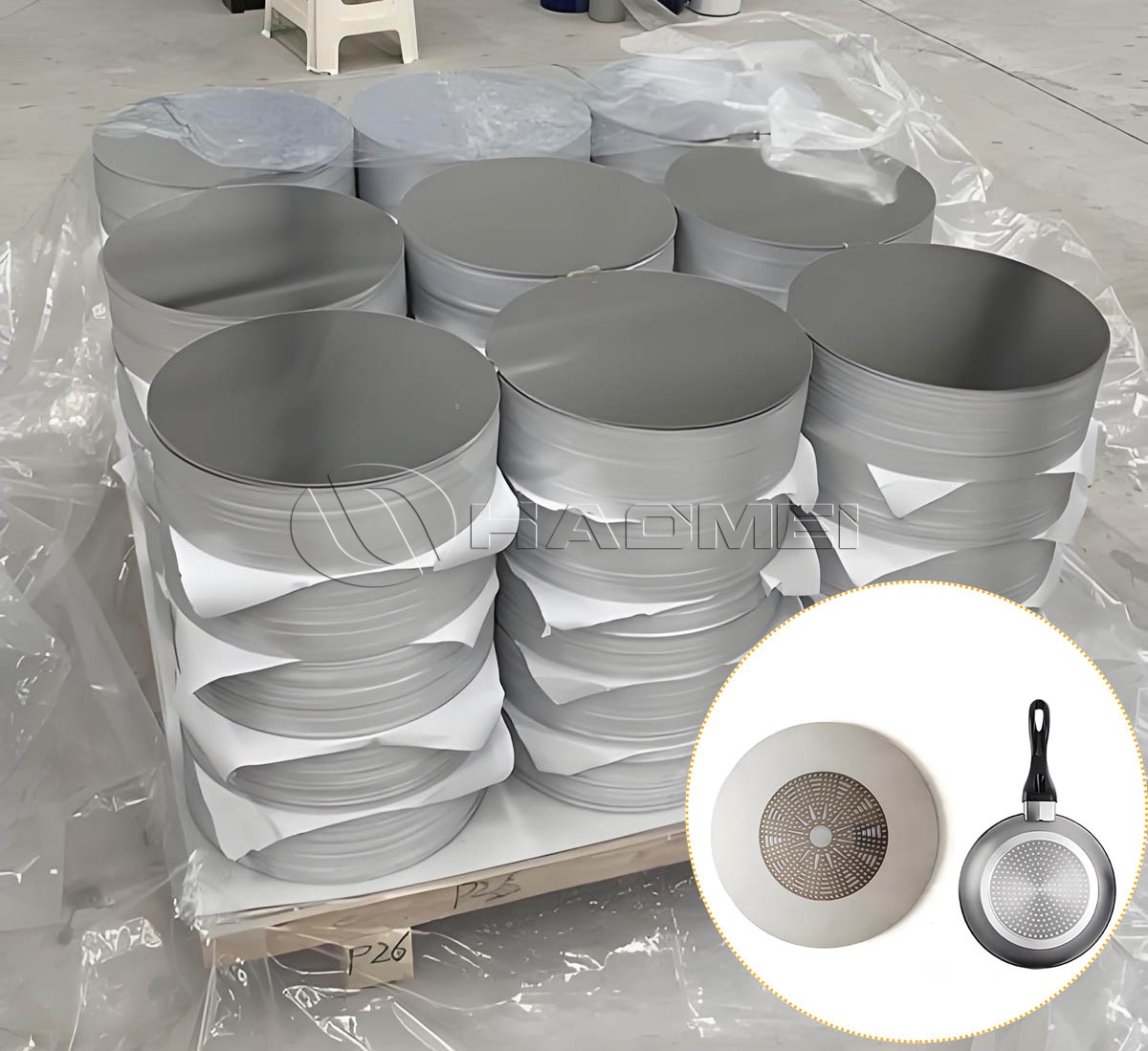
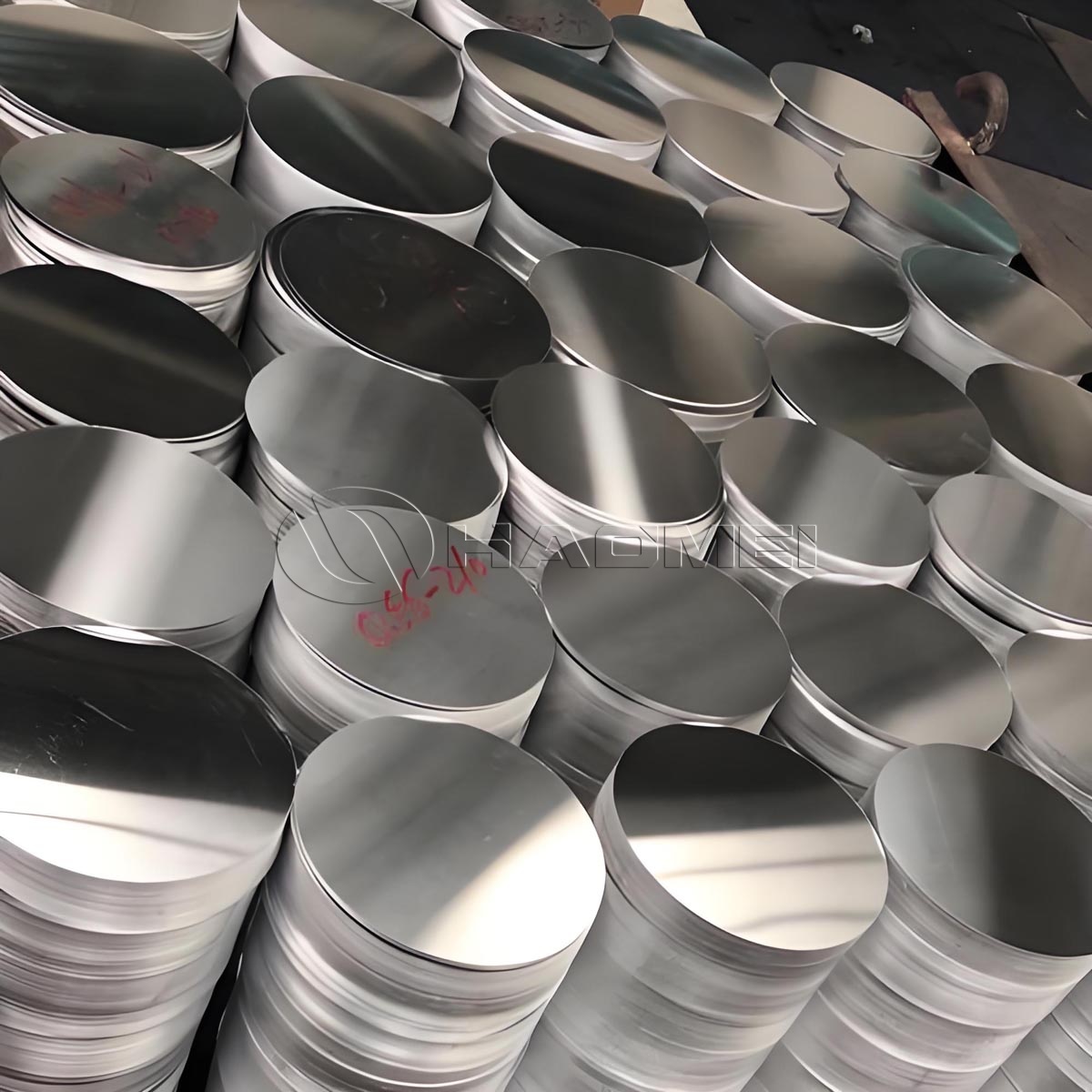
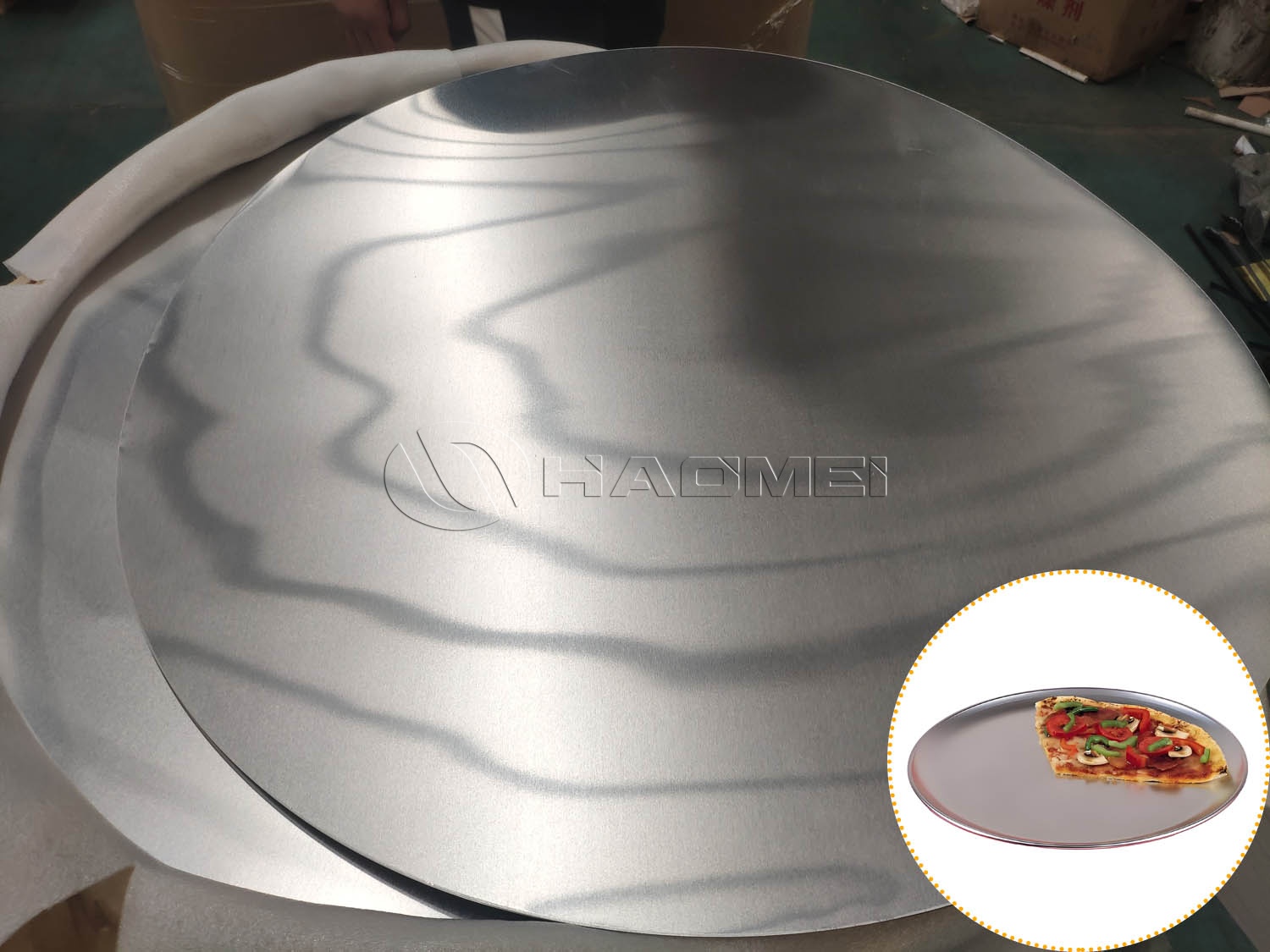
Cookware manufacturers require raw materials that combine consistent formability, thermal conductivity, surface quality, and reliable mechanical performance. As an aluminum circle manufacturer, we produce 3003 aluminum circles and 5052 aluminum circles for applications including frying pans, saucepans, stockpots, pressure cookers, baking trays, and multi-layer cookware components.
The correct cookware aluminum circle grade depends on the forming method, required wall strength, finished surface, and intended service conditions. Alloy 3003 is widely selected for its balanced deep drawing performance and cost efficiency. Alloy 5052 provides higher strength, improved fatigue resistance, and stronger corrosion resistance for cookware that requires greater structural stability.
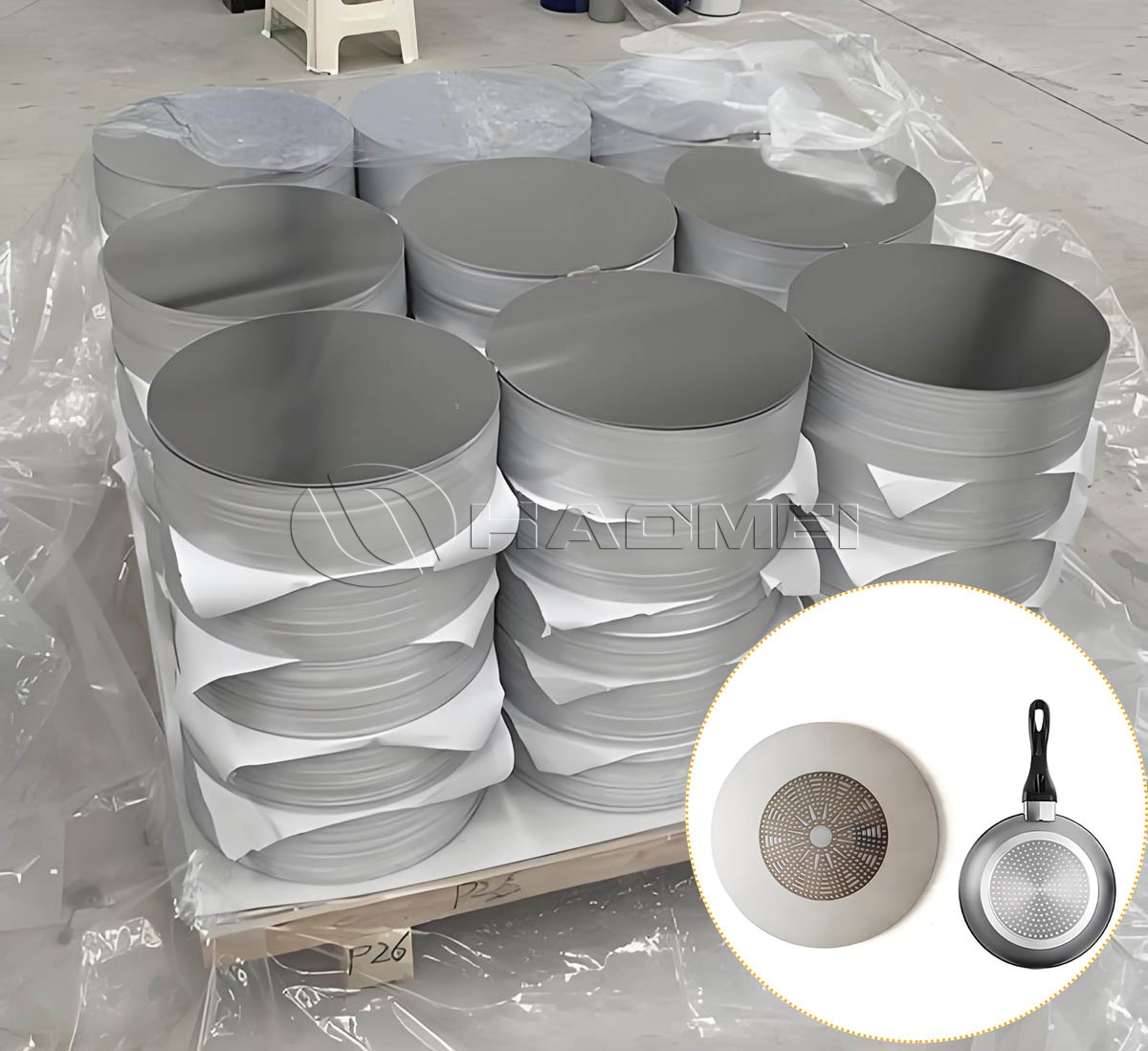
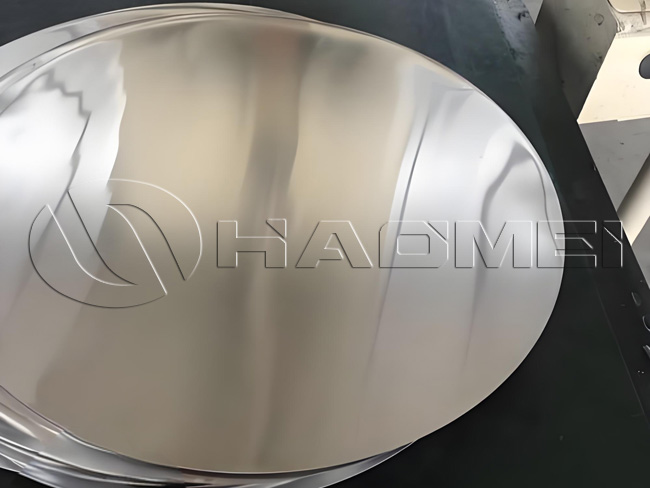
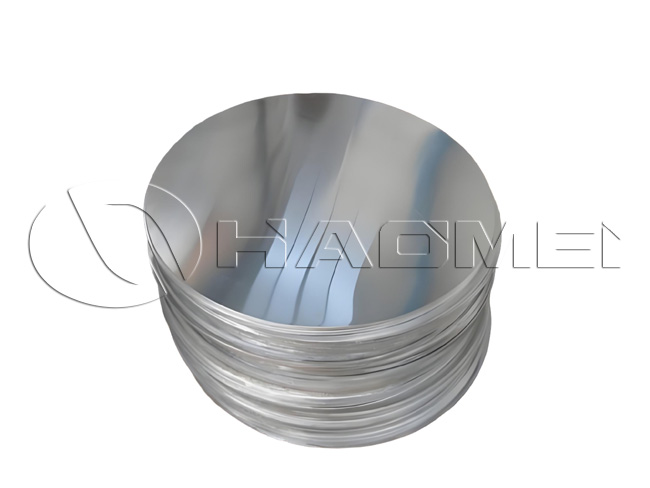
An aluminum circle disc is not simply a round sheet blank. Its quality directly affects the drawing process, base flatness, coating adhesion, anodizing appearance, and final cookware durability. Inconsistent thickness, excessive earing, rough edges, or poor grain structure can create forming defects and increase material loss during production.
For cookware producers, the primary material selection considerations include:
Deep drawing or spinning performance.
Strength after forming and during daily use.
Heat transfer efficiency and base stability.
Corrosion resistance in humid, acidic, or alkaline environments.
Surface cleanliness for non-stick coating, polishing, or anodizing.
Compatibility with bonded stainless steel or induction base structures.
Our Aluminum Circles for Cookware are manufactured with controlled chemistry, uniform rolling properties, and stable annealing processes to support repeatable cookware production.
3003 is an aluminum-manganese alloy commonly used for cookware aluminum discs. Its manganese content improves strength compared with commercially pure aluminum while retaining good workability. For cookware factories using deep drawing, stretching, spinning, and stamping operations, 3003 aluminum circles provide a practical balance between mechanical performance and forming reliability.
In the O temper, 3003 aluminum circle discs offer high ductility and are suitable for deep drawn pots, bowls, pressure cooker bodies, and cookware with relatively high side walls. In H14 and similar work-hardened tempers, the alloy is often used for shallow-drawn products, pans, lids, baking utensils, and structural cookware parts requiring increased rigidity.
The alloy also has good corrosion resistance under normal kitchen conditions. It can be supplied with a mill finish for subsequent coating, polishing, or fabrication. Where surface coating is required, proper degreasing and pretreatment remain essential to ensure consistent adhesion.
Good deep drawing and spinning performance in O temper.
Stable mechanical properties for high-volume cookware production.
Better strength than 1050 and 1060 aluminum grades.
Good corrosion resistance for general cookware use.
Suitable for non-stick coated, painted, polished, and laminated products.
Cost-effective choice for conventional aluminum cookware bodies.
5052 is an aluminum-magnesium alloy known for higher strength and corrosion resistance than 3003. It is widely used where cookware requires improved dent resistance, greater wall stability, or enhanced performance in humid and demanding environments.
5052 aluminum circles are particularly suitable for heavy-duty frying pans, cookware bodies with demanding shape retention requirements, marine-style outdoor cooking equipment, and components that may experience repeated heating and handling. Magnesium contributes to the alloy's strength, while chromium supports corrosion resistance and grain structure control.
Compared with 3003, 5052 has higher forming resistance and more noticeable springback in certain tempers. For this reason, cookware manufacturers should match the temper and blank dimensions carefully to the product geometry. O temper is generally preferred for deeper forming operations, while H32 or H34 may be selected for shallow-drawn parts that require higher finished stiffness.
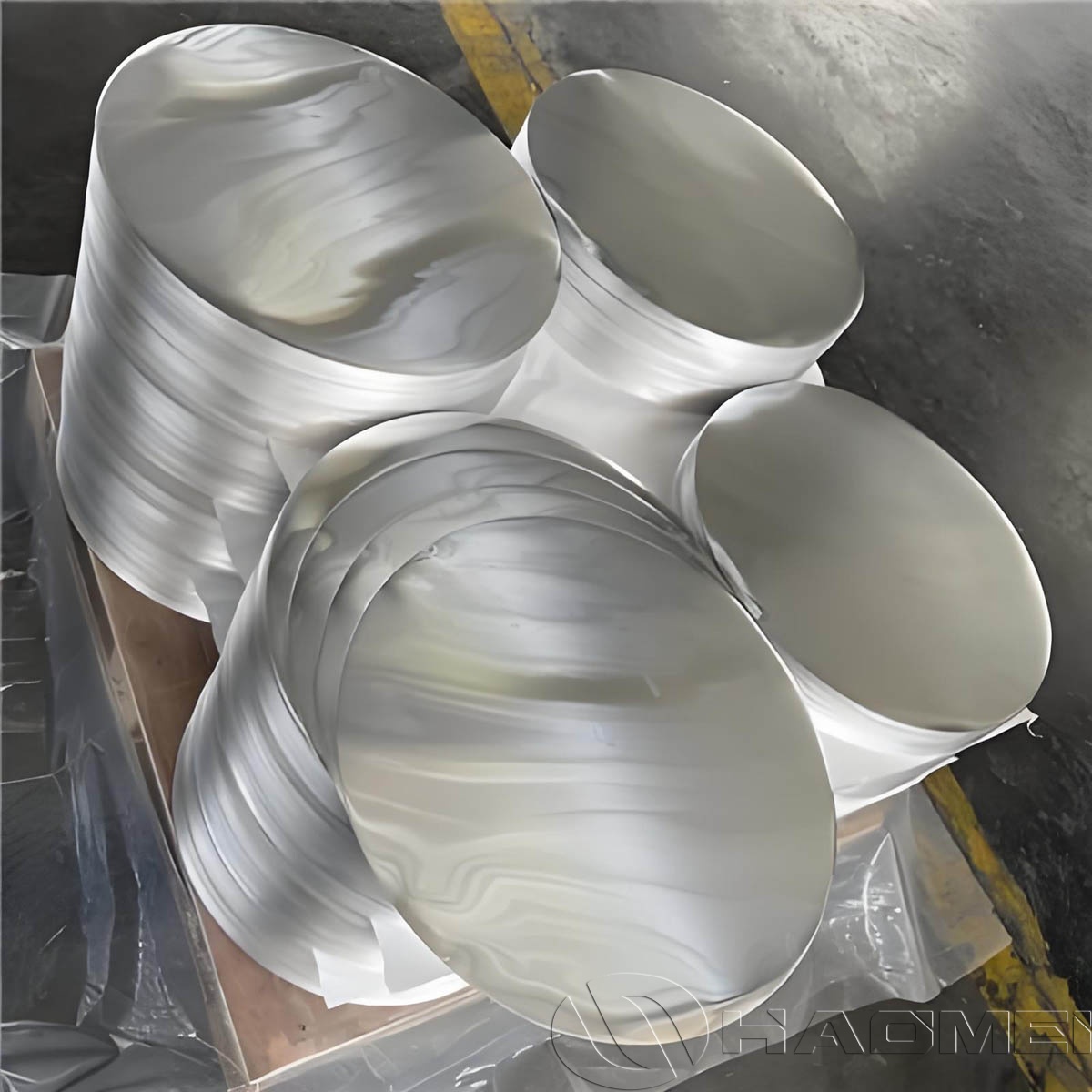
Higher strength than 3003 aluminum circles.
Good corrosion resistance, including humid and mildly saline environments.
Improved resistance to denting and deformation.
Suitable for demanding cookware structures and heavy-gauge applications.
Good fatigue performance for repeatedly used cookware components.
Compatible with surface finishing and further assembly processes.
The following parameters represent common production ranges for aluminum circle discs for cookware. Final values can be adjusted according to drawing ratio, cookware design, finishing route, and customer processing equipment.
| Parameter | 3003 Aluminum Circle | 5052 Aluminum Circle |
|---|---|---|
| Main alloying element | Mn | Mg, Cr |
| Typical temper | O, H12, H14, H16, H18 | O, H32, H34 |
| Typical thickness | 0.60-6.00 mm | 0.80-6.00 mm |
| Typical diameter | 100-1200 mm | 100-1200 mm |
| Common cookware use | Pots, pans, lids, baking utensils | Heavy-duty pans, high-strength cookware bodies |
| Deep drawing suitability | Excellent in O temper | Good in O temper, depending on draw ratio |
| Relative strength | Medium | High |
| Corrosion resistance | Good | Very good |
| Surface condition | Mill finish, cleaned surface | Mill finish, cleaned surface |
| Edge condition | Smooth, burr-controlled | Smooth, burr-controlled |
| Typical Chemical Composition, wt.% | 3003 | 5052 |
|---|---|---|
| Manganese | 1.0-1.5 | 0.0-0.10 |
| Magnesium | 0.0-0.05 | 2.2-2.8 |
| Chromium | 0.0-0.10 | 0.15-0.35 |
| Copper | 0.05-0.20 | 0.10 max |
| Aluminum | Balance | Balance |
Mechanical properties vary by temper, thickness, and applicable material standard. We confirm the agreed technical requirements through mill test documentation and production inspection before shipment.
The best alloy is determined by the cookware structure and the customer's forming route rather than by strength alone. For standard deep-drawn cookware, 3003 is usually the preferred material because it offers dependable ductility, smooth drawing behavior, and economical processing. It is particularly effective for products with higher walls or more complex drawn shapes.
5052 is recommended when the finished product needs greater rigidity or higher resistance to deformation. It is often selected for thicker frying pans, heavy cookware bodies, and products where mechanical durability is a priority. However, the increased strength requires appropriate die design, lubrication, and forming control.
| Production Requirement | Recommended Alloy | Recommended Temper |
|---|---|---|
| Deep drawn saucepan or pot body | 3003 | O |
| Spun cookware component | 3003 | O or H14 |
| Shallow frying pan body | 3003 or 5052 | H14 or H32 |
| Heavy-gauge pan requiring stiffness | 5052 | H32 or H34 |
| High corrosion resistance requirement | 5052 | O or H32 |
| General non-stick cookware blank | 3003 | O or H14 |
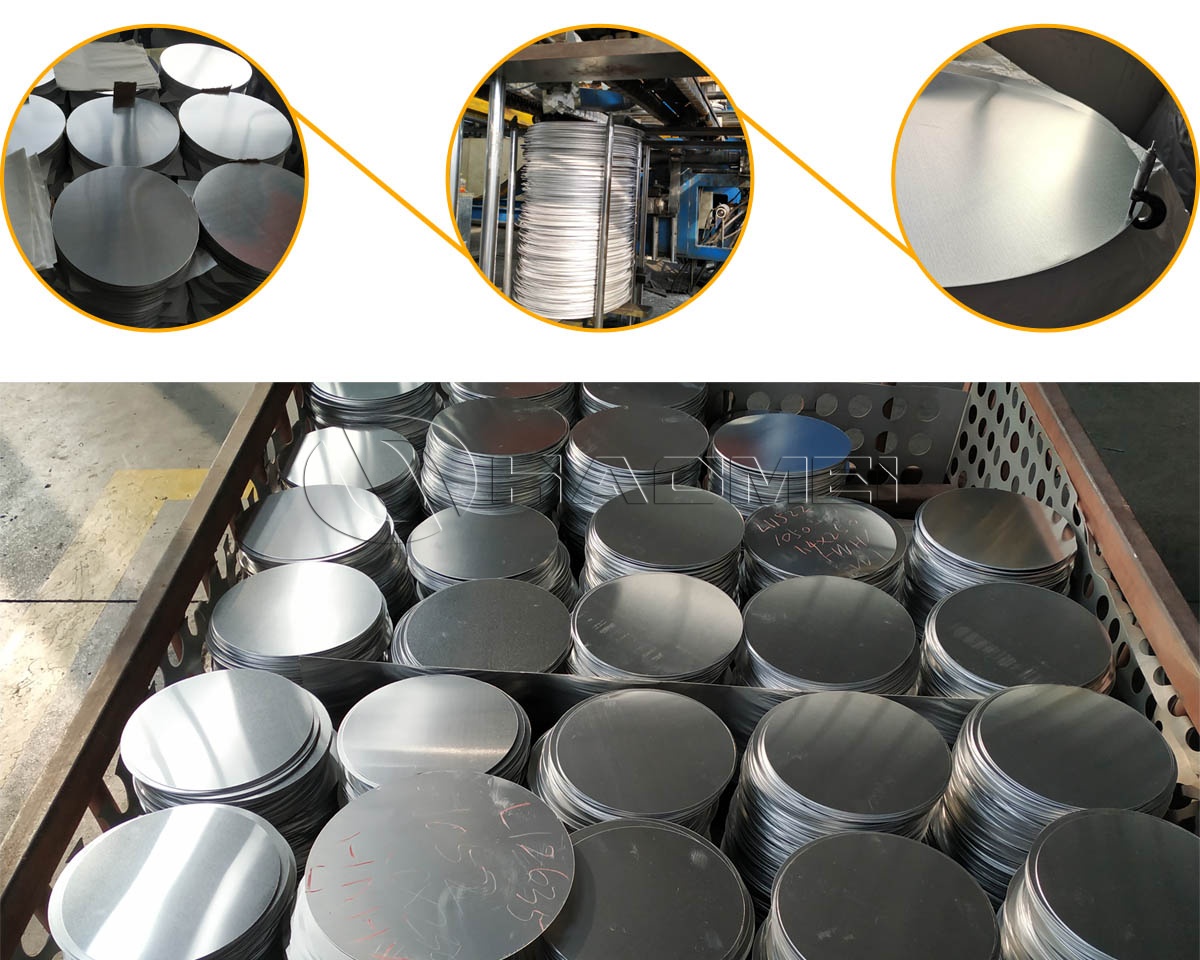
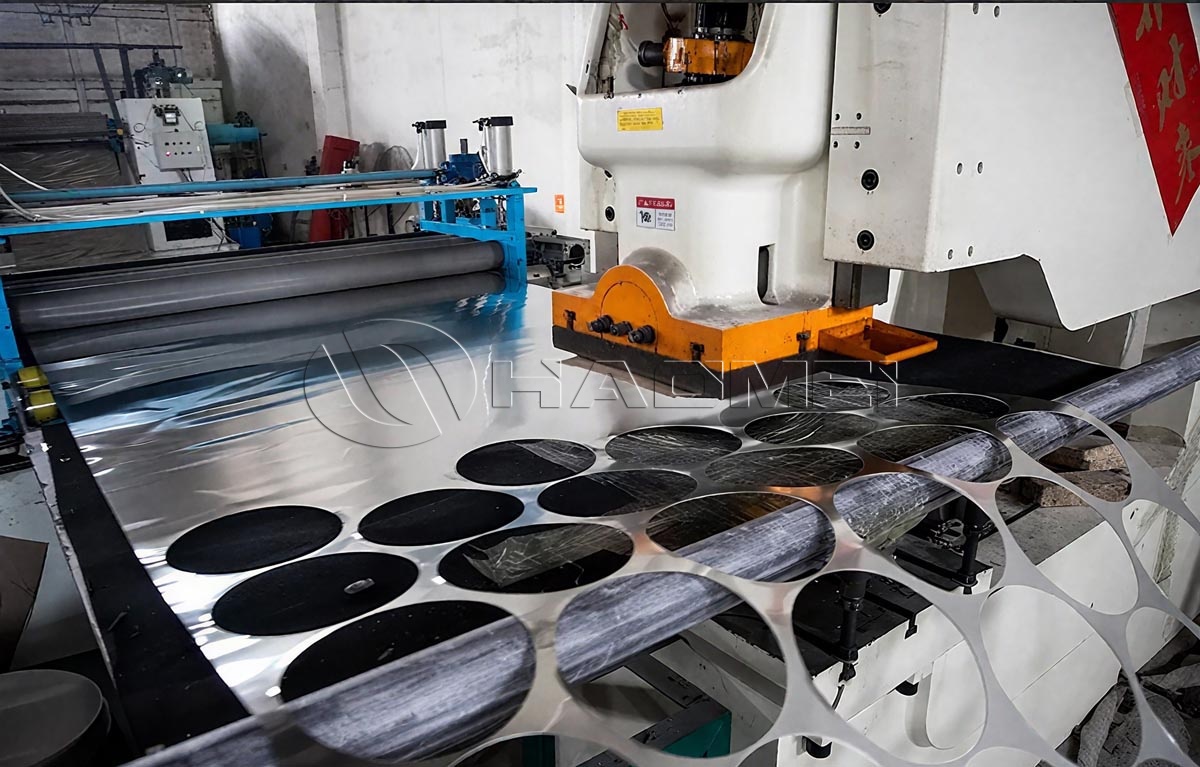
As a factory producing aluminum circles for cookware, we control each stage from coil selection through slitting, blanking, annealing, inspection, and packaging. The objective is to supply aluminum discs with stable forming behavior across each production batch.
The starting coil influences the final aluminum circle's elongation, surface condition, and earing tendency. We select suitable rolling material based on alloy, thickness, temper, and intended drawing depth. Controlled rolling and annealing help produce a uniform grain structure that supports stable deformation during cookware forming.
Cookware blanks require roundness and clean edges to feed reliably into stamping and drawing equipment. Our blanking process is controlled to reduce burrs, edge cracking risks, and dimensional variation. Diameter tolerance and thickness tolerance are checked according to the agreed customer specification.
For non-stick coated cookware, surface cleanliness is important because oils, particles, scratches, and roll marks can affect pretreatment and coating appearance. We inspect the surface condition before packing and provide protective separation where needed. For polished or anodized cookware, stricter surface requirements can be defined before production.
Annealing is especially important for 3003 and 5052 aluminum circles used in deep drawing. The process restores ductility after rolling and supports more uniform metal flow during forming. We adjust annealing conditions according to alloy thickness, target temper, and the customer's drawing requirements.
For projects that need a different rolling route or specific forming behavior, our Hot Rolled Aluminum Circle options can be evaluated together with the required thickness and finished cookware application.
Before delivery, our cookware aluminum circle discs are inspected for key dimensional and surface characteristics. Typical checks include diameter, thickness, roundness, temper, edge quality, surface cleanliness, and packaging integrity. Chemical composition and mechanical properties can be verified according to the relevant order requirements.
Common delivery requirements include:
Diameter and thickness tolerance agreements.
O temper or work-hardened temper confirmation.
Maximum permitted burr height.
Surface protection requirements.
Interleaf paper or film separation for sensitive surfaces.
Palletized export packaging suitable for sea freight.
Mill test certificate requirements.
3003 and 5052 aluminum circles are both reliable cookware raw materials, but they serve different production priorities. 3003 aluminum circles provide strong deep drawing capability and balanced cost performance. 5052 aluminum circles offer higher strength, improved corrosion resistance, and greater rigidity for demanding cookware designs.
By matching alloy, temper, thickness, and blank quality to the cookware manufacturing process, producers can reduce forming defects, improve product consistency, and achieve stable long-term performance.

Office Address:
No.14 Waihuan Road, CBD, Zhengzhou, China
Contact Us
HAOMEI Aluminum offer an custom aluminum circle for you!
whatsapp: +86-18703635966
Email: sales@alummc.com
Email: alummc@hotmail.com
Request Free Sample & Quotation
Copyright © 2026 By HAOMEI Aluminum CO., LTD. All Rights Reserved. Sitemap
 +86-18703635966
 sales@alummc.com
 8618703635966
