
 No.14 Waihuan Road, CBD, Zhengzhou, China
 +86-18703635966

No.14 Waihuan Road, CBD, Zhengzhou, China
+86-18703635966
As a manufacturer of aluminum circles for cookware, we produce large diameter aluminum discs designed for the forming requirements of frying pans, woks, stockpots, pressure cookers, casserole pots, and commercial cooking vessels. Large diameter blanks require more than dimensional accuracy. Their performance during deep drawing, spinning, stamping, and bottom-impact bonding depends on alloy selection, grain structure, surface condition, thickness consistency, and controlled annealing.
Our production process is designed to provide stable, repeatable cookware aluminum circle material for customers operating automated and semi-automated cookware manufacturing lines. We supply aluminum circles in standard and customized diameters, with material conditions selected according to the intended forming method and final cookware design.
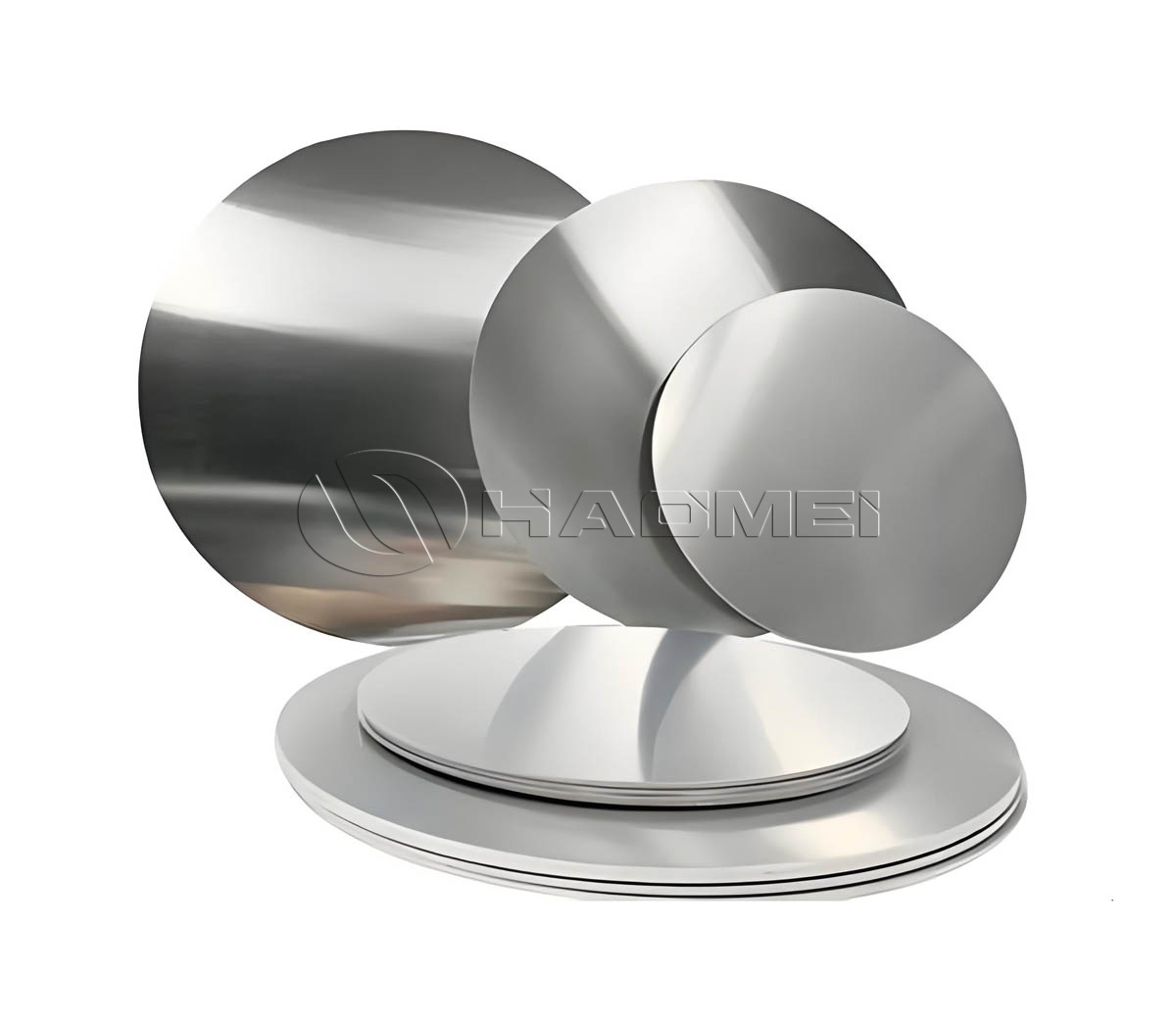
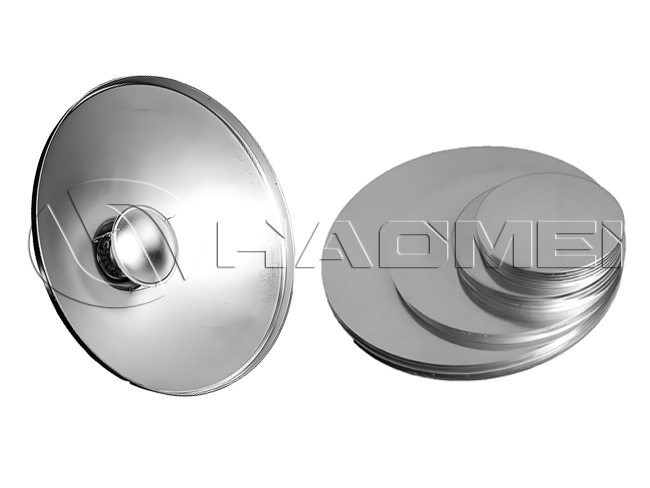
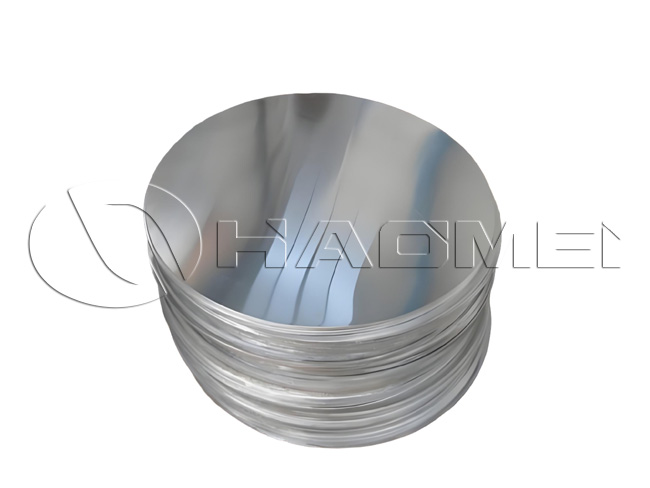
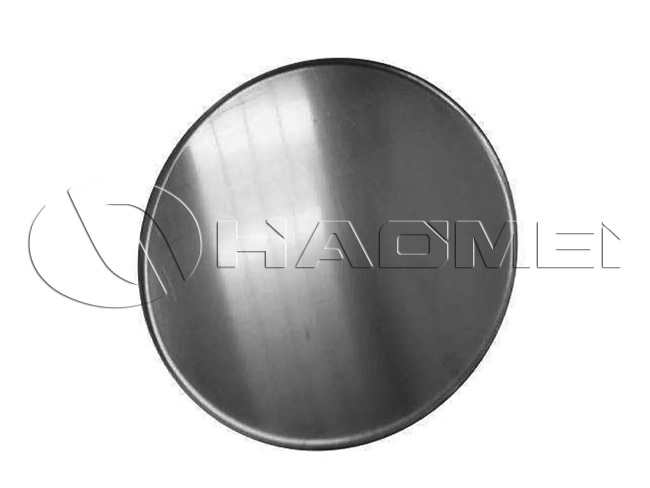
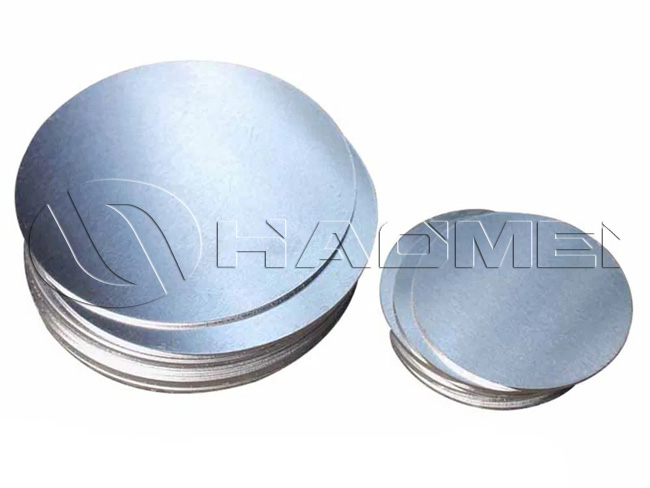
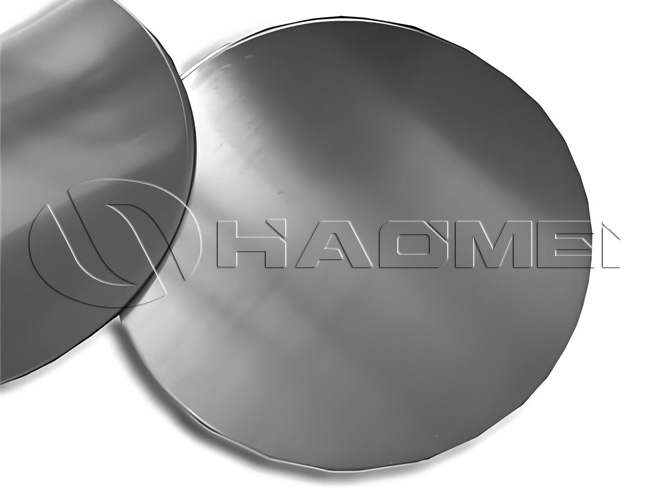
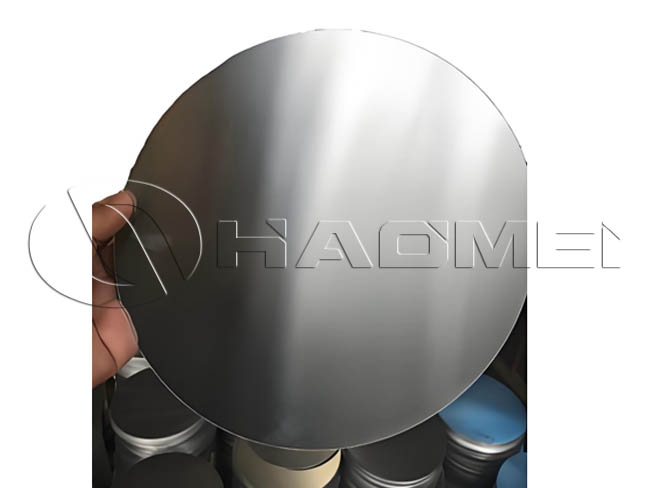
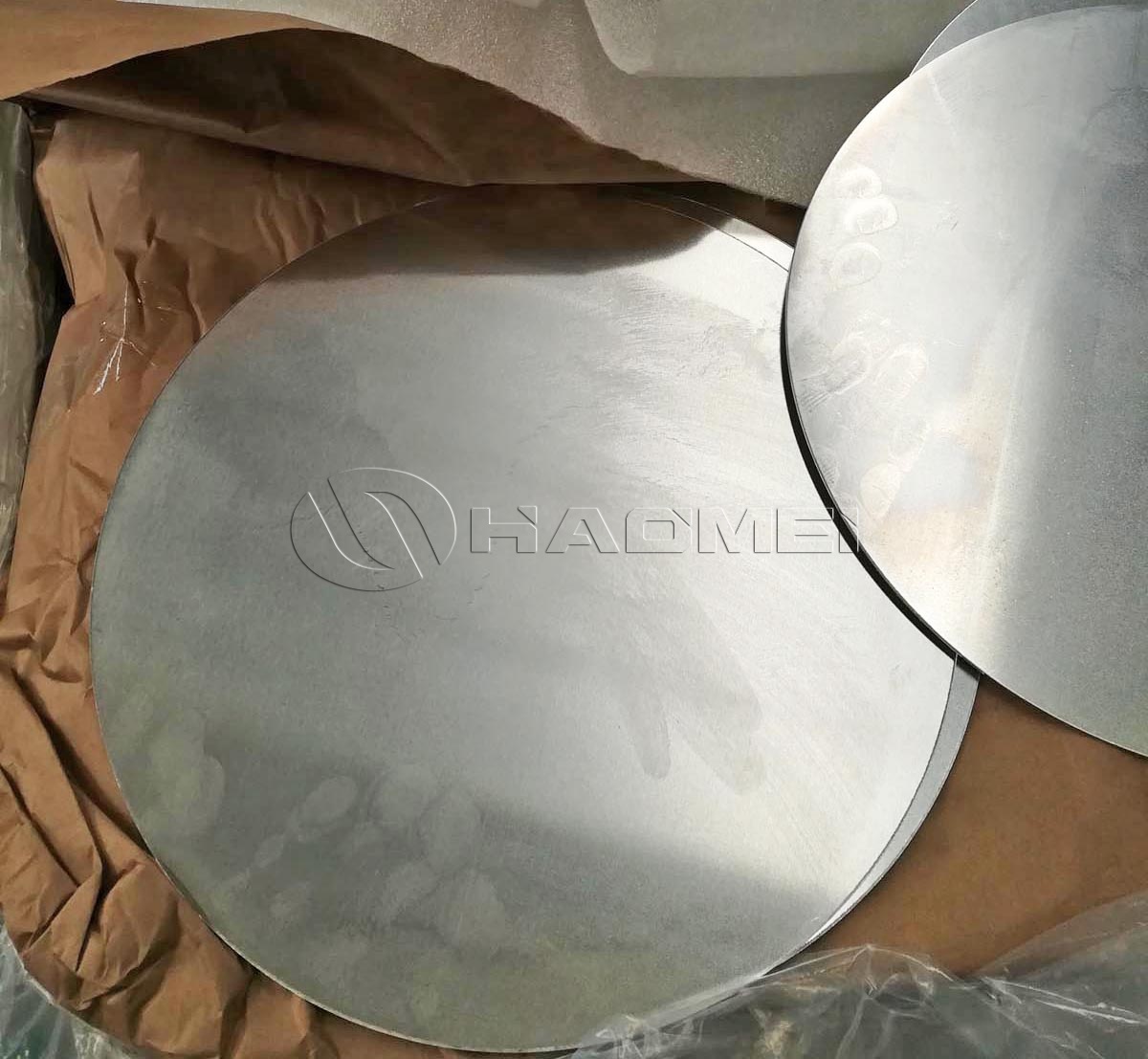
A large diameter aluminum circle for cookware is a round aluminum blank, generally produced from aluminum coil or sheet through precision blanking. Compared with small discs used for lampshades or small utensils, large circles are intended for cookware bodies with wider bases, higher sidewalls, or greater forming depth.
Typical applications include frying pans, wok pans, saute pans, stockpots, Dutch ovens, cooking basins, pizza pans, and multi-layer cookware components. Depending on the product construction, the aluminum disc may be used as the complete cookware body, as an outer shell for bonded cookware, or as a heat-conducting base layer.
For large diameter cookware blanks, flatness and thickness consistency are particularly important. Any unevenness in the blank can influence material flow during drawing and may lead to wrinkling, earing, wall-thickness variation, or reduced yield in subsequent processing.
We select aluminum alloy grades based on the drawing depth, cookware shape, mechanical strength, corrosion resistance, and surface treatment required by the customer. The most commonly specified materials are 1050, 1060, 1070, 1100, and 3003 aluminum alloys.
| Alloy | Main Characteristics | Typical Cookware Applications | Formability |
|---|---|---|---|
| 1050 Aluminum | High purity aluminum, good conductivity, excellent corrosion resistance | Frying pans, pots, shallow cookware, base discs | Excellent |
| 1060 Aluminum | Good ductility, stable surface quality, economical processing | General cookware bodies, pans, cooking basins | Excellent |
| 1070 Aluminum | High aluminum content and high thermal conductivity | Heat-sensitive cookware components, formed vessels | Excellent |
| 1100 Aluminum | Good workability and corrosion resistance | Spun cookware, light-duty pots and pans | Very good |
| 3003 Aluminum | Higher strength than 1xxx series, good corrosion resistance | Deep cookware, pressure cooker parts, heavier pans | Good to very good |
For applications requiring substantial deformation, 1050 and 1060 aluminum circles in O temper are widely used because of their high elongation and low forming resistance. For cookware that requires improved structural strength, 3003 aluminum circle material can provide a balanced combination of formability and mechanical performance.
We also manufacture Hot Rolled Aluminum Circle products for cookware producers that require a more favorable grain structure for deep drawing and heavy forming operations.
Our large diameter aluminum circle for cookware can be manufactured to customer drawings, forming data, and production equipment requirements. The following table presents common supply ranges. Final specifications are confirmed according to the alloy, temper, diameter, and intended forming process.
| Parameter | Standard Production Range | Notes |
|---|---|---|
| Alloy | 1050, 1060, 1070, 1100, 3003 | Other grades available upon technical review |
| Temper | O, H12, H14, H16, H18 | O temper is preferred for deep drawing |
| Diameter | 300 mm to 1,400 mm | Custom large diameters available |
| Thickness | 0.50 mm to 6.00 mm | Selected according to cookware design |
| Diameter Tolerance | Typically +/- 0.5 mm to +/- 2.0 mm | Depends on diameter and blanking method |
| Thickness Tolerance | According to applicable alloy standards | Controlled across coil width and length |
| Surface Finish | Mill finish, brushed, polished, coated | Selected for downstream processing |
| Edge Condition | Smooth, burr-controlled, clean-cut | Suitable for safe automated handling |
| Coil or Disc Supply | Individual discs or palletized stacks | Packaging adapted to handling equipment |
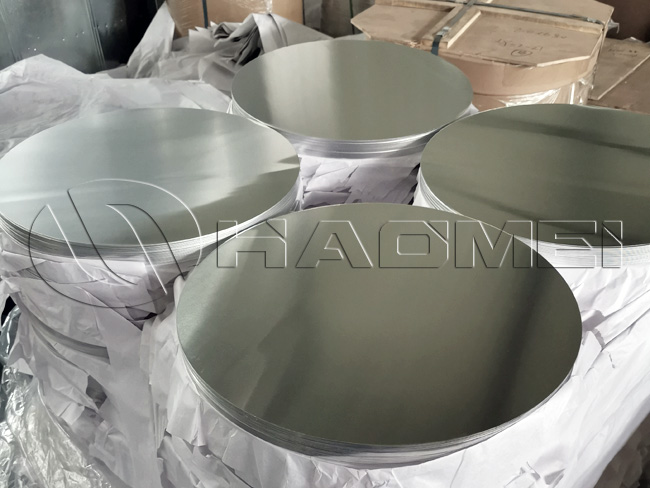
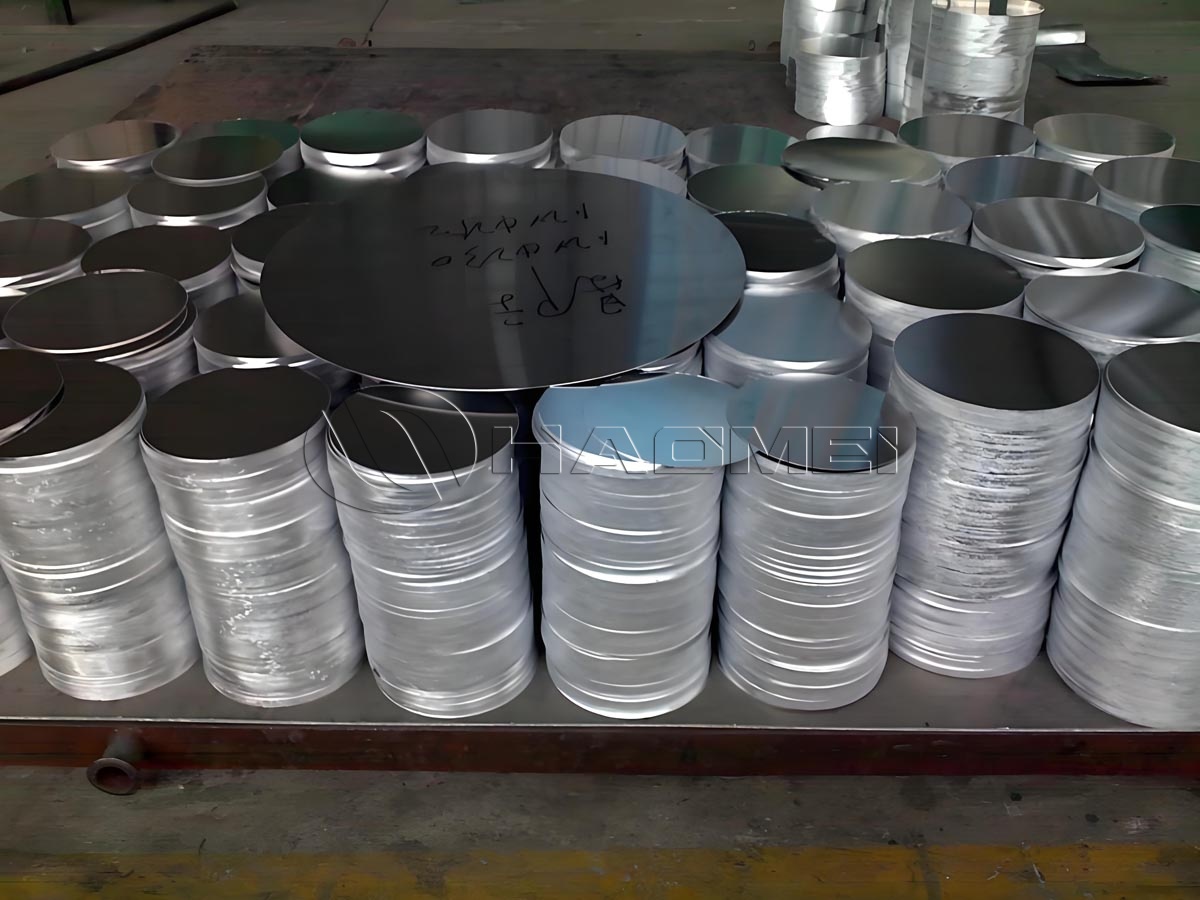
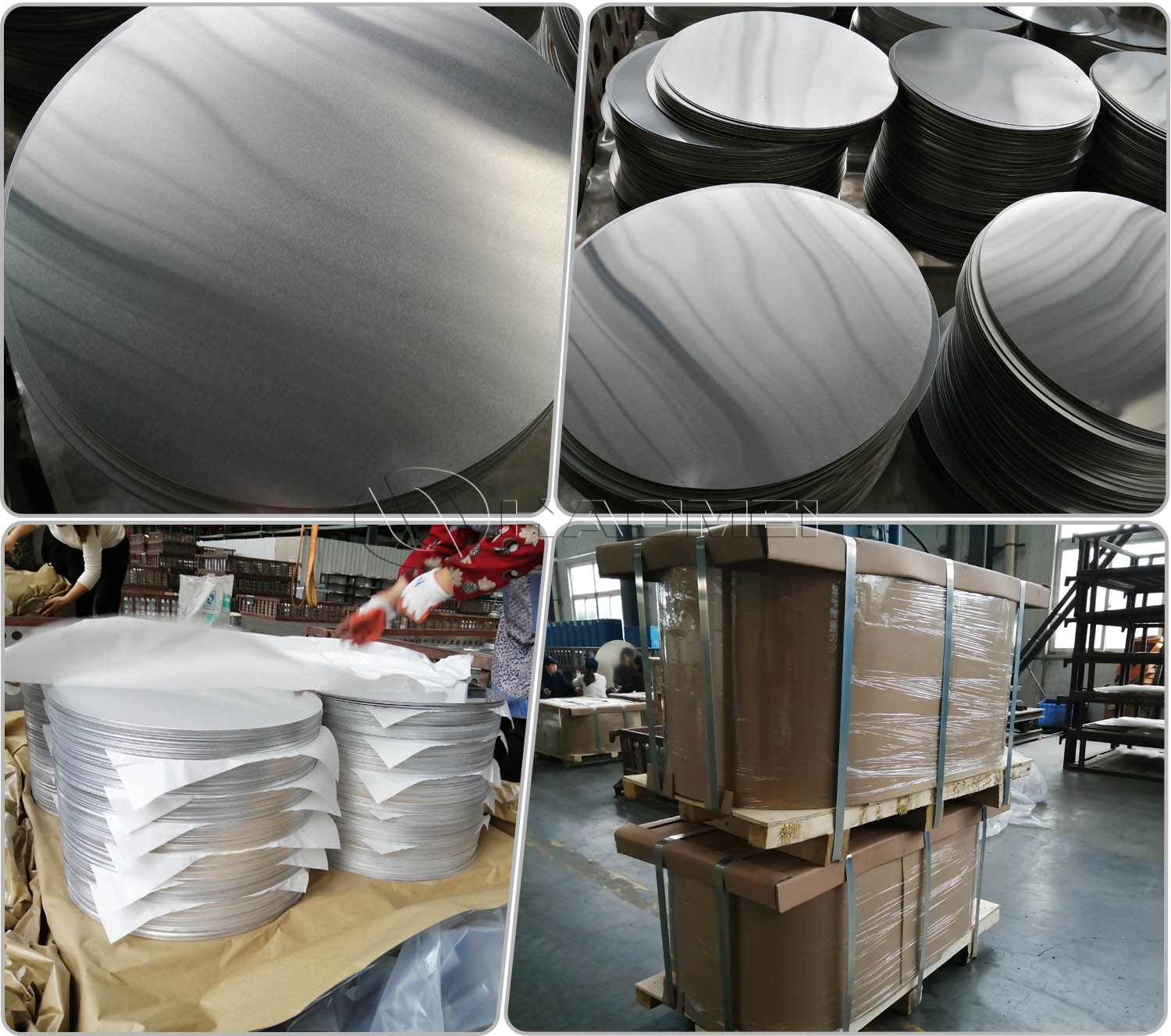
Large discs above 800 mm in diameter may require additional attention during transportation and storage. We use reinforced pallet support, protective interleaving where necessary, and stable stacking methods to reduce edge deformation and surface damage before the circles reach the cookware production line.
We manufacture aluminum circle discs through a controlled process that begins with qualified aluminum ingot and rolled coil material. Each stage is managed to support the forming performance expected by cookware manufacturers.
The process starts with aluminum melting and alloy composition control. After casting, the material is hot rolled and, where required, cold rolled to achieve the specified thickness. For deep drawing cookware, rolling quality directly affects grain distribution, elongation, and the tendency for earing during forming.
Annealing is a critical operation for a deep drawing aluminum circle. We use controlled heating and cooling cycles to obtain the requested temper, particularly O temper for high-deformation cookware production. Proper annealing improves ductility and supports more uniform material flow during drawing or spinning.
After coil preparation, the material is blanked into circular discs using suitable press and die equipment. For large diameter aluminum circles, die condition and blanking alignment are important for maintaining roundness, edge quality, and consistent diameter.
Our quality team inspects surface condition, dimensions, edges, and packaging readiness. We control common issues that can affect cookware processing, including oil stains, scratches, burrs, oxidation marks, laminations, and foreign inclusions.
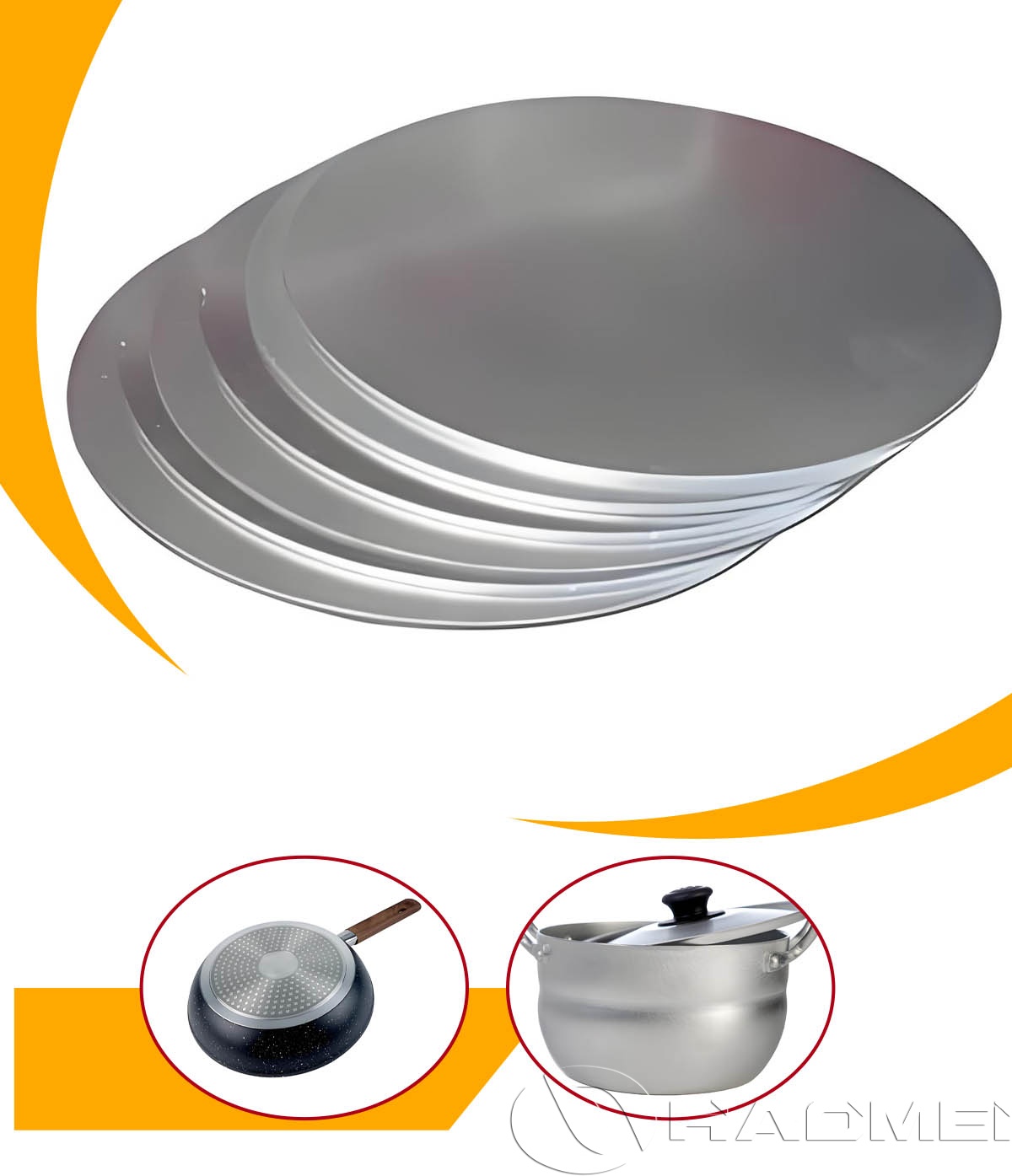
Cookware factories often process aluminum discs through deep drawing, spinning, pressing, trimming, polishing, non-stick coating, anodizing, or composite bottom bonding. To support these operations, our aluminum circles are produced with attention to the following performance requirements.
Thickness variation can cause uneven deformation, inconsistent cookware wall thickness, and unstable performance during impact bonding. We monitor thickness during rolling and inspect finished material against agreed tolerances.
A cookware aluminum circle must stretch without cracking when formed into a pan or pot body. Alloy chemistry, annealing quality, grain structure, and surface cleanliness all influence drawability. For deep pots and high-wall cookware, we recommend confirming the drawing ratio and tooling conditions before finalizing material selection.
Earing is the uneven rim formation that can occur after deep drawing. While some trimming is standard in cookware manufacturing, excessive earing increases material waste and processing cost. We optimize rolling and annealing conditions to support stable forming behavior.
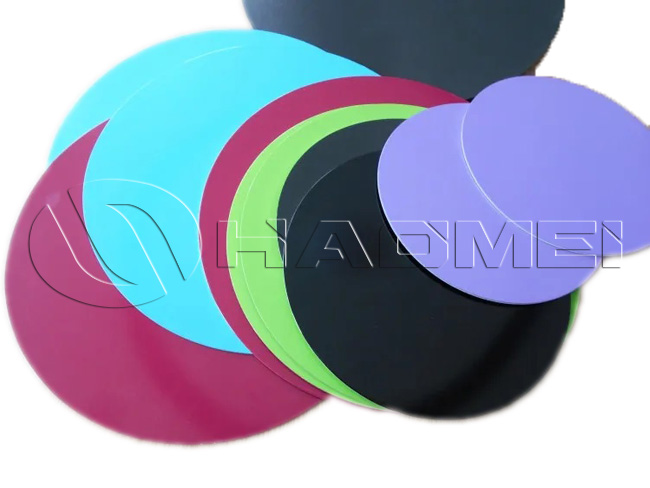
Cookware surfaces may receive PTFE coating, ceramic coating, anodizing, polishing, painting, or decorative treatment. A clean and uniform aluminum surface helps improve coating adhesion and visual consistency. When specific finishing requirements apply, we confirm surface standards before production.
The correct disc size depends on the cookware diameter, drawing depth, rim design, trimming allowance, and manufacturing method. A larger initial blank is normally required when producing deep cookware bodies because the material must flow from the base area into the sidewall.
| Cookware Type | Common Blank Diameter Range | Typical Thickness Range | Recommended Material Condition |
|---|---|---|---|
| Frying Pan | 350 mm to 700 mm | 1.5 mm to 4.0 mm | 1050 O, 1060 O, 3003 O |
| Wok Pan | 450 mm to 1,000 mm | 1.2 mm to 3.5 mm | 1050 O, 1060 O |
| Stockpot | 500 mm to 1,200 mm | 1.0 mm to 3.0 mm | 1060 O, 3003 O |
| Saute Pan | 400 mm to 800 mm | 1.5 mm to 4.0 mm | 1050 O, 3003 O |
| Pressure Cooker Component | 500 mm to 1,000 mm | 2.0 mm to 5.0 mm | 3003 O |
| Commercial Cooking Vessel | 800 mm to 1,400 mm | 2.0 mm to 6.0 mm | 1060 O, 3003 O |
The figures above are reference ranges rather than fixed recommendations. Our technical team reviews customer drawings, final pan dimensions, forming method, and required mechanical properties to propose an appropriate aluminum disc specification.
Large diameter aluminum circles are widely used in both household and commercial cookware manufacturing. Their low density, thermal conductivity, corrosion resistance, and forming flexibility make aluminum a practical material for many product designs.
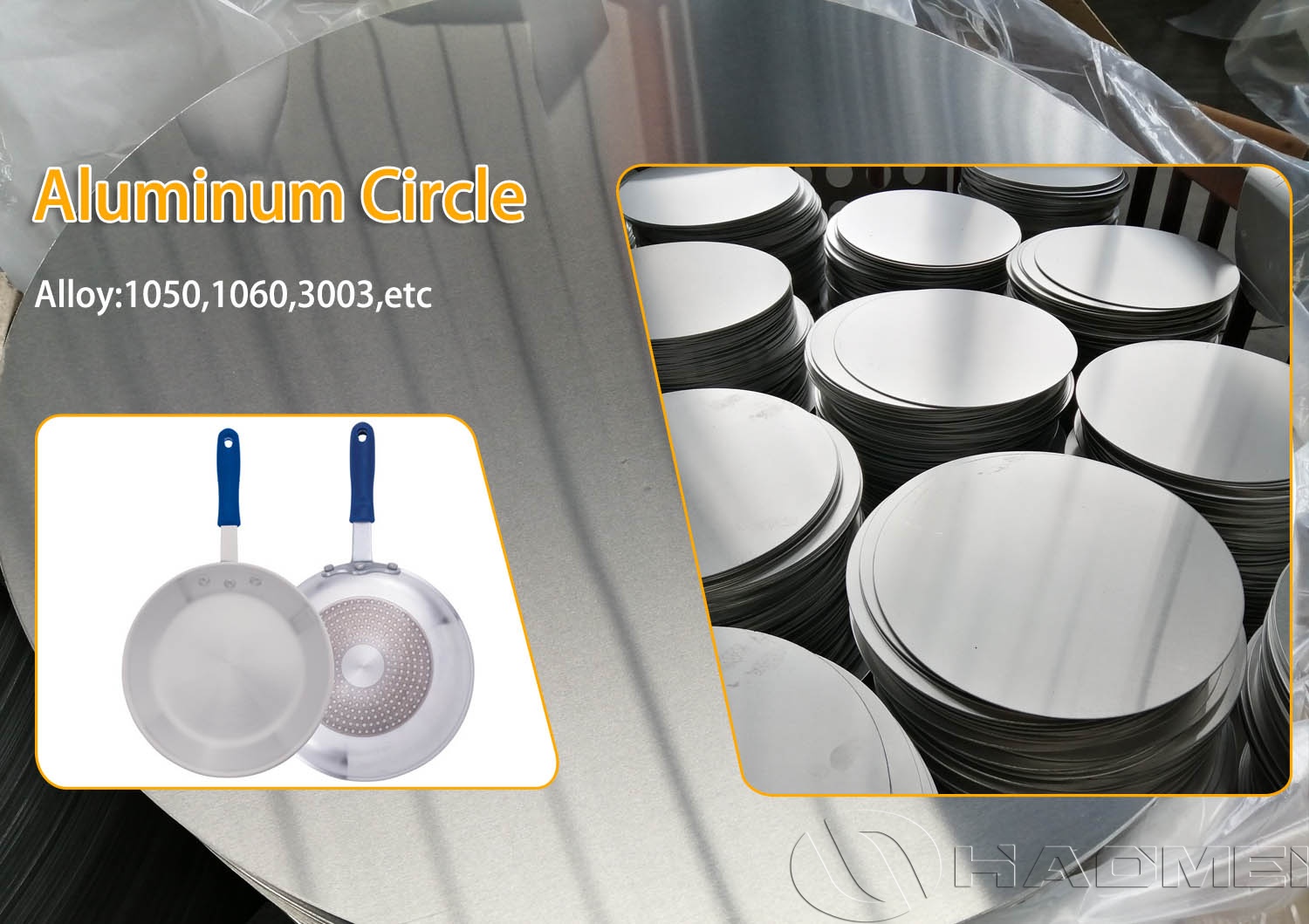
For non-stick frying pans, the aluminum circle is commonly deep drawn or pressed into shape before surface preparation and coating. For stockpots and cooking vessels, larger discs can be deep drawn, spun, or formed in multiple stages. In induction-compatible cookware, the aluminum body may later receive a stainless steel induction plate or a bonded multi-layer base.
Our Aluminum Circles for Cookware are supplied for manufacturers producing both conventional and induction-ready cookware systems.
As a factory supplying international cookware manufacturers, we package aluminum circle discs according to product size, surface requirements, and destination conditions. Standard export packaging includes wooden pallets, moisture-resistant wrapping, edge protection, steel or plastic strapping, and clear product labels.
For polished or surface-sensitive aluminum discs, protective paper or film can be applied when requested. Each package can be identified by alloy, temper, thickness, diameter, batch number, quantity, and customer reference code to support warehouse traceability.
Direct factory supply gives cookware producers better control over technical specifications, production scheduling, quality communication, and packaging details. We work with customers from material confirmation through mass production, helping them match the large diameter aluminum circle to their forming equipment and cookware design.
Before order confirmation, we can evaluate required alloy, temper, disc diameter, thickness, surface condition, edge requirement, and packing method. For new cookware projects, sample testing is recommended to verify drawing performance under actual tooling and production conditions.
A large diameter aluminum circle for cookware must provide reliable performance throughout forming, finishing, and assembly. Material selection, O temper annealing, dimensional consistency, burr-controlled edges, and clean surfaces are all essential to stable cookware production.
As an aluminum circle manufacturer, we produce large aluminum discs for frying pans, woks, stockpots, pressure cooker components, and commercial cooking vessels. By manufacturing to defined technical requirements, we help cookware factories reduce forming variation, improve processing efficiency, and maintain consistent finished-product quality.

Office Address:
No.14 Waihuan Road, CBD, Zhengzhou, China
Contact Us
HAOMEI Aluminum offer an custom aluminum circle for you!
whatsapp: +86-18703635966
Email: sales@alummc.com
Email: alummc@hotmail.com
Request Free Sample & Quotation
Copyright © 2026 By HAOMEI Aluminum CO., LTD. All Rights Reserved. Sitemap
 +86-18703635966
 sales@alummc.com
 8618703635966
