
 No.14 Waihuan Road, CBD, Zhengzhou, China
 +86-18703635966

No.14 Waihuan Road, CBD, Zhengzhou, China
+86-18703635966
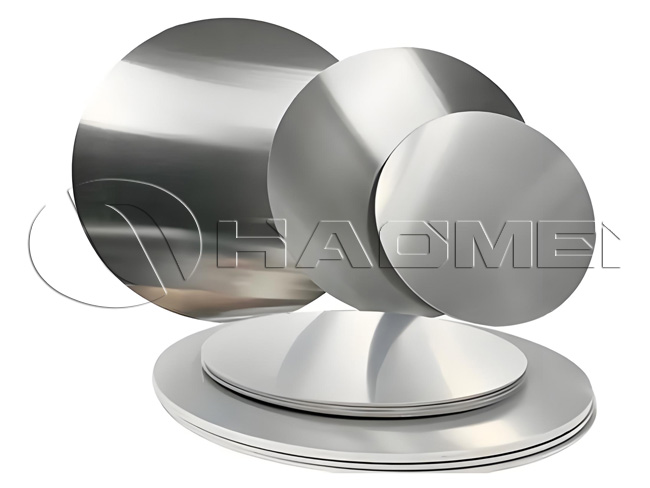
As a manufacturer of aluminum circles and discs for deep drawing, spinning, and stamping, we frequently receive the same question from cookware and lighting customers: whether to use 3105 aluminum circle or 1100 aluminum circle. Both are widely used for aluminum circle for cookware, reflectors, and general formed parts, but they differ in alloying approach, strength, forming stability, surface response, and cost-performance.
In production terms, the choice affects not only finished-part properties but also press performance, scrap rate, and surface quality after anodizing or coating. This article explains the difference between 3105 and 1100 aluminum circles from a factory perspective, covering material features, specifications, manufacturing controls, and typical application fit.
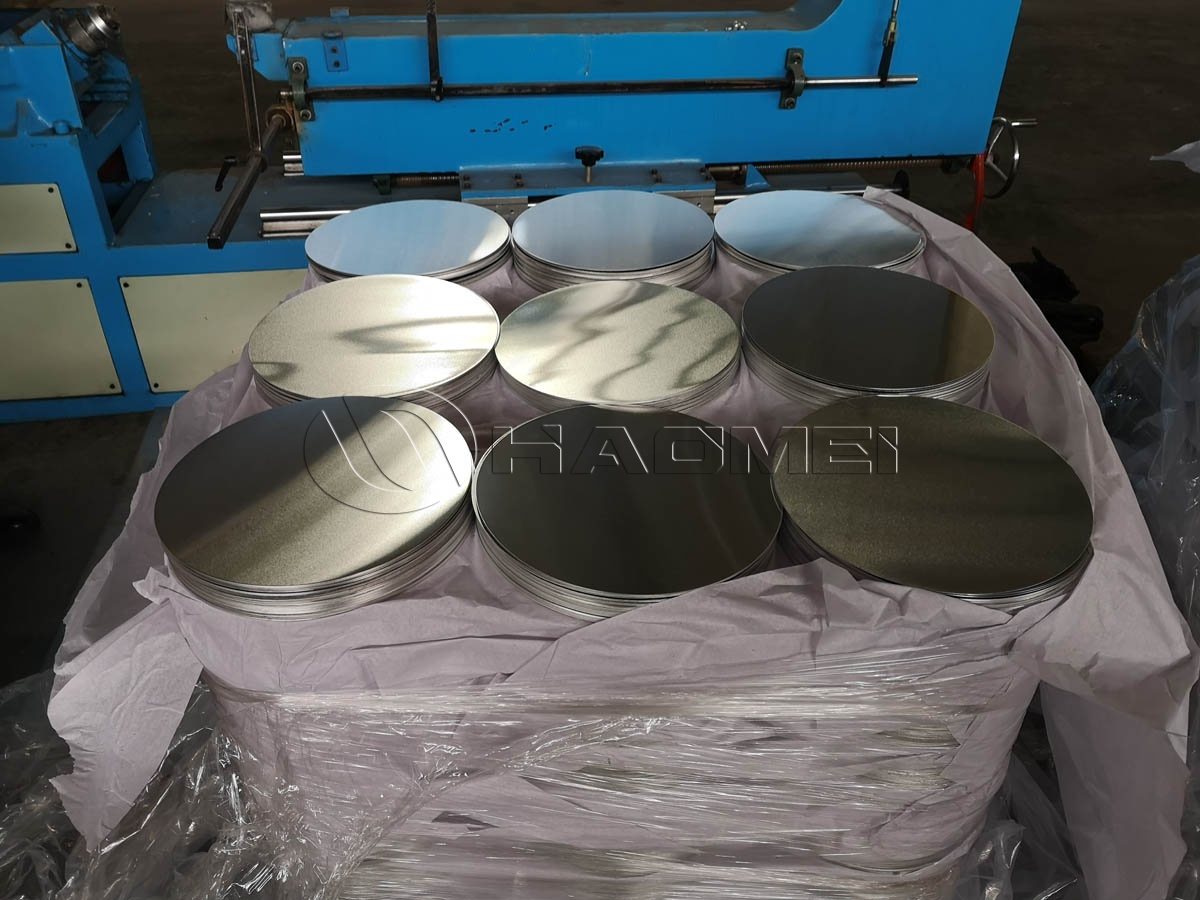
1100 is a commercially pure aluminum alloy, typically 99.0% minimum Al. It is selected for its excellent corrosion resistance, high thermal conductivity, and very good workability. For aluminum discs that require high ductility and clean surface, 1100 is a common baseline.
3105 is a 3000 series aluminum alloy primarily strengthened by manganese, with a small magnesium addition. Compared with 1100, it provides higher strength and better dent resistance while maintaining good formability. For many cookware bodies and lids, 3105 aluminum circle offers improved robustness without moving to much higher-strength alloys that may reduce forming margin.
When customers also evaluate adjacent 3000 series options, we typically reference our 3105 Aluminum Circle and, for broader selection context, the 3000 Series Aluminum circle range.
The following values are typical ranges used in industrial procurement. Final values depend on temper, thickness, and applicable standards. We provide mill test certificates (MTC) per lot.
| Item | 1100 Aluminum Circle | 3105 Aluminum Circle |
|---|---|---|
| Alloy series | 1xxx (commercially pure) | 3xxx (Al-Mn-Mg) |
| Typical Al content | >= 99.0% | Balance Al |
| Main alloying elements | Very low total alloy | Mn, Mg (plus minor Fe, Si) |
| Strength level (relative) | Lower | Medium |
| Formability (deep drawing/spinning) | Excellent | Very good |
| Surface for anodizing | Very good, bright potential | Good, may show more grain/tonal variation |
| Thermal conductivity (relative) | Higher | Slightly lower |
| Corrosion resistance | Excellent | Excellent |
| Weldability | Very good | Very good |
| Common tempers supplied for circles | O, H12, H14 (as specified) | O, H14, H16 (as specified) |
| Typical thickness range we supply | 0.3 to 6.0 mm | 0.3 to 6.0 mm |
| Typical diameter range we supply | 80 to 1200 mm | 80 to 1200 mm |
| Typical edge condition | Deburred, smooth edge | Deburred, smooth edge |
| Typical surface options | Mill finish, bright finish | Mill finish |
Note: For cookware deep drawing, O temper is often preferred for maximum ductility. For lids, nameplates, and parts requiring higher stiffness, H14 or similar is commonly selected.
The most direct difference between 3105 and 1100 aluminum circles is strength. 3105, with Mn and Mg, typically achieves higher yield and tensile strength in comparable tempers. In finished cookware, this improves resistance to deformation during handling, packing, and consumer use.
From a forming line perspective, higher strength can reduce the risk of wrinkling in certain operations but may increase forming load. For customers with older presses or multi-stage deep drawing, we evaluate tooling and draw ratio to confirm the safest alloy-temper combination.
1100 aluminum circle provides an excellent formability window, especially in O temper. It is forgiving in deep drawing and spinning, making it a strong candidate when:
The part has aggressive draw depth.
The tooling condition is variable.
The target is to minimize cracking risk.
3105 aluminum circle remains very formable, but the process window can be slightly narrower depending on temper and thickness. For many cookware shapes, this difference is not limiting when die design and lubrication are stable.
For anodized components, 1100 generally offers a more uniform appearance and can achieve higher brightness when paired with suitable surface preparation. 3105 can anodize well, but alloying elements may lead to more visible grain patterns or slight color differences across batches if surface preparation and anodizing parameters are not tightly controlled.
For reflective applications where visual performance is critical, we often recommend bright-finish material or specific polishing routes.
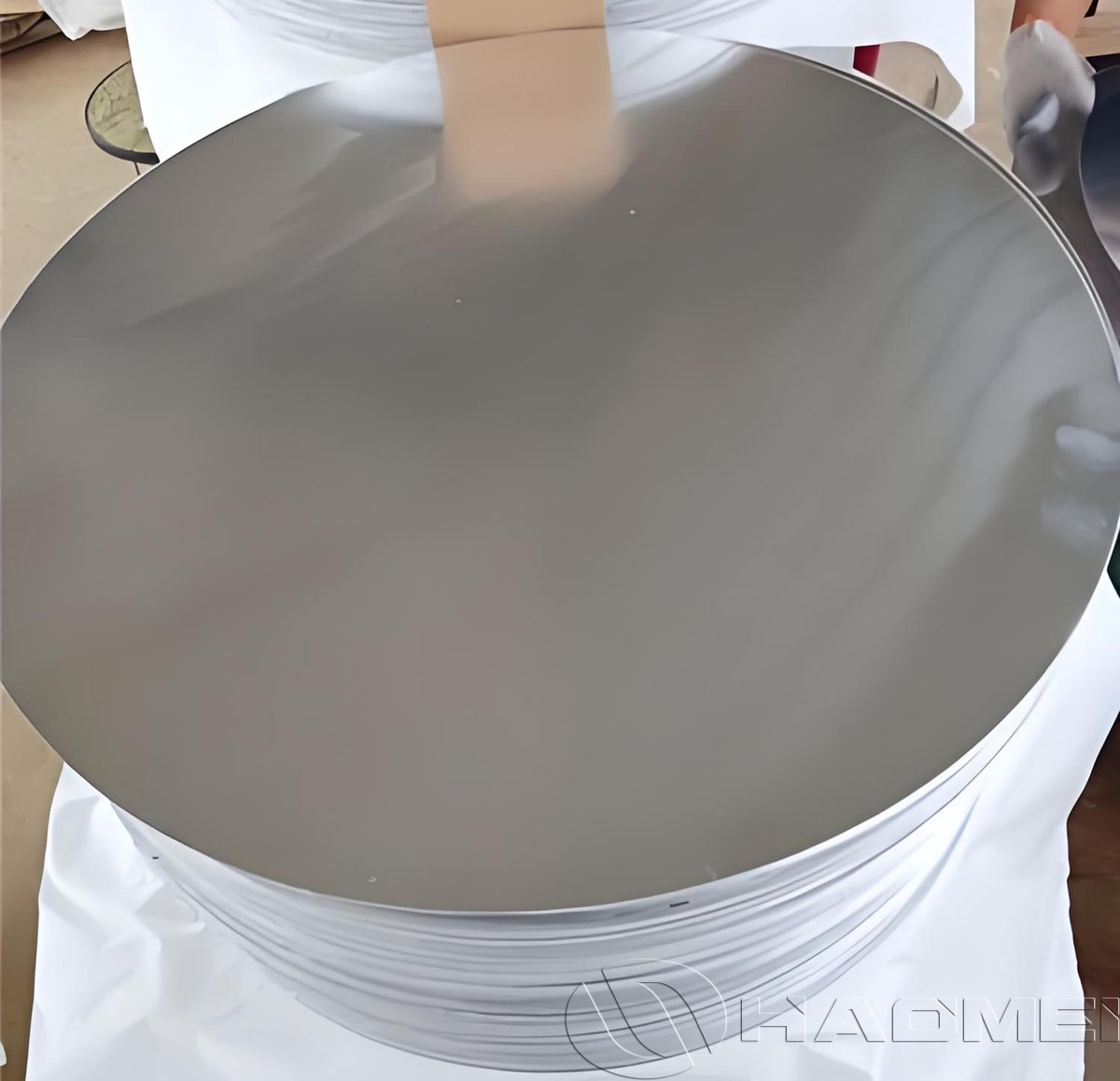
Because 1100 is closer to pure aluminum, it typically has higher thermal conductivity than 3105. For cookware bottoms where heat spreading is the priority, 1100 can provide an advantage. However, many cookware designs use multi-layer structures, coatings, or induction bases where the overall thermal behavior depends on the assembly.
Both 1100 and 3105 provide excellent corrosion resistance in typical cookware and household environments. Actual food-contact compliance depends on the full product system, including coatings, anodizing, and customer-side processing. We supply material according to agreed standards and can support documentation required by customers for their downstream compliance programs.
As a circle manufacturer, our objective is not only chemical conformity but also consistent forming performance. Our aluminum circles are produced from qualified hot-rolled or cold-rolled coils/sheets with controlled grain structure. We focus on key factors that influence deep drawing aluminum circle performance:
Coil selection and slitting discipline to ensure stable thickness and flatness.
Annealing control for O temper to achieve consistent elongation and low earing.
Circle blanking with controlled burr and edge smoothness.
Surface cleanliness management to reduce stamping marks and coating defects.
Alloy: 1100, 3105 (others on request)
Temper: O, H12, H14, H16 (per application)
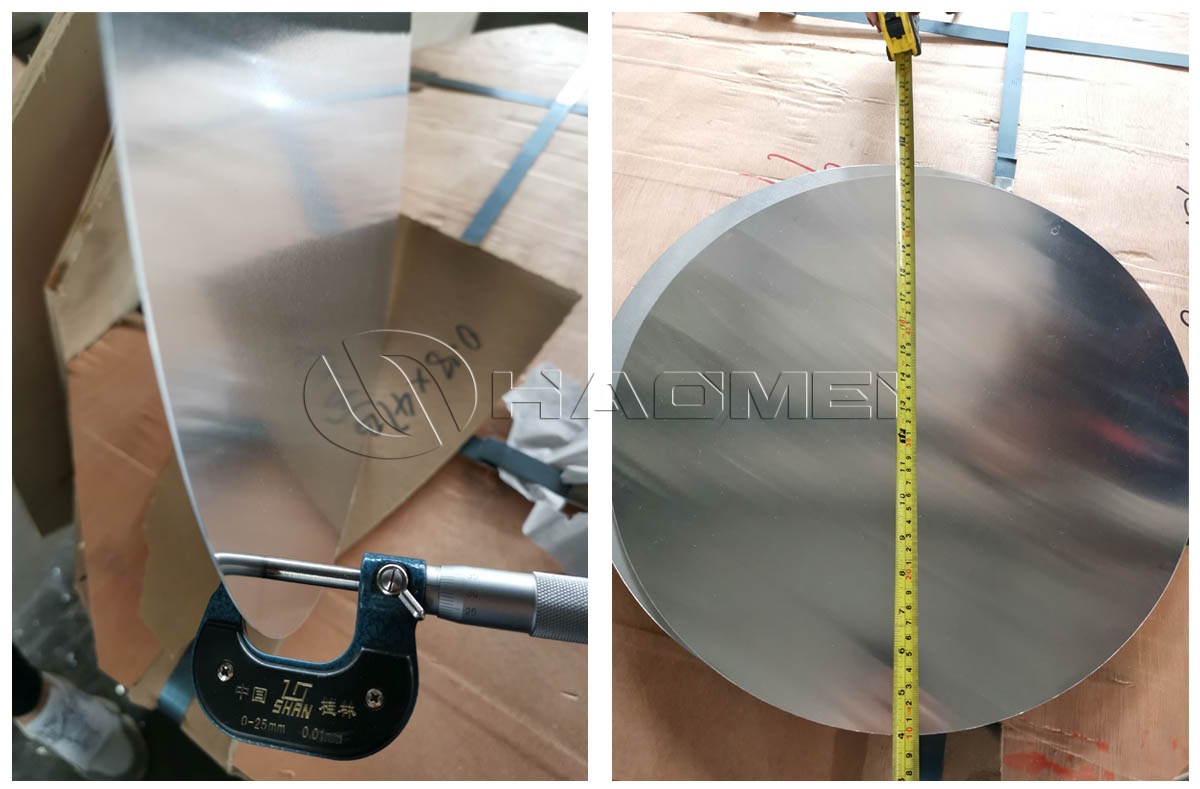
Thickness: 0.3 to 6.0 mm
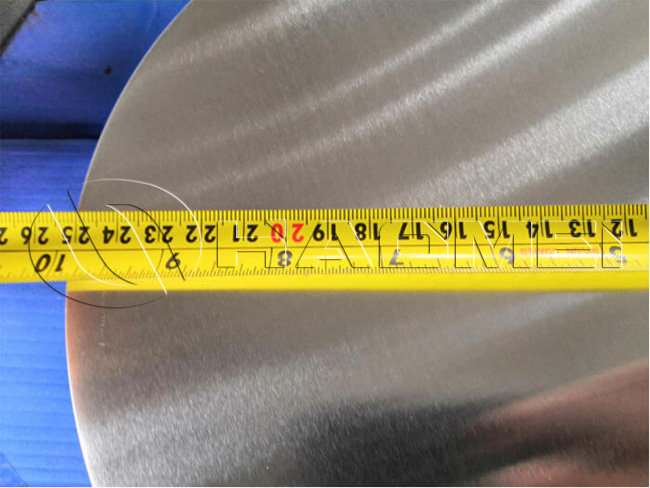
Diameter: 80 to 1200 mm
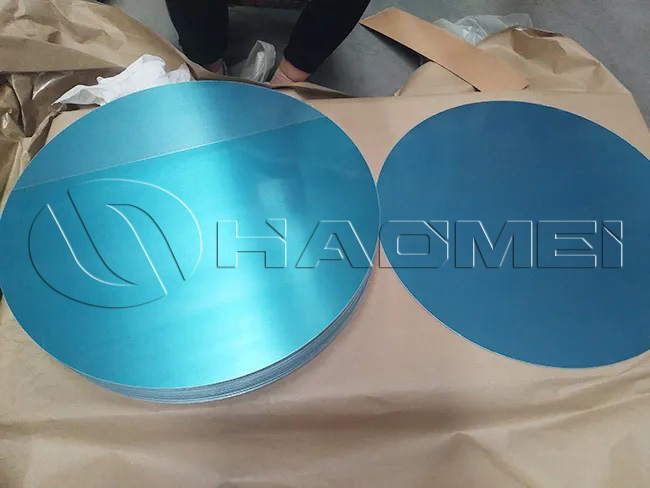
Packaging: export-grade wooden pallets or cases, interleaving paper/film as required
We routinely customize:
Diameter tolerance and thickness tolerance targets for automated press lines.
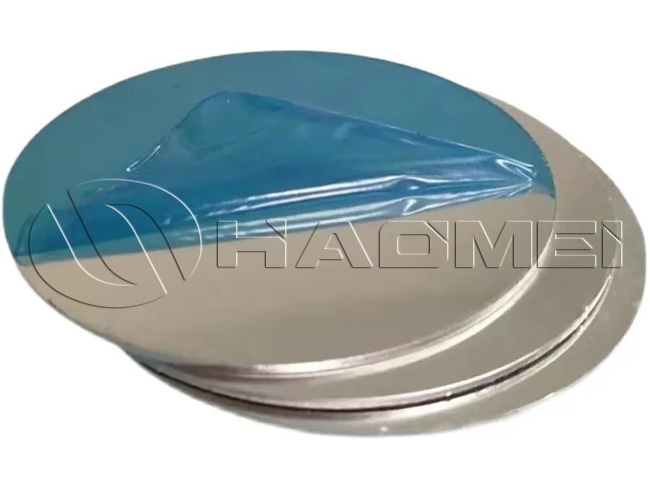
Surface protection film for scratch-sensitive parts.
Small-batch sampling for die trials before mass production.
Anodizing-focused surface requirements (Ra guidance, cleanliness, and defect controls).
To support B2B production stability, our QC system focuses on both measurable parameters and downstream forming results.
Chemical composition verification by spectrometer per heat.
Mechanical property testing per temper and thickness.
Dimensional inspection: thickness, diameter, roundness.
Flatness and surface inspection for dents, rolls marks, embedded particles.
Edge quality checks: burr height and edge uniformity.
Each lot is traceable to melt, coil, processing route, and inspection records. We issue MTC and inspection reports aligned with customer purchase requirements.
We manufacture to commonly requested international standards (as specified in the contract), and we align inspection items with the applicable standard clauses and customer drawings. If you require special acceptance criteria for cookware-grade circles, we can establish a control plan before mass supply.
Deep drawn cookware where maximum ductility is required
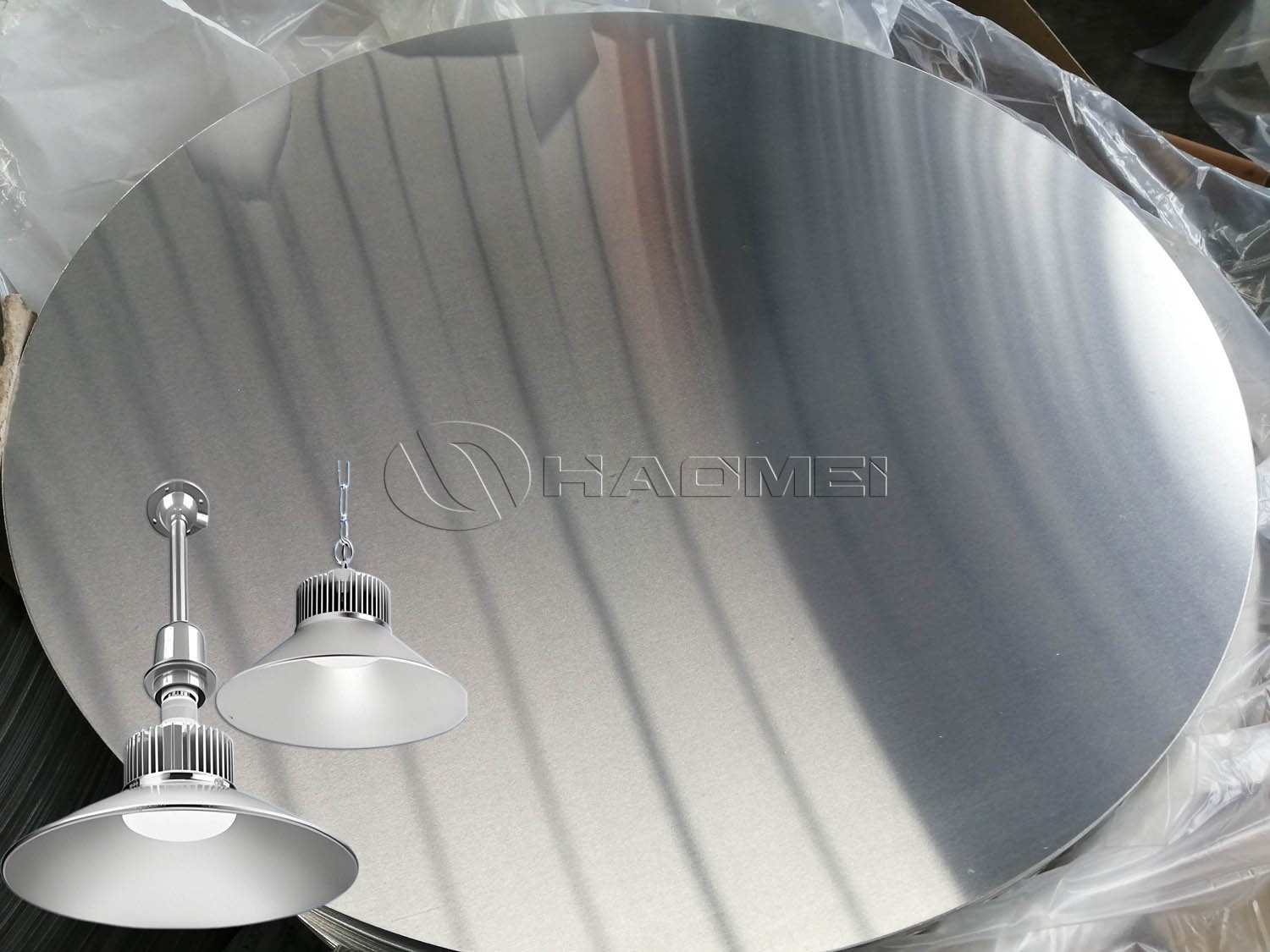
Reflectors and lighting components with emphasis on surface finish
Nameplates and anodized discs requiring uniform appearance
Heat-related parts where higher conductivity is beneficial
Cookware bodies, lids, and formed shells needing higher rigidity
General stamping and spinning where dent resistance matters
Painted or coated parts where medium strength supports handling
High-volume cookware lines balancing forming stability and mechanical robustness
In practice, many cookware customers qualify both alloys and select by SKU: 1100 for deep drawn items with higher draw ratios, and 3105 for shapes that benefit from added stiffness.
While this article focuses on 3105 vs 1100 aluminum circles, selection is often made across a broader set:
1050/1060 (1xxx): similar to 1100, often chosen for reflectors and conductivity-focused parts.
3003 (3xxx): a widely used cookware alloy, generally between 1100 and higher-strength 3xxx options in strength and formability.
3004/5052 (3xxx/5xxx): higher strength options for specific durability targets, sometimes with tighter forming constraints.
When customers request improved strength over 1100 but want to avoid a large step-up in forming load, 3105 is frequently a practical solution.
We recommend confirming the following before finalizing 1100 or 3105 aluminum circle:
Forming method: deep drawing, spinning, stamping, or multi-stage.
Part geometry: draw depth, corner radius, trim allowance.
Temper target: O for maximum ductility, H tempers for stiffness.
Surface route: anodizing, polishing, painting, non-stick coating.
Scrap drivers: earing, cracking, orange peel, surface lines, edge split.
For new projects, we can provide trial lots in both alloys with matched thickness and temper to compare press performance and finished-part appearance under your production conditions.
The difference between 3105 and 1100 aluminum circles can be summarized as: 1100 prioritizes ductility, surface uniformity, and conductivity, while 3105 provides higher strength and better stiffness with good forming performance. The best choice depends on the forming route and the finished product requirements, especially for cookware, lighting, and anodized components.
As a dedicated aluminum circle factory, we support stable long-term supply with controlled raw material sourcing, disciplined annealing and blanking, and lot-level traceability. We also provide technical support for alloy-temper selection, trial sampling, and quality alignment to help customers reduce scrap and stabilize mass production. We value long-term cooperation based on consistent quality and practical engineering communication.

Office Address:
No.14 Waihuan Road, CBD, Zhengzhou, China
Contact Us
HAOMEI Aluminum offer an custom aluminum circle for you!
whatsapp: +86-18703635966
Email: sales@alummc.com
Email: alummc@hotmail.com
Request Free Sample & Quotation
Copyright © 2026 By HAOMEI Aluminum CO., LTD. All Rights Reserved. Sitemap
 +86-18703635966
 sales@alummc.com
 8618703635966
