
 No.14 Waihuan Road, CBD, Zhengzhou, China
 +86-18703635966

No.14 Waihuan Road, CBD, Zhengzhou, China
+86-18703635966
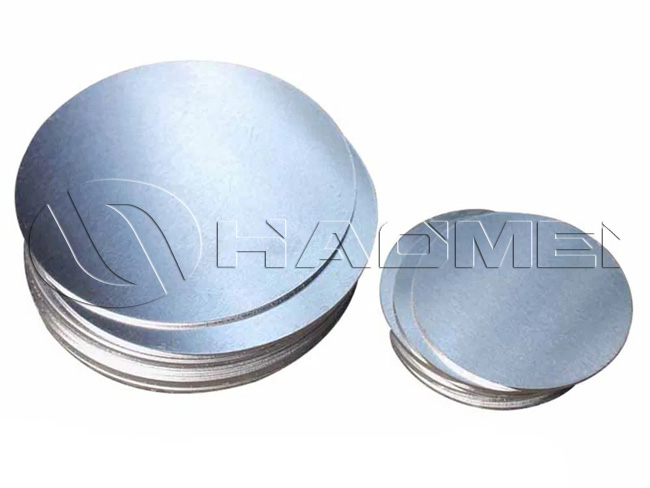
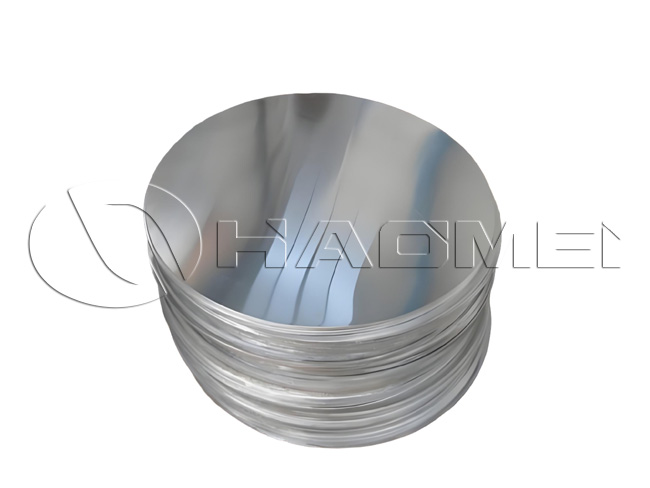
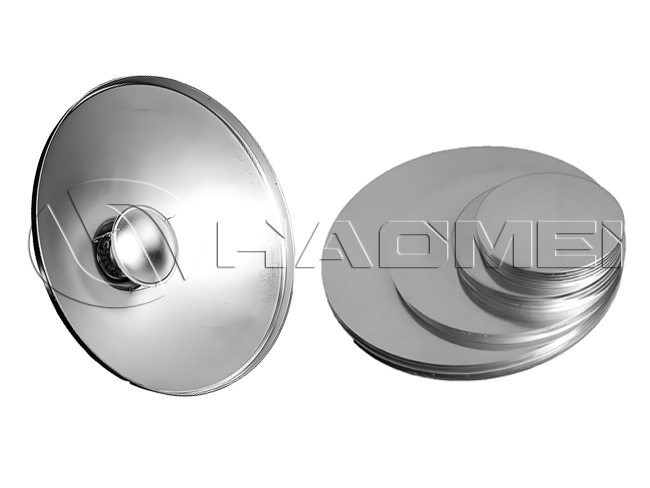
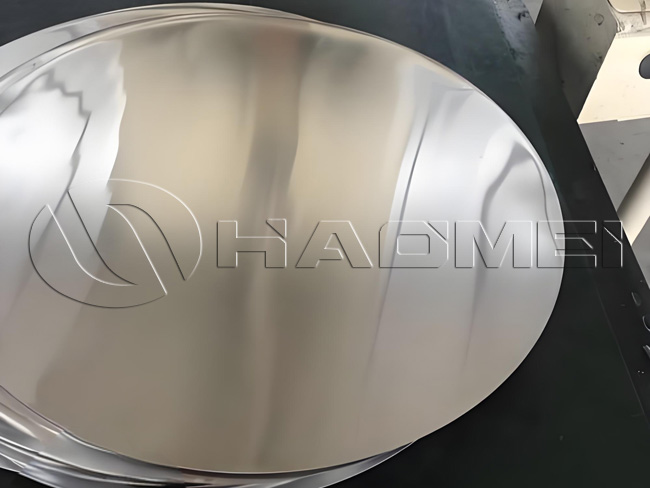
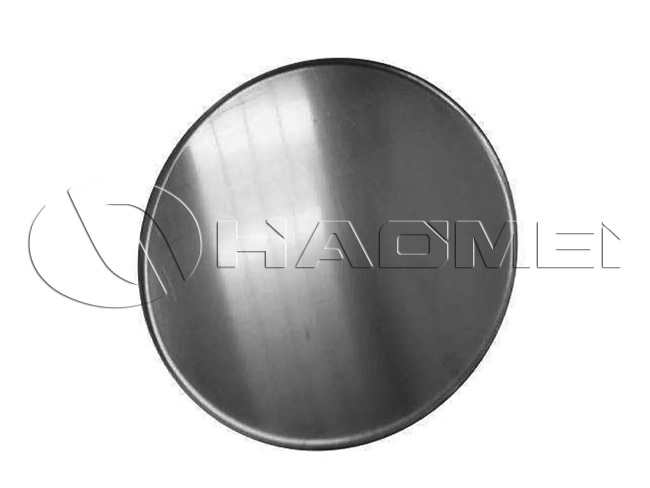
As a direct aluminum circle manufacturer, we produce 24 inch aluminum circle products for cookware manufacturing with controlled alloy selection, stable thickness tolerance, clean surface quality, and reliable forming performance. In cookware production, a 24 inch aluminum disc is typically selected for large pots, stockpots, pressure cooker components, commercial kitchen utensils, and deep drawn cookware parts that require consistent metal flow during spinning, stamping, or deep drawing.
Our production focuses on the practical requirements of cookware factories. These requirements include flatness, edge quality, earing control, surface cleanliness, and mechanical consistency from batch to batch. For customers manufacturing anodized cookware, non-stick cookware, hard anodized cookware, and polished kitchenware, the quality of the aluminum circle directly affects forming yield, appearance, and downstream coating performance.
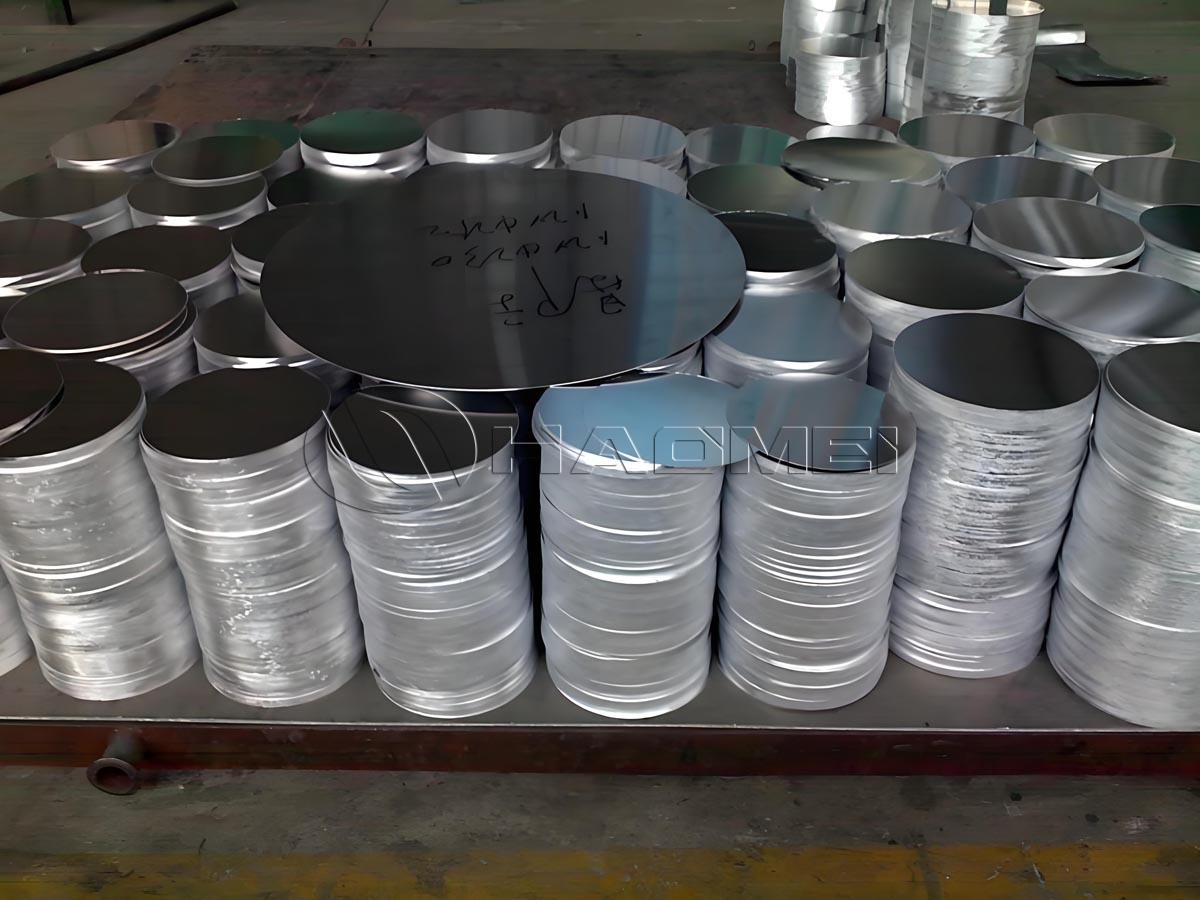
A 24 inch aluminum circle, equivalent to approximately 609.6 mm in diameter, is a common large-size blank for cookware manufacturing. Compared with smaller aluminum discs, this size provides more design flexibility for producing wide-body cookware items or components requiring a larger draw ratio.
In our factory production practice, customers usually choose a 24 inch aluminum circle for the following applications:
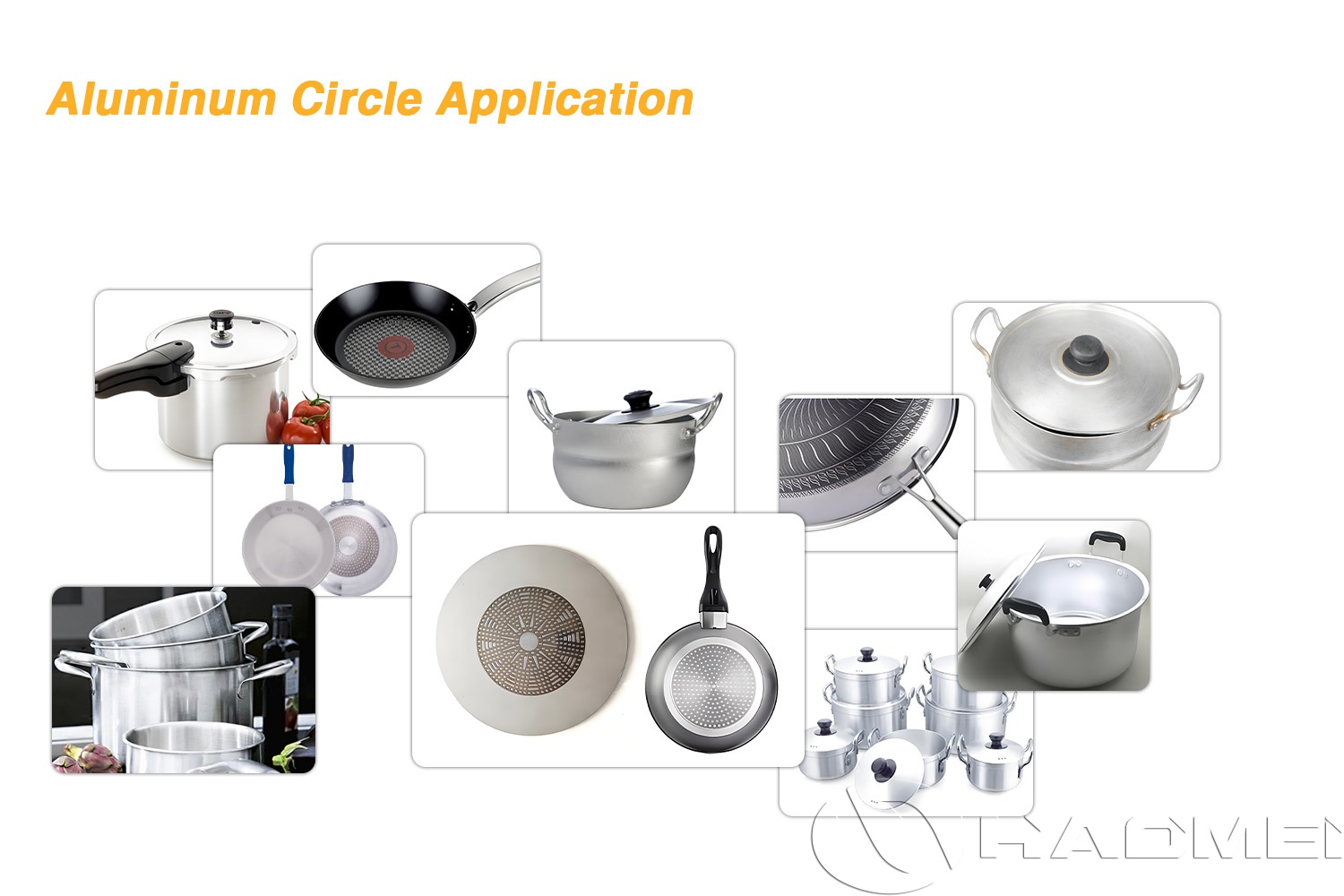
Large cooking pots and stockpots
Pressure cooker bodies and lids
Deep drawn kitchen containers
Spun cookware shells
Commercial cookware bases
Multi-layer cookware substrate components
For these applications, the aluminum circle must maintain uniform thickness and a smooth edge after blanking. If the circle has burrs, waviness, oil contamination, or inconsistent mechanical properties, the risk of cracking, orange peel, wrinkling, or poor anodizing increases during processing.
As a cookware aluminum disc manufacturer, we mainly supply 1000 series and 3000 series materials according to forming method and end-use requirements.
1000 series alloys such as 1050, 1060, 1070, and 1100 aluminum circle are widely used in cookware because of their high aluminum purity, excellent ductility, and good thermal conductivity. These alloys are especially suitable for deep drawing and spinning operations.
Among them, 1100 aluminum circle is a standard option for many cookware plants because it combines good formability with stable processing behavior.
3003 aluminum circle is commonly used where somewhat higher strength is required while maintaining good formability. In cookware manufacturing, 3003 aluminum disc may be selected for certain stamped or spun parts, especially when the design requires better structural rigidity than pure aluminum grades.
The table below summarizes the common supply range for our 24 inch aluminum circle for cookware manufacturing.
| Item | Specification |
|---|---|
| Product | 24 inch aluminum circle / aluminum disc |
| Diameter | 609.6 mm |
| Available alloys | 1050, 1060, 1070, 1100, 3003 |
| Typical tempers | O, H12, H14, H24 |
| Thickness range | 0.5 mm - 6.0 mm |
| Standard thickness tolerance | According to order specification and applicable production standard |
| Diameter tolerance | Typically controlled according to customer drawing and application |
| Surface finish | Mill finish, clean surface, no heavy oil, no obvious scratches |
| Edge condition | Sheared or blanked edge, low burr |
| Forming process suitability | Deep drawing, spinning, stamping, pressing |
| Typical cookware uses | Pots, pans, pressure cooker parts, lids, kitchen containers |
| Packaging | Export wooden pallets, interleaving paper, moisture protection |
For cookware customers, the final specification is determined not only by diameter and thickness, but also by alloy-temper combination and the intended forming route. A deep drawn stockpot body and a spun cookware lid may require different material softness and elongation.
We manufacture aluminum circle for cookware from qualified coil or sheet stock under controlled process conditions. The process route is selected based on customer requirements for surface finish, yield, and forming behavior.
We begin with aluminum coil or sheet produced to controlled chemical composition and mechanical properties. For cookware applications, cleanliness and grain structure are important because they influence deep drawing performance and anodizing uniformity.
The incoming coil is slit to suitable width if required. Material condition is checked before blanking to confirm thickness, temper, and surface status.
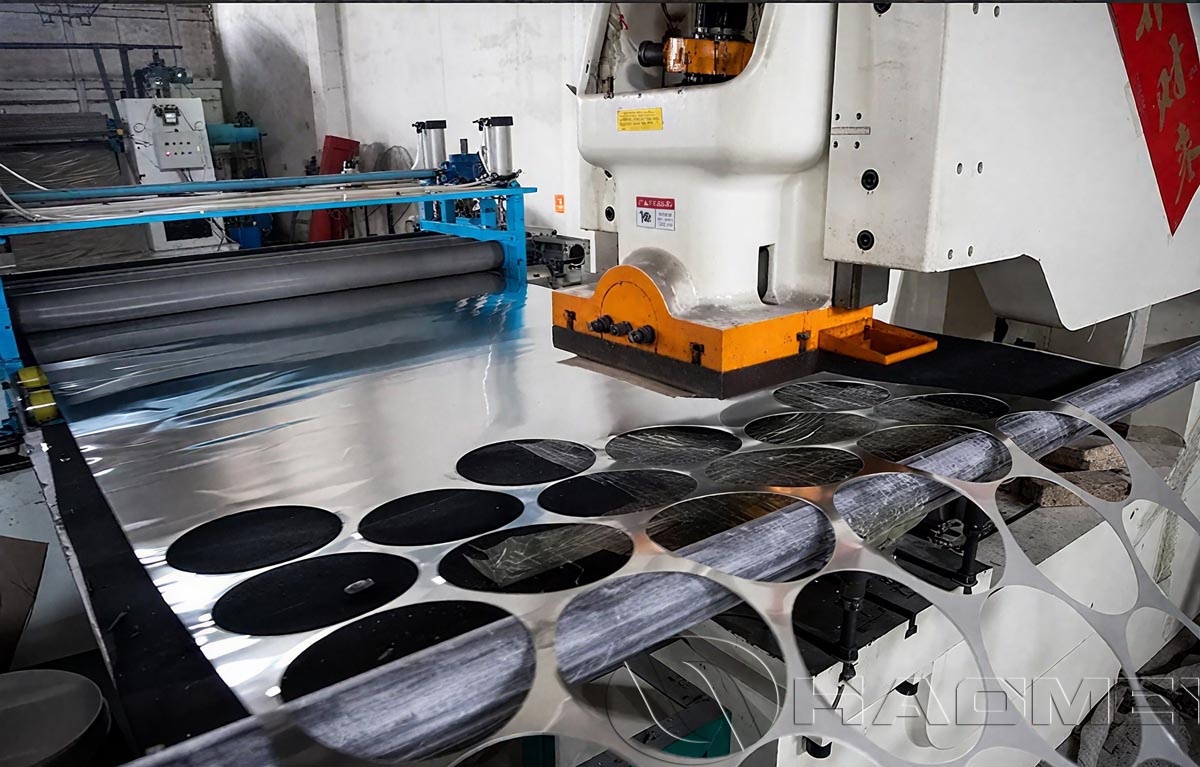
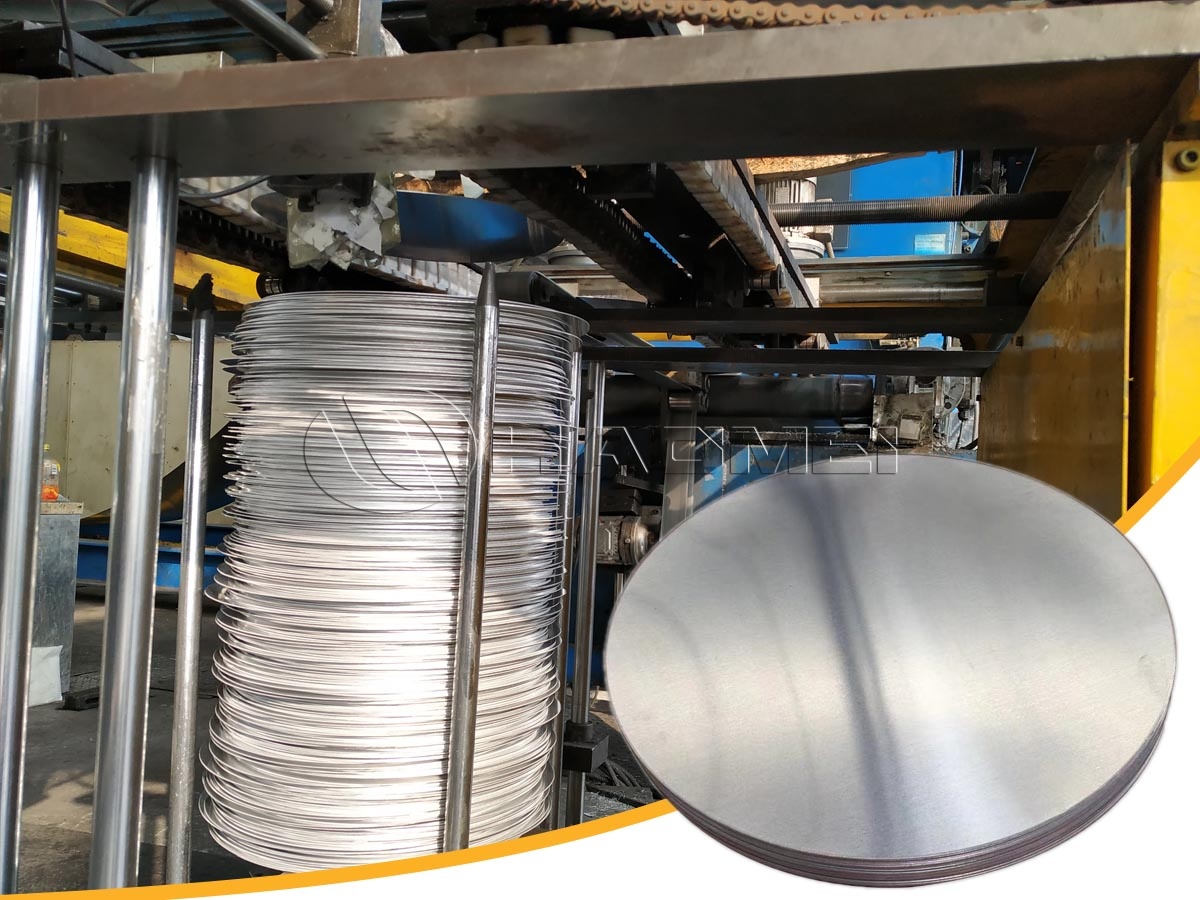
The aluminum disc is produced by precision blanking equipment. This stage determines diameter accuracy, edge quality, and shape consistency. For a 24 inch aluminum circle, stable blanking control is especially important because larger discs are more sensitive to flatness deviation and edge defects.
For O temper or deep drawing applications, annealing is controlled to achieve the required ductility. This is a critical step for cookware aluminum disc production. Proper annealing helps reduce cracking and excessive earing during drawing.
Each batch is checked for scratches, roll marks, oil residue, and visual contamination. Customers using non-stick coating or anodizing generally request a cleaner cosmetic standard, and we organize inspection accordingly.
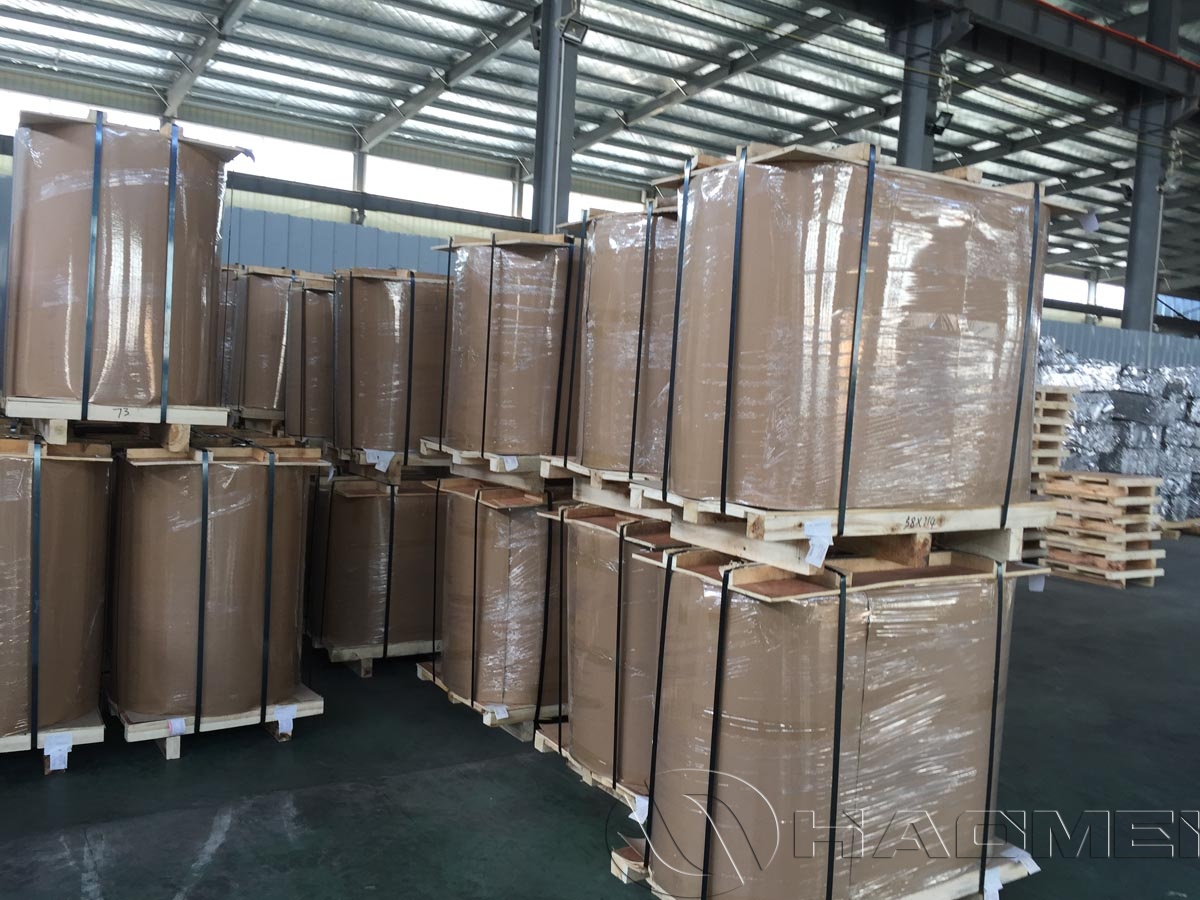
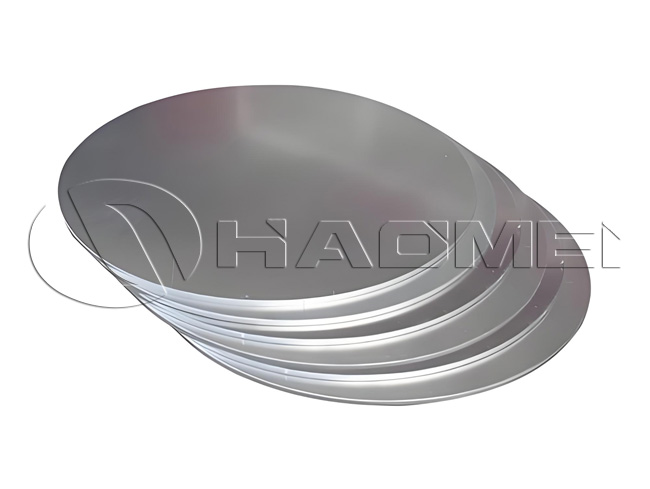
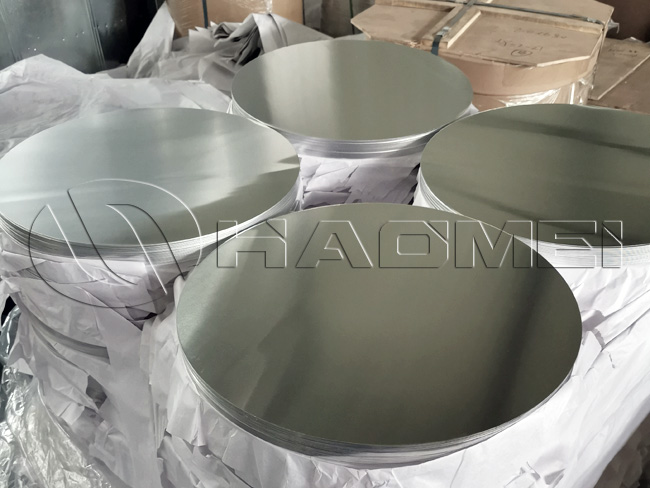
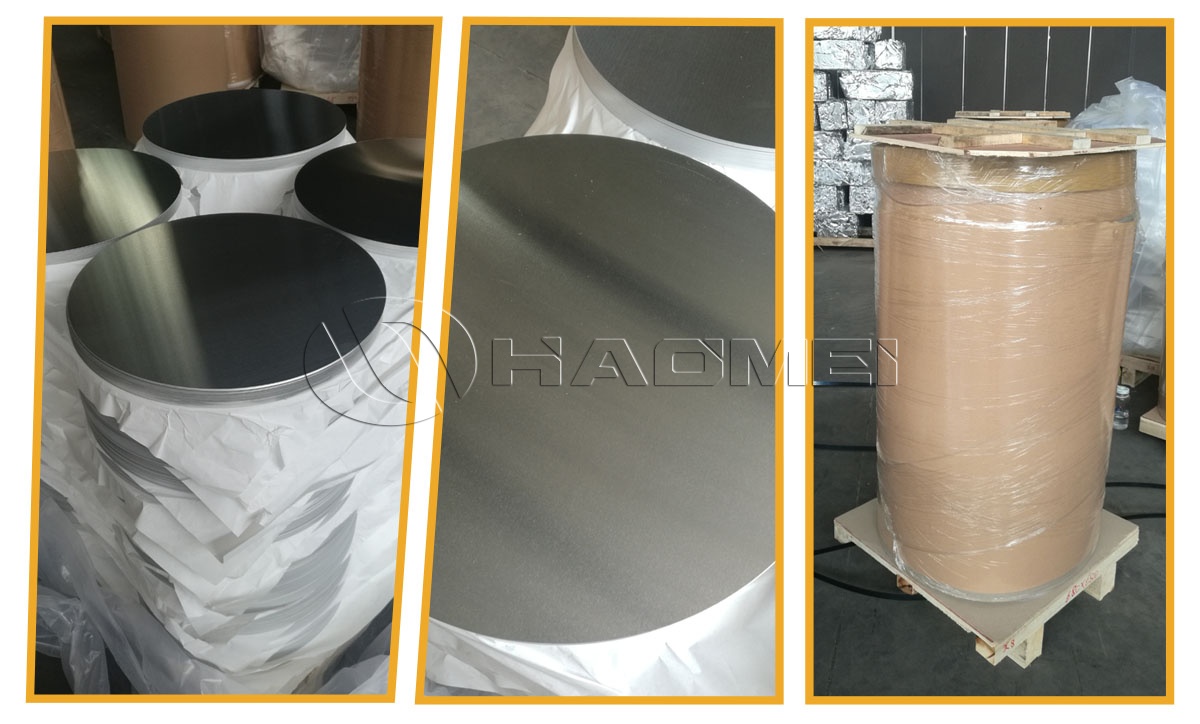
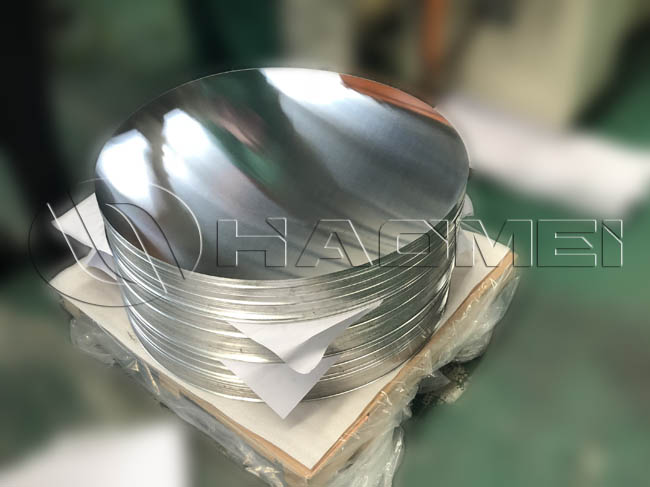
Finished aluminum circles are stacked with protective separation materials and packed on pallets for export shipment.
When supplying a 24 inch aluminum circle for cookware manufacturing, we focus on several quality points that directly affect customer production.
Deep drawing aluminum circle material must have stable elongation and uniform grain distribution. If the material varies from batch to batch, forming parameters become difficult to control and scrap rates increase.
Earing during deep drawing leads to trimming loss and reduced productivity. Through alloy selection, rolling control, and annealing management, we help customers reduce earing in formed cookware parts.
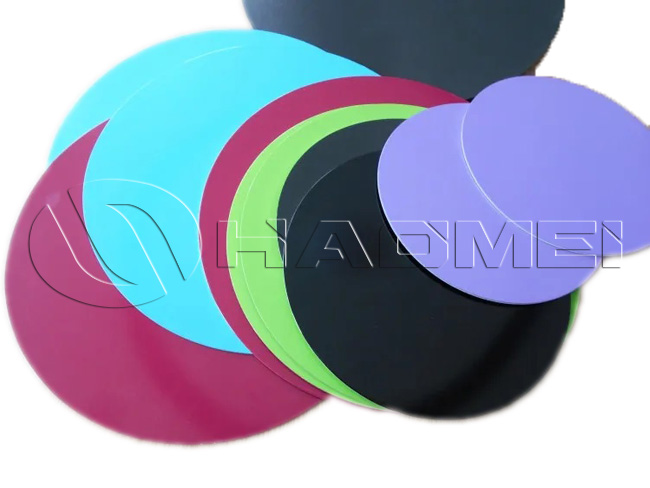
Cookware surfaces may be polished, coated, anodized, or laminated. Therefore, the initial aluminum disc should have a clean and uniform surface free from severe defects.
Thickness consistency is necessary for heat distribution, forming accuracy, and finished product weight control. For large cookware bodies, uneven thickness may cause deformation or inconsistent mechanical response during pressing.
Poor flatness affects feeding and centering during stamping or spinning. Excessive burr can damage tools or create safety issues in subsequent operations. Our manufacturing process is designed to keep these factors within practical control limits.
As a factory, we normally recommend specifications based on the customer's end product and processing method rather than offering a single universal grade.
For deep drawn cookware with high ductility requirements, 1050, 1060, or 1100 aluminum circle in O temper is commonly suitable.
For general cookware stamping and spinning, 1100 aluminum disc is often selected because it offers a balanced combination of formability and process stability.
For cookware parts needing somewhat higher strength, 3003 aluminum circle may be considered.
For anodized cookware, both alloy cleanliness and surface consistency should be confirmed before mass production.
For non-stick cookware, substrate flatness and surface condition are important for downstream coating adhesion and product appearance.
To avoid specification mismatch, cookware manufacturers usually confirm the following points with us before order production:
Exact diameter tolerance requirement
Thickness and allowable variation
Alloy and temper
Intended process, such as deep drawing, spinning, or stamping
Surface quality standard
Whether anodizing or non-stick coating will follow
Packaging method and pallet size
Trial order or mass production quantity
In factory cooperation, these details are more important than nominal size alone. Two orders may both be described as 24 inch aluminum circle, but the actual production requirements can differ significantly depending on the cookware design.
We supply aluminum circle discs for cookware manufacturing to customers who need repeatable industrial quality rather than generic commodity material. Our internal control emphasizes practical manufacturing results: smooth forming, low scrap, clean appearance, and consistent batch performance.
For export customers, we provide specification confirmation before production, production tracking during processing, and standard packaging suitable for long-distance transport. We understand that cookware factories need material that runs efficiently on existing presses, drawing lines, and spinning equipment. Therefore, our focus is on process compatibility and stable supply.
A 24 inch aluminum circle for cookware manufacturing is not simply a large round blank. It is a process-sensitive semi-finished product that must match the forming method, alloy requirements, surface expectations, and quality standards of the final cookware item. As a direct aluminum circle manufacturer, we produce cookware aluminum discs with controlled alloy selection, temper management, dimensional accuracy, and surface quality for industrial production use.
If you are sourcing 24 inch aluminum circle, 1100 aluminum circle, or 3003 aluminum circle for cookware manufacturing, the most important step is to define the exact processing and quality requirements before volume production. This allows us to manufacture the aluminum disc to the technical condition that best supports your forming efficiency and finished cookware quality.

Office Address:
No.14 Waihuan Road, CBD, Zhengzhou, China
Contact Us
HAOMEI Aluminum offer an custom aluminum circle for you!
whatsapp: +86-18703635966
Email: sales@alummc.com
Email: alummc@hotmail.com
Request Free Sample & Quotation
Copyright © 2026 By HAOMEI Aluminum CO., LTD. All Rights Reserved. Sitemap
 +86-18703635966
 sales@alummc.com
 8618703635966
