
 No.14 Waihuan Road, CBD, Zhengzhou, China
 +86-18703635966

No.14 Waihuan Road, CBD, Zhengzhou, China
+86-18703635966
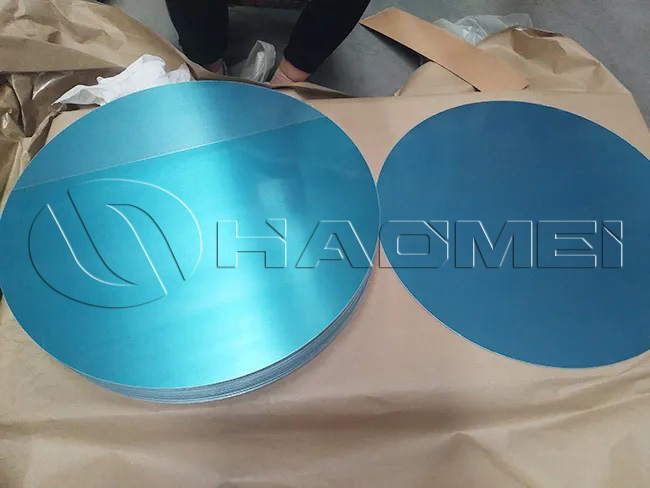
As an aluminum circle manufacturer, we produce wholesale 3003 aluminum discs for cookware factories that require stable forming performance, clean surfaces, and consistent dimensional accuracy. Our production is based on coil preparation, precision blanking, annealing, surface control, and final inspection. The purpose is to supply cookware aluminum discs that can be processed into pots, pans, lids, pressure cooker components, non-stick cookware substrates, and other formed kitchenware parts.
3003 aluminum alloy is widely used in cookware because it combines moderate strength, good corrosion resistance, and reliable deep drawing capability. Compared with pure aluminum grades, 3003 contains manganese as the main alloying element, which improves strength while retaining good workability. For cookware manufacturers, this balance is important because the material must withstand spinning, deep drawing, stretching, trimming, cleaning, and coating processes without cracking or unstable deformation.
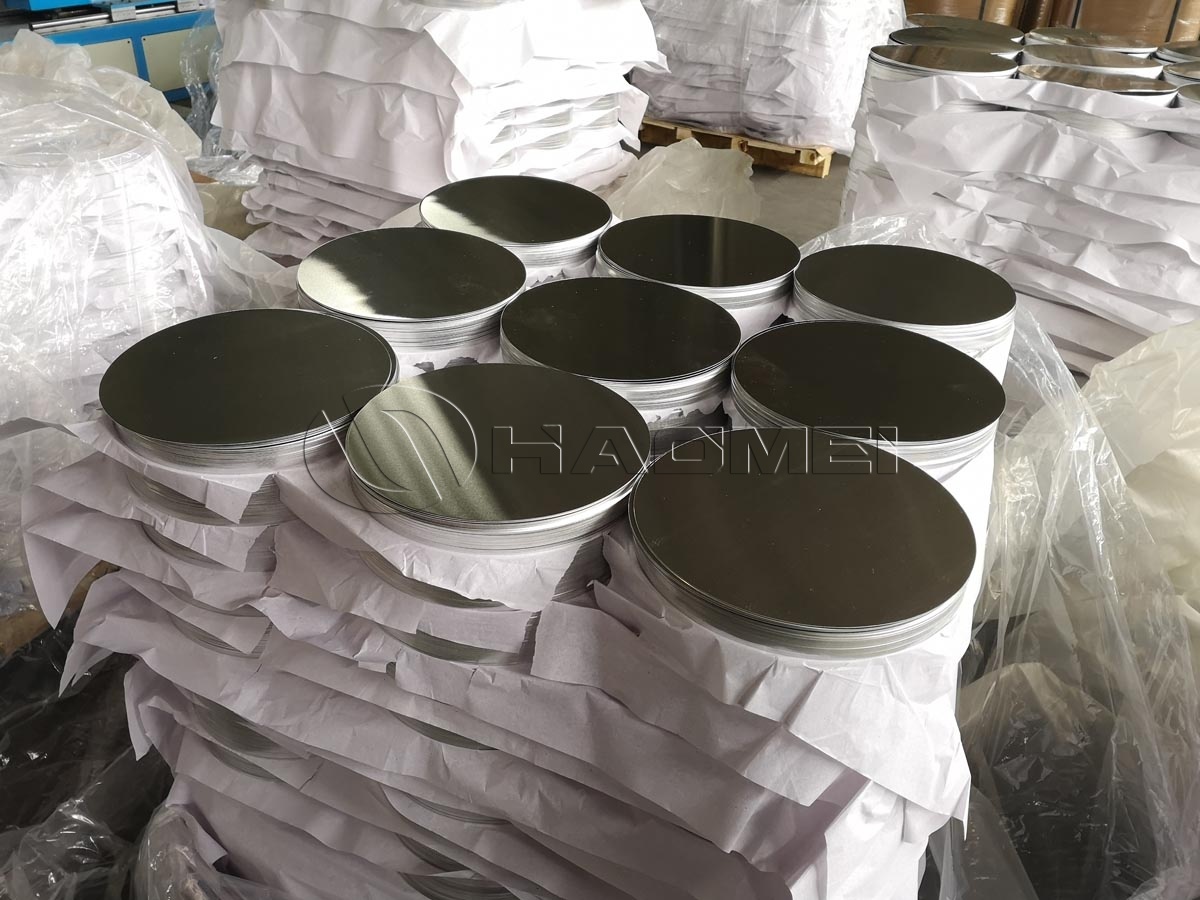
Cookware production places specific requirements on aluminum discs. The material must be soft enough for forming, but strong enough to support the final shape after processing. 3003 aluminum discs meet these requirements in many cookware applications, especially when supplied in suitable tempers such as O, H12, H14, or H16.
The alloy has good thermal conductivity, which helps cookware distribute heat efficiently. Although 3003 is not the highest conductivity aluminum grade, it offers a practical combination of heat transfer, strength, and process stability. In addition, the material has good resistance to atmospheric corrosion and moisture, which is beneficial during storage, transportation, and finished cookware service conditions.
From our factory experience, cookware customers often select 3003 aluminum circle products when they need better strength than 1050 or 1060 aluminum circles, while still maintaining good forming performance. This makes 3003 suitable for medium and deep drawn cookware bodies, coated pan substrates, and aluminum cookware blanks that require controlled surface quality.
For buyers comparing alloy options, our 3003 Aluminum Circle product line is manufactured for forming applications where alloy consistency, temper control, and surface cleanliness are important.
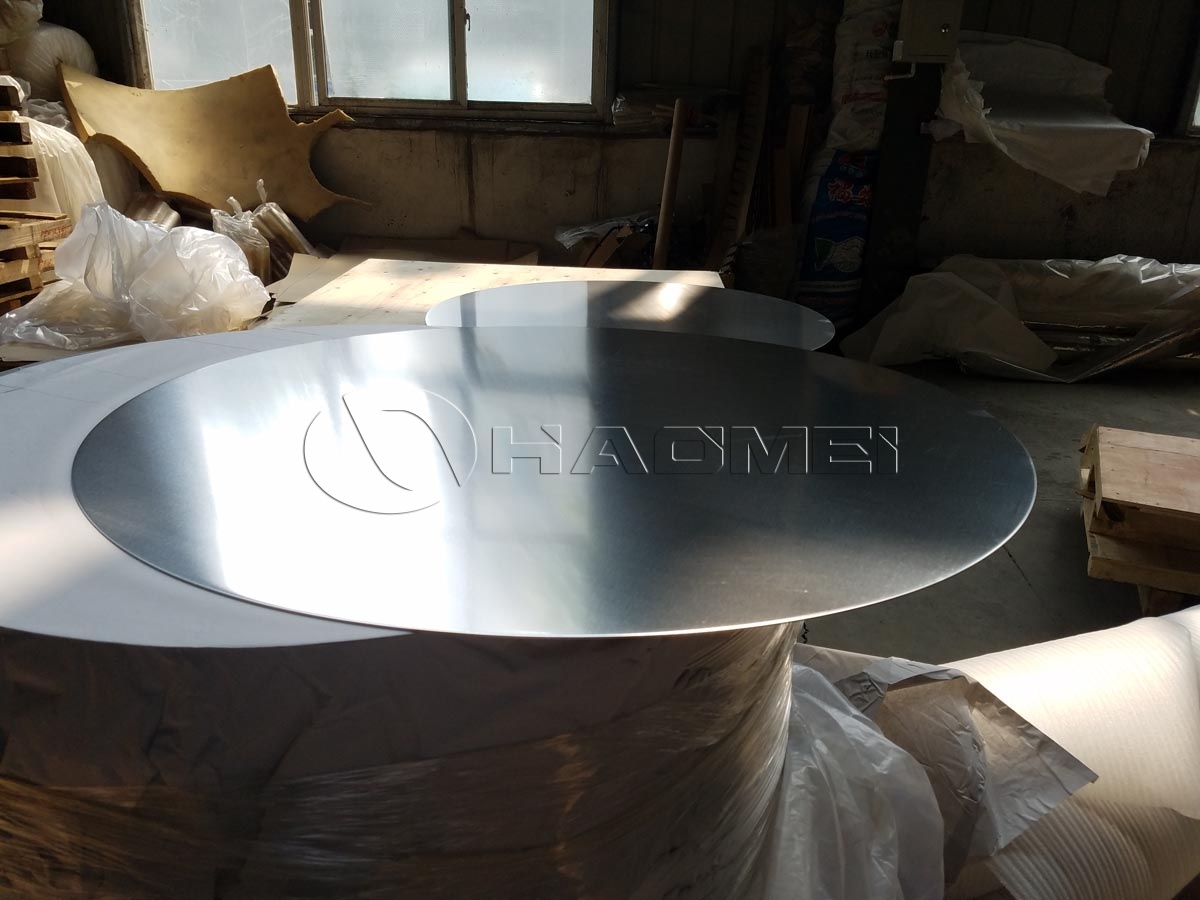
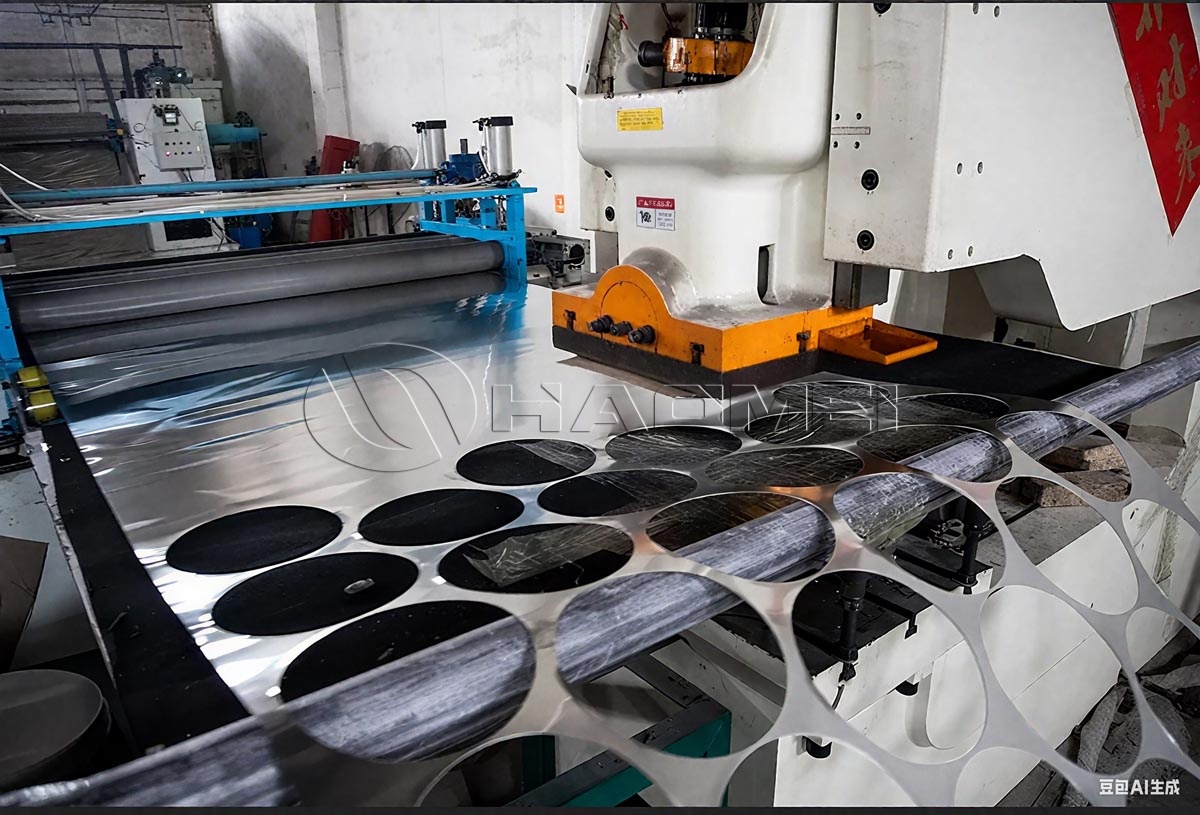
Our manufacturing process begins with aluminum coil selection. The chemical composition, mechanical properties, and surface condition of incoming coils are checked before production. After coil approval, the material is slit or fed into blanking equipment according to the required disc diameter. Precision blanking helps maintain roundness and reduces burr formation at the edge.
For cookware discs, edge condition is important because sharp burrs or uneven edges can affect subsequent forming and operator safety. We control the cutting clearance and tooling condition to achieve smooth edges suitable for cookware processing. When required, additional edge treatment can be arranged based on customer application.
Annealing is another key step. The temper of 3003 aluminum discs directly affects drawability, elongation, and springback. For deep drawing cookware, O temper is commonly used because it provides higher ductility. For shallower forming, spinning, or structural cookware components, semi-hard tempers such as H12 or H14 may be selected. We produce according to the temper specified in the purchase order and verify mechanical properties through inspection.
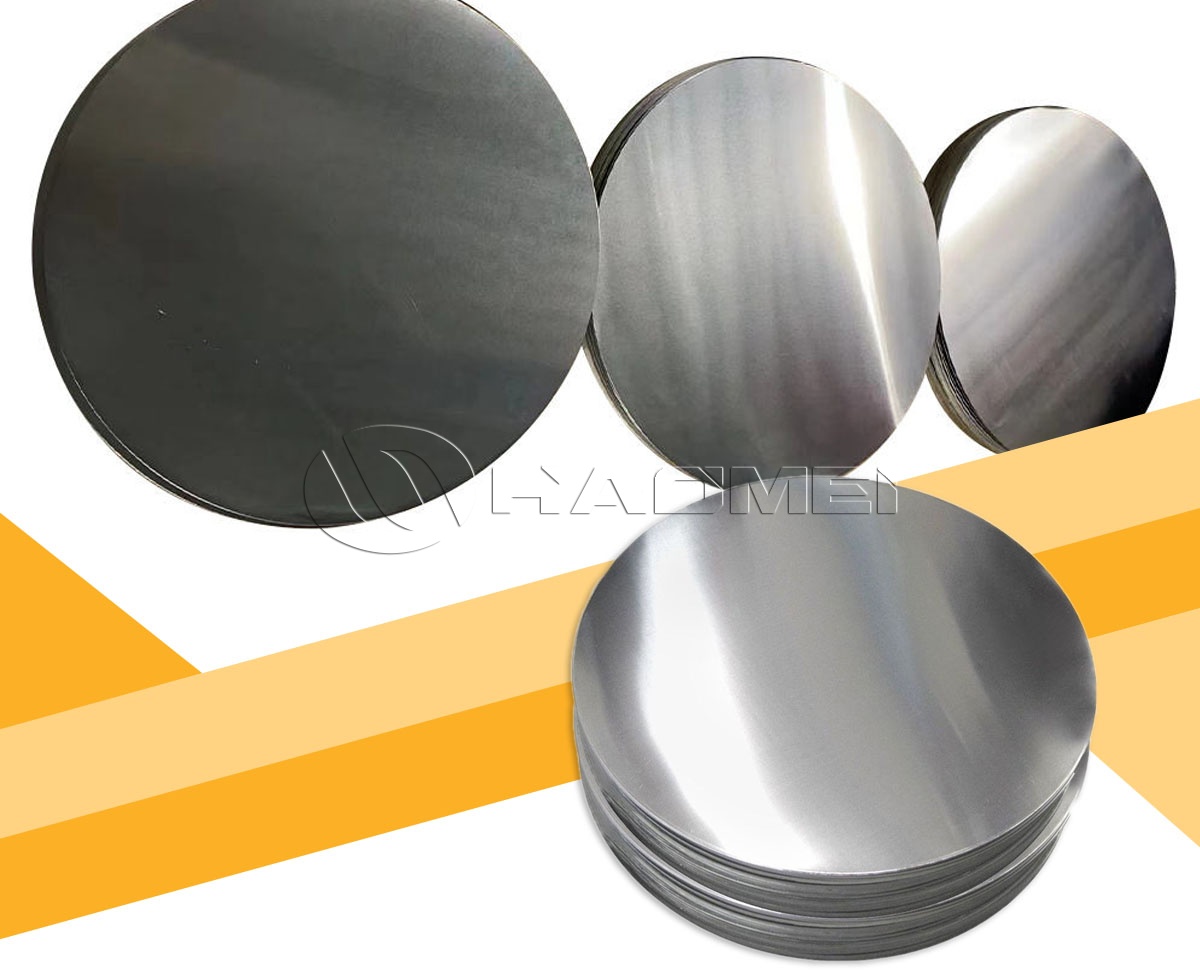
Surface protection is also controlled during production. The surface should be free from heavy scratches, oil stains, oxidation marks, black spots, and embedded foreign particles. A clean and uniform surface is especially important for cookware manufacturers that perform anodizing, polishing, or non-stick coating after forming.
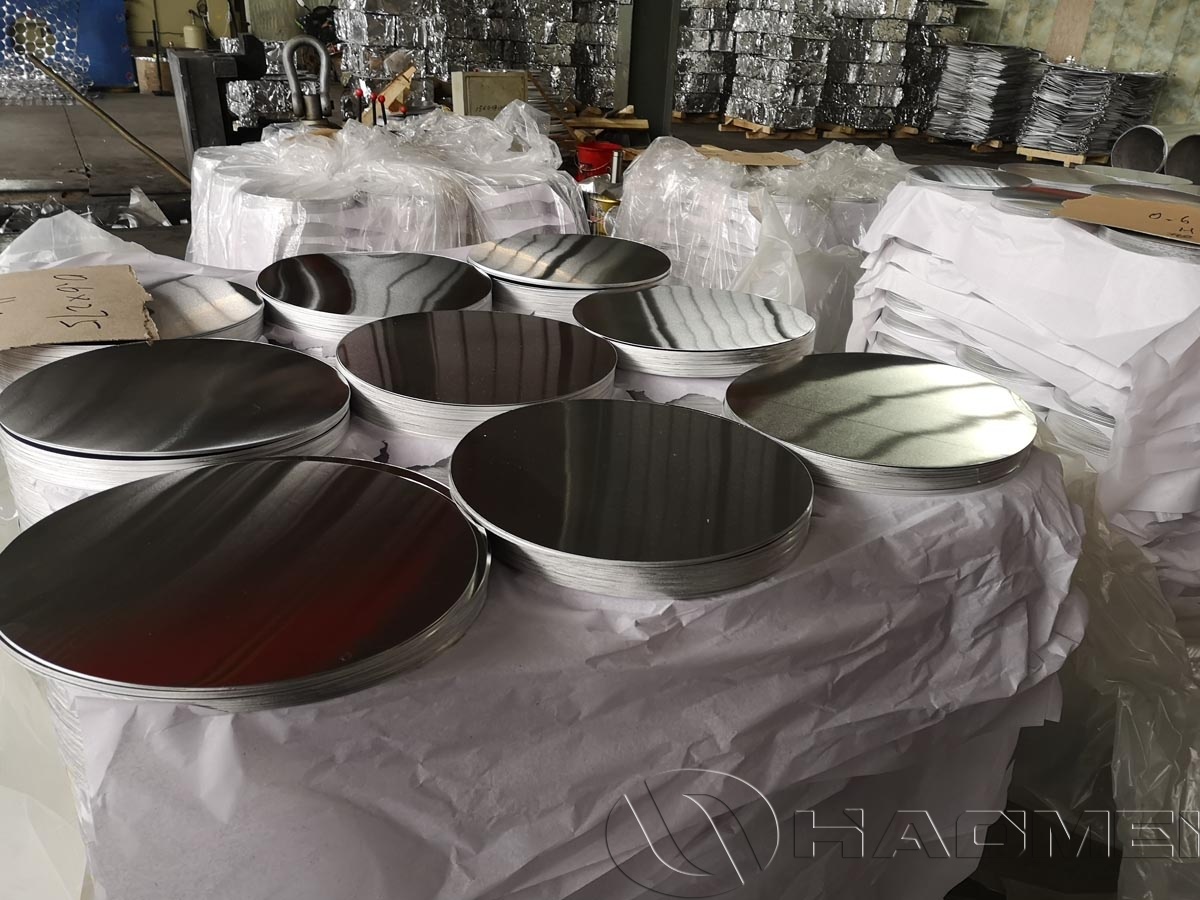
The following table shows common specifications for wholesale 3003 aluminum discs used in cookware manufacturing. Custom specifications can be produced after technical confirmation.
| Item | Typical Specification |
|---|---|
| Product name | 3003 aluminum disc, 3003 aluminum circle, cookware aluminum disc |
| Alloy | 3003 |
| Main element | Aluminum with manganese alloying element |
| Temper | O, H12, H14, H16, H18, as required |
| Thickness range | 0.4 mm to 6.0 mm |
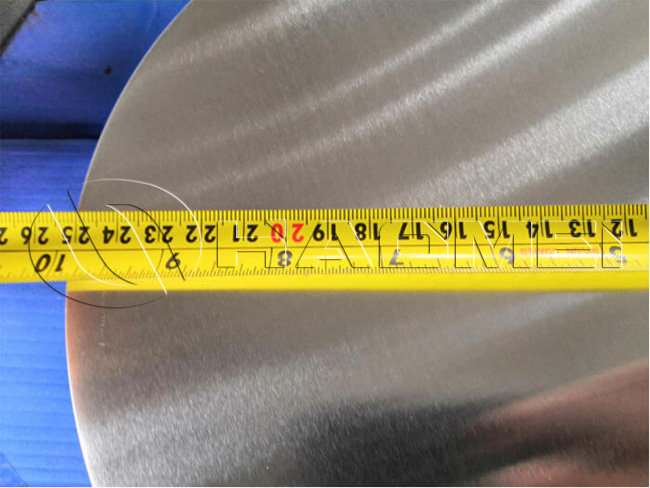
| Diameter range | 80 mm to 1200 mm |
| Common cookware thickness | 0.8 mm to 4.0 mm |
| Surface | Mill finish, clean surface, optional coated or protected surface |
| Edge quality | Smooth blanked edge, low burr, controlled roundness |
| Diameter tolerance | According to order requirement and production capability |
| Thickness tolerance | According to applicable standard or agreed specification |
| Processing method | Coil feeding, blanking, annealing, leveling, inspection, packing |
| Applications | Frying pans, saucepans, stock pots, pressure cookers, lids, cookware bases |
| Packing | Wooden pallets, moisture protection, paper interleaving if required |
| Supply form | Wholesale aluminum discs packed by pallet or according to contract |
Cookware aluminum discs are different from general industrial blanks because the surface is often visible or prepared for further finishing. Even when the final product will be coated, the aluminum substrate must be clean and stable. Defects such as deep scratches, roll marks, stains, severe orange peel, and surface contamination may affect polishing, coating adhesion, and final appearance.
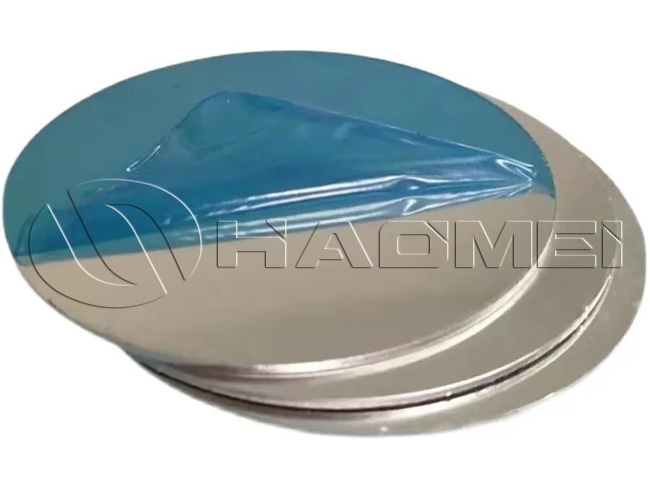
In our factory, surface control starts from coil inspection. During blanking and transfer, we use handling procedures intended to reduce friction marks and impact dents. For customers who require higher surface requirements, protective paper, film, or special packaging can be discussed. This is common for discs used in visible cookware surfaces or pre-treatment lines.
For non-stick cookware manufacturers, surface compatibility with cleaning, etching, blasting, and coating processes is important. We recommend that buyers provide forming method, coating process, and final cookware type before ordering. This allows our technical team to recommend a suitable temper and surface condition.
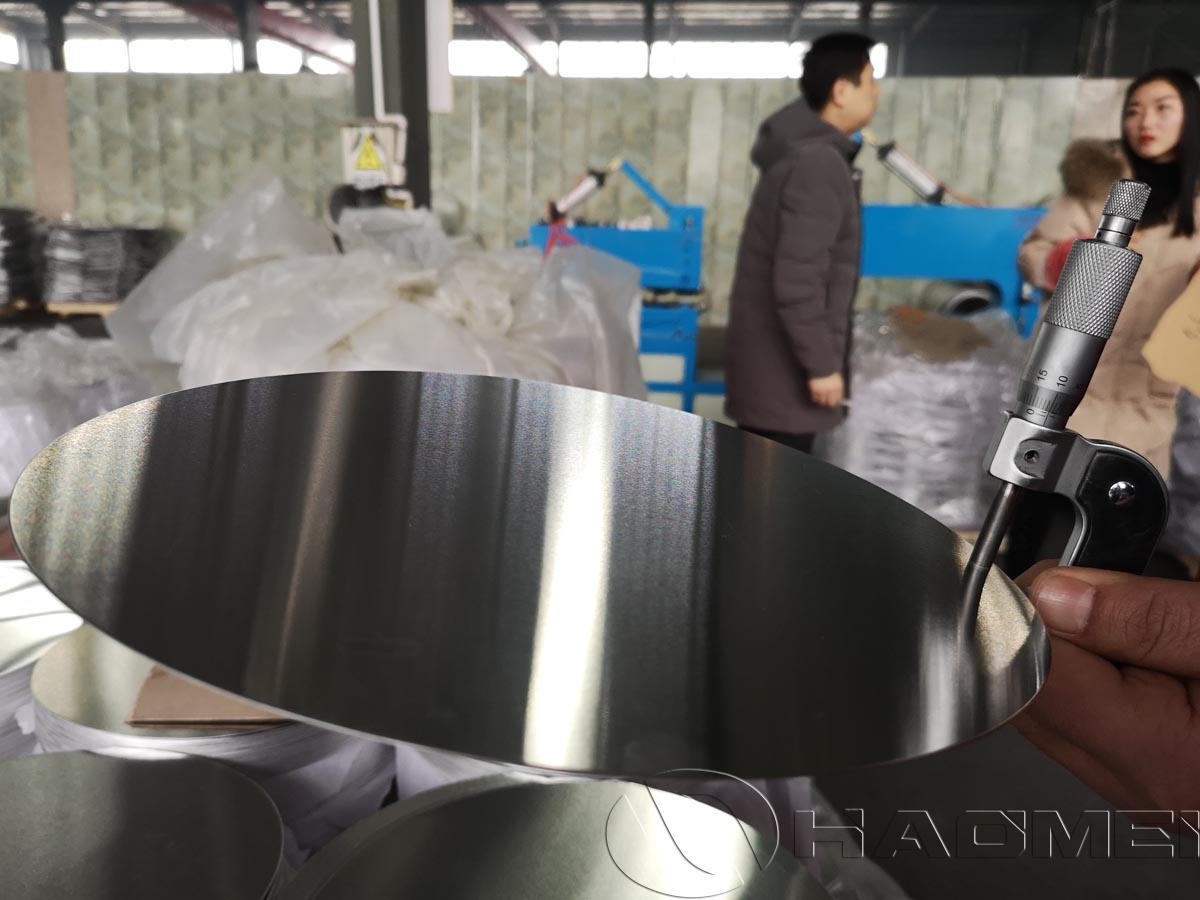
Temper selection is one of the most important decisions when purchasing wholesale 3003 aluminum discs for cookware. A suitable temper improves forming efficiency and reduces production loss.
O temper is usually selected for deep drawing cookware bodies. It provides better elongation and reduces cracking risk during severe deformation. H12 and H14 tempers are often used for parts that need moderate strength and limited forming. H16 and H18 are harder tempers and may be suitable for specific flat or shallow formed components, but they are not usually the first choice for deep drawing.
If the cookware design includes a large drawing ratio, sharp corners, or multiple forming steps, we generally suggest testing O temper first. If the product requires better rigidity after forming, the final cookware design, wall thickness, and heat treatment or coating process should be evaluated together.
As a manufacturer, we do not recommend choosing temper only by price. A lower material cost may lead to higher scrap rates if the temper is not compatible with the forming process. Correct material selection can improve production stability and reduce total manufacturing cost.
Dimensional consistency is essential for automatic cookware production lines. If disc diameter varies too much, feeding, centering, and forming accuracy can be affected. If thickness varies outside the required range, cookware weight, wall thickness, and forming pressure may become unstable.
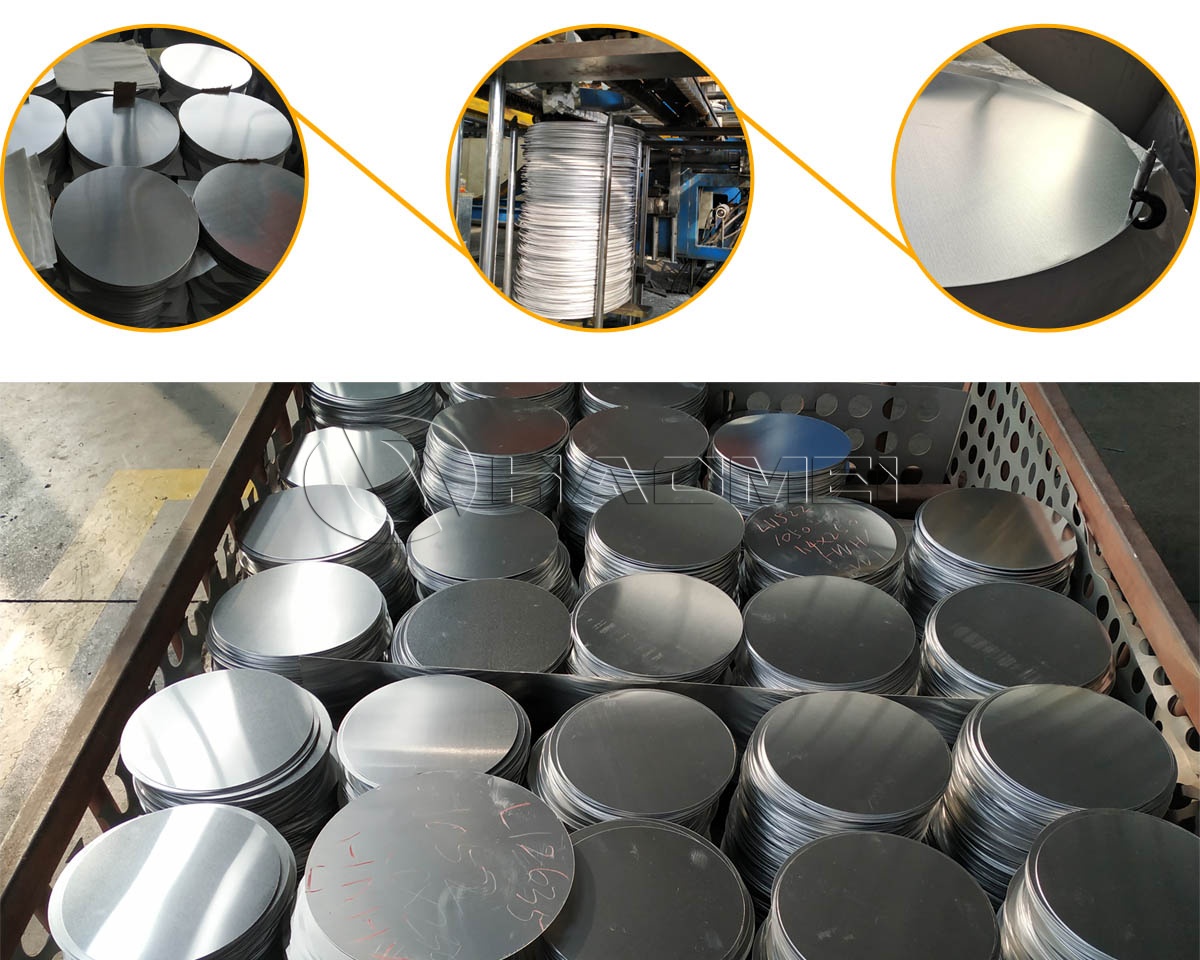
Our production process uses controlled blanking dies, coil leveling, and sampling inspection to maintain consistent diameter and thickness. For large wholesale orders, inspection records can be prepared according to customer requirements. Typical inspection items include diameter, thickness, burr height, surface condition, temper, packing condition, and batch identification.
For cookware factories using high-speed production, we recommend confirming tolerance requirements before mass production. Different cookware processes may require different control levels. For example, cookware discs for precision drawn pans may require tighter diameter and thickness control than discs for simple lids or shallow components.
While 3003 is a common cookware alloy, some customers also use 1050, 1060, 1070, 1100, 3004, or 3105 aluminum circles. Pure aluminum grades offer excellent ductility and high thermal conductivity, but lower strength. 3003 provides improved strength while maintaining good formability, making it suitable for many mid-range and high-volume cookware products.
3004 and 3105 may be selected for applications requiring different strength levels or forming behavior. Buyers who need to compare several manganese-containing alloys may refer to our 3000 Series Aluminum circle range for related material options.
The correct alloy should be selected according to cookware type, forming depth, final thickness, coating process, and expected mechanical performance. Our factory can support sample production for verification before large-volume orders.
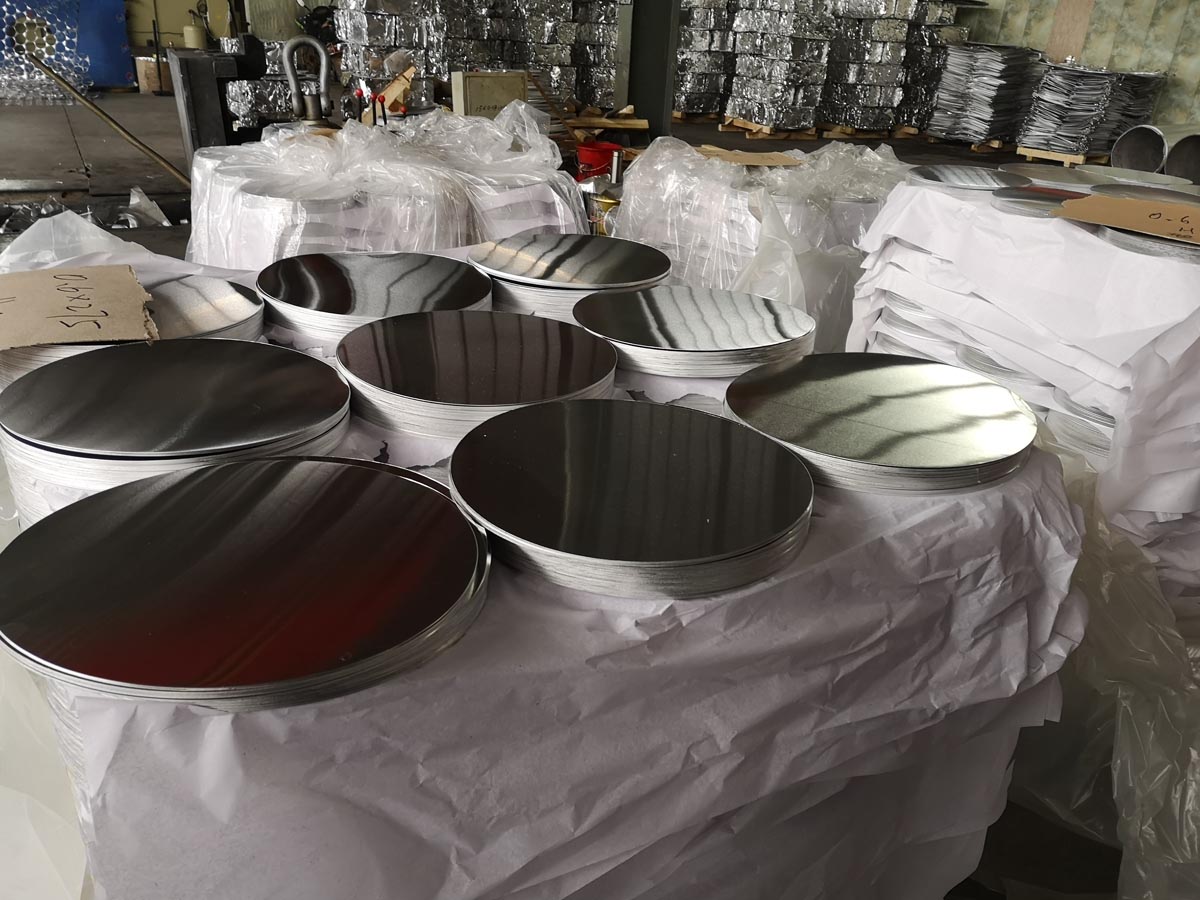
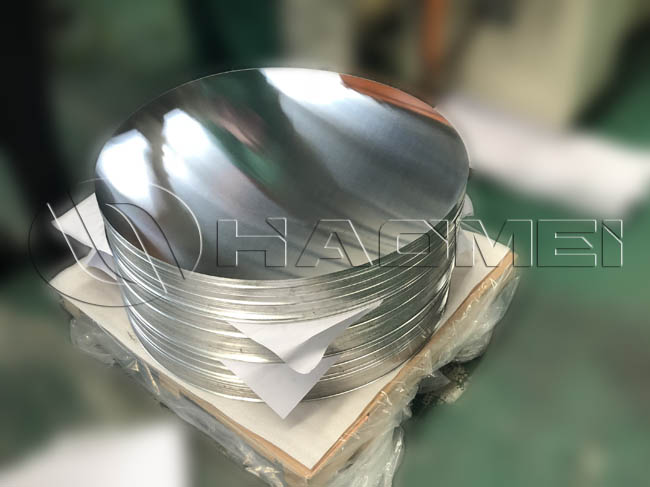
Wholesale 3003 aluminum discs are usually packed on wooden pallets. The discs are stacked evenly, protected against moisture, and fixed to prevent movement during transportation. Depending on customer requirements, we can use kraft paper, plastic film, moisture barrier materials, desiccant, and reinforced pallet structures.
Good packaging is important for export orders because aluminum discs may pass through long-distance sea transportation, port handling, and warehouse storage before use. Poor packaging can cause edge damage, water marks, and surface stains. Our packing method is designed to maintain disc condition from our factory to the customer production site.
Each batch is identified with labels showing alloy, temper, size, quantity, weight, and production information. This helps customers manage inventory and trace production batches during cookware manufacturing.
To quote and produce accurately, we recommend that buyers provide the following information: alloy, temper, thickness, diameter, quantity, surface requirement, edge requirement, packing method, and destination port. If the discs will be used for deep drawing or non-stick cookware, it is helpful to provide forming depth, cookware type, and any special surface treatment process.
For first-time cooperation, sample discs or trial orders can be arranged according to the required specification. After customer verification, we can proceed with batch production. For repeated wholesale orders, stable specifications can be recorded to improve production efficiency and delivery consistency.
Wholesale 3003 aluminum discs for cookware require more than basic blanking. The material must have suitable alloy composition, controlled temper, stable thickness, accurate diameter, clean surface, and reliable packaging. As a factory manufacturer, we focus on producing cookware aluminum discs that support efficient forming and consistent finished product quality.
3003 aluminum discs are a practical choice for cookware manufacturers that need a balance of formability, strength, corrosion resistance, and thermal performance. By selecting the correct temper, tolerance, and surface condition, cookware factories can improve production stability and reduce unnecessary processing defects.

Office Address:
No.14 Waihuan Road, CBD, Zhengzhou, China
Contact Us
HAOMEI Aluminum offer an custom aluminum circle for you!
whatsapp: +86-18703635966
Email: sales@alummc.com
Email: alummc@hotmail.com
Request Free Sample & Quotation
Copyright © 2026 By HAOMEI Aluminum CO., LTD. All Rights Reserved. Sitemap
 +86-18703635966
 sales@alummc.com
 8618703635966
