
 No.14 Waihuan Road, CBD, Zhengzhou, China
 +86-18703635966

No.14 Waihuan Road, CBD, Zhengzhou, China
+86-18703635966
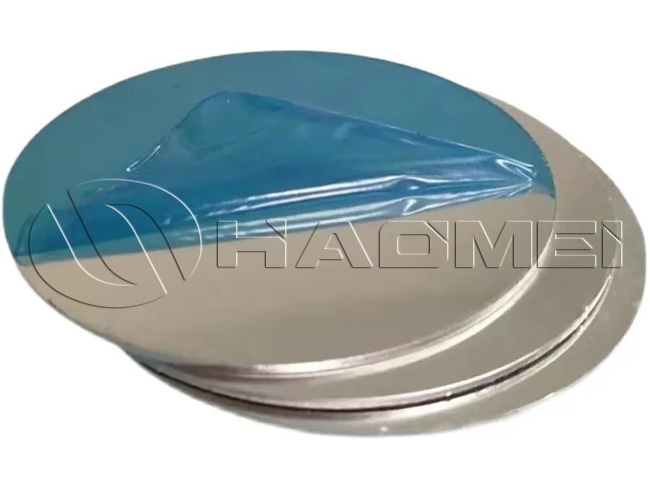
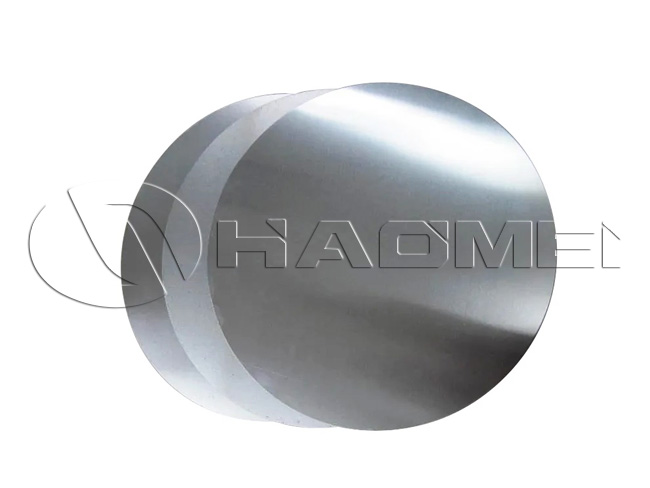
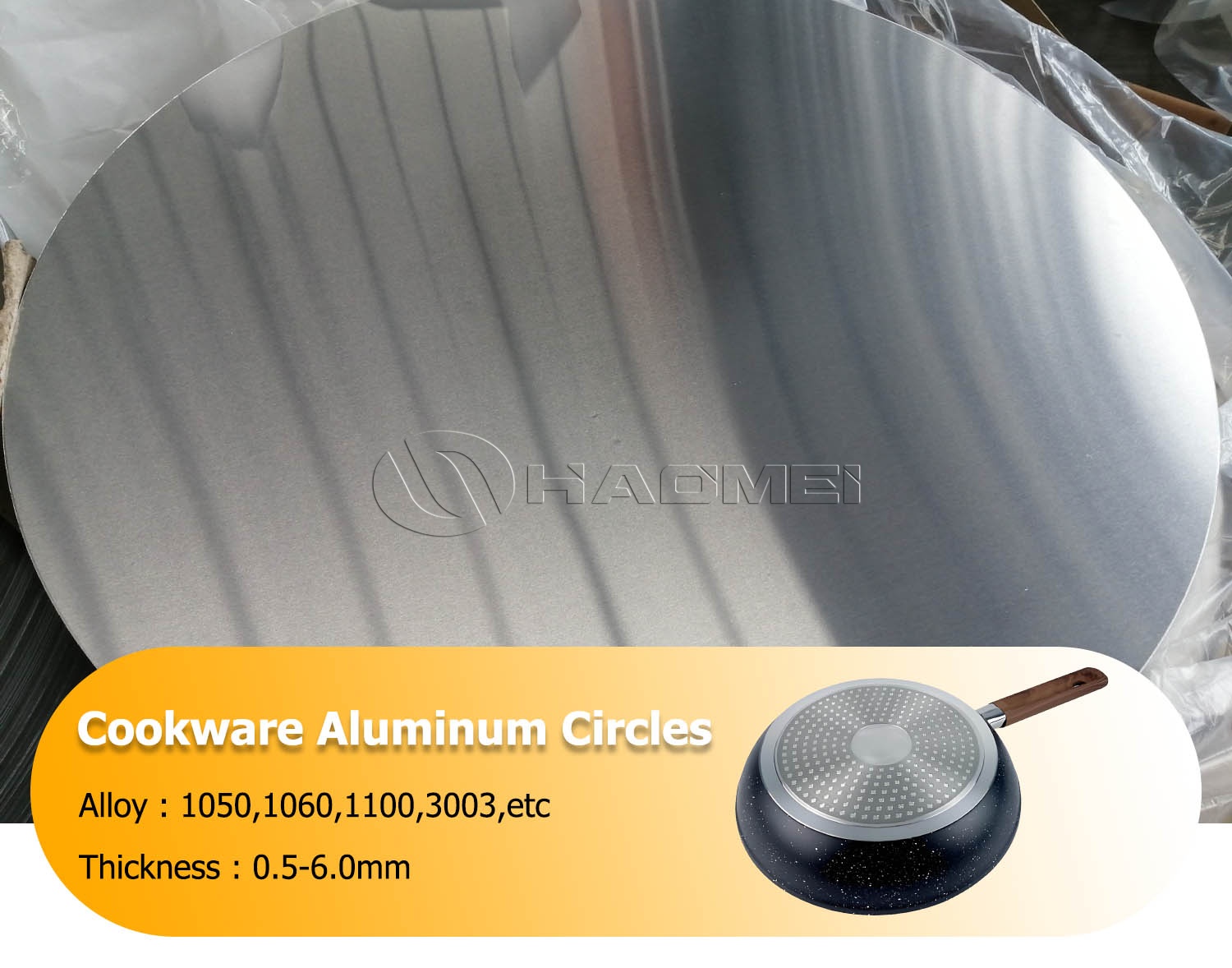
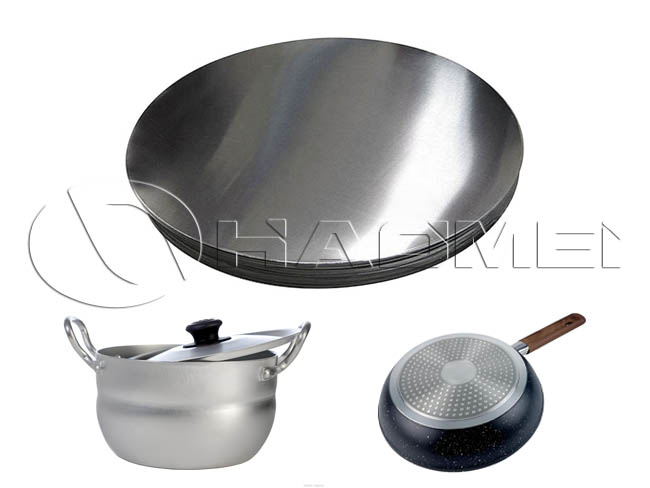
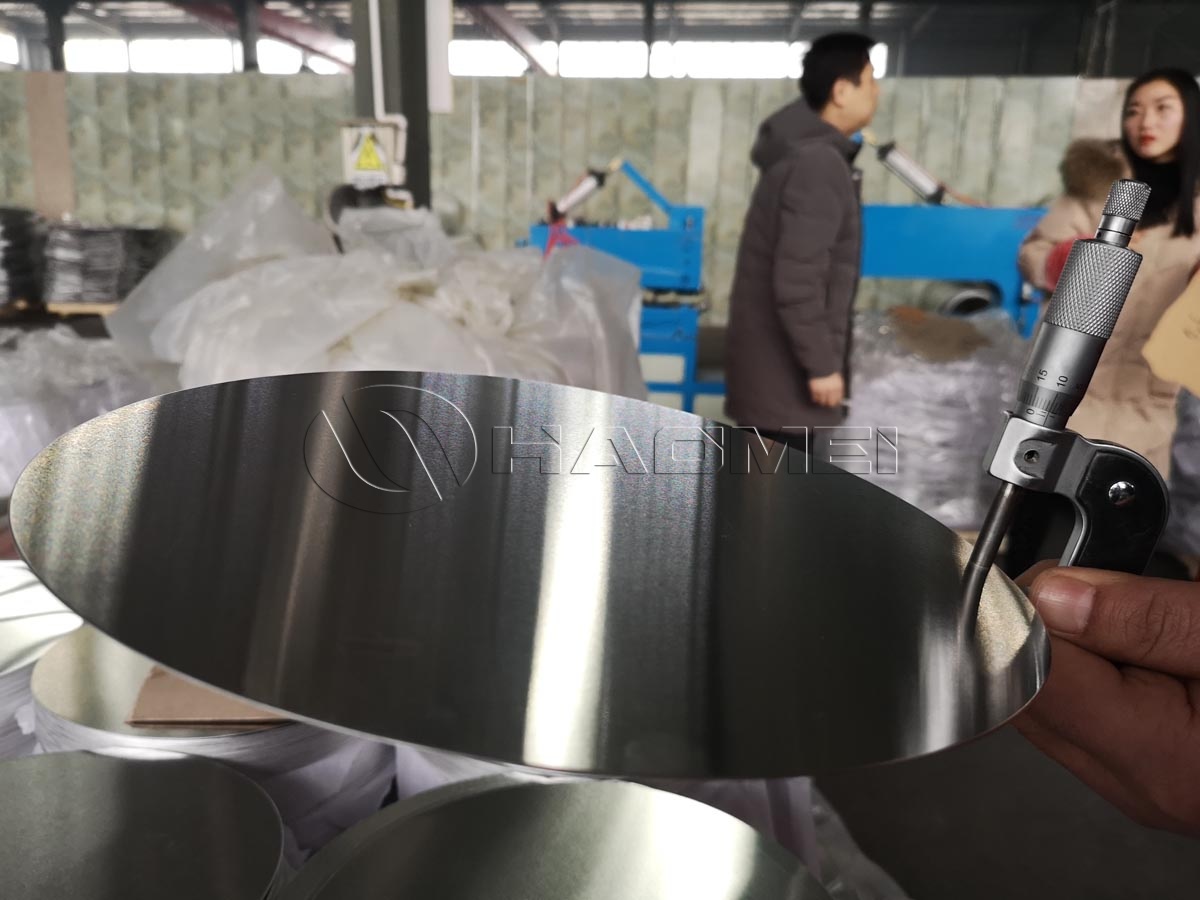
As an aluminum circle manufacturer, our factory produces deep drawn 3003 aluminum circle for kitchenware applications such as pots, pans, pressure cooker bodies, rice cooker liners, bakeware, lids, and other formed cookware parts. For kitchenware manufacturers, the aluminum circle is not only a simple blank. It directly affects drawing performance, surface quality, coating adhesion, dimensional accuracy, and the final service life of the finished product.
3003 aluminum alloy is widely used in cookware because it combines good formability, stable corrosion resistance, moderate strength, and reliable thermal conductivity. When the material is processed correctly, it can withstand multi-stage deep drawing, spinning, stretching, and edge forming with a low risk of cracking or orange peel. Our production focuses on controlled chemistry, uniform annealing, accurate blanking, clean surface handling, and protective packaging for export shipments.
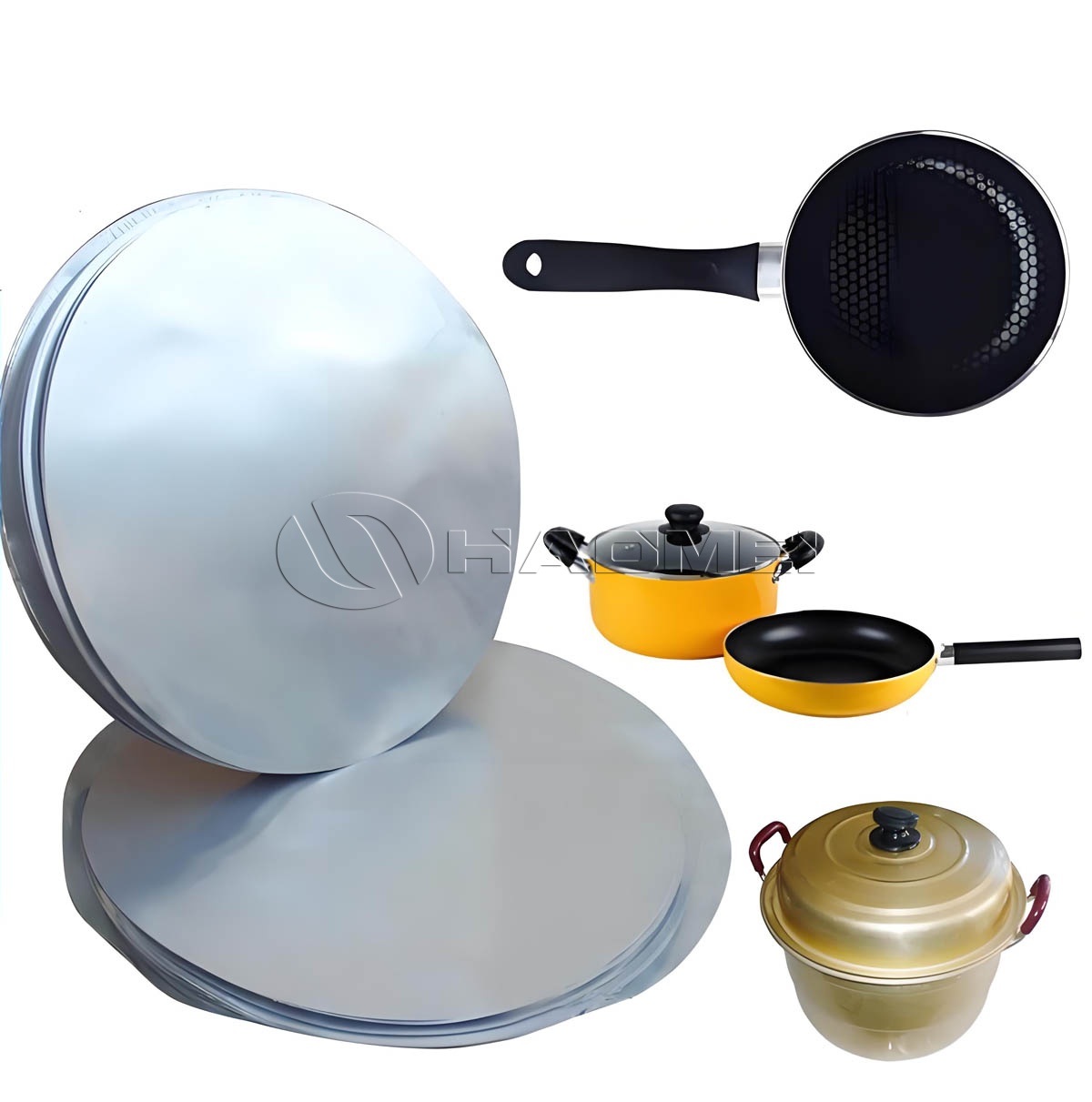
3003 belongs to the 3000 series aluminum-manganese alloy family. Compared with pure aluminum grades, 3003 provides higher mechanical strength while maintaining good ductility. This balance is important for cookware production, especially when the aluminum disc needs to be deep drawn into a pot body or pan shell with a smooth side wall.
For kitchenware, the base material must meet several practical requirements. It should draw evenly without tearing, keep a stable shape after forming, conduct heat efficiently, resist corrosion in normal household environments, and accept surface treatments such as non-stick coating, anodizing, polishing, or exterior painting. A properly produced 3003 Aluminum Circle can meet these requirements in mass production.
The alloy is also suitable for cookware components that require further processes after forming. Many customers carry out degreasing, etching, anodizing, spraying, roller coating, or bonding with stainless steel or other layers. For these applications, consistent surface cleanliness and predictable temper are as important as chemical composition.
1. Excellent Strength and Rigidity: Composed of an aluminum-manganese alloy, this material possesses high hardness and strong resistance to deformation. After stamping and forming, the cookware body remains sturdy and rigid-resistant to dents and warping-making it ideally suited for various deep-drawing processes in cookware manufacturing.
2. Corrosion and Rust Resistance:It exhibits superior resistance to rust, acids, and alkalis. It is not easily corroded by daily exposure to soups and seasonings, ensuring a long service life.
3. Uniform Heat Conduction:The material offers stable thermal conductivity and ensures uniform heat distribution. This prevents localized scorching during cooking and makes it suitable for a wide range of culinary applications, including frying, stir-frying, and boiling.
4. Excellent Processability:Possessing moderate plasticity, it performs exceptionally well in processes such as deep drawing, bending, and flanging. It boasts a high success rate in mass production forming, making it highly compatible with automated cookware manufacturing lines.
5. utstanding Surface Treatment Adaptability:3003 aluminum circles feature a high surface finish, free from visible cracks or defects. This makes them highly suitable for secondary surface treatment processes such as polishing, spray coating (including non-stick coatings), and anodizing.
6. Safety and Environmental Friendliness:The material is non-toxic and odorless, complying with food-contact safety standards. It withstands high temperatures without releasing any harmful substances, ensuring safety during long-term use.
Deep drawing is a demanding forming process. The aluminum circle is pressed into a die cavity to create a hollow shape. During this process, the metal flows from the flange area into the wall and bottom of the part. If the blank has uneven thickness, unstable temper, poor lubrication response, hard edge burrs, or internal stress, defects may appear during production.
Common deep drawing defects include earing, cracking at the wall, wrinkling at the flange, uneven wall thickness, surface scoring, and poor roundness. Our factory controls these risks from coil selection to final blank inspection. The rolling direction, annealing curve, leveling condition, blanking clearance, and edge quality are managed according to the final application.
For cookware customers, we normally confirm the drawing ratio, final product depth, die structure, lubrication method, and required surface finish before recommending the temper. O temper is commonly used for more demanding deep drawing. H12, H14, and other tempers may be selected for shallow drawing, lids, utensils, or parts requiring higher rigidity.
The following table shows typical specifications for our deep drawn 3003 aluminum circle for kitchenware. Final parameters can be adjusted according to customer drawings, forming process, and destination market requirements.
| Item | Typical Specification |
|---|---|
| Product name | Deep drawn 3003 aluminum circle for kitchenware |
| Alloy | 3003 |
| Temper | O, H12, H14, H16, customized according to drawing depth |
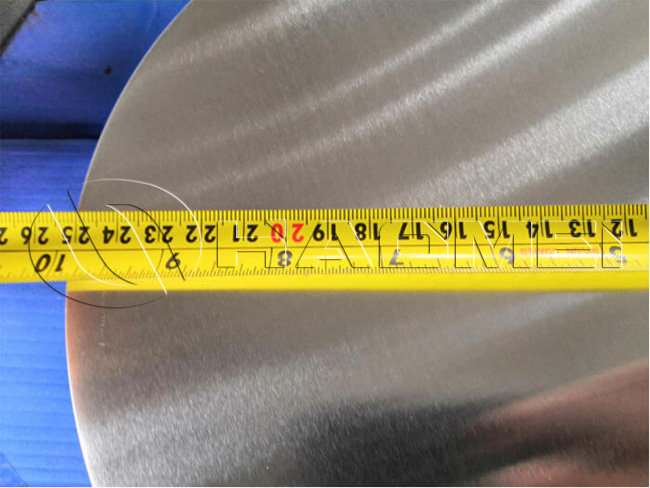
| Thickness range | 0.40 mm to 6.00 mm |
| Diameter range | 80 mm to 1200 mm |
| Thickness tolerance | According to EN, ASTM, or customer standard |
| Diameter tolerance | Typically +/-0.5 mm to +/-2.0 mm, depending on size |
| Surface finish | Mill finish, bright finish, degreased, coated-ready surface |
| Edge condition | Smooth edge, burr controlled, roundness inspected |
| Application | Pots, pans, rice cooker liners, pressure cookers, bakeware, lids |
| Processing method | Coil rolling, annealing, leveling, blanking, inspection, packing |
| Standards | ASTM B209, EN 573, EN 485, GB/T 3880, or agreed specification |
| Packaging | Wooden pallets or cases, moisture protection, export packing |
For cookware production, the stability of 3003 alloy is essential. The main alloying element is manganese, which improves strength and supports stable forming behavior. Iron and silicon content must be controlled because excessive or inconsistent intermetallic particles may influence surface appearance and drawing performance.
Our factory purchases and processes aluminum coils according to defined chemical composition requirements. Before production, each batch is identified and traceable. During processing, material certificates can be provided with composition and mechanical properties. For customers with strict requirements, additional testing can be arranged, including tensile strength, elongation, hardness, and surface inspection.
A consistent microstructure is especially important for deep drawn cookware. Uneven grain size may cause rough surfaces after drawing, commonly known as orange peel. To reduce this risk, annealing temperature, holding time, and cooling conditions are controlled. The objective is not only to meet the numerical tensile data, but also to support stable performance on the customer's press line.
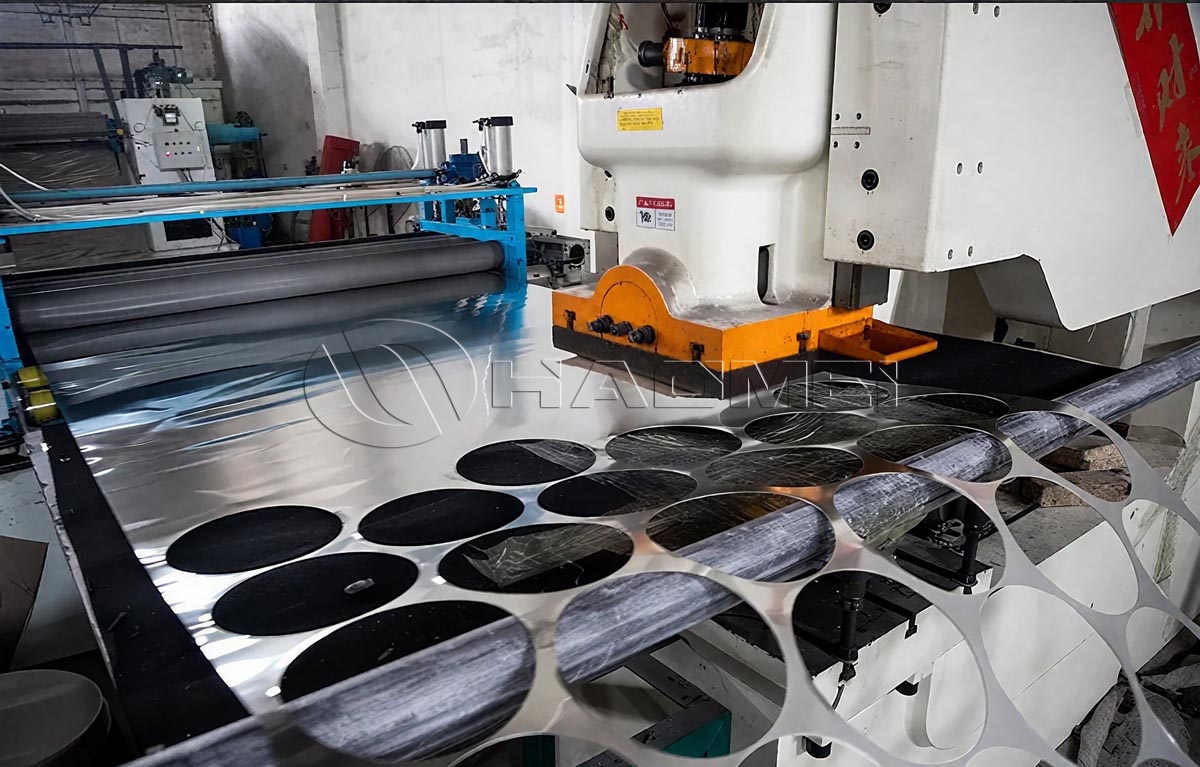
Our production of 3003 aluminum disc for cookware starts with aluminum coil preparation. The coil is selected according to alloy, thickness, width, temper route, and surface requirement. After rolling and annealing, the coil is leveled to reduce internal stress and improve flatness. This is important because uneven flatness can affect blanking accuracy and feeding stability.
The blanking process is carried out using dedicated circle cutting equipment. Tooling clearance is adjusted according to thickness and diameter. Proper clearance helps reduce burr height and avoids edge cracks during deep drawing. After blanking, circles are stacked carefully to prevent surface friction and edge damage.
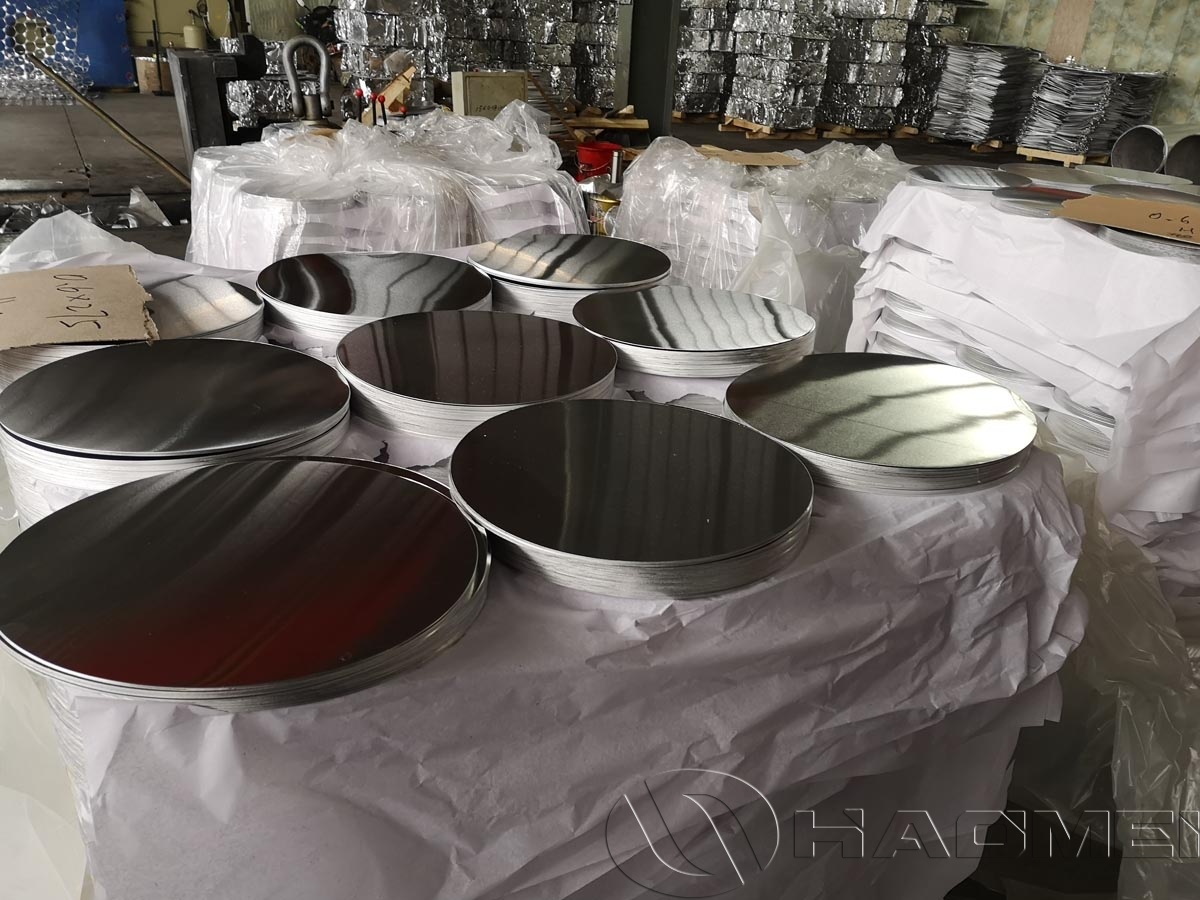
For customers requiring high surface cleanliness, we can supply circles with controlled oil film or degreased surface depending on the next process. Cookware producers using non-stick coating often require a surface that is clean, uniform, and free from heavy oil, black spots, scratches, and roll marks. We discuss these requirements before production because different downstream processes may need different surface states.
Quality control is carried out at several stages. Incoming coil inspection checks alloy, thickness, width, surface condition, and identification. During cutting, operators monitor diameter, edge condition, burr, flatness, and surface appearance. Final inspection verifies quantity, packing condition, and traceability before shipment.
For deep drawn kitchenware, we pay close attention to the following points:
Thickness consistency across the circle
Smooth edge without harmful burrs
Uniform temper and elongation
Clean surface without serious scratches or stains
Flatness suitable for automatic feeding
Roundness and diameter tolerance suitable for tooling
Batch traceability from coil to finished circles
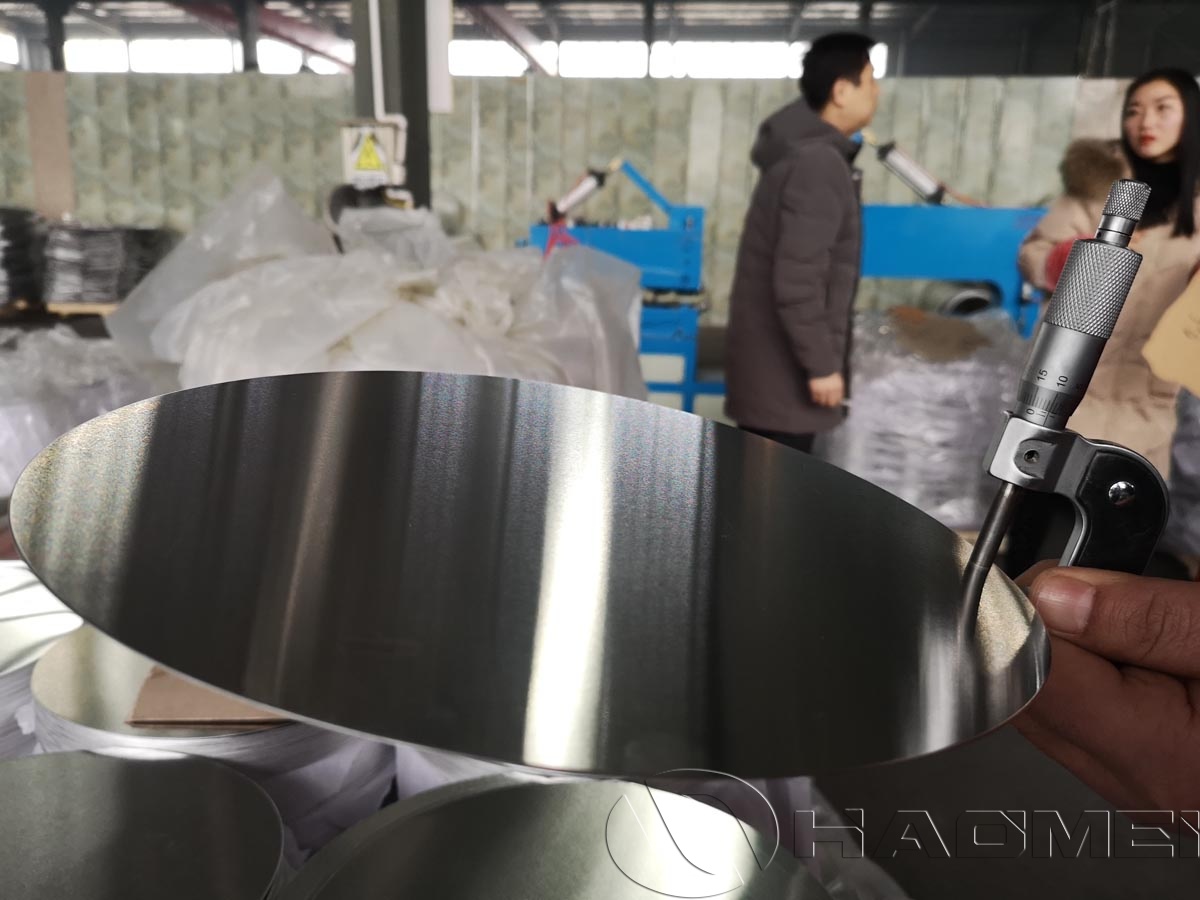
In addition to routine dimensional checks, we can cooperate with customers to conduct trial drawing validation. When a new cookware design is developed, small batch testing can help confirm whether the selected thickness and temper are suitable. This approach reduces later production risk and supports stable mass production.
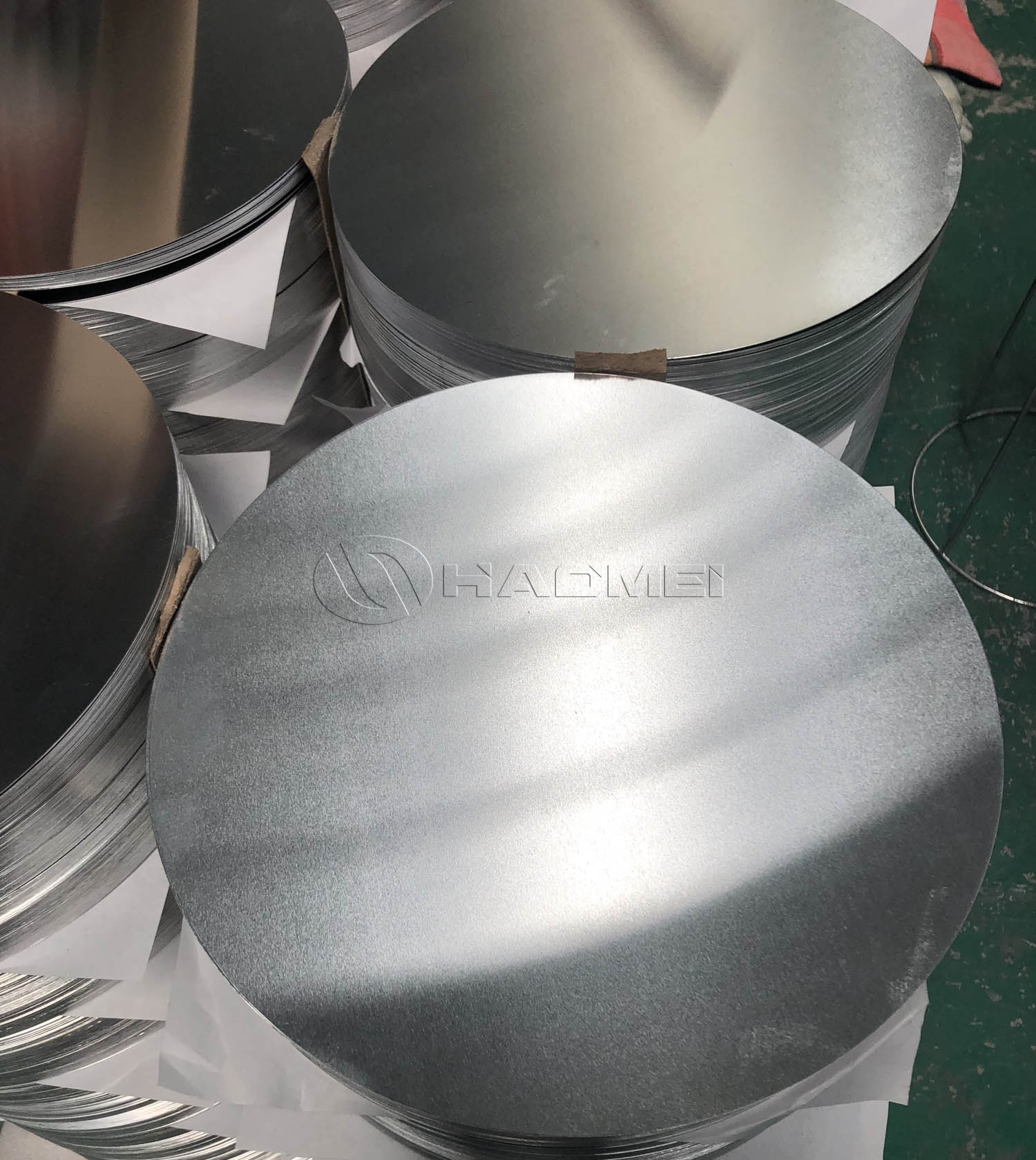
The surface of aluminum circle for cookware must be suitable for both forming and finishing. Visible scratches, oil stains, oxidation marks, roll marks, and embedded particles can affect the final appearance after polishing, anodizing, or coating. For non-stick cookware, poor surface preparation may also reduce coating adhesion.
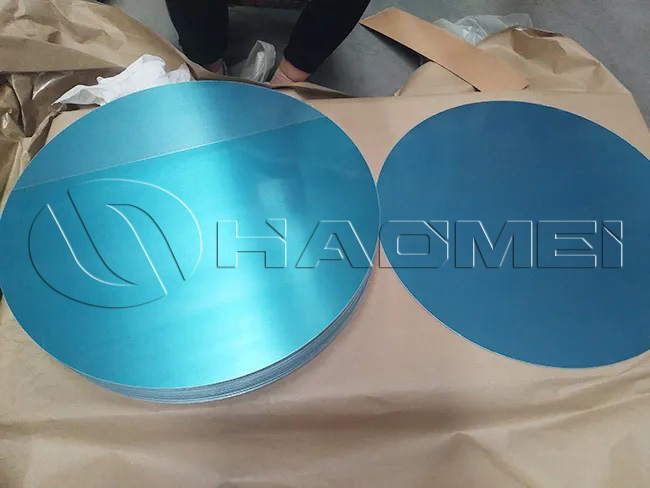
Our factory applies controlled handling during cutting, stacking, and packing. Separating paper or film can be used when required. For export orders, moisture protection is important because long-distance sea transportation may expose the goods to humidity and temperature changes. We use suitable packing materials to reduce the risk of water stains and surface oxidation.
Different kitchenware products require different surface standards. For inner pot liners, customers may require a clean surface for anodizing or coating. For pan bodies, the exterior may need painting or polishing. For lids and shallow drawn parts, a bright and uniform surface may be requested. We confirm these details before production to avoid mismatch between material supply and downstream process.
Temper selection depends on forming depth and final product function. O temper offers the highest ductility and is commonly used for deep drawn pots, rice cooker liners, and pressure cooker bodies. H12 or H14 may be suitable for shallow pans, covers, trays, or other products where only moderate forming is required. If the finished part needs more rigidity, a harder temper may be considered, but the drawing ratio must be checked.
There is no single temper suitable for every kitchenware design. A deep pot with a small bottom radius requires a softer material than a shallow frying pan. A large diameter aluminum disc may also behave differently from a small disc under the same nominal temper. As a manufacturer, we evaluate the drawing depth, wall shape, corner radius, lubrication, and press capacity before giving a recommendation.
For customers producing multiple cookware sizes, we can supply different diameters and tempers under one shipment plan. This helps maintain production continuity while keeping each part matched with its forming requirement. We also produce other 3000 Series Aluminum circle products for cookware and industrial forming applications when alternative alloys are needed.
Our role is to manufacture aluminum circles according to technical requirements, not to act as a trading intermediary. This allows better control of production scheduling, process parameters, inspection standards, and packaging details. For B2B cookware manufacturers, direct factory communication reduces misunderstanding and supports more consistent supply.
The key advantages of our factory supply include controlled alloy source, stable annealing process, precise circle cutting, flexible diameter range, and export packaging experience. We also maintain records for each production batch, which supports quality tracking after delivery. If a customer provides drawings or sample parts, our technical team can review the forming requirements and suggest a practical specification.
We do not recommend selecting aluminum circles only by price per kilogram. For deep drawn cookware, poor edge quality or unstable elongation may lead to higher scrap rates, press stoppage, die wear, or coating defects. A stable material specification often provides better overall production efficiency.
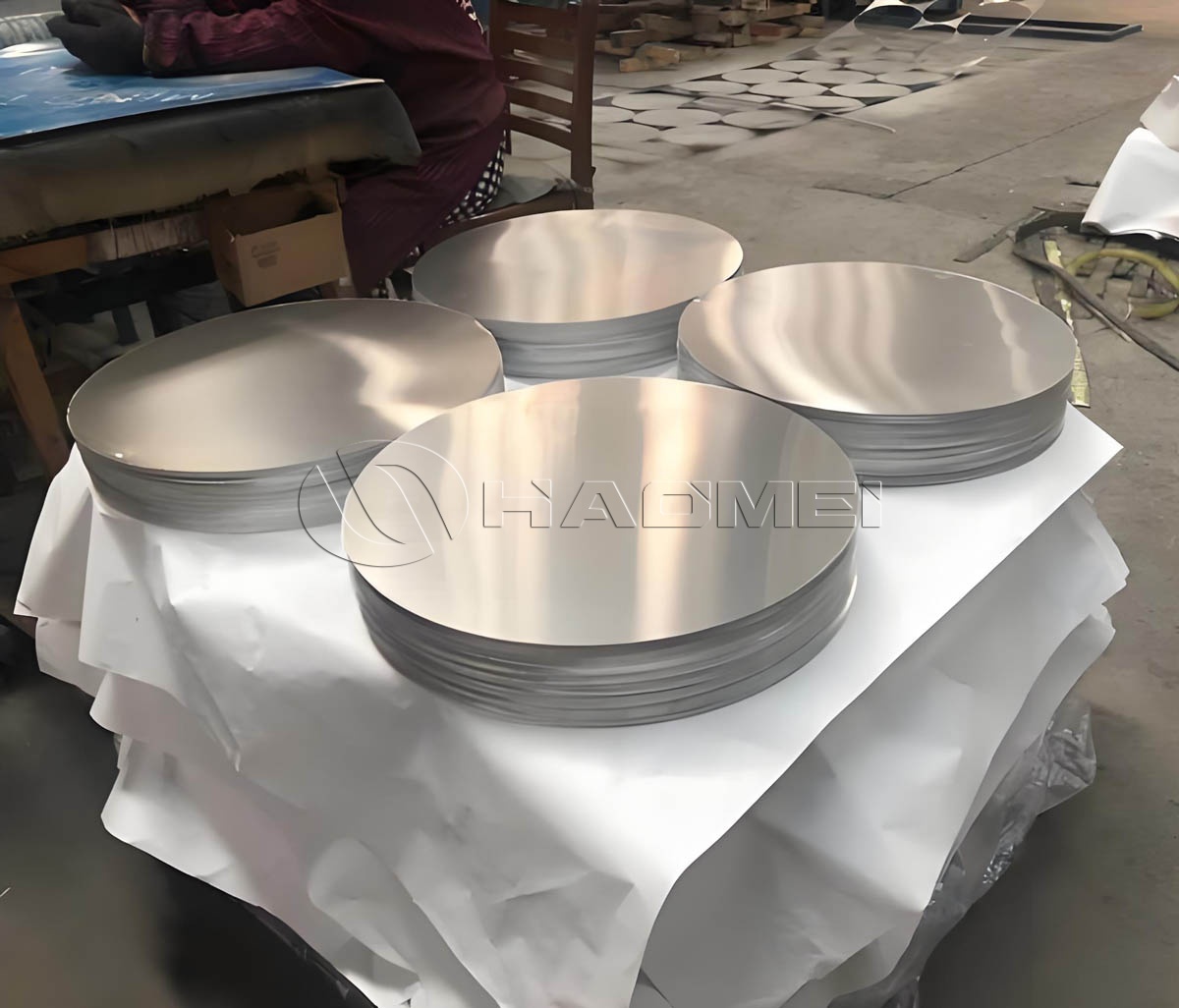
Cookware aluminum circles are usually packed on wooden pallets or in wooden cases. The packing method depends on diameter, thickness, quantity, and transport mode. Circles are stacked evenly, protected with moisture-resistant material, and fixed to prevent movement during shipment. For larger diameters, stronger pallet structures may be used to avoid deformation.
Each package can be labeled with alloy, temper, thickness, diameter, batch number, net weight, gross weight, and customer reference. Mill test certificates and packing lists are prepared according to order requirements. For long-distance export shipments, we recommend dry container conditions and proper handling at the destination warehouse.
To obtain a suitable quotation and production plan, customers are encouraged to provide the following information:
Alloy and temper, such as 3003 O or 3003 H14
Thickness and diameter of the aluminum circle
Quantity by size
Final kitchenware product and drawing depth
Surface requirement, such as mill finish or coating-ready surface
Edge and burr requirement
Packing method and destination port
Applicable standard or inspection requirement
If the exact temper is not confirmed, our factory can provide guidance based on the intended cookware product. For new projects, trial orders are useful before full-scale production.
Deep drawn 3003 aluminum circle for kitchenware requires more than basic cutting from aluminum coil. The material must have stable alloy composition, suitable temper, uniform thickness, clean surface, controlled edge quality, and reliable packaging. These factors directly influence forming efficiency and finished cookware quality.
As a manufacturer, our factory supplies 3003 aluminum circles for cookware producers that require consistent deep drawing performance and practical technical support. By matching the material specification with the customer's forming process, we help support stable production of pots, pans, cooker liners, bakeware, lids, and related kitchenware components.

Office Address:
No.14 Waihuan Road, CBD, Zhengzhou, China
Contact Us
HAOMEI Aluminum offer an custom aluminum circle for you!
whatsapp: +86-18703635966
Email: sales@alummc.com
Email: alummc@hotmail.com
Request Free Sample & Quotation
Copyright © 2026 By HAOMEI Aluminum CO., LTD. All Rights Reserved. Sitemap
 +86-18703635966
 sales@alummc.com
 8618703635966
