
 No.14 Waihuan Road, CBD, Zhengzhou, China
 +86-18703635966

No.14 Waihuan Road, CBD, Zhengzhou, China
+86-18703635966
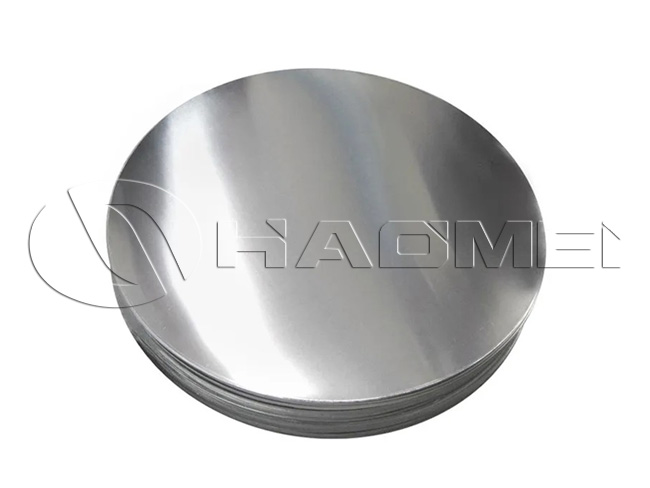
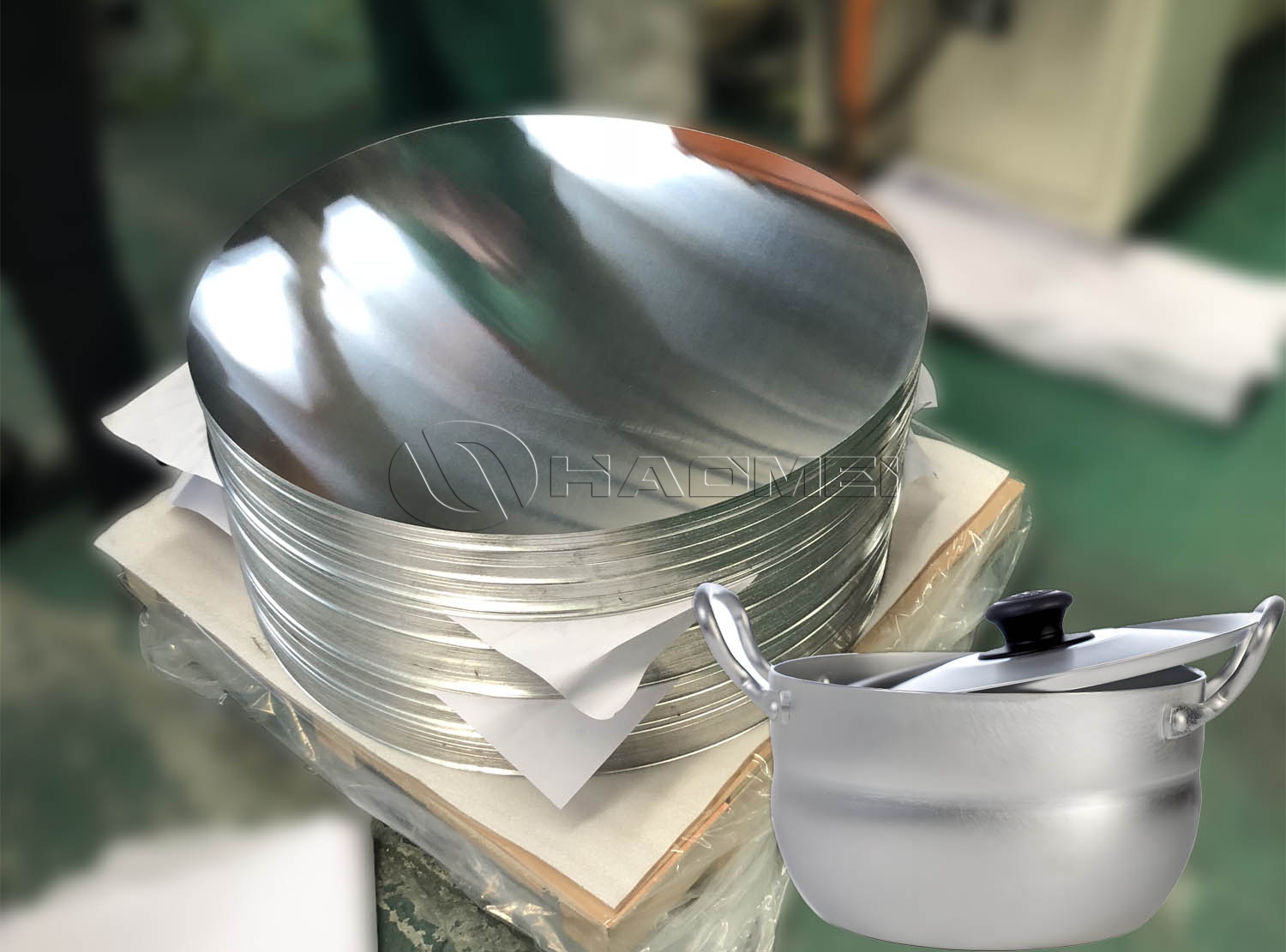
As a manufacturer of aluminum circles and disc blanks, we supply A1050 aluminum circular sheets for cookware forming lines where cost control, stable drawability, and consistent surface quality are required. A1050 (Al 99.5%) is widely selected for pressure cooker bodies, frying pans, saucepans, and base plates because it combines good ductility with reliable thermal conductivity and a competitive material cost.
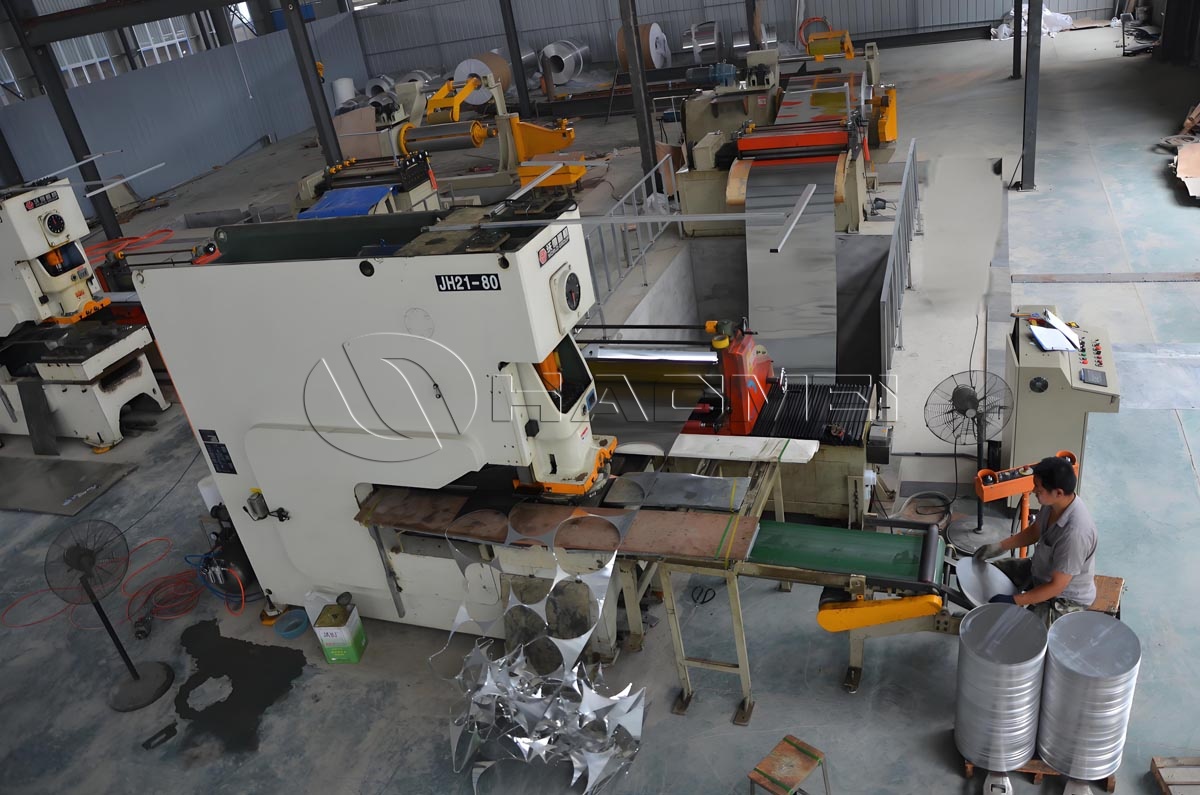
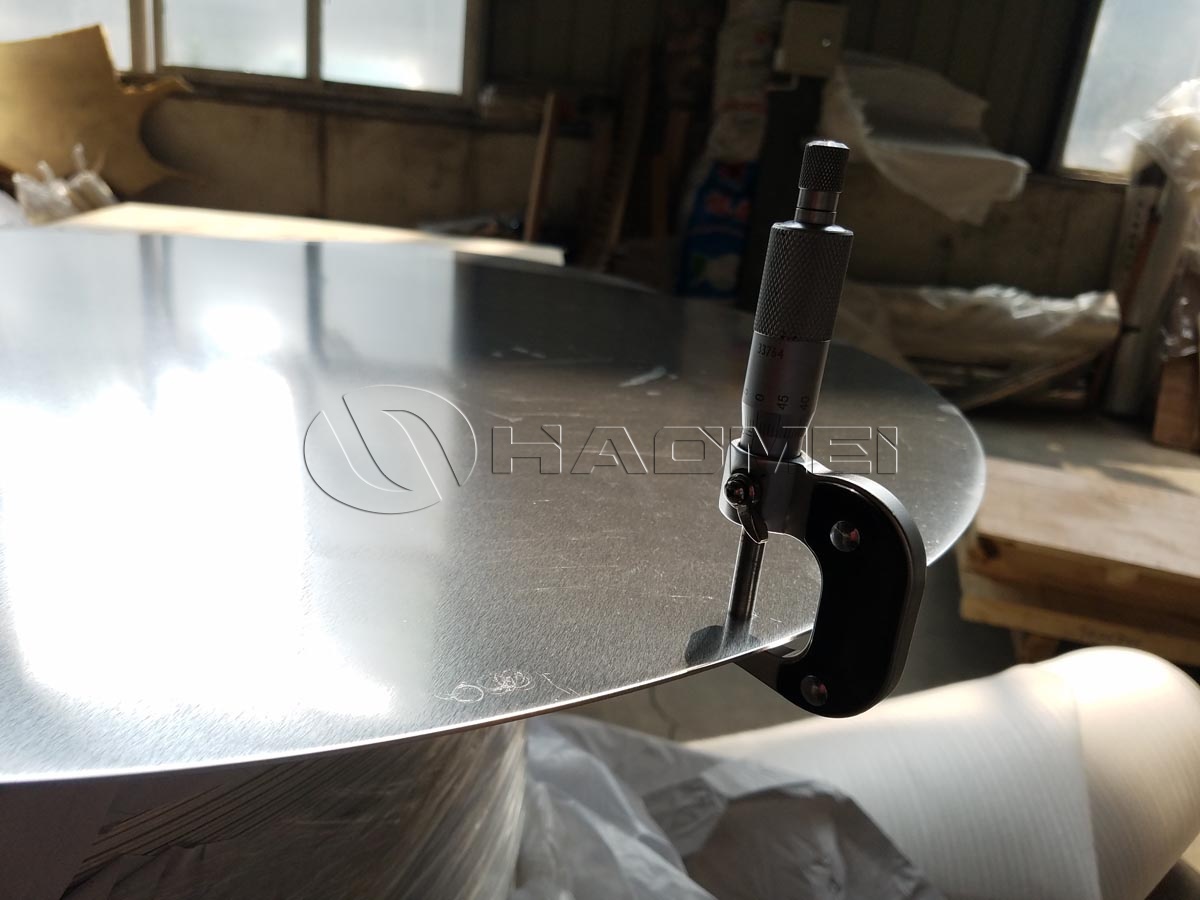
In cookware production, the disc is not the finished product. It is a forming substrate that must perform consistently through blanking, deep drawing, spinning, impact forming, trimming, and surface treatment (anodizing, coating, or lamination). Our production focus is therefore on tight thickness control, low edge burr, uniform grain structure, and surface cleanliness to reduce scrap and stabilize downstream processing.
1050 aluminum discs are made of 1-series pure aluminum (Al≥99.5%), with core advantages of extreme cost-effectiveness, excellent formability, good thermal conductivity, and food-grade safety. They are the preferred low-cost substrate for mid-to-low-end cookware and small appliance inner pots.
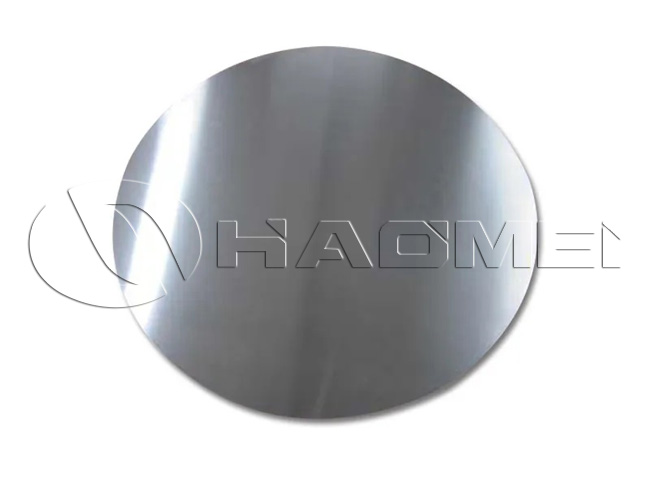
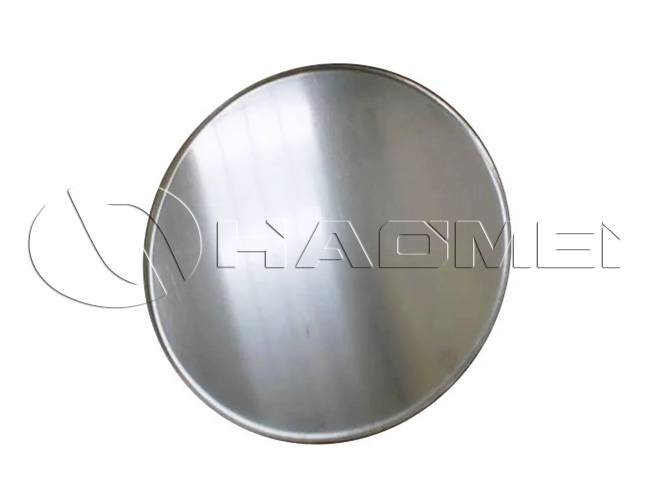
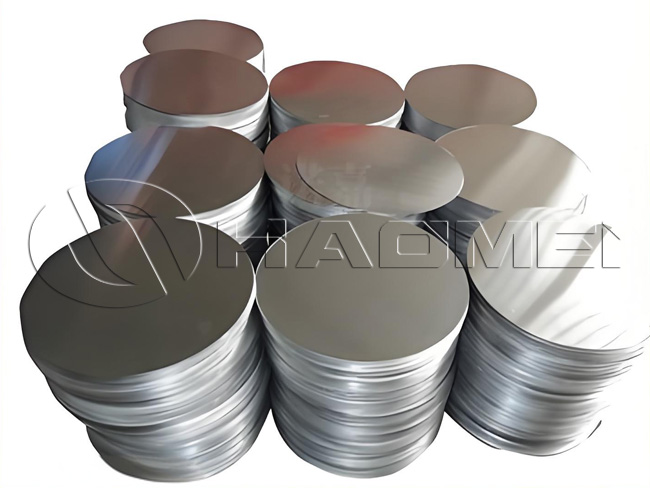
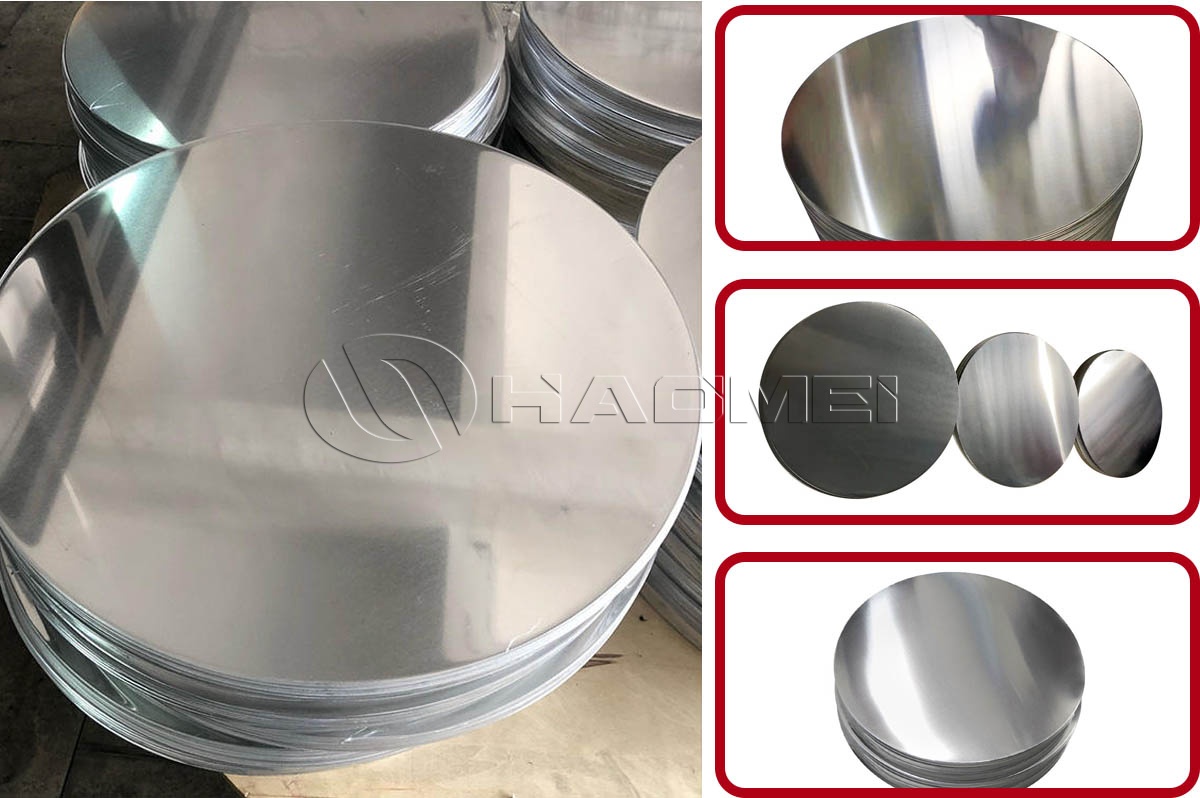
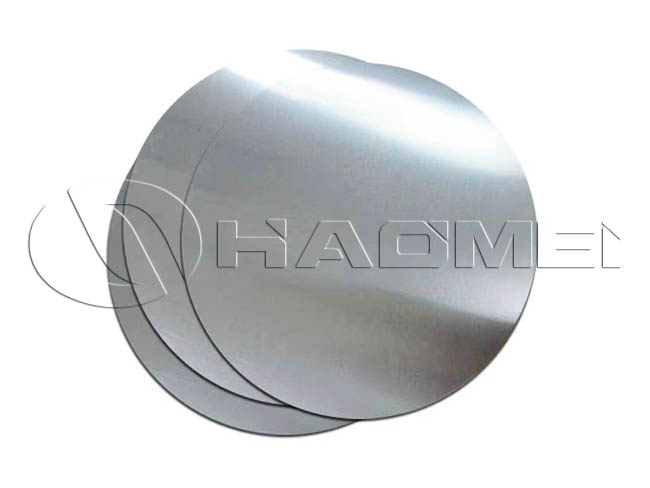
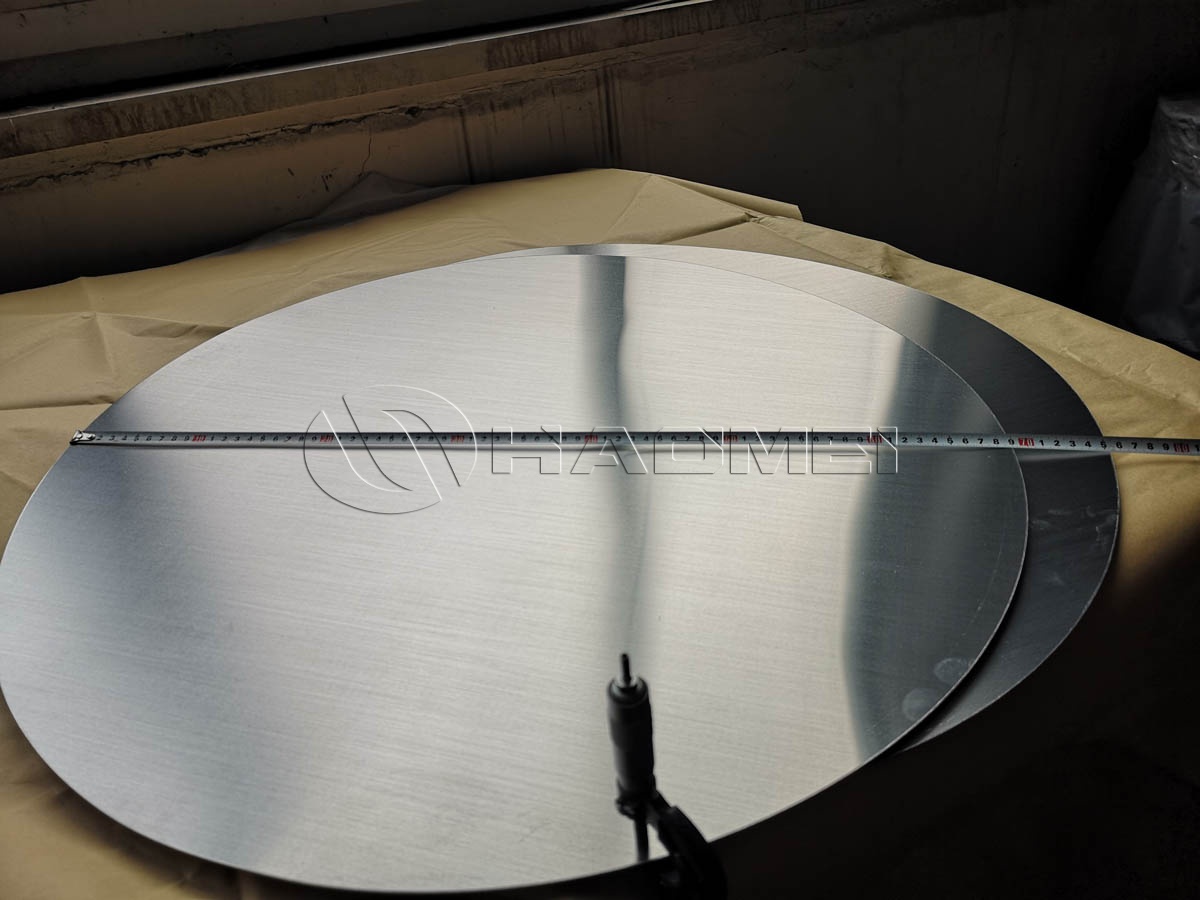
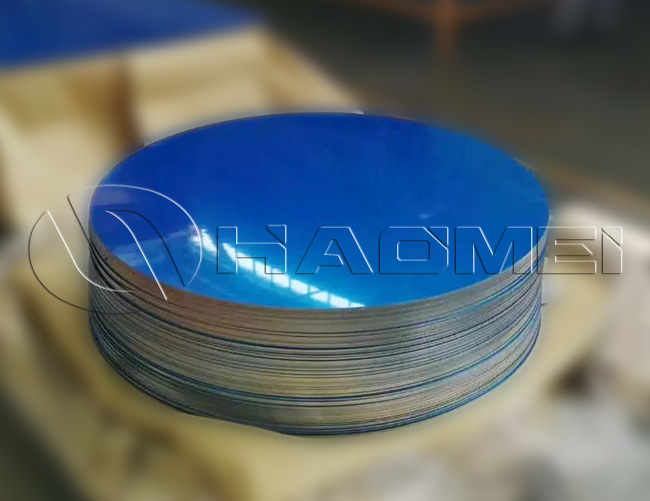
We manufacture A1050 aluminum circular sheets (also called aluminum circles, aluminum discs, or cookware blanks) from 1000 series aluminum coil/plate, processed by precision blanking and finishing operations. Typical supply forms include:
Plain circles for deep drawing or spinning
Degreased circles for coating lines
Circles with controlled surface for anodizing or non-stick coating prep
Large diameter aluminum discs for multi-step drawing
For buyers managing multiple SKUs, A1050 circles are often used as a baseline material where forming reliability is needed at low cost. For higher strength requirements, 3000 series or certain 5000 series alloys may be evaluated, which we compare later in this article.
A1050 belongs to the 1000 series aluminum alloy family with typical aluminum content of 99.5% or above. This high purity provides:
Excellent ductility for deep drawing and spinning
Lower risk of cracking in tight radii compared with higher-strength alloys
Predictable behavior across multi-step forming routes
Cookware bodies and lids often require surface processes such as non-stick coating, anodizing, polishing, or brushing. We control surface defects that may print through after forming and finishing, such as roll marks, dents, oil stains, and scratches.
For cookware, heat transfer and handling weight matter. A1050 provides good thermal conductivity and low density, supporting even heating and easier handling versus many alternative metals.
As a standard 1000 series alloy, A1050 is widely available, efficient to process, and cost-effective for high-volume cookware blanks.
The parameters below reflect our typical manufacturing range for A1050 aluminum circular sheets for cookware. Final values are confirmed by order specification and application requirements.
| Item | Specification / Options |
|---|---|
| Alloy | A1050 (Al 99.5% min, per applicable standard) |
| Temper (common) | O (annealed), H12, H14, H16 (as required) |
| Thickness range | 0.30 to 6.00 mm |
| Diameter range | 80 to 1200 mm (larger on evaluation) |
| Diameter tolerance | Typically +/-0.20 to +/-0.50 mm depending on diameter |
| Thickness tolerance | As per standard and customer requirement, commonly tight control for forming |
| Surface | Mill finish, cleaned/degreased, brushed option (by agreement) |
| Edge condition | Clean sheared edge, controlled burr, optional edge deburring |
| Flatness | Controlled for stable blank feeding and forming |
| Typical forming processes | Deep drawing, spinning, stamping, impact forming |
| Coating/anodizing readiness | Available with surface cleanliness control for coating and anodizing |
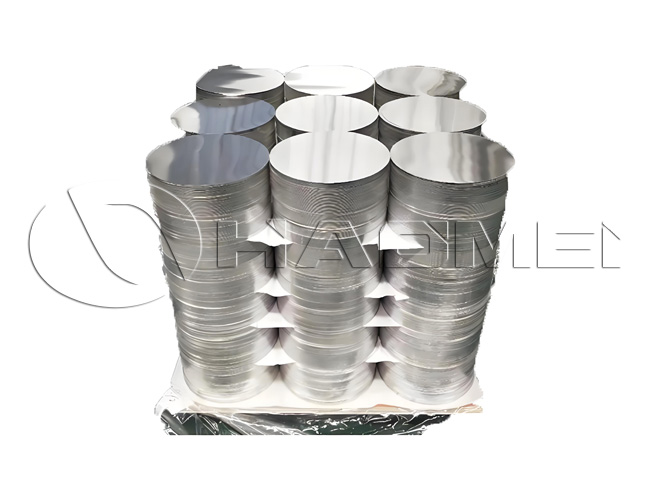
| Packaging | Vertical or horizontal packing, interleaving paper/film, moisture protection, palletized |
| Traceability | Heat number, coil/lot identification, inspection records |
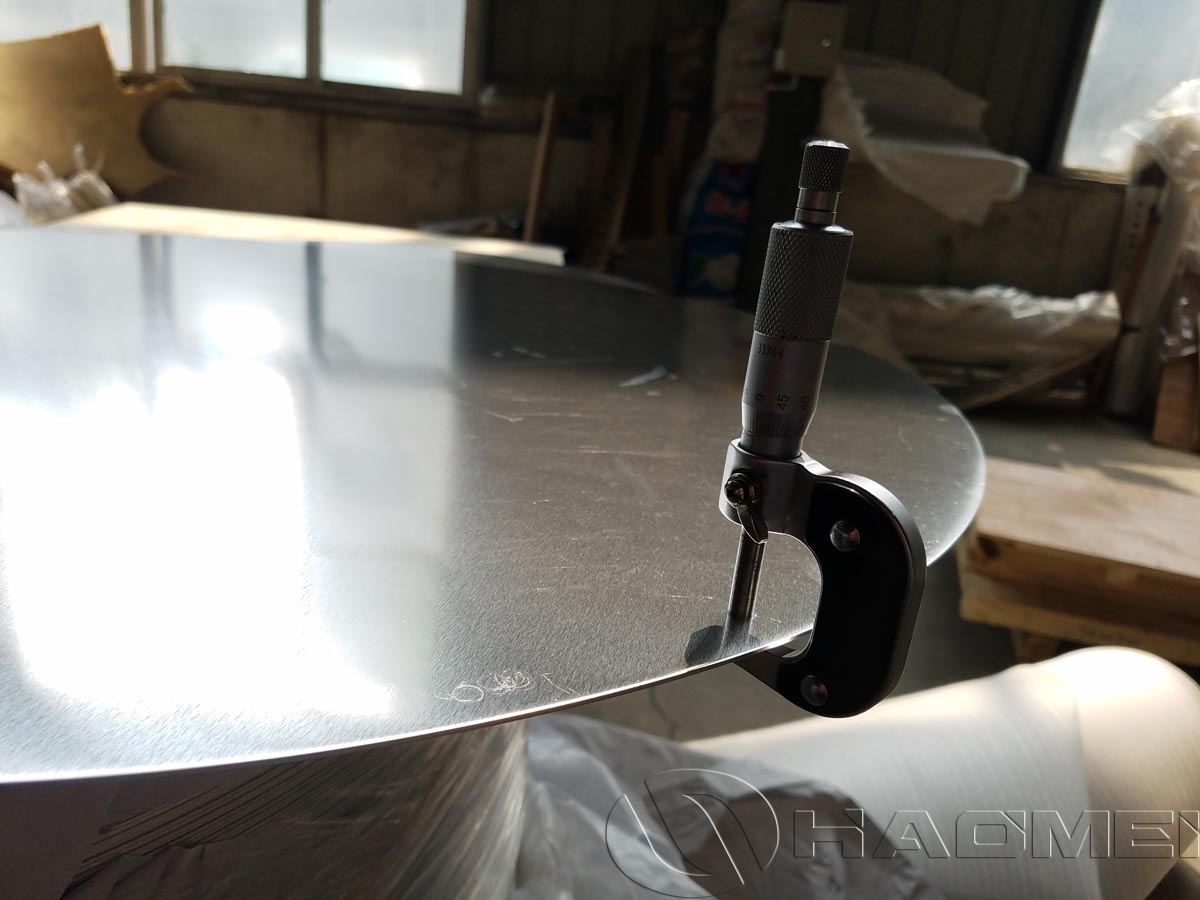
We select qualified 1000 series feedstock and manage incoming verification to ensure alloy chemistry consistency and stable mechanical properties. When customers require strict anodizing consistency, we align chemistry and processing windows to reduce batch-to-batch variation.
Our circle production is optimized for cookware blanks:
Precision blanking to maintain roundness and reduce edge burr
Process settings designed to protect surface finish
Lot-based controls to keep thickness and hardness consistent
For customers needing a broader 1000 series range beyond A1050, we also manufacture 1000 Series Aluminum circle products for cookware and industrial applications.
For deep drawing cookware, O temper is frequently selected for maximum ductility. For parts requiring improved rigidity during handling or specific forming steps, H12/H14 may be used. We control annealing parameters and hardness targets to achieve repeatable forming performance.
Depending on the next process step, we can supply:
Standard mill finish circles
Cleaned/degreased circles for coating lines
Interleaved packing to minimize friction marks
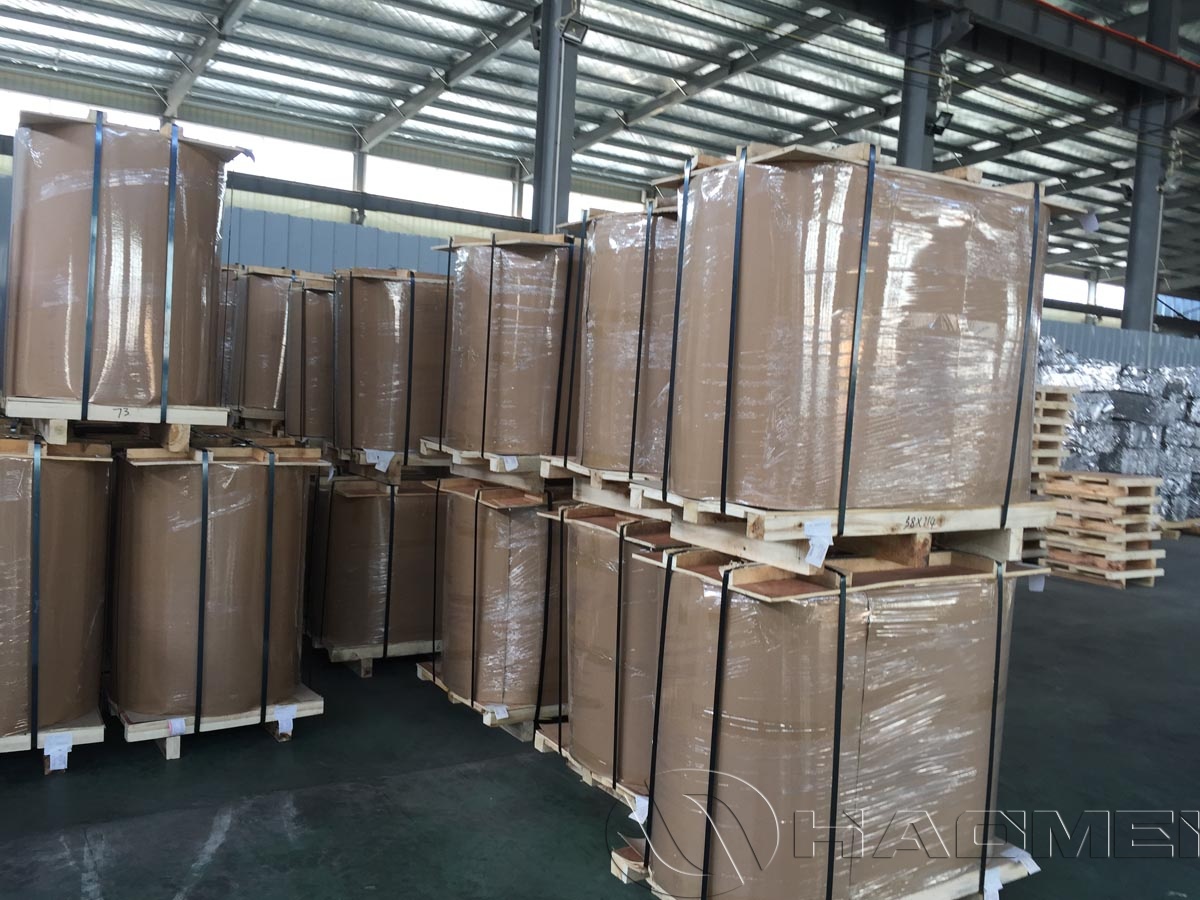
Cookware factories often need discs that can go directly into press feeding. We provide stable packing formats (including vertical packing) with protection against moisture and abrasion.
Cookware lines differ by press tonnage, tooling design, draw ratio, lubrication system, and coating route. We therefore support order-specific customization, including:
Diameter and thickness combinations for your SKU list
Temper selection (O, H12, H14, others by agreement)
Surface cleanliness level for coating or anodizing
Packing method aligned to your feeding system
Lot sizing and delivery plan to support stable production
For multi-step deep drawing or spinning, we can also align grain structure and hardness windows to improve stability in forming, based on your process feedback.
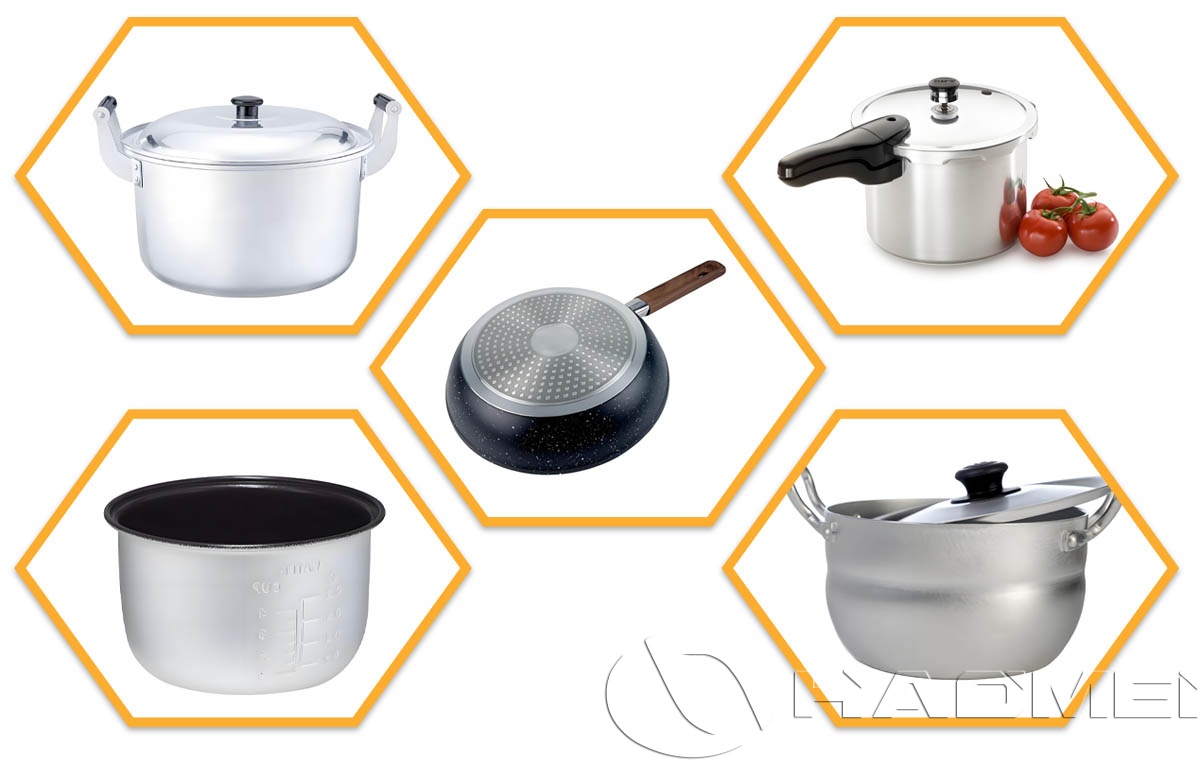
A1050 aluminum circular sheets are most commonly used in:
Non-stick cookware blanks (frying pans, saucepans)
Pressure cooker bodies and lids
Kettle and pot components (drawn or spun)
Cookware base discs and heat spreader components (depending on design)
Secondary applications for aluminum circles may include lighting reflectors, covers, and general-purpose stamped parts, but our A1050 cookware blank programs are engineered primarily for forming stability and surface requirements typical of cookware finishing.
Selecting the right alloy is a balance of cost, forming behavior, strength, and finishing requirements. Below is a practical comparison from a manufacturer perspective.
Purity and conductivity: A1060 (Al 99.6%) is slightly higher purity, offering marginally better conductivity and potentially improved anodizing uniformity.
Formability: Both are excellent for deep drawing; differences are usually small and process-dependent.
Cost and availability: A1050 is often more cost-effective for large-volume cookware blanks.
Composition: A1100 contains small additions (commercially pure aluminum), often used widely in cookware circles.
Forming: A1100 also has strong forming performance, and selection often depends on local qualification history and finishing needs.
Cost: Depending on market conditions, A1050 can offer a cost advantage.
Strength: 3003 is stronger than A1050.
Formability: 3003 can still deep draw well, but tooling and process may need adjustments.
Cookware use: Often chosen when higher stiffness or dent resistance is required, but the cost may be higher.
Strength and corrosion resistance: 5052 is significantly stronger and has excellent corrosion resistance.
Formability: Good, but higher strength can reduce drawability for aggressive draw ratios.
Cost: Typically higher than A1050; used for premium or structural cookware components.
In many mass-market cookware programs, A1050 aluminum circle sheet remains a preferred option when low cost, stable forming, and reliable supply are the primary drivers.
For cookware manufacturers, the key performance indicator is not only the disc specification but also the stability across batches and delivery cycles. We support long-term cooperation through:
Stable capacity planning: production scheduling aligned with your monthly consumption
Consistent process windows: controlled temper and surface parameters to minimize forming variability
Traceability and quick feedback loop: lot identification and production records to support root-cause analysis if needed
Technical coordination: assistance on temper selection, burr control targets, and packing methods based on your press and coating line requirements
If you are sourcing A1050 aluminum circular sheets for cookware and need a low-cost, manufacturing-direct supply with controlled quality and practical technical support, we can prepare a specification confirmation based on your forming route, target diameter and thickness list, and required temper.

Office Address:
No.14 Waihuan Road, CBD, Zhengzhou, China
Contact Us
HAOMEI Aluminum offer an custom aluminum circle for you!
whatsapp: +86-18703635966
Email: sales@alummc.com
Email: alummc@hotmail.com
Request Free Sample & Quotation
Copyright © 2026 By HAOMEI Aluminum CO., LTD. All Rights Reserved. Sitemap
 +86-18703635966
 sales@alummc.com
 8618703635966
