
 No.14 Waihuan Road, CBD, Zhengzhou, China
 +86-18703635966

No.14 Waihuan Road, CBD, Zhengzhou, China
+86-18703635966
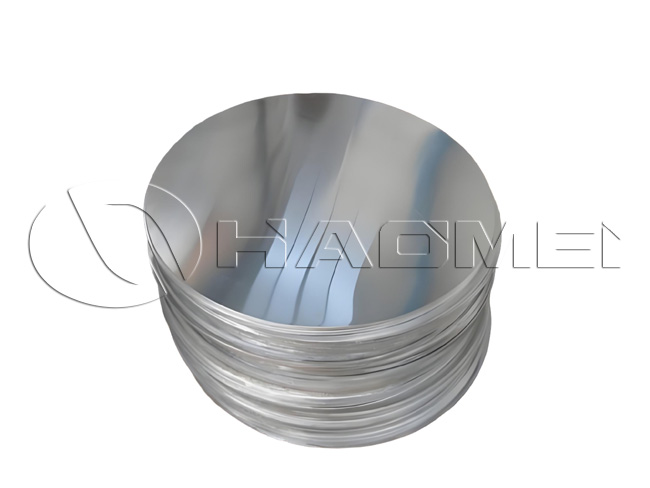
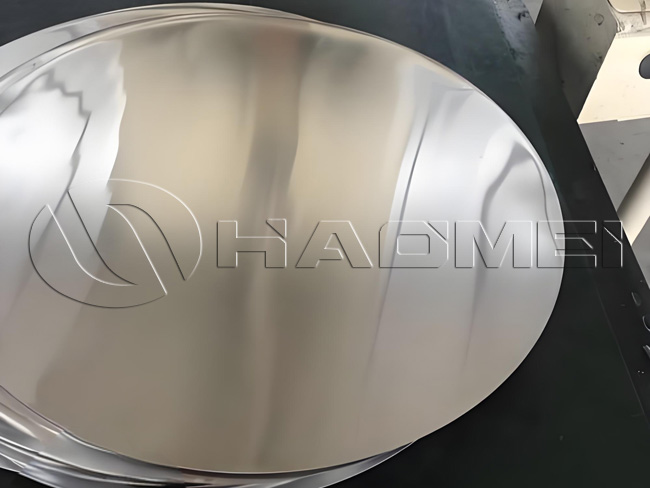
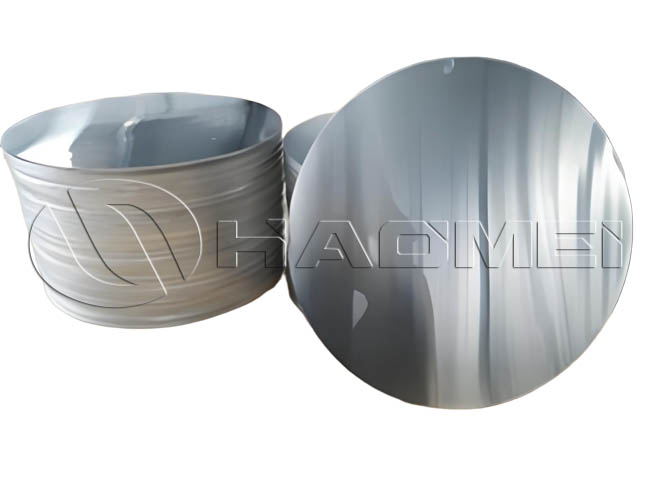
As a factory specializing in the production of aluminum circle discs, we supply rolled and processed aluminum blanks for downstream industrial forming, spinning, deep drawing, stamping, anodizing, and coating operations. In practical manufacturing, aluminum circle discs are not a generic semi-finished product. Their value depends on controlled alloy chemistry, grain structure, surface quality, thickness tolerance, and formability under specific fabrication conditions.
This article outlines the top applications of aluminum circle discs in industry, based on our manufacturing experience and the technical requirements we see from global OEMs and component processors.
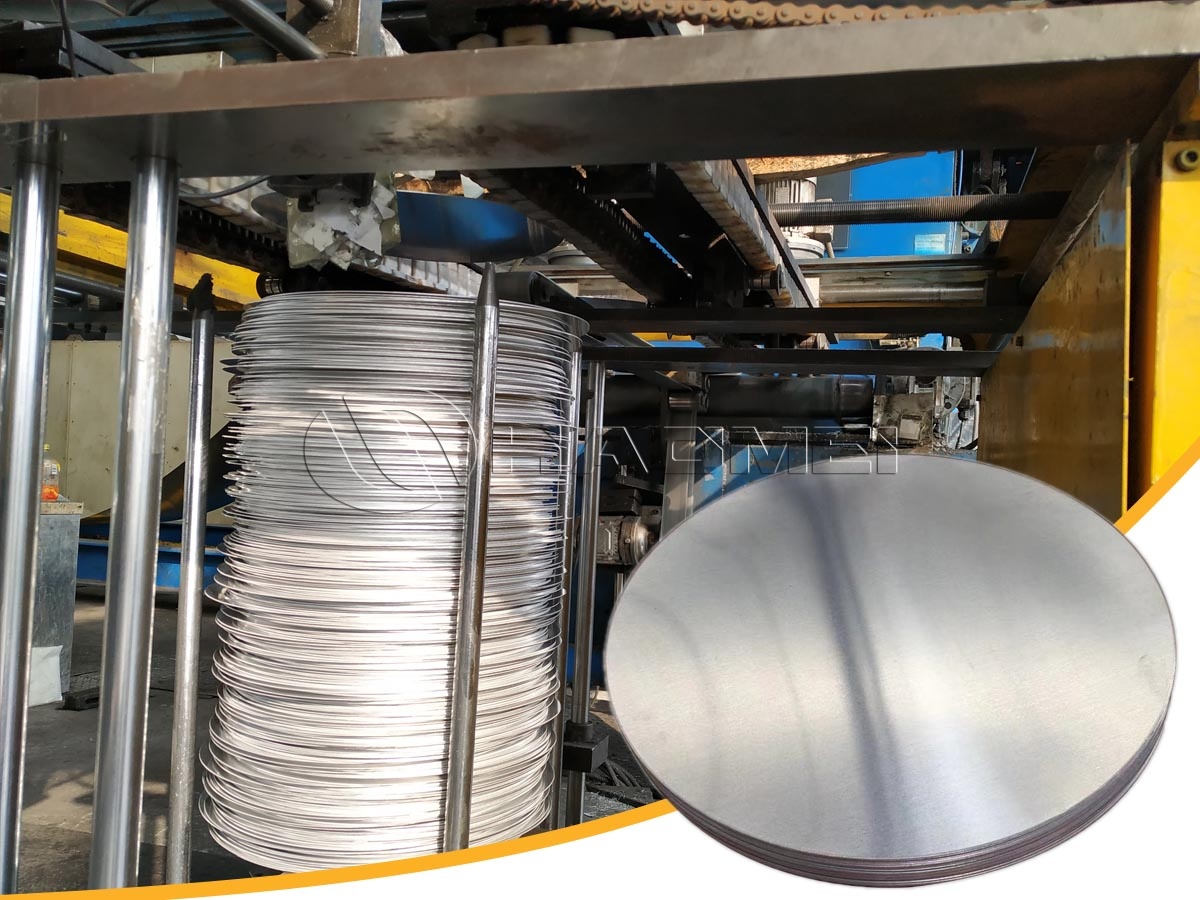
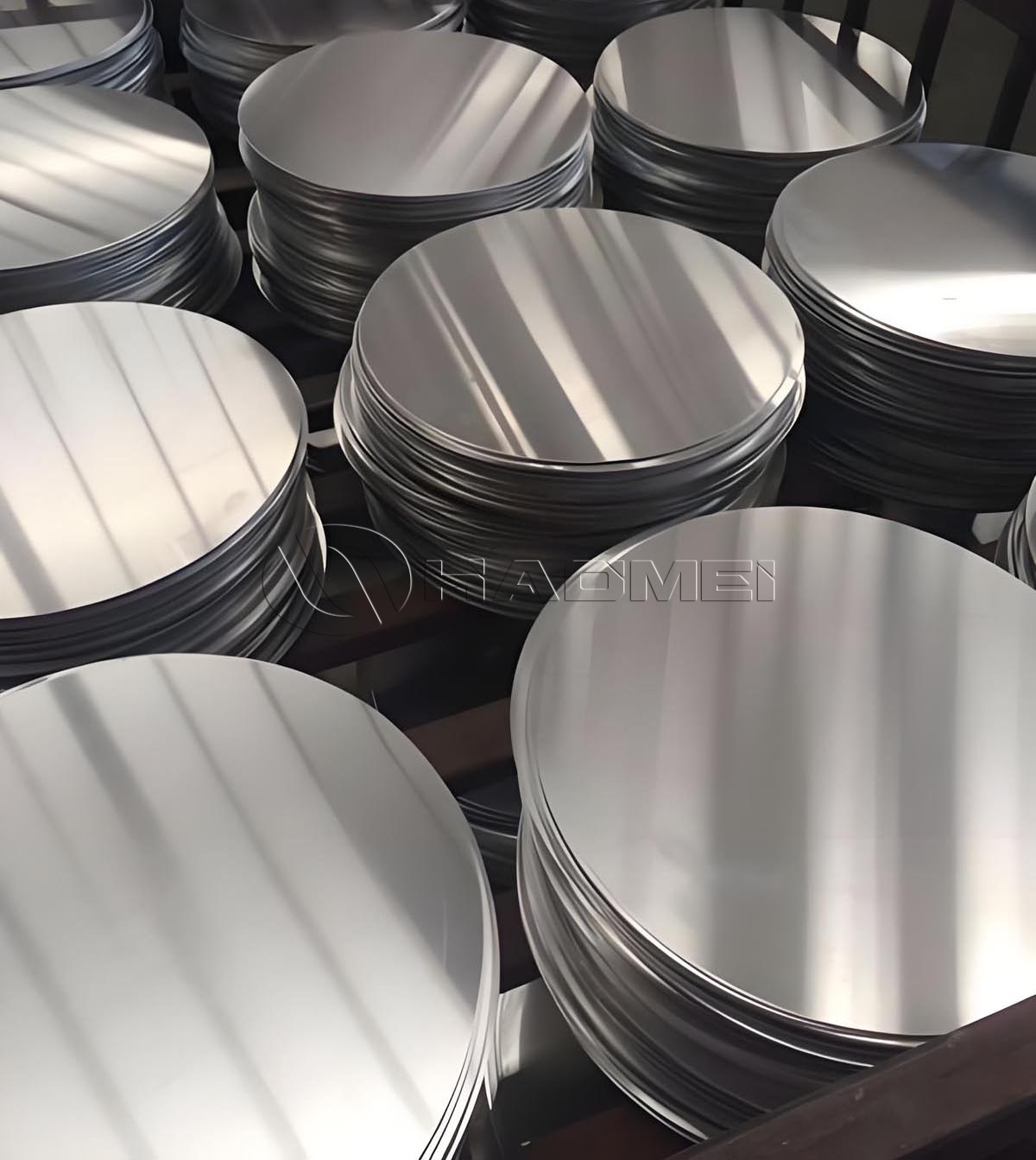
Aluminum circle discs are widely selected because they combine low density, good thermal conductivity, corrosion resistance, and efficient formability. Compared with many alternative metals, aluminum can be processed into circular blanks with stable dimensional accuracy and then converted into finished parts by deep drawing, spinning, impact bonding, punching, or surface finishing.
From a manufacturing standpoint, the most common reasons customers specify aluminum circle discs include:
Good deep drawing and spinning performance
Low ear rate in forming operations
Uniform thickness and flatness
Clean surface suitable for anodizing or coating
High thermal conductivity for cookware and heating parts
Low weight for lighting, signage, and electrical applications
Recyclability and good material utilization
Depending on the end use, we typically produce aluminum circles in 1xxx, 3xxx, 5xxx, and selected 8xxx series alloys, with tempers such as O, H12, H14, and H24.
The table below summarizes the technical range commonly requested for industrial aluminum circle discs.
| Parameter | Typical Range | Notes |
|---|---|---|
| Alloy | 1050, 1060, 1070, 1100, 3003, 3004, 5052, 8011 | Selected by forming, corrosion, and surface requirements |
| Temper | O, H12, H14, H24 | O temper is common for deep drawing |
| Thickness | 0.4 mm to 6.0 mm | Thin gauges for lamps and signs, thicker gauges for cookware |
| Diameter | 80 mm to 1200 mm | Customized according to downstream processing |
| Diameter tolerance | typically +/-0.5 mm to +/-1.0 mm | Depends on size and cutting method |
| Thickness tolerance | according to order specification | Can follow applicable ASTM, EN, or customer standard |
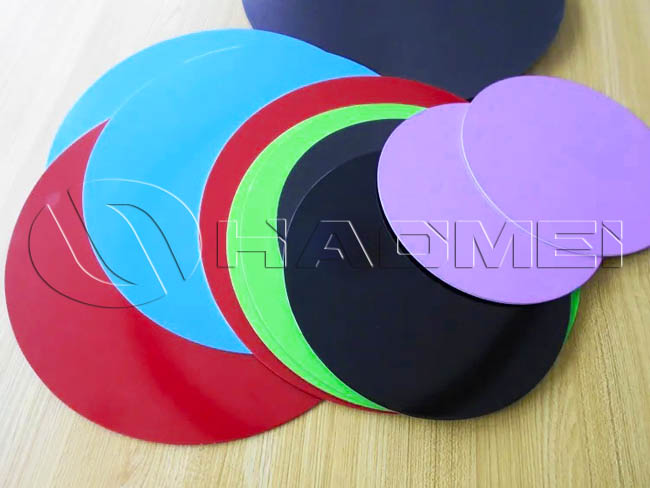
| Surface finish | mill finish, anodizing quality, coated, mirror | Chosen by end application |
| Production route | DC cast, hot rolled, cold rolled, blanked | Route influences formability and grain consistency |
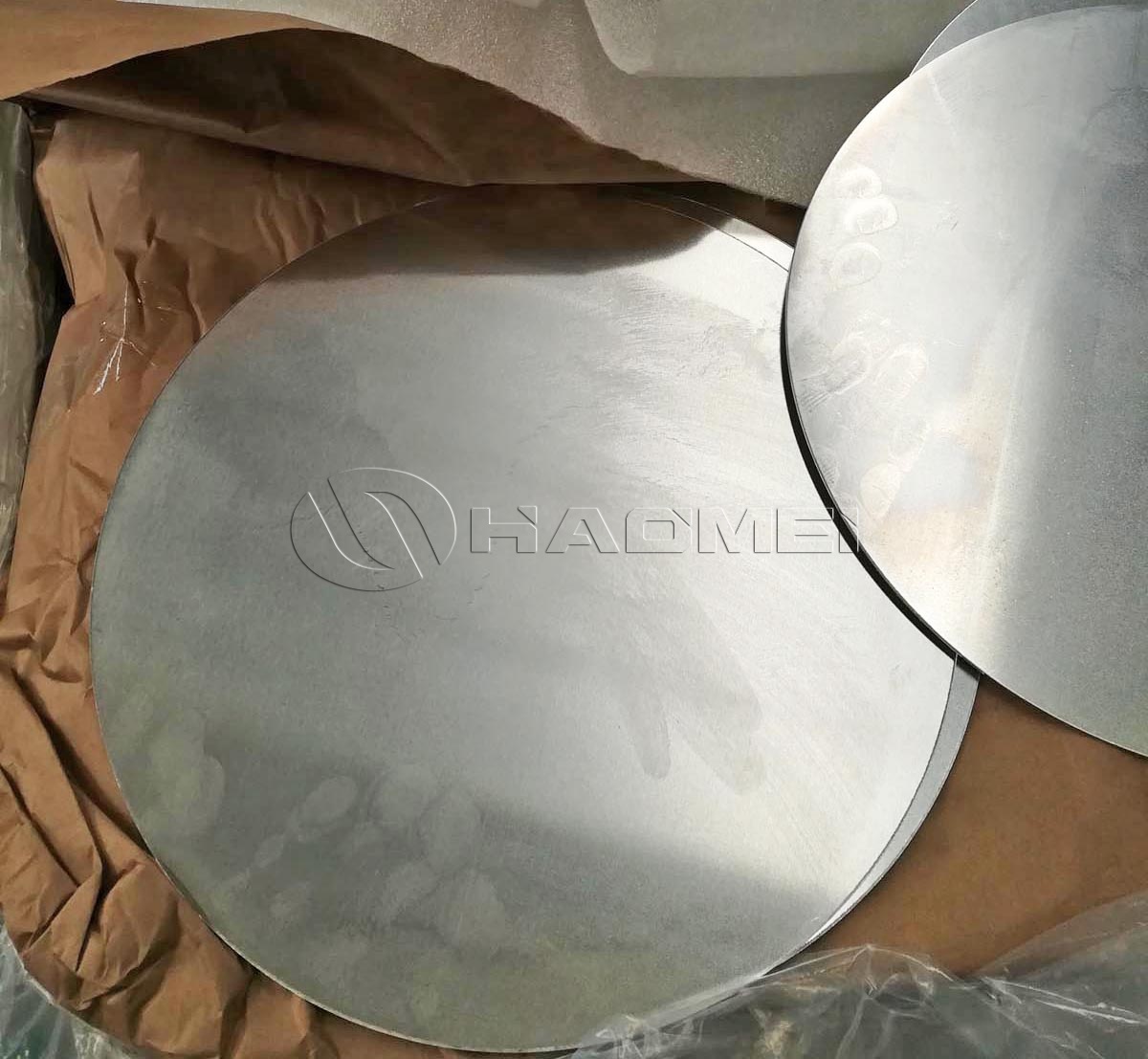
| Packaging | eye to wall, pallets, paper interleaving | Export packaging based on shipment mode |
In our production, tight process control is especially important for applications requiring repeated forming or decorative finishing. Improper rolling history or surface contamination can directly affect yield in customer operations.
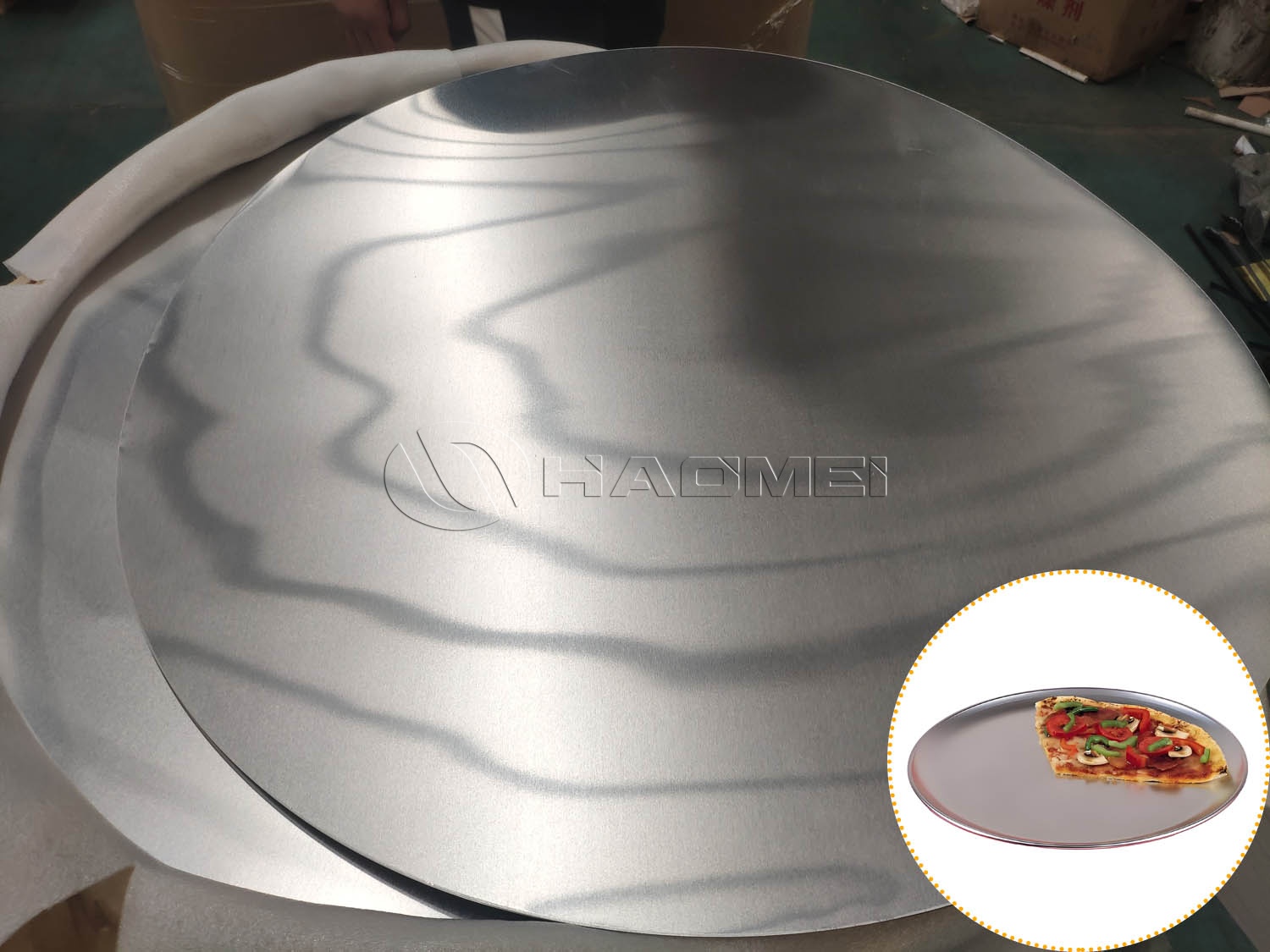
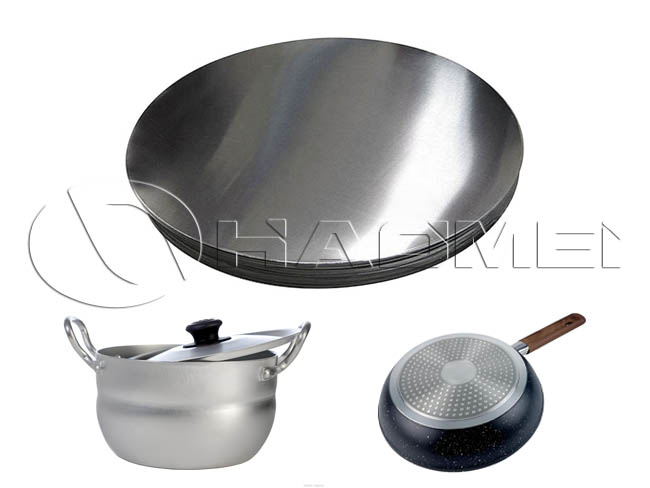
Cookware remains one of the largest end-use sectors for aluminum circle discs. Manufacturers of frying pans, pressure cookers, stock pots, rice cooker inner components, saucepans, and non-stick cookware require discs with stable deep drawing performance and high thermal conductivity.
For this sector, 1050, 1060, 1070, 1100, and 3003 alloys are frequently used. Soft temper material is often preferred because it reduces the risk of cracking during deep drawing and spinning. For pressure cookware or products requiring better strength after forming, alloy and temper selection must be matched carefully with the production route.
We manufacture Aluminum Circles for Cookware with controlled surface cleanliness and edge quality, which are both essential for non-stick coating lines and high-speed forming equipment.
Typical cookware requirements include:
Excellent deep drawability
Smooth and burr-free edges
Uniform heat distribution
Low surface defects for polishing or coating
Consistent mechanical properties from batch to batch
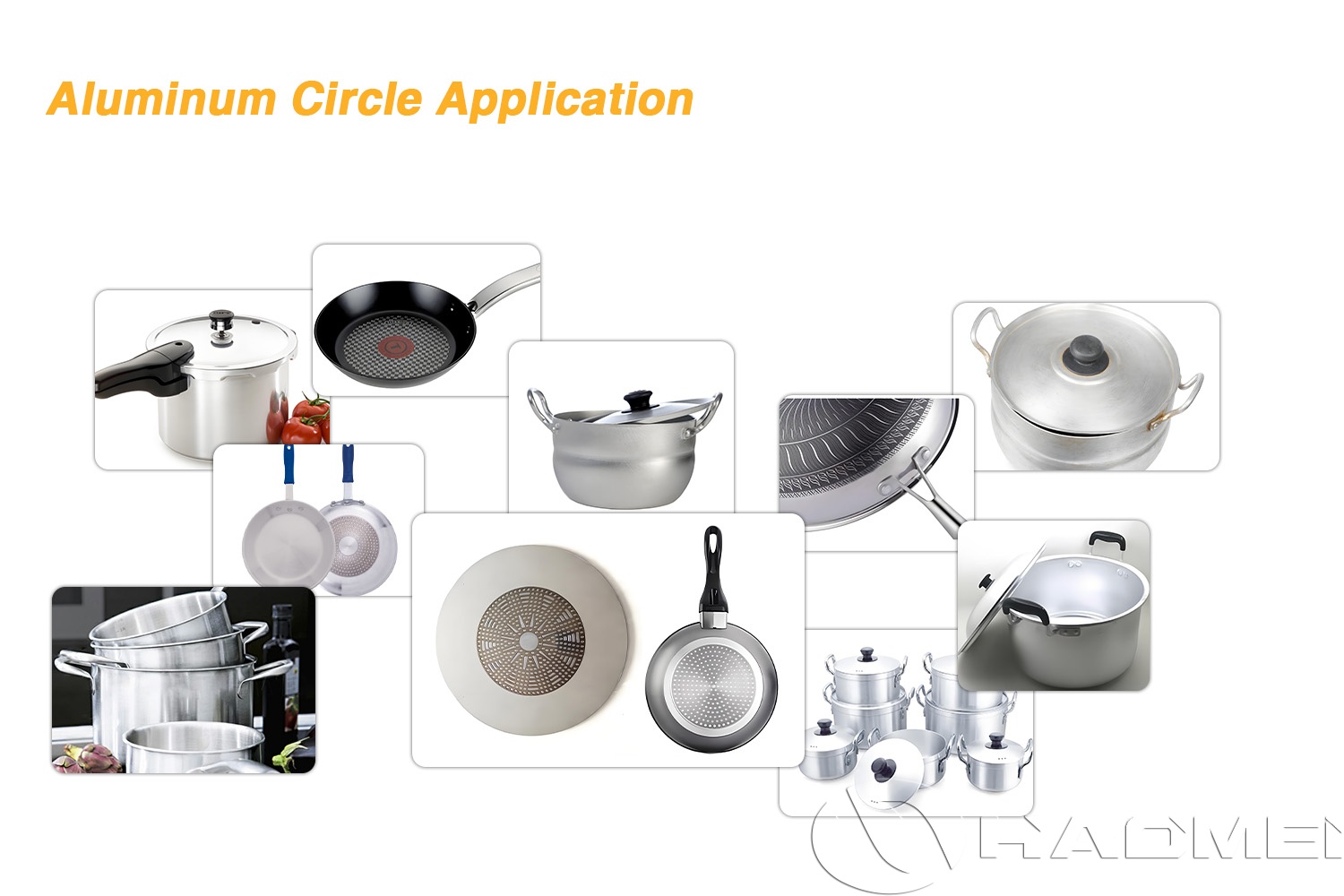
In many cookware projects, customers also evaluate the difference between cold rolled and Hot Rolled Aluminum Circle material. Hot rolled feedstock can offer advantages in deeper forming conditions due to its metallurgical structure, especially for larger diameter and thicker discs.
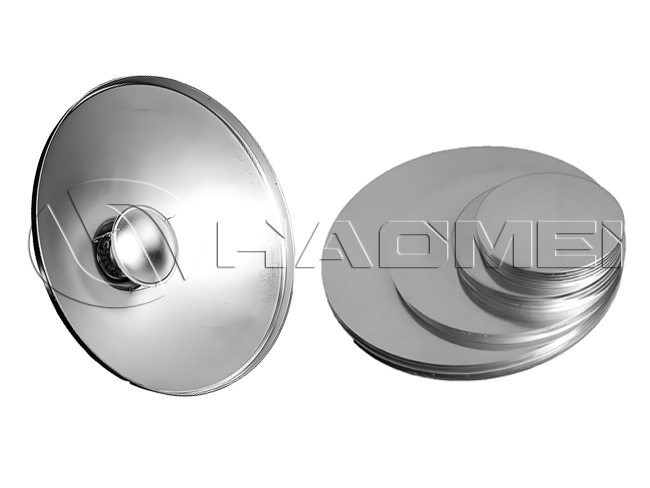
Aluminum circle discs are also widely used in lampshades, reflector housings, decorative lighting covers, and industrial lighting components. In this field, dimensional consistency and surface appearance are often as important as forming performance.
Common alloys include 1050, 1060, and 1100 because of their excellent reflectivity and suitability for spinning. Depending on the final product, the disc may be polished, anodized, painted, or further processed into reflective surfaces.
As a manufacturer, we see three main technical concerns in lampshade production:
Spinning stability without cracking
Surface quality for decorative finishing
Good reflectivity or anodizing response
For products requiring decorative or reflective treatment, the incoming coil quality must be carefully managed before blanking. Minor rolling marks, oil residue, or shape instability can become visible after spinning and anodizing.
Another important application is traffic signs, safety boards, circular sign blanks, and road guidance components. In this segment, aluminum circle discs are valued for corrosion resistance, low weight, and long outdoor service life.
Traffic sign applications may use 1050, 3003, or 5052 depending on the required strength, weather resistance, and coating system. These discs are typically surface treated, coated, or laminated with reflective film before final fabrication.
The key manufacturing requirements for this sector include:
Flat and stable blanks for printing or film lamination
Good corrosion resistance in outdoor conditions
Controlled thickness for structural stability
Clean surface for painting and reflective sheeting adhesion
Customers making circular road signs often specify material with consistent flatness and tight diameter tolerance to support automated sign production. For these needs, our aluminum circle discs for traffic signs are produced with emphasis on punching quality and surface uniformity.
Aluminum circle discs are used in selected electrical and electronic applications such as capacitor shells, enclosures, covers, heat-dissipating parts, and precision stamped components. In this area, formability must be balanced with conductivity, corrosion resistance, and dimensional control.
High-purity alloys such as 1050 and 1060 are often chosen where electrical conductivity matters. For housings and covers, 3003 may be used when moderate strength and good forming performance are needed.
From the factory perspective, this application places greater emphasis on:
Tight thickness tolerance
Stable blanking quality
Surface cleanliness for subsequent assembly
Compatibility with anodizing or insulation treatments
For precision parts, poor edge quality can affect stamping efficiency and tool life. Therefore, disc blanking method and die maintenance are critical factors, not only the alloy itself.
Aluminum circle discs are also processed into lids, covers, filter housings, vessel parts, and formed components used in food processing, light chemical equipment, and packaging machinery. These products may require corrosion resistance, clean surfaces, and compatibility with additional forming operations.
In these applications, 1060, 1100, 3003, and 5052 are commonly specified. The selection depends on whether the finished part requires stronger corrosion performance, easier deep drawing, or compatibility with coating and sealing systems.
The most common production concerns include:
Material cleanliness n- Good formability for multiple drawing steps
Resistance to deformation during assembly
Surface suitability for food-contact or industrial coatings
Where hygiene and cleanliness are essential, controlled packaging and interleaving are just as important as rolling quality. Surface scratches or contamination can create rejection risk in downstream fabrication.
In decorative and architectural manufacturing, aluminum circle discs are converted into ceiling parts, covers, ornamental panels, spun decorative shells, and custom formed components. These projects often require a combination of good shape retention and a high-quality visible surface.
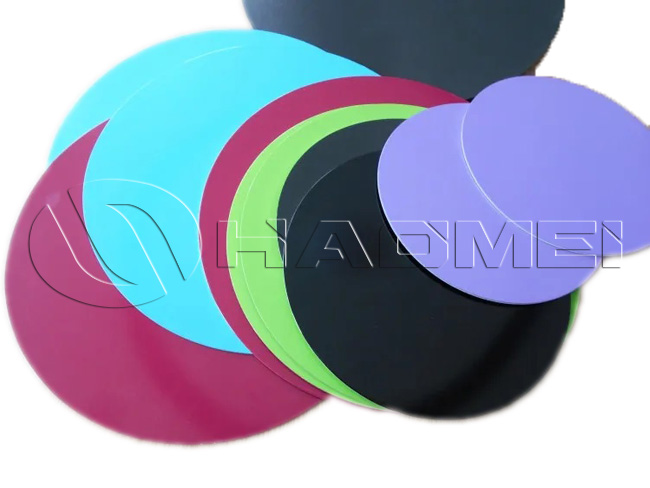
Depending on the design, customers may require mill finish, anodizing quality, mirror finish, or color-coated material. In our production planning, decorative applications require additional control over coil surface, lubrication residues, and protective packaging.
Typical technical priorities are:
Surface appearance after spinning or stamping
Color consistency after coating or anodizing
Flatness before secondary processing
Reliable dimensional repeatability in serial production
Although decorative parts may appear less demanding than structural parts, the visual acceptance standard is often much stricter.
As a manufacturer, we do not recommend selecting aluminum circle discs only by price or nominal alloy. End-use performance depends on the interaction between alloy, temper, rolling route, thickness, and the customer's forming method.
The table below shows a practical application-based selection guide.
| Application | Common Alloy | Common Temper | Key Requirement |
|---|---|---|---|
| Cookware | 1050, 1060, 1100, 3003 | O, H14 | Deep drawing, heat conductivity |
| Lampshades | 1050, 1060, 1100 | O | Spinning, surface finish, reflectivity |
| Traffic signs | 1050, 3003, 5052 | H14, H24 | Flatness, corrosion resistance, coating base |
| Electrical parts | 1050, 1060, 3003 | O, H14 | Conductivity, stamping accuracy |
| Chemical and food equipment parts | 1060, 1100, 3003, 5052 | O, H24 | Clean surface, corrosion resistance |
| Decorative components | 1050, 1060, 1100, 3003 | O, H14 | Appearance, anodizing or coating quality |
This application-driven approach helps reduce cracking, excessive earing, poor surface yield, and forming instability in downstream production.
For industrial buyers, the suitability of aluminum circle discs should be evaluated through more than alloy designation alone. The following quality factors usually determine actual processing results:
Uniform grain structure supports stable deep drawing and spinning, especially for cookware and lighting components.
Burr-free and smooth edges improve safety, reduce die wear, and support cleaner forming.
Oil marks, roll marks, inclusions, or scratches can cause rejection in anodizing, coating, and decorative applications.
Flat blanks improve automation performance in punching, laminating, and spinning lines.
Industrial users need repeatable mechanical properties and forming behavior across large-volume orders.
Aluminum circle discs serve a broad range of industries because they offer a practical combination of light weight, corrosion resistance, thermal conductivity, and efficient formability. The top applications include cookware, lampshades, traffic signs, electrical components, chemical and food equipment parts, and decorative products.
From our position as a factory manufacturer, the most important point is that industrial performance begins with upstream control. Alloy selection, temper, rolling route, blanking precision, and surface management all influence whether the disc performs reliably in the customer's process.
For buyers evaluating aluminum circle discs, the best results come from matching the material specification to the exact forming method and end-use environment rather than using a one-grade-fits-all approach. That is how we support stable quality in high-volume industrial production.

Office Address:
No.14 Waihuan Road, CBD, Zhengzhou, China
Contact Us
HAOMEI Aluminum offer an custom aluminum circle for you!
whatsapp: +86-18703635966
Email: sales@alummc.com
Email: alummc@hotmail.com
Request Free Sample & Quotation
Copyright © 2026 By HAOMEI Aluminum CO., LTD. All Rights Reserved. Sitemap
 +86-18703635966
 sales@alummc.com
 8618703635966
