
 No.14 Waihuan Road, CBD, Zhengzhou, China
 +86-18703635966

No.14 Waihuan Road, CBD, Zhengzhou, China
+86-18703635966
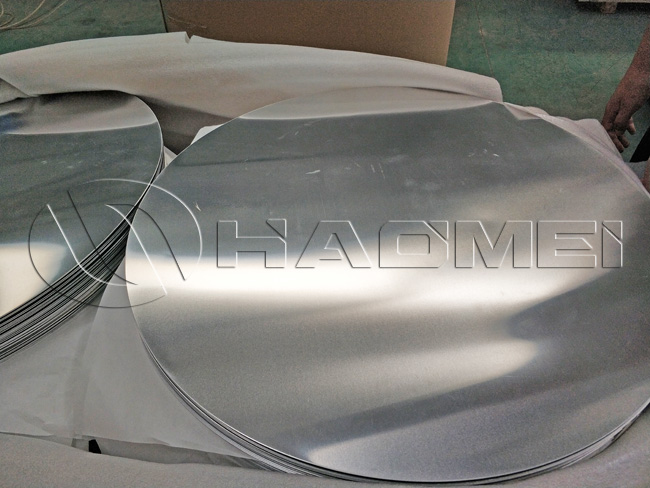
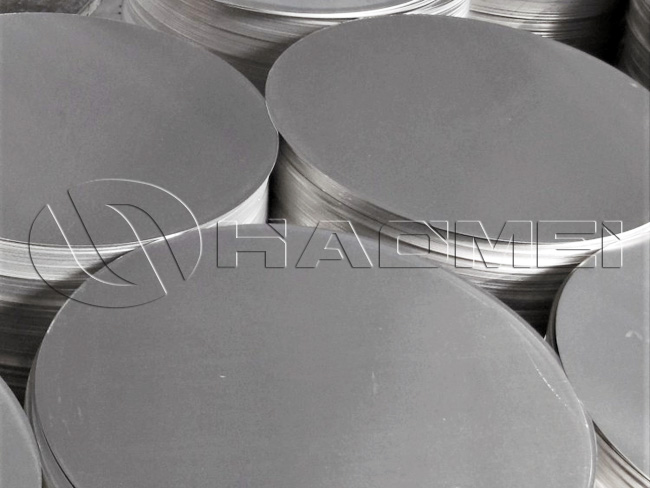
As an aluminum circle manufacturer, we produce polished 3105 aluminum circles for decorative lampshades where appearance, formability, and dimensional consistency must be controlled together. Decorative lighting components are not only functional metal parts. They are visible surfaces, so the aluminum disc must support stable spinning, drawing, polishing, anodizing, painting, or powder coating without obvious defects.
3105 aluminum is widely used for lampshade manufacturing because it combines moderate strength, good corrosion resistance, and reliable forming behavior. Compared with general-purpose aluminum discs, polished 3105 aluminum circles require tighter control of surface quality, edge condition, flatness, and alloy temper. Our production route is designed for these requirements, from coil selection and blanking to surface protection and final inspection.
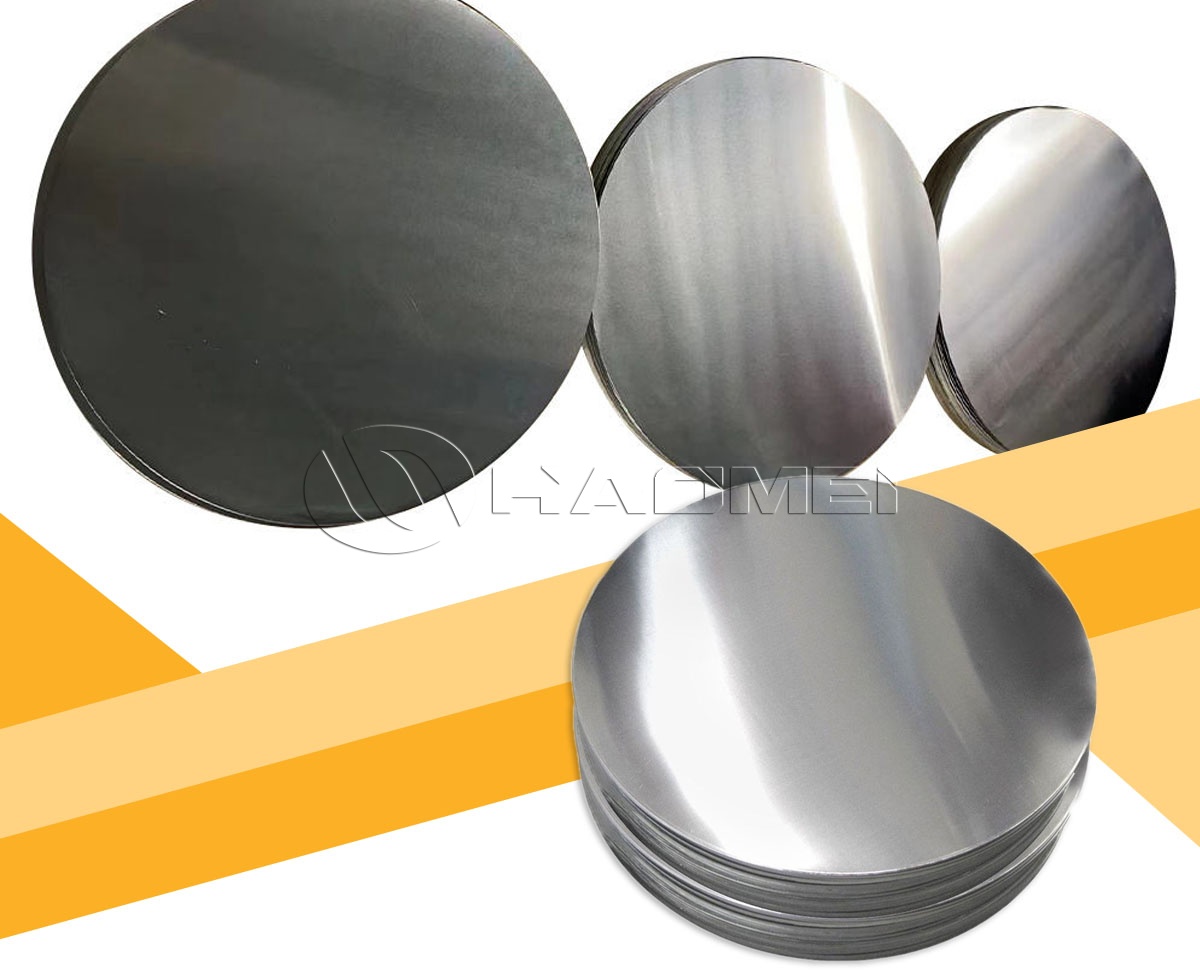
3105 aluminum belongs to the 3000 series aluminum-manganese alloy family. It contains manganese as the main alloying element and has higher strength than pure aluminum grades such as 1050 or 1060, while maintaining good workability. For lampshade production, this balance is important because the disc must withstand spinning or deep drawing, yet remain suitable for polishing and decorative finishing.
In practical lampshade manufacturing, 3105 aluminum circles are often used for pendant lamp shades, ceiling lamp covers, reflector housings, decorative bowls, wall lamp parts, and architectural lighting accessories. The material can be formed into curved, conical, domed, or stepped shapes depending on the tool design and forming process.
From a factory perspective, the key advantage of 3105 is process stability. When the chemical composition, temper, and rolling quality are correctly controlled, the aluminum circle shows uniform deformation during spinning or drawing. This reduces the risk of orange peel, cracking, uneven wall thinning, or surface distortion after polishing.
For buyers who source multiple 3000 series alloys, our 3105 Aluminum Circle production line focuses on decorative and formed parts that require both mechanical reliability and visible surface quality.
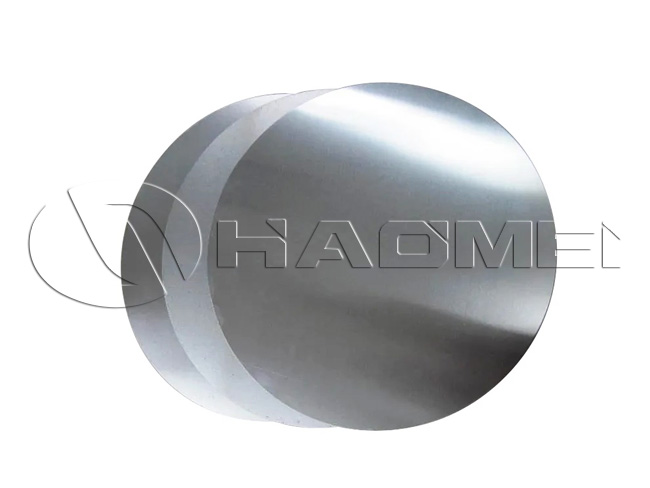
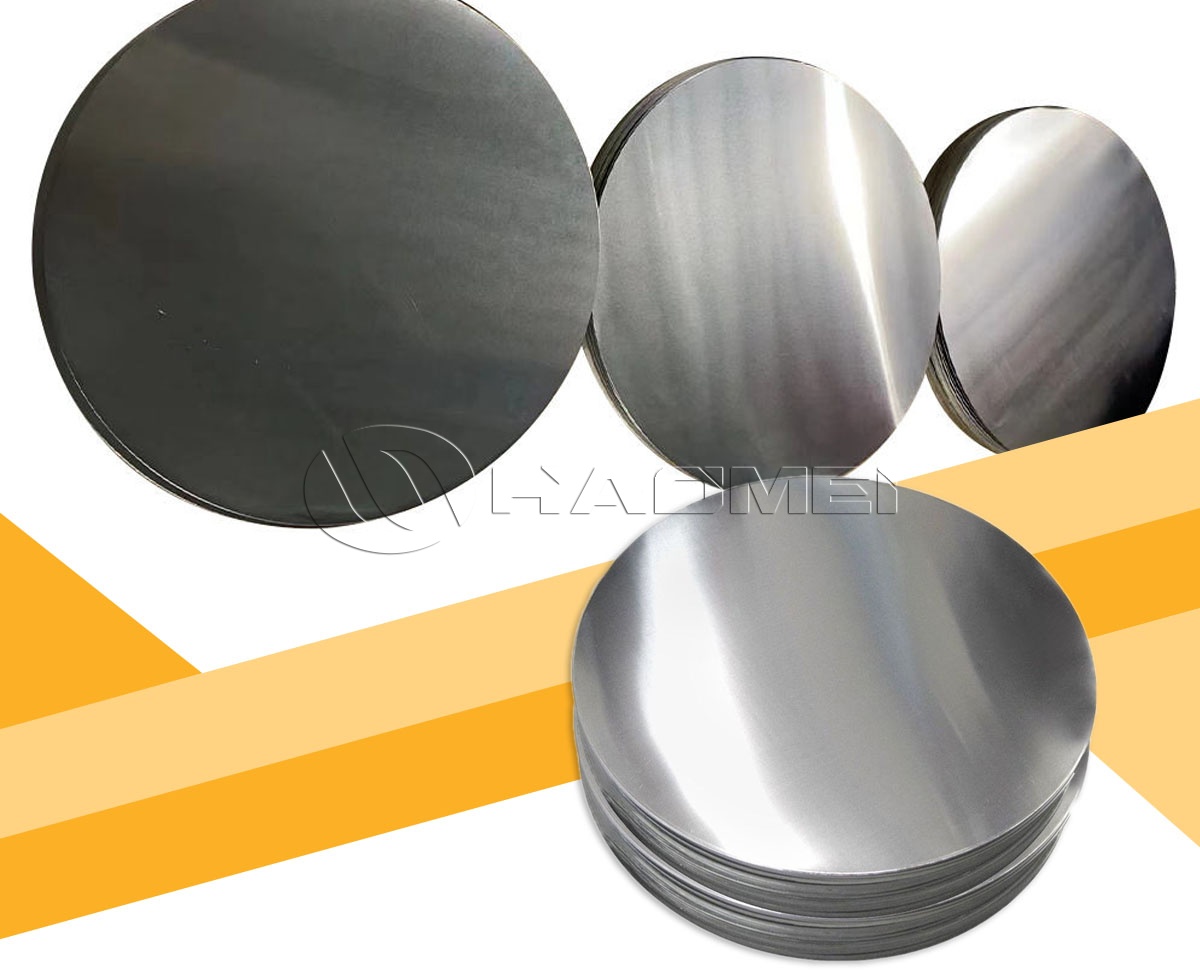
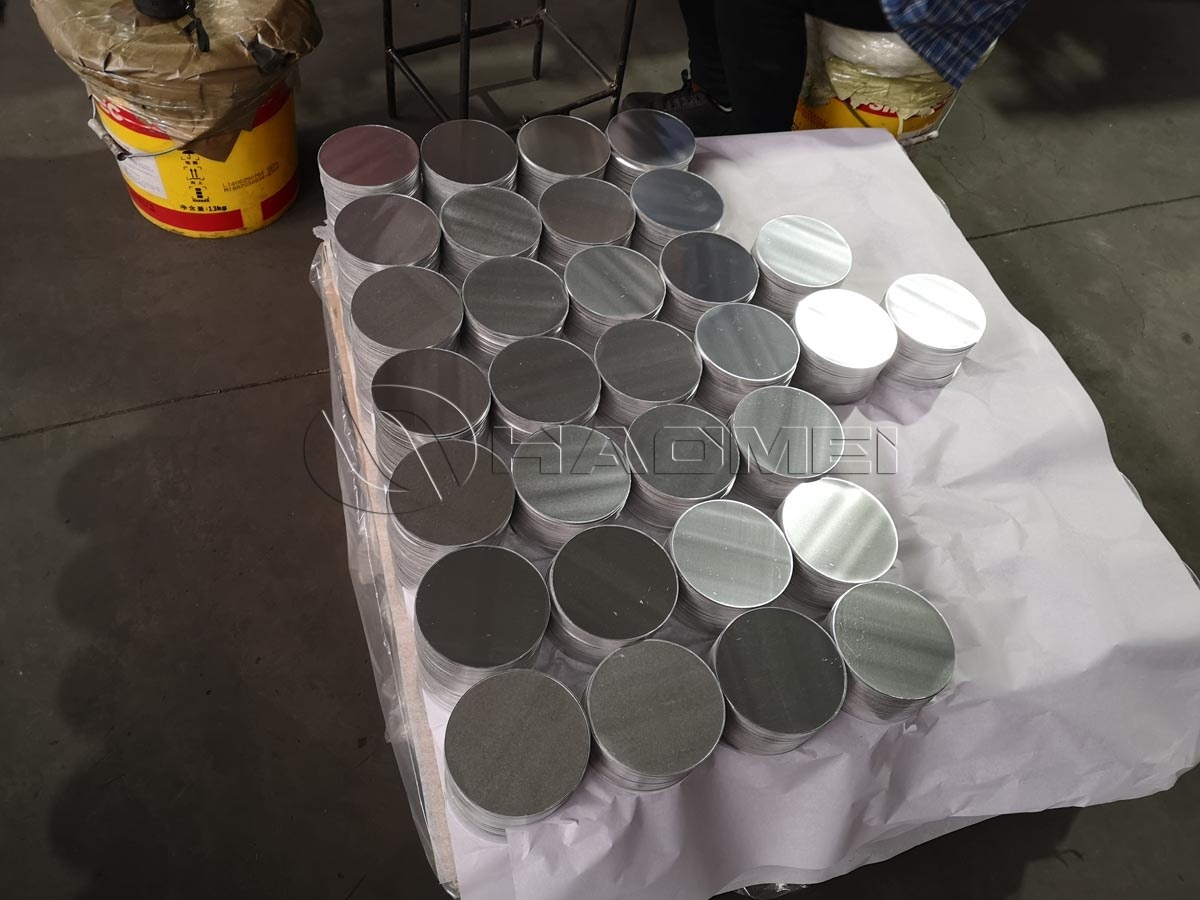
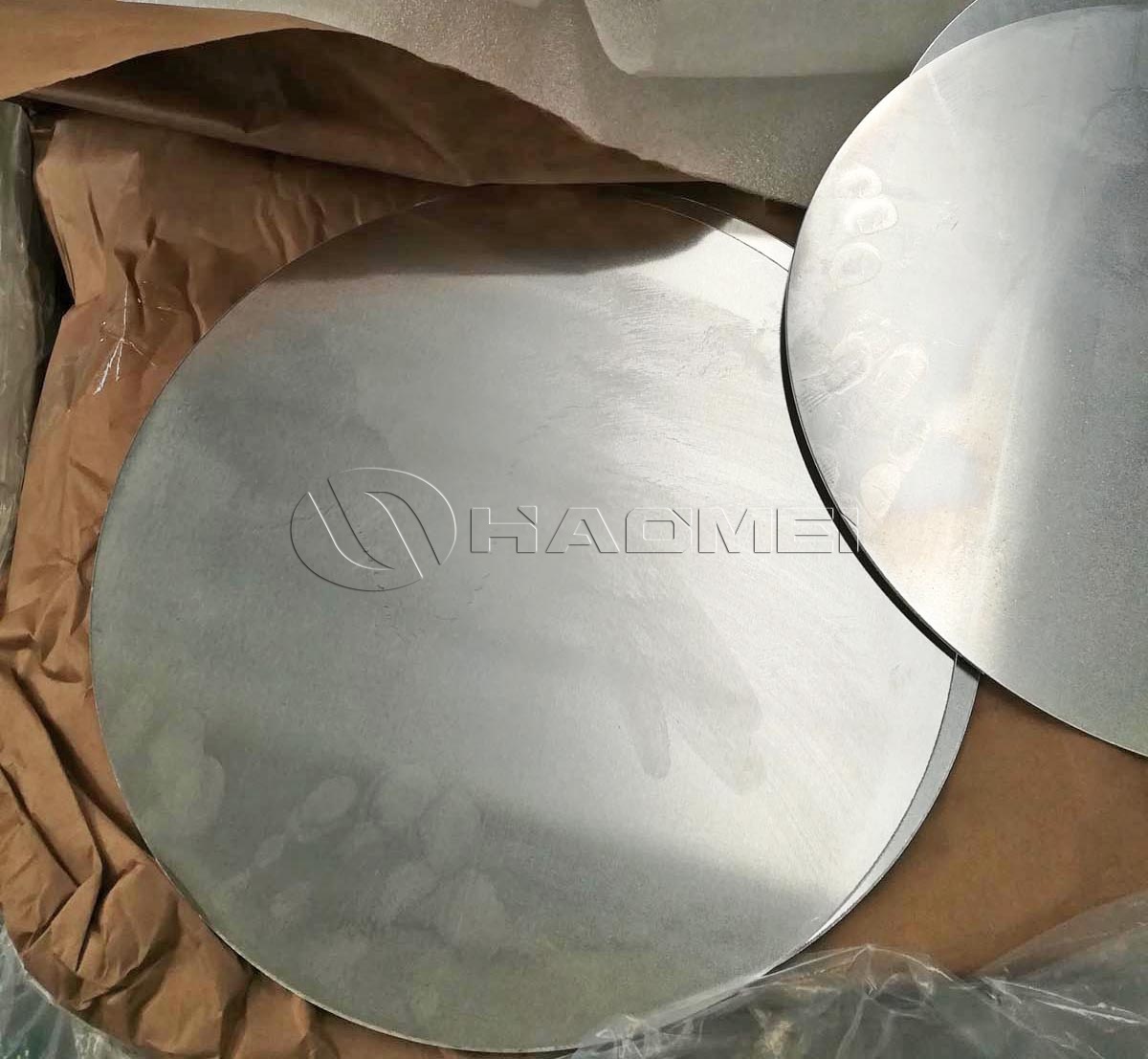
A polished lampshade aluminum disc is different from a standard industrial blank. The surface must be clean, bright, and suitable for further finishing. Depending on the final product design, customers may require a satin polish, semi-bright polish, high-gloss polish, or a surface prepared for anodizing.
For decorative lampshades, visible defects can become more obvious after forming. Small scratches, roller marks, oil stains, water marks, black lines, or embedded particles may expand or reflect light after the disc is spun into shape. Therefore, we inspect the original coil surface before blanking and protect the aluminum circles during handling, stacking, and packaging.
Polishing quality also depends on the alloy and temper. A suitable 3105 aluminum disc should have consistent grain structure and stable hardness. If the material is too hard, forming cracks may appear. If it is too soft or uneven, the surface may deform irregularly during spinning. Our production engineers recommend the temper based on the lampshade depth, diameter, forming method, and final surface treatment.
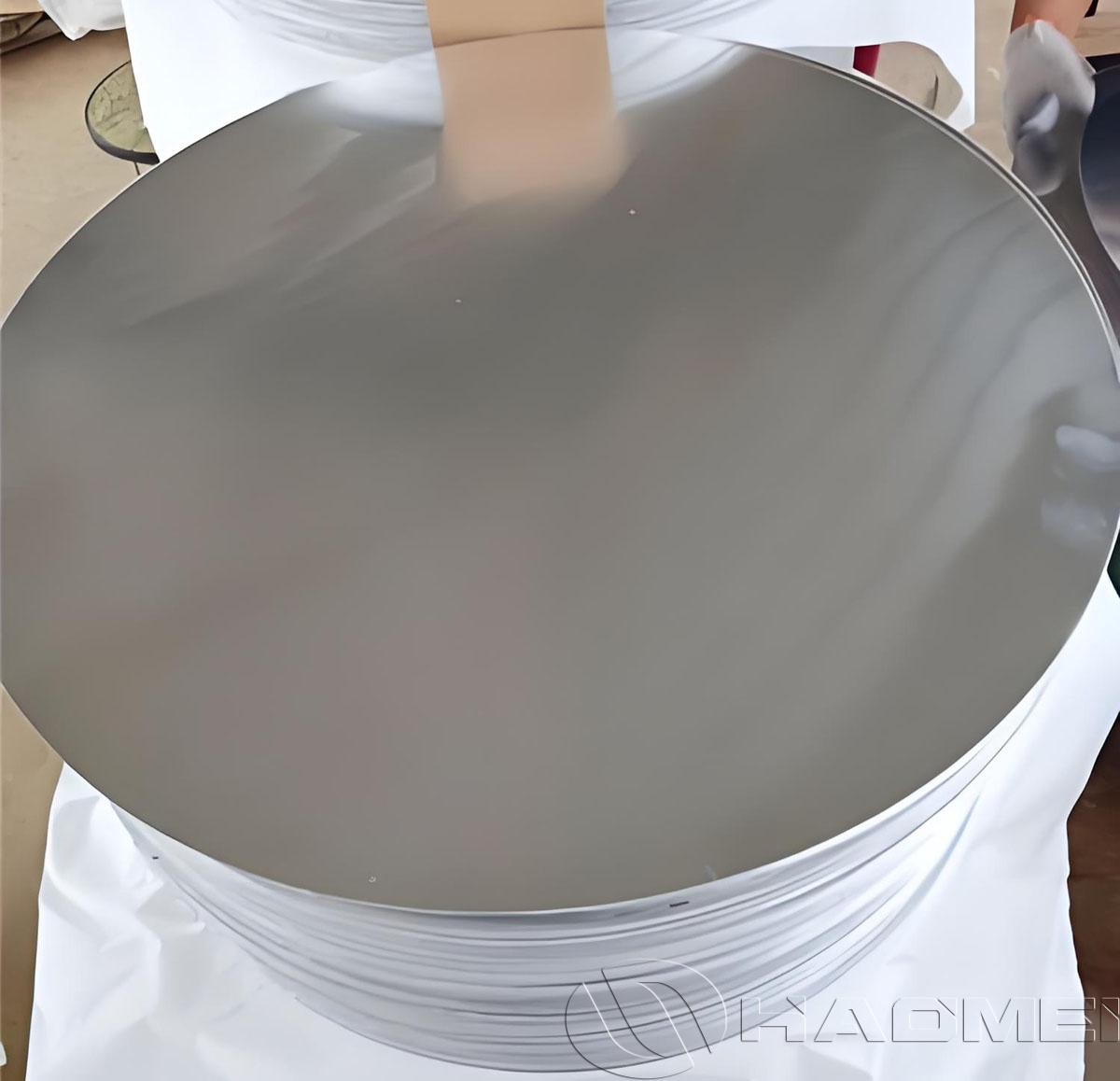
The following table shows common specifications for polished 3105 aluminum circles used in decorative lampshades. Custom dimensions and tolerances can be produced according to drawings, samples, or forming requirements.
| Item | Typical Specification | Notes |
|---|---|---|
| Alloy | 3105 | Aluminum-manganese alloy for forming and decorative use |
| Temper | O, H12, H14, H16, H18 | Selected according to spinning, drawing, or stamping process |
| Thickness | 0.5 mm to 4.0 mm | Common lampshade range is 0.6 mm to 2.5 mm |
| Diameter | 100 mm to 1200 mm | Larger sizes available after technical review |
| Diameter tolerance | +/-0.5 mm to +/-2.0 mm | Depends on diameter and thickness |
| Thickness tolerance | According to EN, ASTM, or agreed standard | Tighter control available for precision parts |
| Surface finish | Polished, bright, mill finish before polishing, or protected surface | Final finish based on application |
| Edge condition | Burr-controlled, smooth edge | Important for spinning and safe handling |
| Flatness | Controlled for automated feeding and forming | Inspected during production |
| Inner surface quality | Clean and oil-controlled | Suitable for coating or reflective treatment |
| Packaging | Wooden pallet or wooden case with moisture protection | Export packaging for sea or land shipment |
| Standards | ASTM B209, EN 485, customer technical specification | Subject to order requirements |
Decorative lampshades are commonly produced by metal spinning, deep drawing, hydraulic forming, or stamping. The correct temper is essential for each forming method.
For deep lampshade shapes with significant deformation, O temper 3105 aluminum circles are often recommended because they provide the highest ductility. The soft condition helps the disc flow evenly during drawing and reduces the risk of edge cracking. For shallow shades or parts requiring better rigidity after forming, H12 or H14 temper may be suitable.
H16 and H18 tempers are used when higher strength is needed and forming depth is limited. These harder conditions require careful evaluation because excessive work hardening may reduce formability. In our factory, we review the lampshade drawing, forming ratio, die radius, and customer process before confirming the recommended temper.
For customers producing different lamp designs, we can supply trial batches in several tempers. This allows engineers to compare forming performance, surface behavior, and final appearance before mass production.
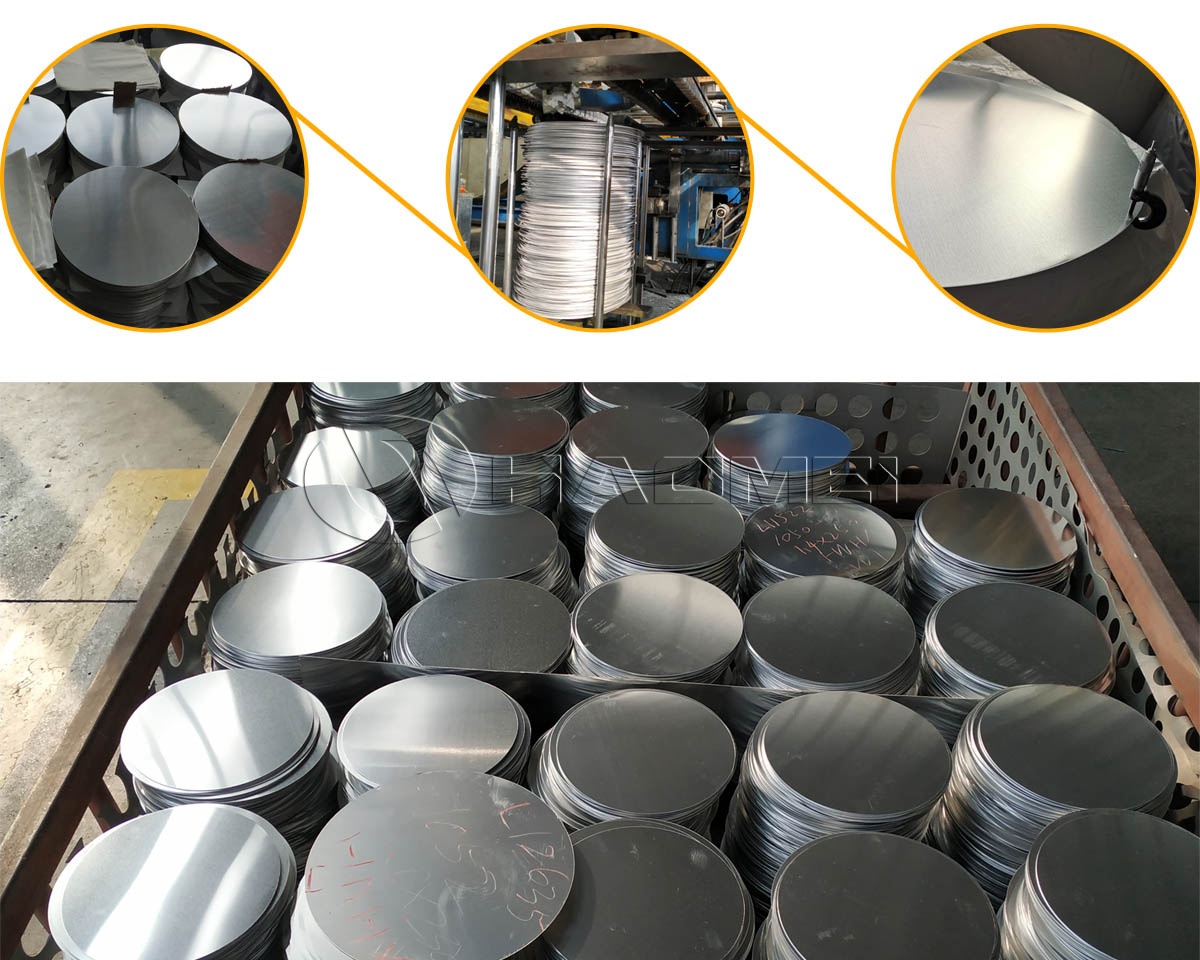
Our production of polished 3105 aluminum circles begins with qualified aluminum coil. The coil is checked for chemical composition, thickness accuracy, surface condition, and mechanical properties. After approval, it enters leveling, blanking, annealing when required, polishing, inspection, and packaging.
The main process flow includes:
Coil selection according to alloy, temper, and surface requirements.
Precision leveling to reduce internal stress and improve flatness.
Circle blanking with controlled diameter and burr height.
Heat treatment or annealing when O temper or special forming performance is required.
Surface polishing or surface preparation according to customer finish requirements.
Cleaning, drying, and surface protection.
Dimensional inspection, surface inspection, and mechanical property testing.
Export packing with protective film, paper interleaving, and moisture-proof materials.
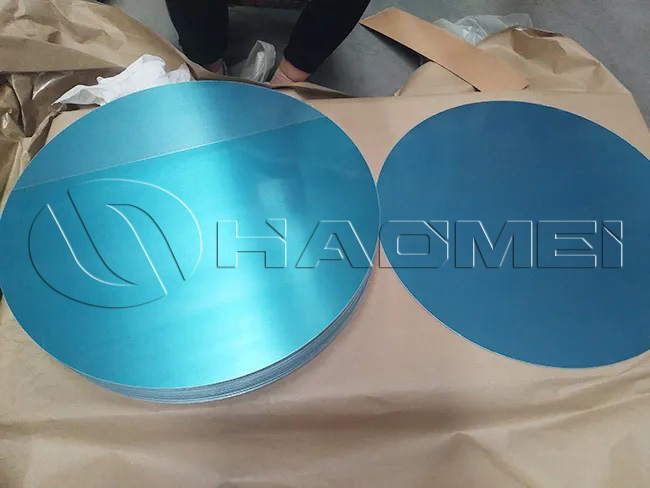
For polished aluminum circles, handling is as important as processing. We use clean working areas and suitable separation materials to reduce surface friction between discs. Operators follow controlled stacking and lifting methods to avoid edge impact and pressure marks.
Lampshade manufacturers often perform secondary processes such as anodizing, brushing, painting, powder coating, or lacquering. Surface contamination can cause coating defects, color differences, poor adhesion, or visible marks. For this reason, our polished 3105 aluminum discs are supplied with controlled oil levels and clean surfaces.
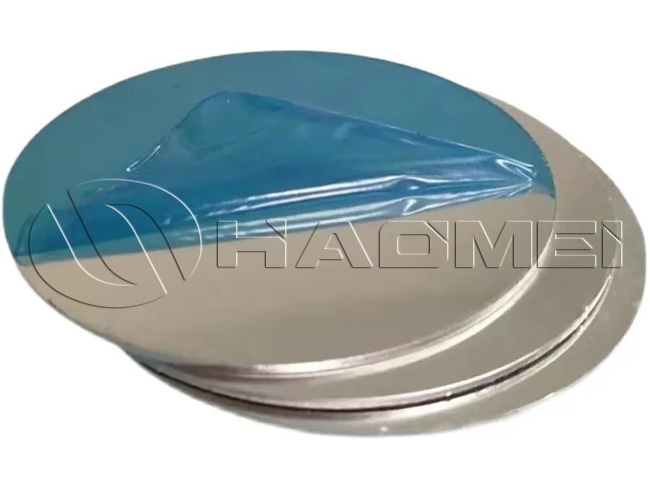
If the customer plans to polish again after forming, we can provide a surface suitable for post-forming finishing. If the lampshade is produced directly from a pre-polished disc, we apply more careful protection during stacking and packaging. Protective film can be used when required, but film selection must match the customer's forming temperature, storage conditions, and removal process.
Moisture control is also important for export shipments. Aluminum circles stored in humid conditions may develop oxidation stains or water marks. Our export packaging uses moisture barriers, desiccants where needed, and stable wooden pallets or cases. Each package is designed to reduce movement during transportation.
A lampshade aluminum circle must have accurate diameter, consistent thickness, and stable flatness. These factors directly affect material feeding, forming symmetry, wall thickness distribution, and trimming allowance. If the diameter varies significantly, the finished lampshade height or rim width may become inconsistent. If the thickness is unstable, drawing force and surface tension can change during production.
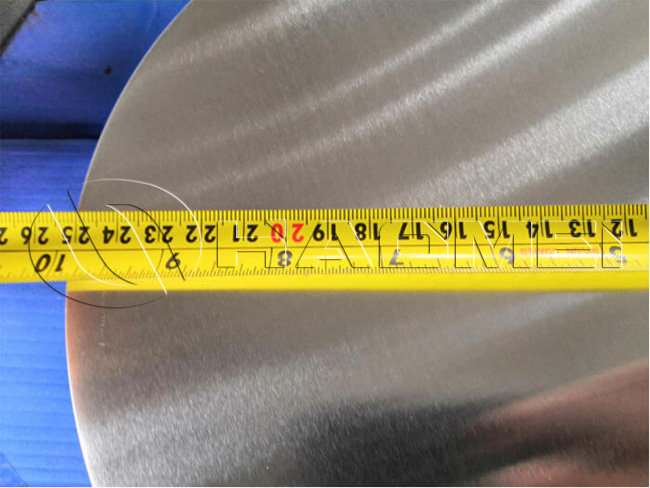
We control circle diameter through precision blanking equipment and routine inspection. Thickness is monitored from incoming coil to finished disc. Flatness is checked because warped discs can create feeding problems in automated lines or cause uneven contact in spinning machines.
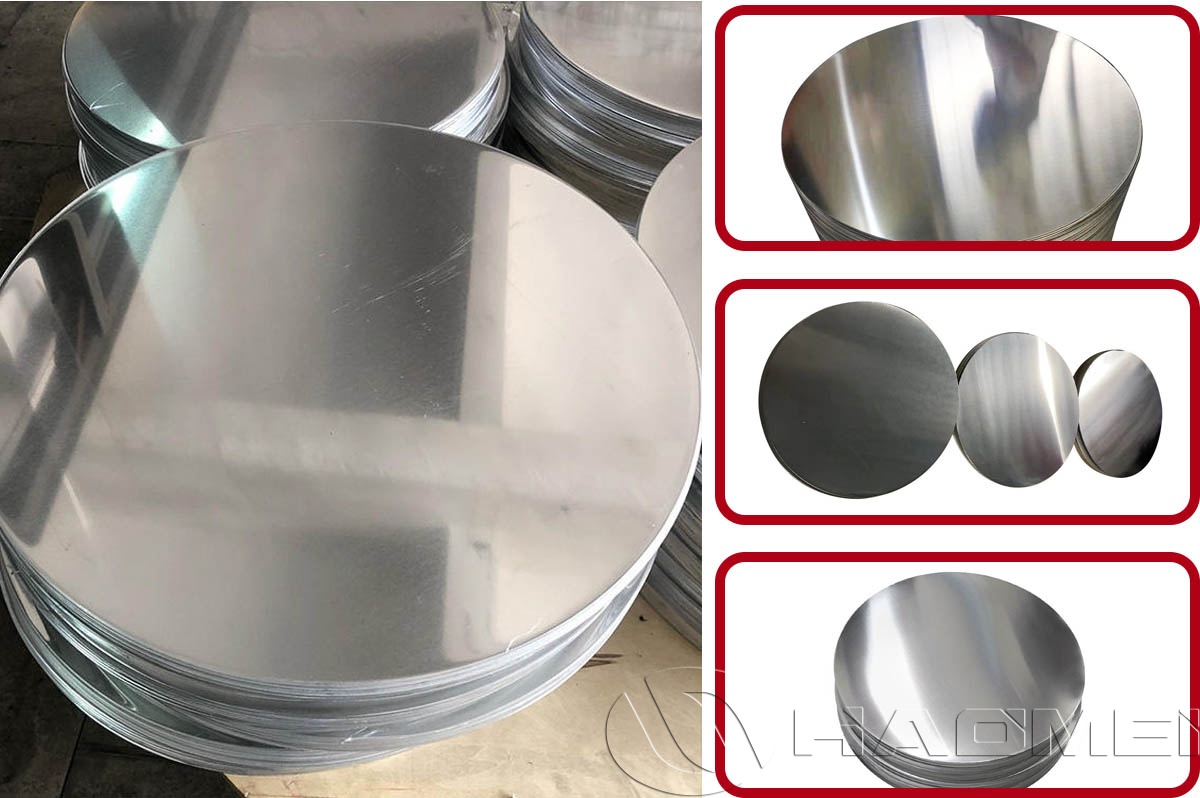
For customers who produce high-volume lighting components, dimensional repeatability can reduce machine adjustment time and scrap rate. This is why we treat polished 3105 aluminum circles as engineered blanks rather than simple cut discs.
Different aluminum grades can be used for lampshades, but each has specific characteristics. 1050 and 1060 aluminum circles provide excellent softness and reflectivity, but their strength is lower. 3003 aluminum circles are widely used for cookware and general deep drawing, and they provide good corrosion resistance. 3105 aluminum offers a practical combination of strength, formability, and surface finishing capability for decorative lighting parts.
For customers comparing alloy options within the same family, 3000 Series Aluminum circle products provide several choices for formed components. However, when a lampshade requires a polished decorative surface and better mechanical stability than pure aluminum, 3105 is often a suitable choice.
The final alloy selection should consider forming depth, required rigidity, surface finish, coating process, and cost target. Our engineering team can evaluate these factors before production instead of recommending a single alloy for all applications.
Before shipment, each batch of polished 3105 aluminum circles is inspected according to the order specification. Inspection normally includes chemical composition verification, thickness measurement, diameter measurement, visual surface inspection, burr check, hardness or tensile testing when required, and packaging confirmation.
Surface inspection is performed under suitable lighting conditions to identify scratches, stains, oxidation, dents, roller marks, and polishing inconsistency. For decorative lampshade applications, acceptance standards should be clearly agreed before production because visible surface expectations may differ between industrial, commercial, and architectural lighting markets.
We can provide mill test certificates, inspection reports, and packing lists with each shipment. For long-term customers, we keep production records to support repeat orders and stable quality tracking.
To produce polished 3105 aluminum circles accurately, we recommend that buyers provide the following information:
Alloy and temper, or the intended forming process if the temper is not yet confirmed.
Thickness and diameter of the aluminum circle.
Surface finish requirement, such as polished, bright, satin, or prepared for coating.
Quantity and packaging preference.
Lampshade drawing or final part dimensions if forming performance needs review.
Required standard, tolerance, and inspection documents.
Destination port and storage conditions if special packaging is needed.
With this information, we can confirm feasibility, recommend material condition, calculate production scheduling, and prepare a quotation based on factory production parameters.
Polished 3105 aluminum circles for decorative lampshades require more than basic blanking. The material must combine stable alloy composition, appropriate temper, precise dimensions, controlled surface finish, and reliable packaging. As a manufacturer, we manage these factors within our production process so that lighting factories can receive aluminum discs suitable for spinning, deep drawing, polishing, anodizing, coating, and assembly.
For decorative lampshade production, 3105 aluminum provides a balanced solution between formability, corrosion resistance, surface quality, and finished part strength. By selecting the right thickness, diameter, temper, and polishing standard, manufacturers can improve forming consistency and achieve a clean decorative appearance in the final lighting product.

Office Address:
No.14 Waihuan Road, CBD, Zhengzhou, China
Contact Us
HAOMEI Aluminum offer an custom aluminum circle for you!
whatsapp: +86-18703635966
Email: sales@alummc.com
Email: alummc@hotmail.com
Request Free Sample & Quotation
Copyright © 2026 By HAOMEI Aluminum CO., LTD. All Rights Reserved. Sitemap
 +86-18703635966
 sales@alummc.com
 8618703635966
