
 No.14 Waihuan Road, CBD, Zhengzhou, China
 +86-18703635966

No.14 Waihuan Road, CBD, Zhengzhou, China
+86-18703635966
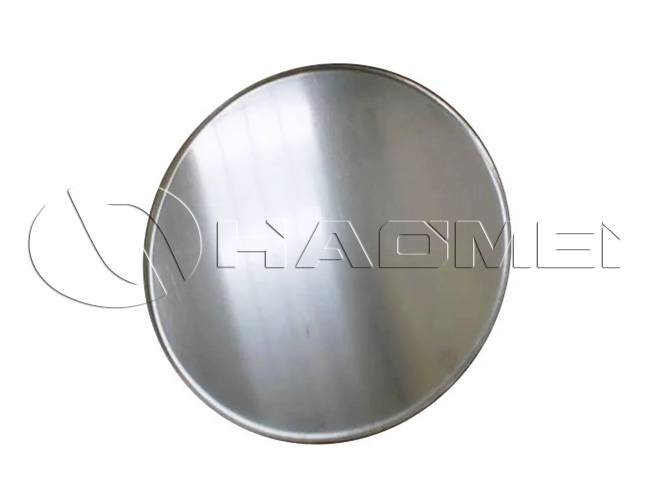
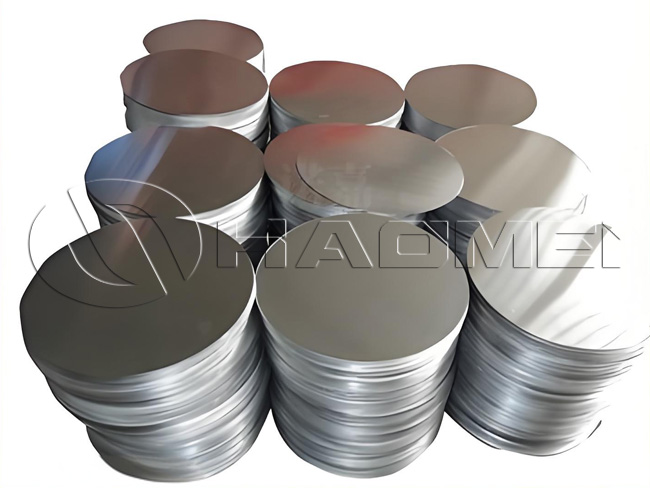
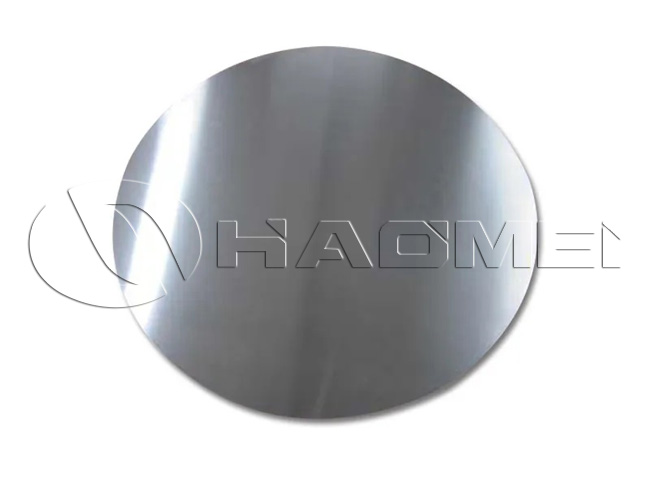
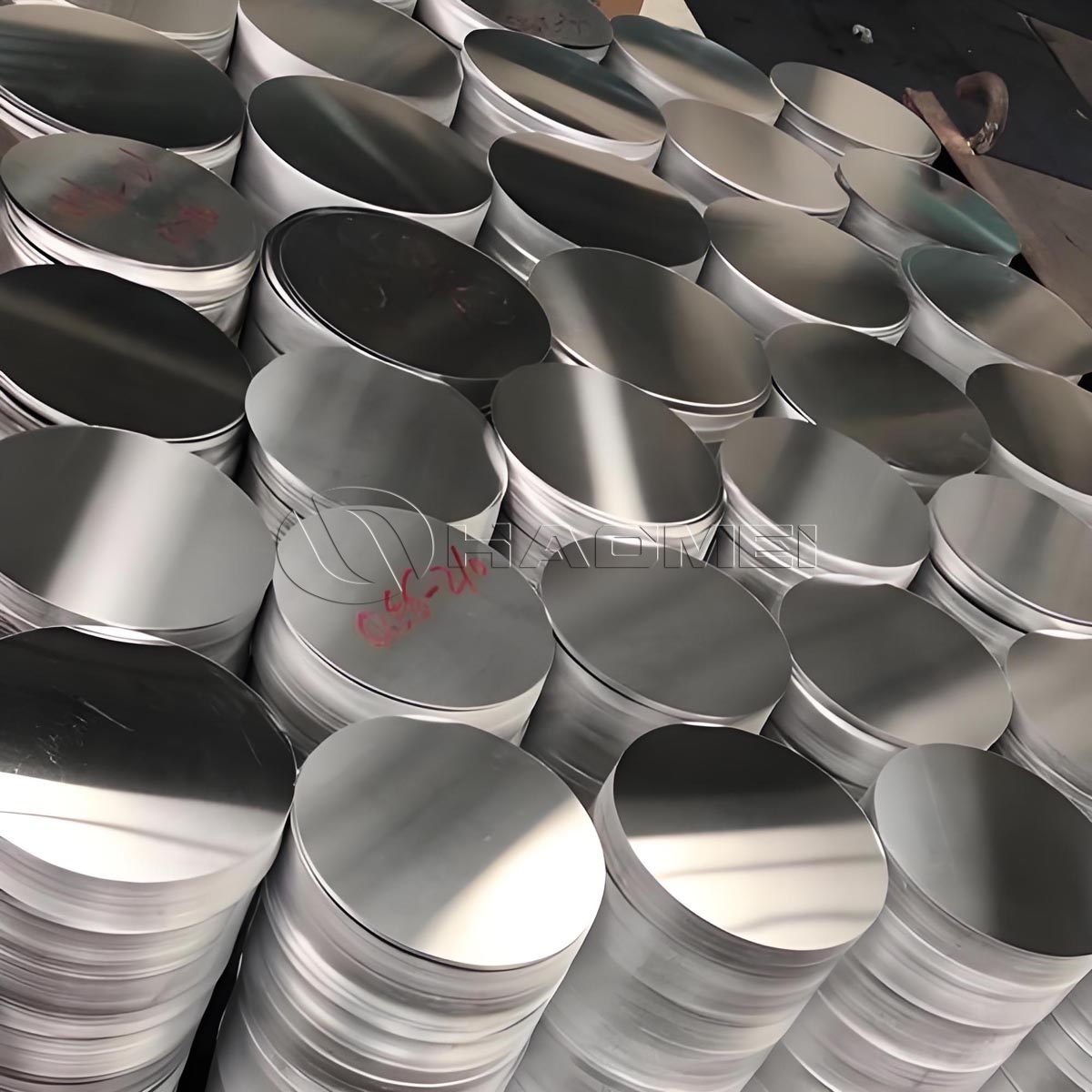
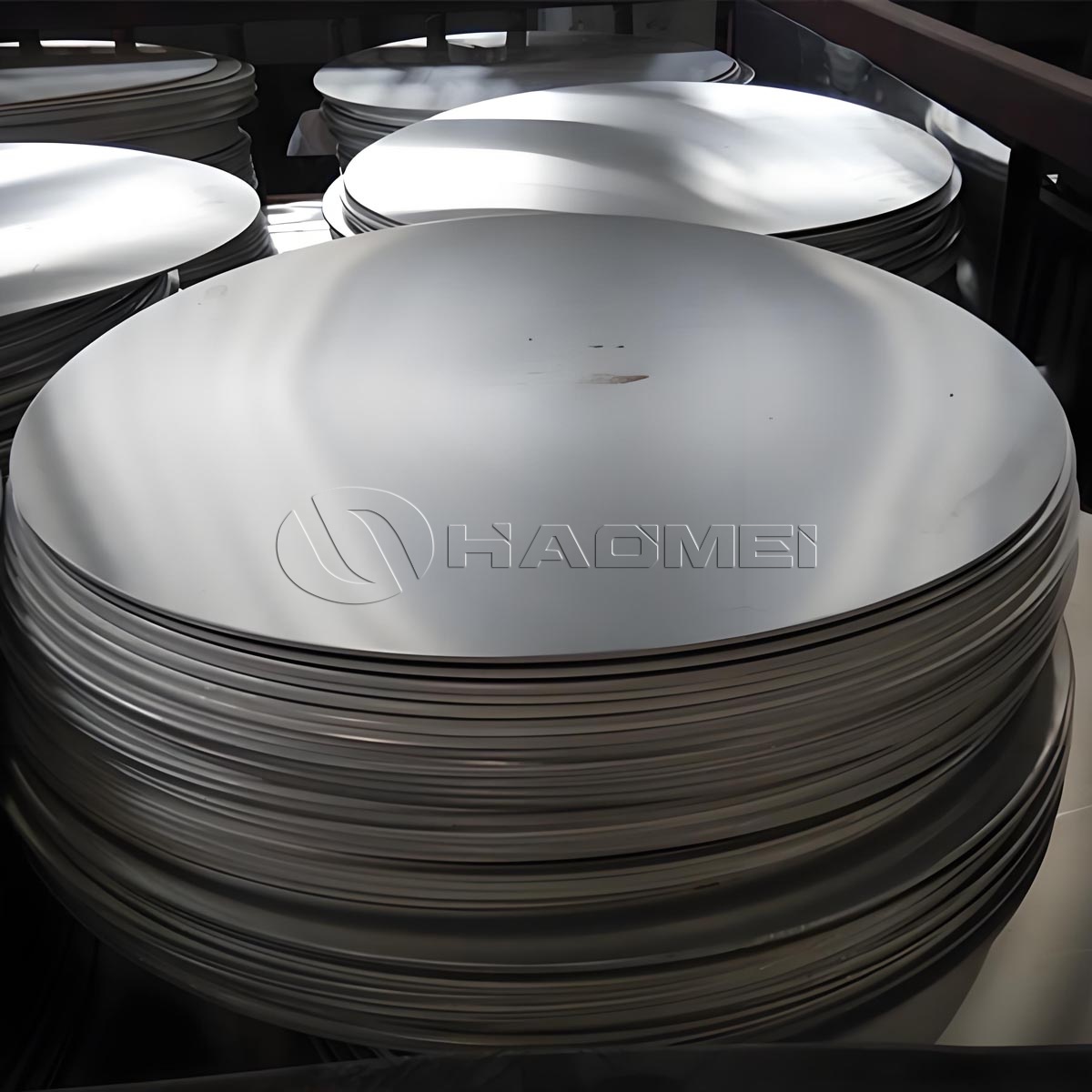
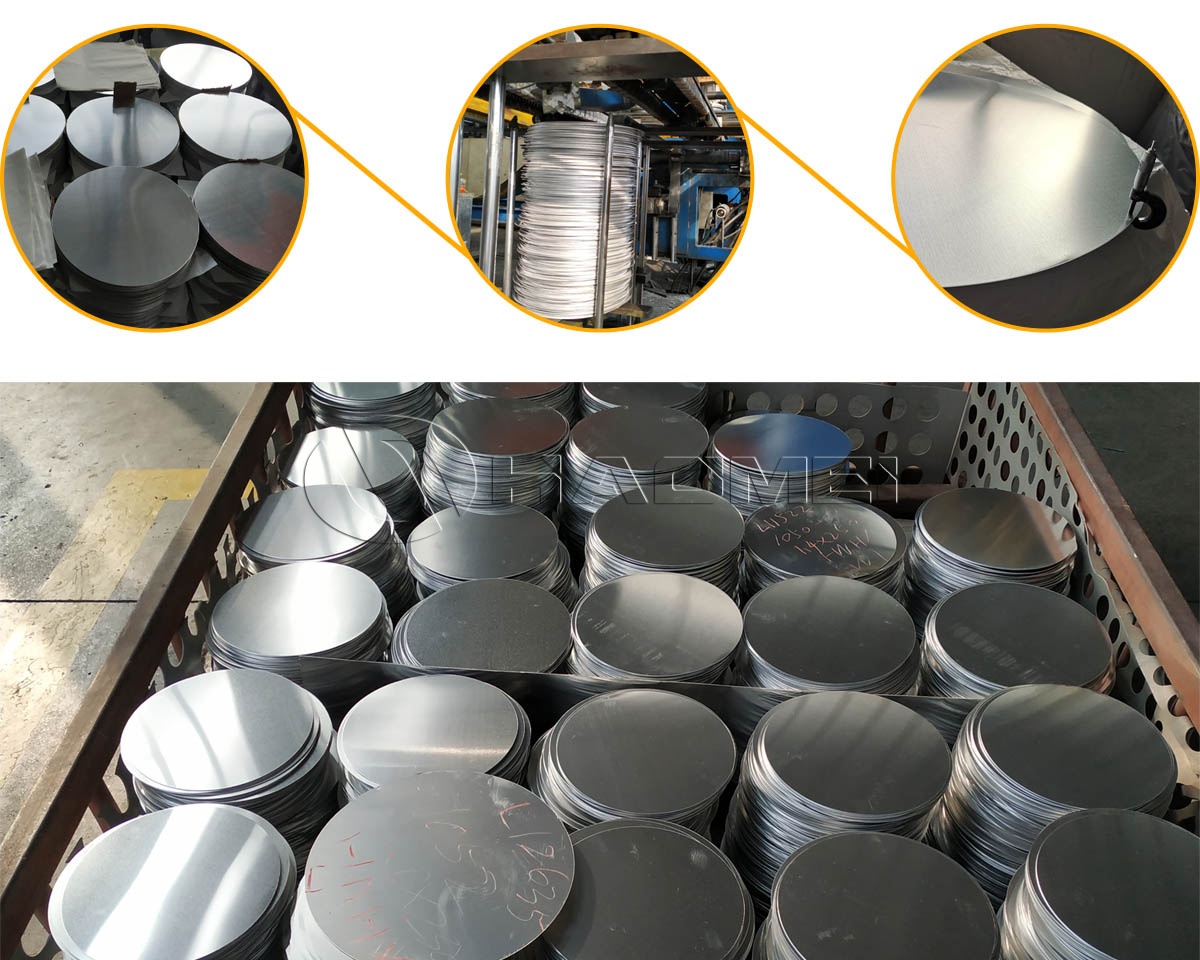
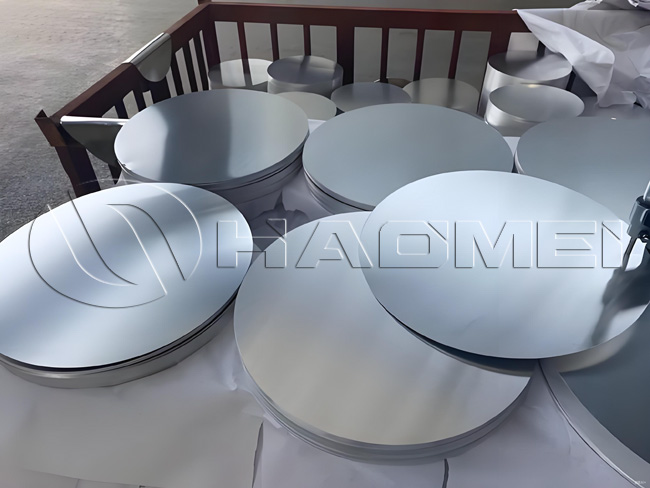
As a dedicated aluminum circle manufacturer, we produce pure mill finish aluminum circles in thicknesses from 0.4mm to 10mm for cookware, lighting, traffic signage, electronics, pressure vessels, and general metal forming applications. Our aluminum discs are manufactured from selected 1000 series aluminum coil and processed under controlled conditions to achieve stable thickness, accurate diameter, clean edges, and dependable forming performance.
Mill finish aluminum circles provide an economical and practical raw material for customers that perform deep drawing, spinning, stamping, anodizing, coating, or other downstream processing. By controlling material selection, rolling condition, blanking parameters, and inspection procedures in our factory, we help customers maintain consistent production quality across repeat orders.
Smooth, Clean Surface: Features a uniform mill finish without additional coatings, making it ideal for products requiring a high-quality appearance.
Excellent Deep-Drawing Properties: Offers a uniform microstructure and good plasticity, suitable for stamping, deep drawing, and metal spinning.
High Dimensional Accuracy: Stable thickness and diameter tolerances facilitate automated mass production.
Excellent Thermal Conductivity: Aluminum’s superior heat-conducting capabilities make it suitable for products such as cookware and heat sinks.
Good Corrosion Resistance: A natural oxide layer forms on the surface, providing effective protection against corrosion.
Lightweight: Low density helps achieve lightweight designs while meeting performance requirements.
Versatile Processing: Suitable for anodizing, stamping, deep drawing, spraying, and various post-processing surface treatments.
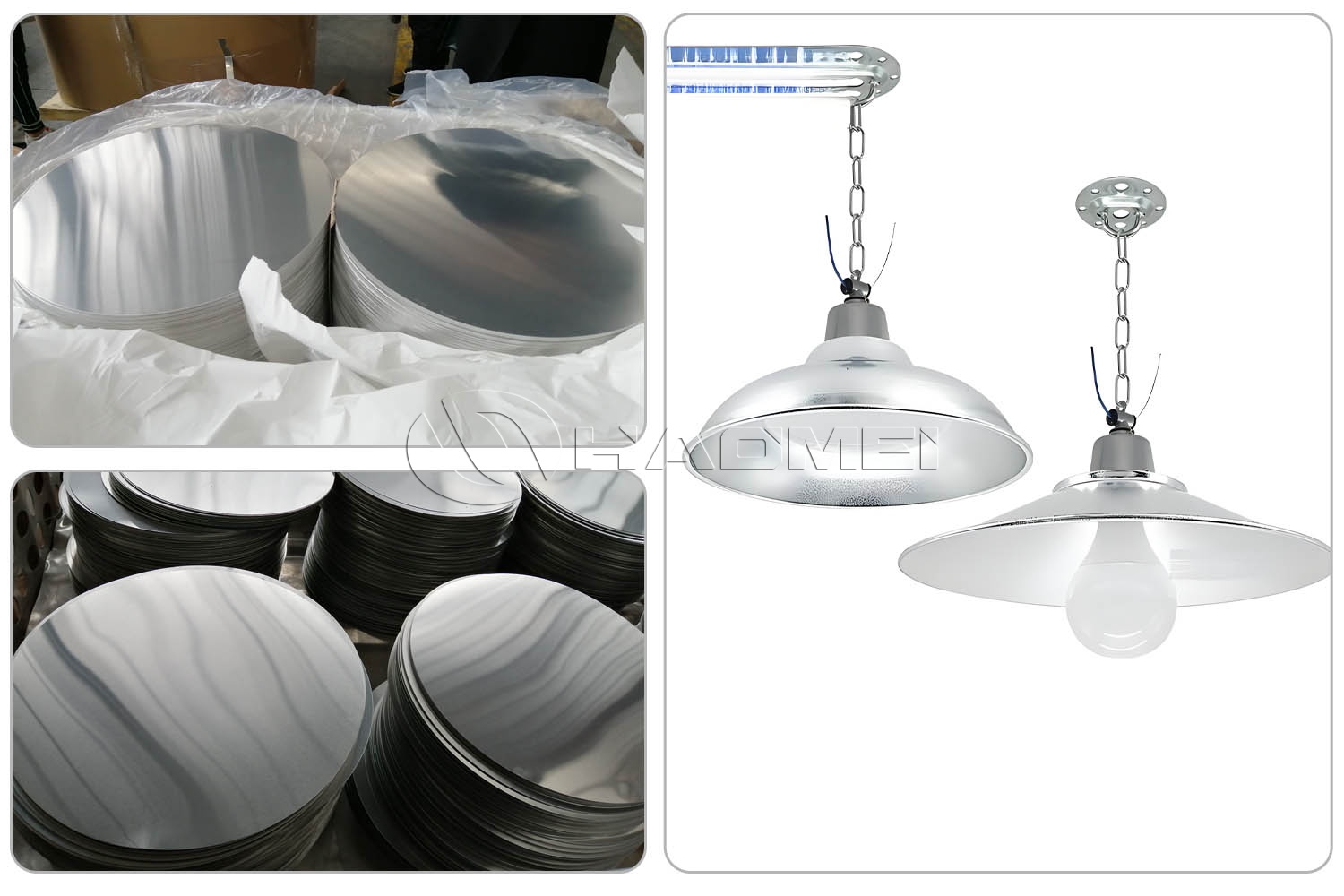
Wide Range of Applications: Can be used in the manufacture of cookware, kitchenware, lighting fixtures, reflectors, containers, and other aluminum products.
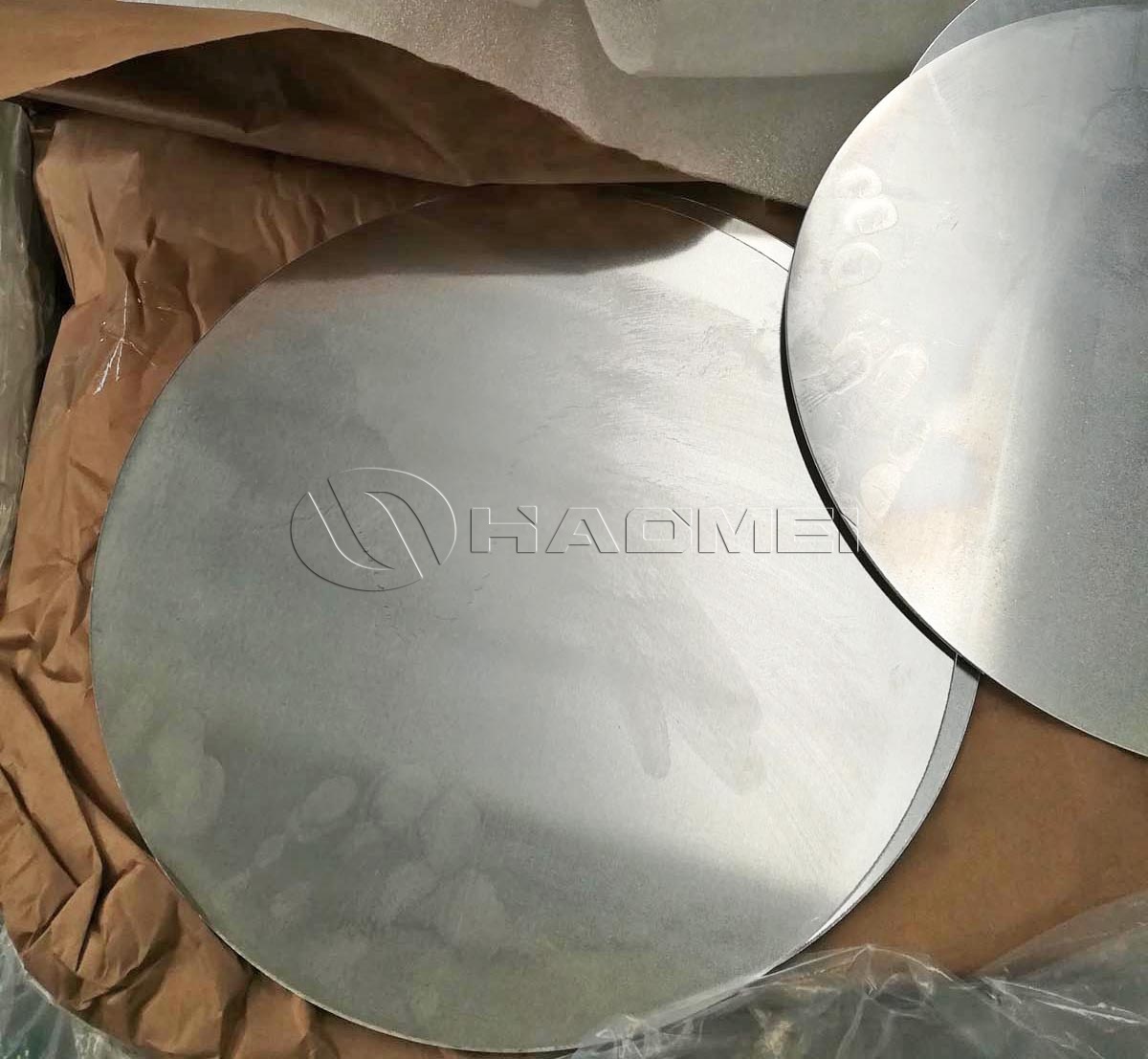
Our factory supplies aluminum circle discs in common grades including 1050, 1060, 1070, and 1100 aluminum. These grades are widely selected because of their high aluminum content, corrosion resistance, thermal conductivity, electrical conductivity, and good workability. The appropriate grade and temper depend on the final application, forming depth, surface treatment requirements, and mechanical performance needed by the buyer.
For deep drawn cookware and spun lighting components, soft temper aluminum circles are generally preferred because they provide better elongation and reduced cracking risk during severe deformation. For flat stamped parts, signs, reflectors, and structural components, H14 or other strain-hardened tempers may be selected to provide increased strength and shape stability.
We manufacture aluminum discs from controlled input coil, rather than sourcing random blanks from the market. This enables us to maintain process continuity from coil selection through slitting, blanking, packing, and shipment. Diameter, thickness, temper, surface condition, and packaging can be specified according to the customer's production requirements.
The following table shows our standard production range for pure mill finish aluminum circles. Custom specifications can be evaluated according to material grade, tooling feasibility, order quantity, and application requirements.
| Item | Standard Range | Remarks |
|---|---|---|
| Alloy | 1050, 1060, 1070, 1100 | 1000 series commercial pure aluminum |
| Thickness | 0.4mm - 10.0mm | Thickness tolerance subject to specification |
| Diameter | 80mm - 1,300mm | Custom diameter available by agreement |
| Temper | O, H12, H14, H16, H18 | O temper is suitable for deep drawing and spinning |
| Surface | Mill finish | Clean, smooth, without harmful defects |
| Production method | Blanking or circle cutting | Selected according to thickness and diameter |
| Edge condition | Deburred, smooth edge | Designed to support safe handling and forming |
| Coil direction | Available on request | Important for demanding drawing applications |
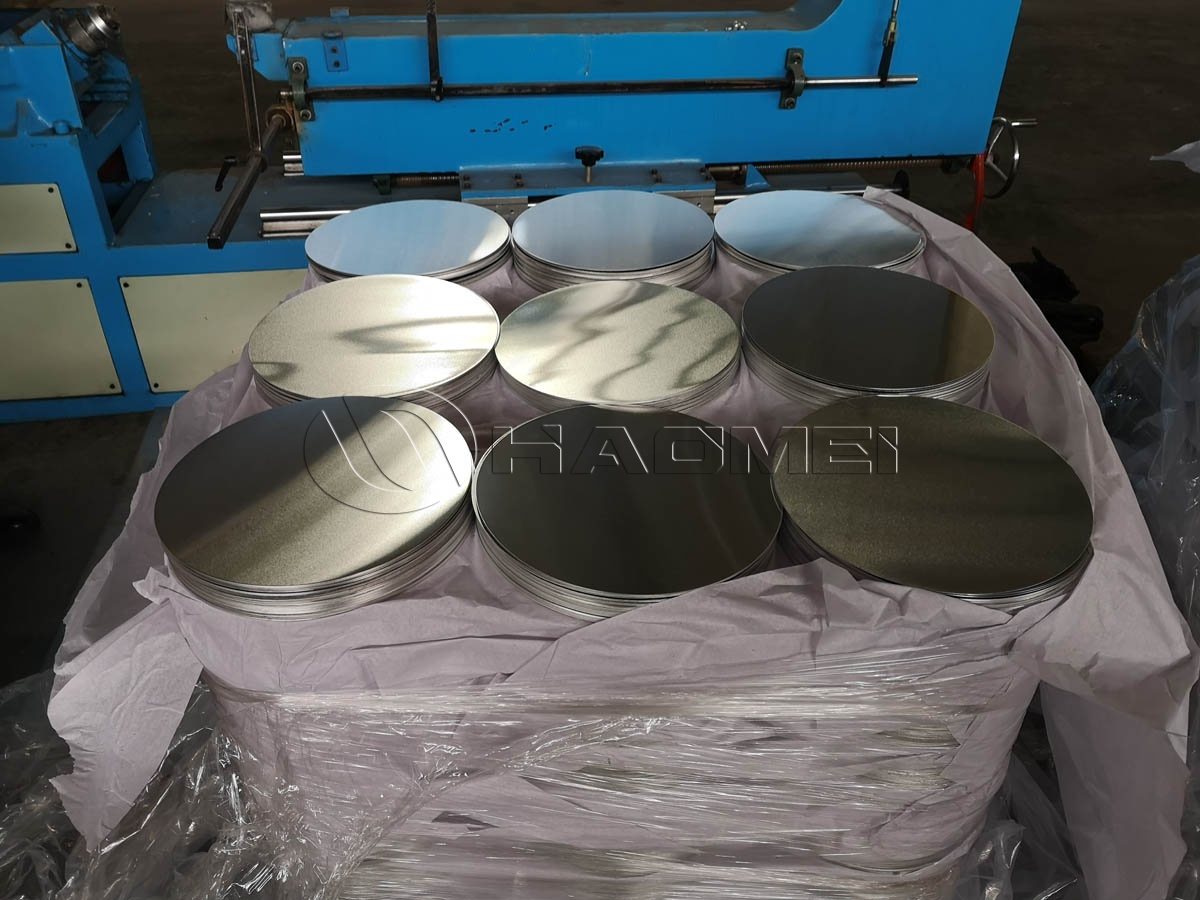
| Packaging | Interleaved paper, film, pallet or wooden case | Export packaging available |
| Applicable standards | ASTM, EN, GB, or customer specification | Material documentation available upon request |
Our tolerance capability is confirmed against the agreed order specification. For thinner aluminum circles, thickness consistency and flatness are particularly important. For heavier aluminum discs, diameter accuracy, edge quality, and deformation control during handling receive additional attention.
1050 aluminum contains a minimum aluminum content of 99.5 percent. It is widely used for cookware, lamp shades, reflectors, traffic signs, chemical equipment components, and general spinning applications. Its excellent corrosion resistance and formability make it a practical choice for many aluminum disc applications.
Our 1050 Aluminum Circle can be supplied in O temper for deep drawing and spinning operations, or in harder tempers for stamped parts requiring improved rigidity. Customers commonly specify this grade for aluminum pots, pans, rice cooker inner components, and lighting housings.
1060 aluminium contains at least 99.6 percent aluminum and offers very good ductility, thermal conductivity, and electrical conductivity. It is frequently selected for deep drawn cookware, heat transfer parts, lighting products, capacitor shells, and decorative spun components.
Our 1060 Aluminium Circle is produced with close attention to grain structure, surface cleanliness, and edge finish. These factors are especially relevant when customers process the material through multiple drawing stages or require a consistent visual result after anodizing or polishing.
1070 aluminum circle material provides high purity and good electrical performance, making it suitable for electronic, electrical, and specialized forming applications. 1100 aluminum circle material offers excellent corrosion resistance and workability, and is commonly used in cookware, signage, reflectors, chemical equipment, and decorative products.
Grade selection should not be based on aluminum content alone. Our technical team reviews the intended process, such as deep drawing, spinning, stamping, embossing, or anodizing, to recommend a suitable alloy and temper combination.
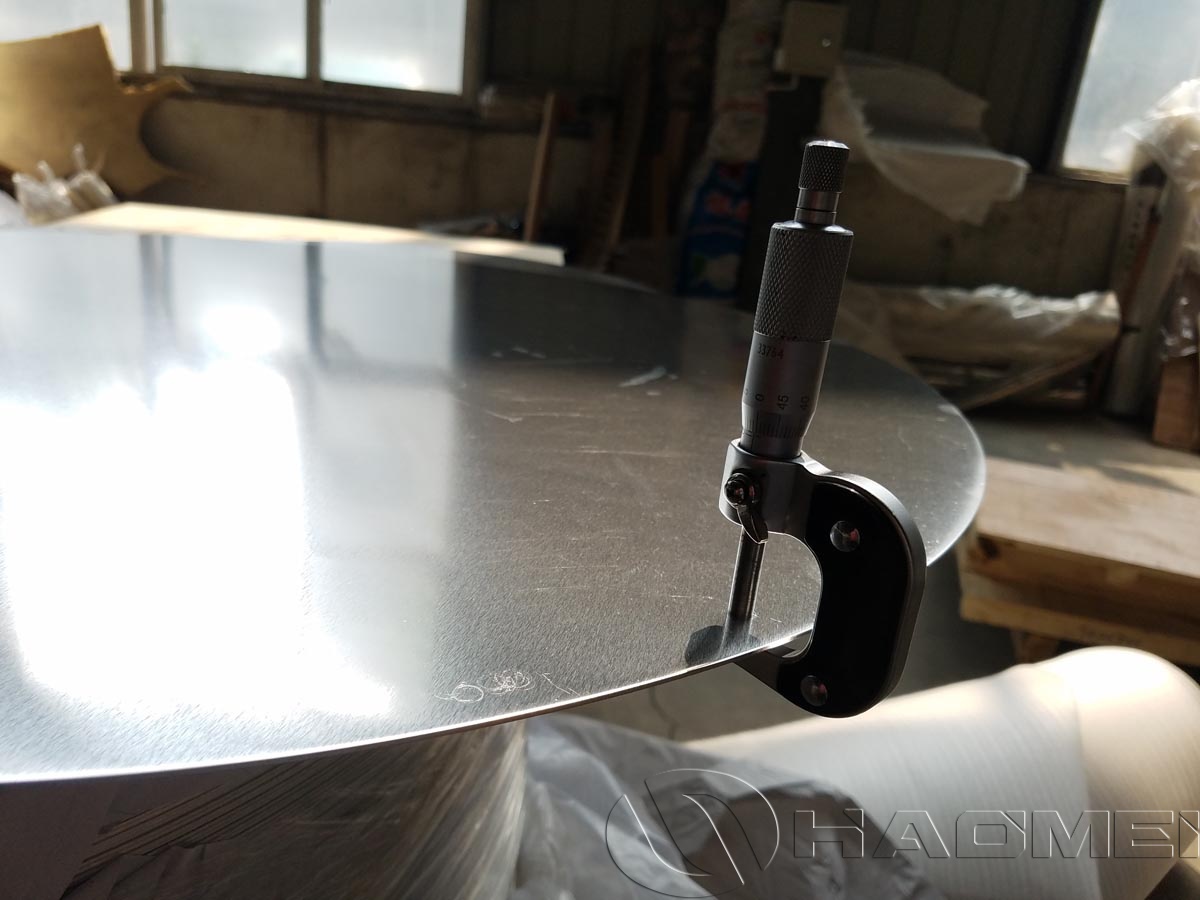
A reliable mill finish aluminum circle must do more than meet nominal dimensions. Surface and edge conditions directly affect customer productivity, especially where the disc will be formed, polished, coated, or anodized.
Our manufacturing process is designed to control common issues that can interrupt downstream production. We inspect for scratches, oil marks, dents, edge burrs, laminations, stains, and other defects that may affect processing or finished appearance. Mill finish does not mean untreated or uncontrolled. It refers to the natural rolled surface condition, supplied without painted, anodized, or decorative coating.
For applications such as cookware and lighting, a stable mill finish surface provides a suitable base for polishing, non-stick coating, painting, anodizing, or mechanical finishing. For industrial uses, the clean surface supports efficient assembly, stamping, and welding preparation where applicable.
High performance aluminum circles are defined by how consistently they behave in the customer's forming operation. Deep drawing and spinning place significant demands on material ductility, grain uniformity, surface lubrication response, and edge integrity.
For deep drawn aluminum discs, we normally recommend O temper material. The annealed condition improves elongation and reduces the probability of cracking around the wall, flange, or corner radius of the formed part. The correct relationship between disc diameter, thickness, tooling geometry, drawing ratio, lubrication, and process sequence remains essential.
For spun aluminum components, such as lamp shades, cookware bodies, reflectors, and covers, the material should maintain uniform deformation around the circumference. Our aluminum circles are processed to support balanced material flow and minimize uneven edge behavior during spinning.
The following factors are reviewed during order confirmation:
Final product shape and required drawing depth.
Number of drawing or spinning stages.
Required temper and mechanical properties.
Surface treatment after forming.
Required diameter and thickness tolerances.
Flatness expectations before forming.
Packaging method and handling conditions.
This production-focused approach helps ensure that the aluminum wafer supplied from our factory is aligned with the buyer's actual manufacturing process rather than only a basic material description.
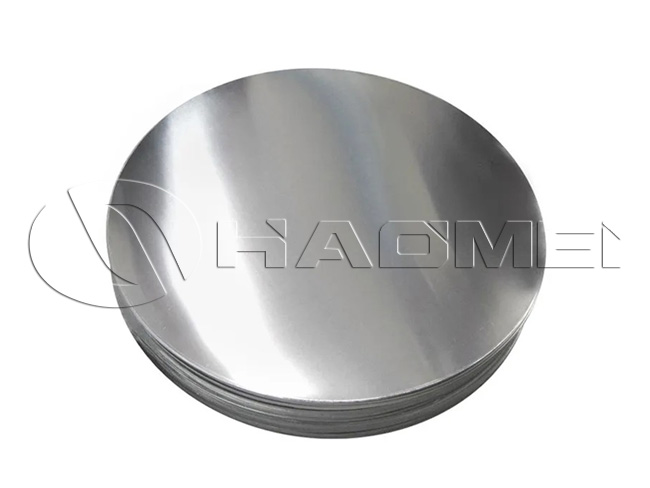
Pure mill finish aluminum circles are used across a broad range of industries because they combine low weight, corrosion resistance, good thermal performance, and favorable formability. Our customers process aluminum discs into finished components for both consumer and industrial markets.
| Industry | Typical Products | Recommended Material Features |
|---|---|---|
| Cookware | Frying pans, pots, pressure cooker parts, saucepans | O temper, deep drawing quality, clean surface |
| Lighting | Lamp shades, reflectors, housings | Spinning performance, smooth surface |
| Traffic and signage | Road signs, blanks, display panels | Flatness, corrosion resistance, stable dimensions |
| Electronics | Capacitor shells, covers, heat-related components | Conductivity, dimensional consistency |
| Packaging | Bottle caps, closures, decorative covers | Stamping quality, surface uniformity |
| Industrial equipment | Spun covers, vessel parts, machine components | Thickness range, edge quality, formability |
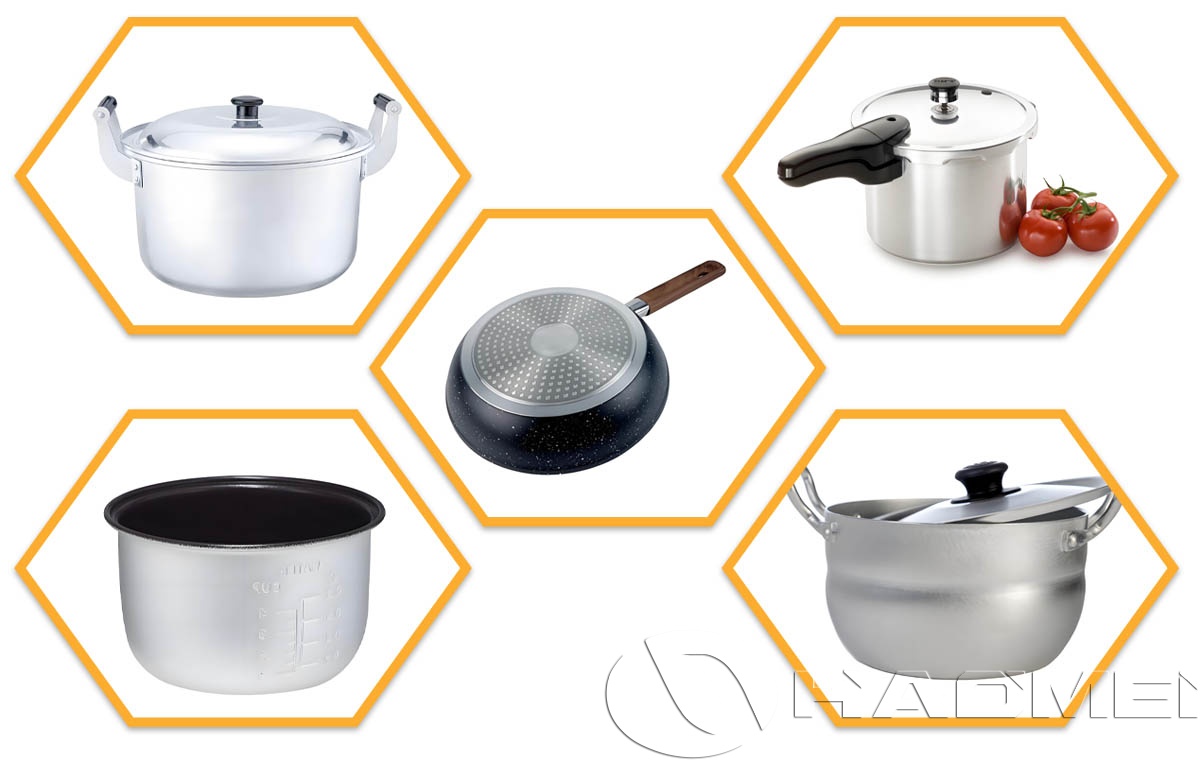
As a factory, we apply inspection procedures throughout production rather than relying only on final sampling. Input aluminum coil is checked for grade, thickness, surface condition, and temper requirements. During blanking or cutting, our operators monitor disc diameter, edge condition, stacking quality, and surface protection.
Final quality control can include thickness measurement at multiple locations, diameter inspection, visual surface inspection, flatness evaluation, weight verification, and packaging confirmation. Where specified, material certificates and inspection documentation can be provided with the shipment.
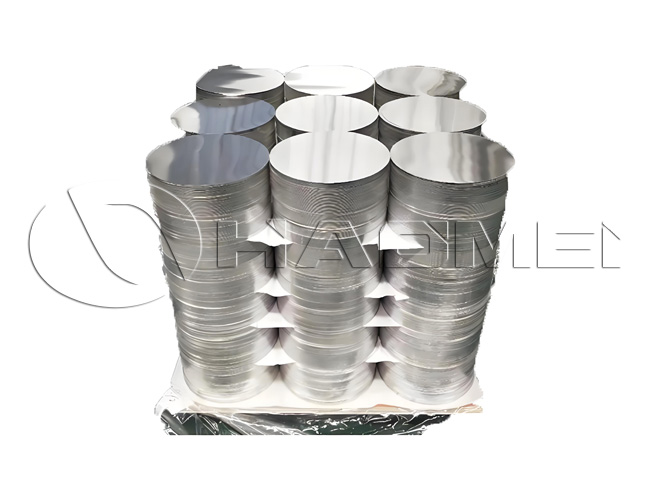
Export packaging is selected according to disc size, thickness, destination, and transportation method. Aluminum circles may be protected with interleaving paper, plastic film, moisture-resistant wrapping, steel straps, pallets, or wooden cases. Proper packaging reduces the possibility of scratches, oxidation staining, edge damage, and displacement during sea or land transportation.
Direct factory sourcing gives B2B buyers clearer control over specifications, production schedules, and quality requirements. We work with customers on thickness, diameter, alloy, temper, surface condition, and packaging before production begins. This helps reduce uncertainty in downstream processing and supports stable repeat supply.
Our production range from 0.4mm to 10mm allows us to serve both thin-gauge stamping applications and heavier-gauge industrial requirements. Whether the product is a 1050 aluminum circle for cookware, a 1060 aluminium circle for spinning, or a 1100 aluminum disc for general fabrication, our objective is to supply material that performs consistently in the next manufacturing stage.
When sending an inquiry for mill finish aluminum circles, please provide the required alloy, temper, thickness, diameter, application, quantity, destination port, and packaging preference. If the aluminum disc will be deep drawn or spun, please also share the finished part drawing or key forming dimensions where possible.
Our factory can review the specification and recommend a suitable pure aluminum circle solution based on practical manufacturing requirements. By matching the correct material condition with the intended process, buyers can improve forming reliability, reduce material loss, and maintain consistent finished-product quality.

Office Address:
No.14 Waihuan Road, CBD, Zhengzhou, China
Contact Us
HAOMEI Aluminum offer an custom aluminum circle for you!
whatsapp: +86-18703635966
Email: sales@alummc.com
Email: alummc@hotmail.com
Request Free Sample & Quotation
Copyright © 2026 By HAOMEI Aluminum CO., LTD. All Rights Reserved. Sitemap
 +86-18703635966
 sales@alummc.com
 8618703635966
