
 No.14 Waihuan Road, CBD, Zhengzhou, China
 +86-18703635966

No.14 Waihuan Road, CBD, Zhengzhou, China
+86-18703635966
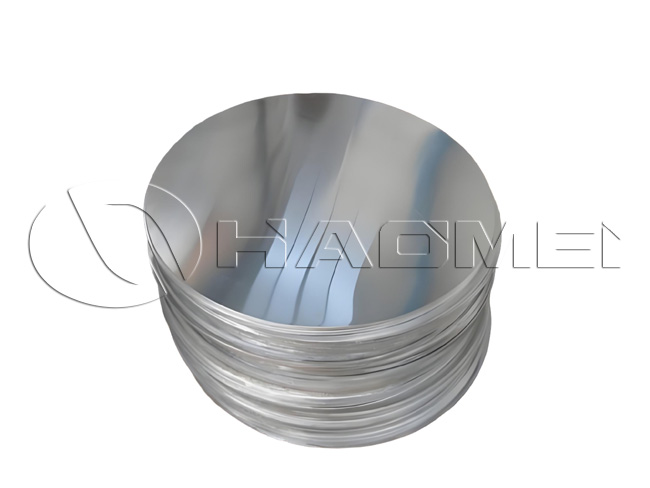
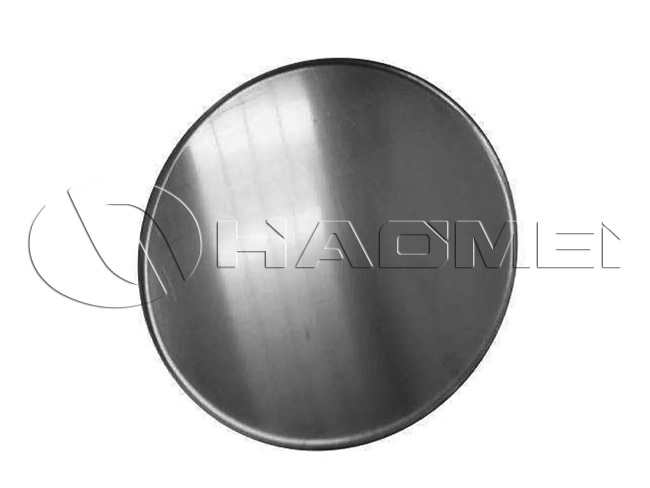
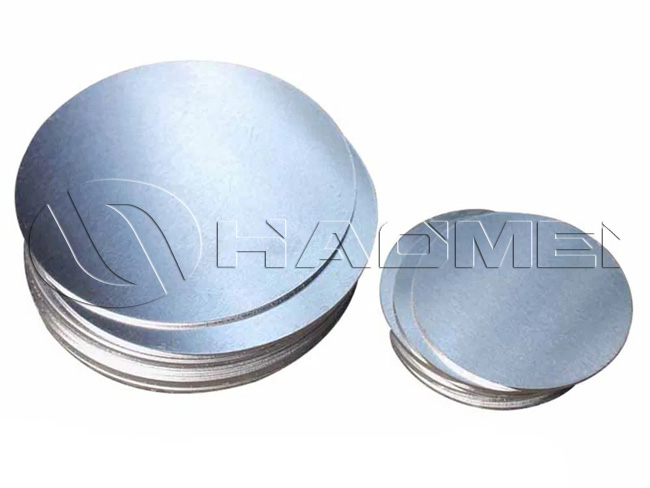
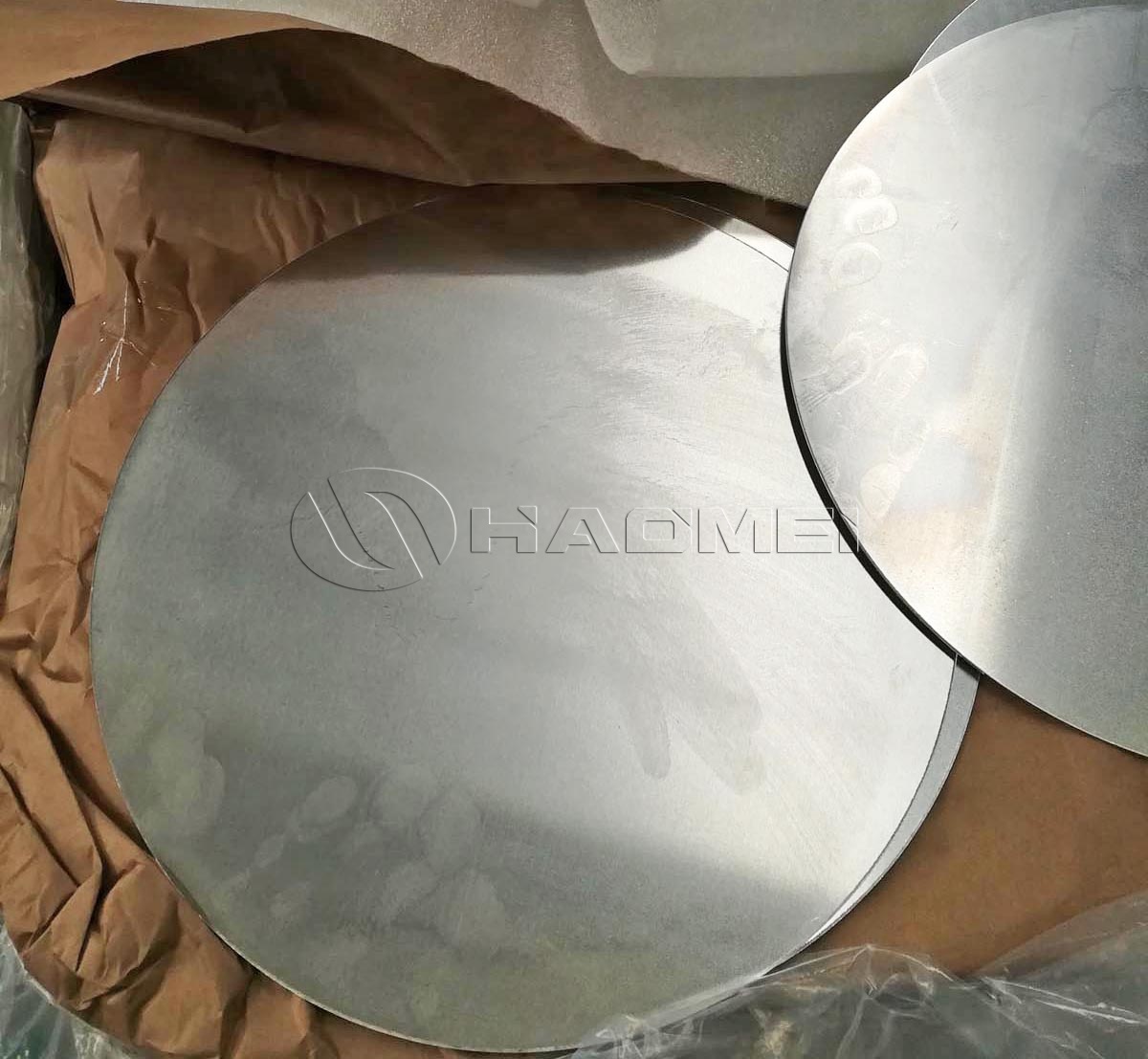
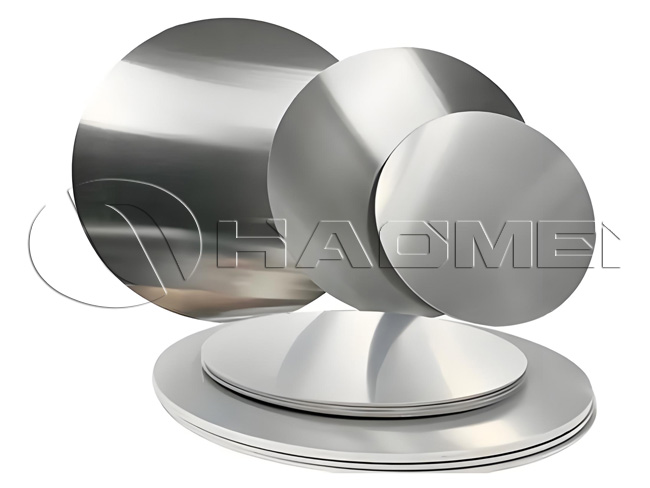
As an aluminum circle manufacturer, we produce 1050, 1060, and 1100 H14 aluminum discs for cookware factories that require stable material behavior in pressing, shallow drawing, spinning, and bottom-forming operations. These aluminum discs are widely used as base materials for frying pans, saucepans, stockpots, kettles, pressure cookware, and other formed aluminum cooking vessels.
Cookware bottom production depends on more than nominal alloy selection. Disc thickness consistency, temper stability, surface cleanliness, edge condition, grain structure, and flatness all affect how the material performs in a press. Our production process is designed to supply deep drawing aluminum circles with controlled characteristics that support repeatable forming and reduce avoidable defects during downstream manufacturing.
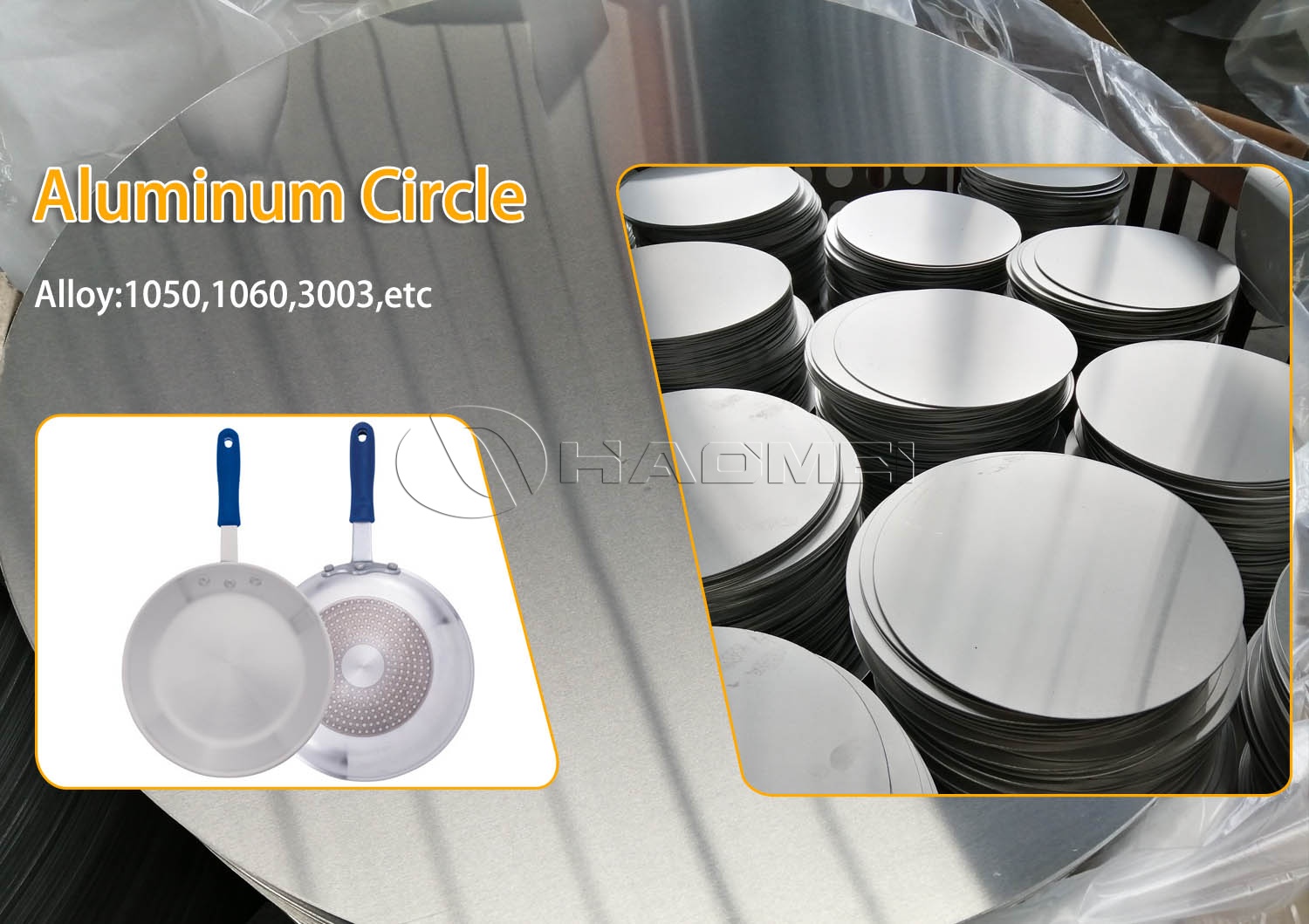
H14 is a half-hard temper that provides a practical balance between strength, rigidity, and formability. For cookware applications involving relatively shallow drawing, bottom pressing, flanging, embossing, or spinning, H14 aluminum discs can offer better shape retention than softer annealed material while remaining suitable for controlled forming operations.
The final selection of 1050 H14 aluminum circles, 1060 H14 aluminum circles, or 1100 H14 aluminum circlesshould be based on the cookware design, disc diameter, thickness, draw depth, tooling geometry, lubrication system, and production speed. We work from customer drawings, forming samples, and technical specifications to recommend a suitable coil or disc condition before full-scale production.
For deep-drawn parts with a high drawing ratio or multiple redraw stages, the temper must be matched carefully to the forming route. H14 material is generally appropriate where the process requires moderate deformation and improved stiffness. For more demanding deep drawing, we can also evaluate softer tempers according to the customer's forming requirements.
The 1000 series aluminum alloys used for cookware discs are commercially pure aluminum grades. Their high aluminum content supports good thermal conductivity, corrosion resistance, and formability. Small differences in composition can influence the preferred material choice for specific cookware manufacturing processes.
| Alloy | Minimum Aluminum Content | Typical Characteristics | Common Cookware Use |
|---|---|---|---|
| 1050 | 99.50% | High purity, good conductivity, good corrosion resistance, stable forming response | Lightweight cookware, pressed pans, kitchenware bottoms |
| 1060 | 99.60% | High aluminum purity, good elongation potential, reliable workability | Frying pans, pots, shallow-drawn and spun cookware parts |
| 1100 | 99.00% | Good corrosion resistance, good workability, slightly higher impurity allowance | General cookware discs, utensils, formed kitchen articles |
In our manufacturing practice, 1050 and 1060 are frequently specified for aluminum cookware circles because of their high purity and favorable processing characteristics. Alloy 1100 is also used where the buyer's standard, equipment setup, or finished product requirements support this grade.
Material selection should not rely on alloy designation alone. A 1060 H14 aluminum disc with suitable thickness tolerance, grain control, and edge quality may perform more consistently in a given cookware line than an alternative material with insufficient process control. Therefore, we verify key requirements before production, particularly for customers operating automated pressing lines.
We manufacture aluminum discs for cookware bottoms from cast-rolled or hot-rolled coils, depending on the requested specification and forming application. The following table presents our typical supply range. Custom dimensions and tolerances can be reviewed against purchase requirements.
| Parameter | Typical Supply Range | Notes |
|---|---|---|
| Alloy | AA 1050, AA 1060, AA 1100 | Chemical composition supplied according to applicable standards or customer requirements |
| Temper | H14 | Half-hard temper for controlled pressing, forming, and cookware bottom applications |
| Disc diameter | 100 mm to 1,200 mm | Common cookware sizes are available; custom diameters can be produced |
| Thickness | 0.50 mm to 6.00 mm | Thickness is selected according to cookware type, draw depth, and final bottom structure |
| Diameter tolerance | As agreed with customer | Controlled according to disc size, thickness, and cutting method |
| Thickness tolerance | As agreed with customer | Verified during coil preparation and finished disc inspection |
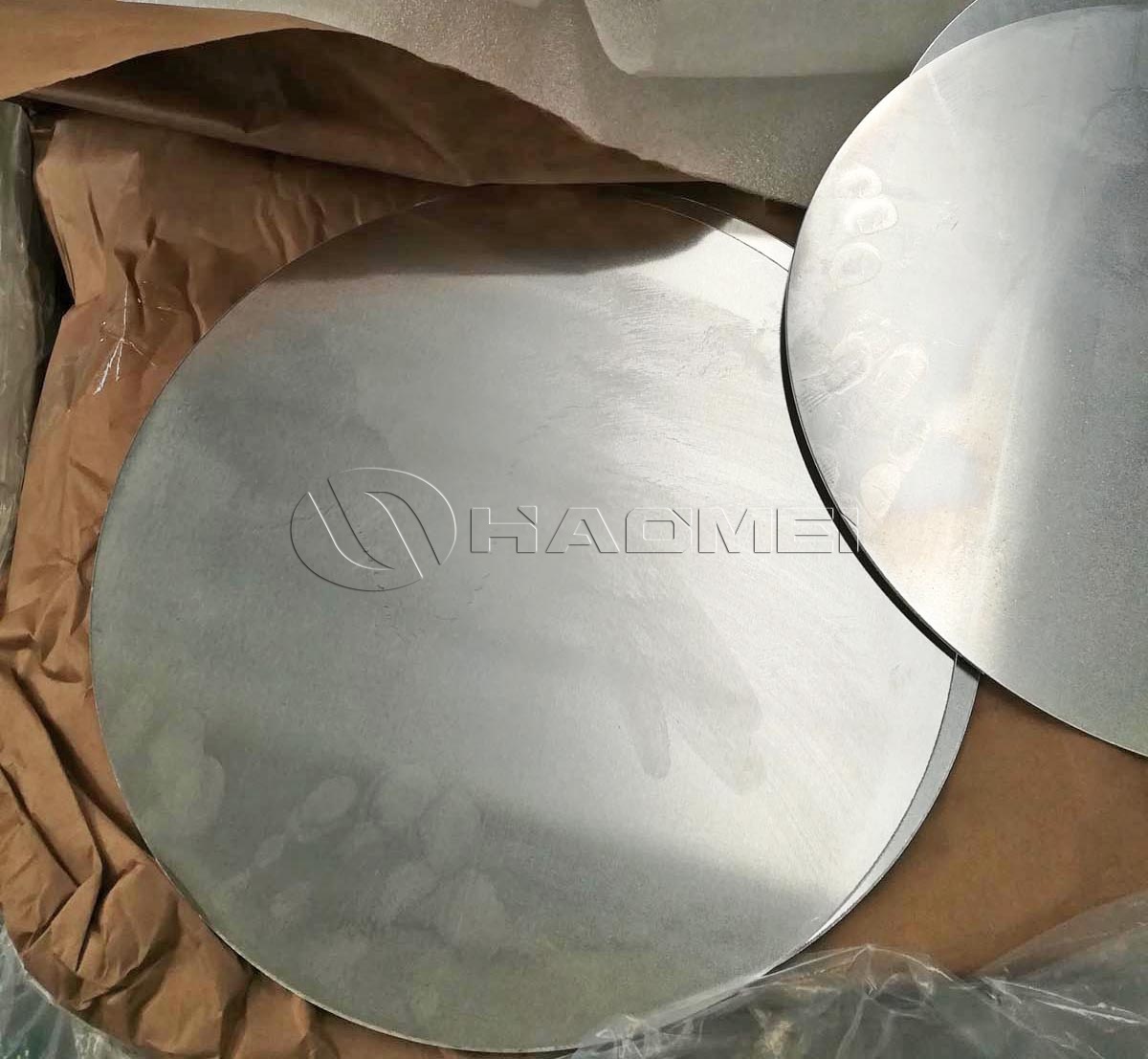
| Surface finish | Mill finish, clean and dry | Free from oil stains, deep scratches, edge damage, and surface contamination within agreed quality limits |
| Edge condition | Smooth, burr-controlled edge | Important for feeding, stacking, pressing, and operator safety |
| Production method | Blanking, circle cutting, or custom processing | Selected according to diameter, volume, tolerance, and surface requirements |
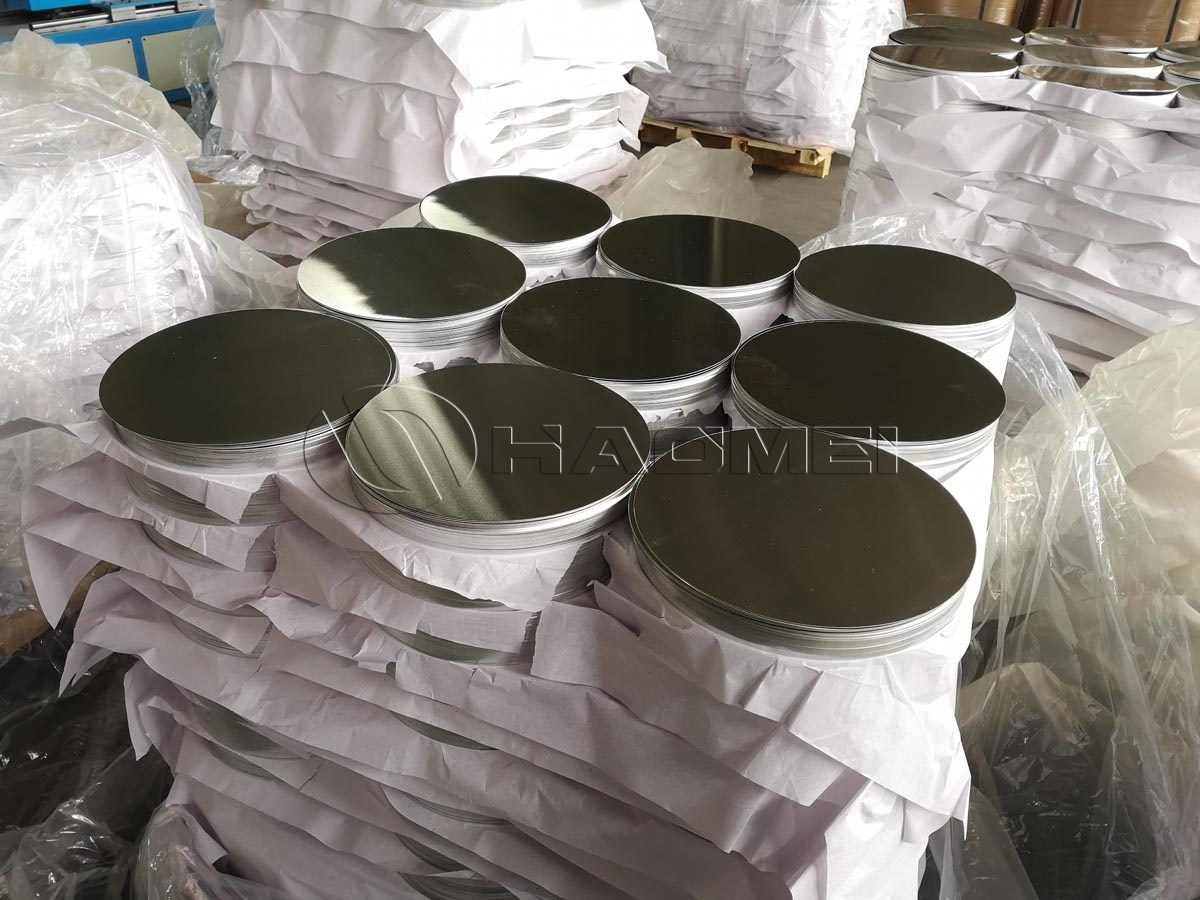
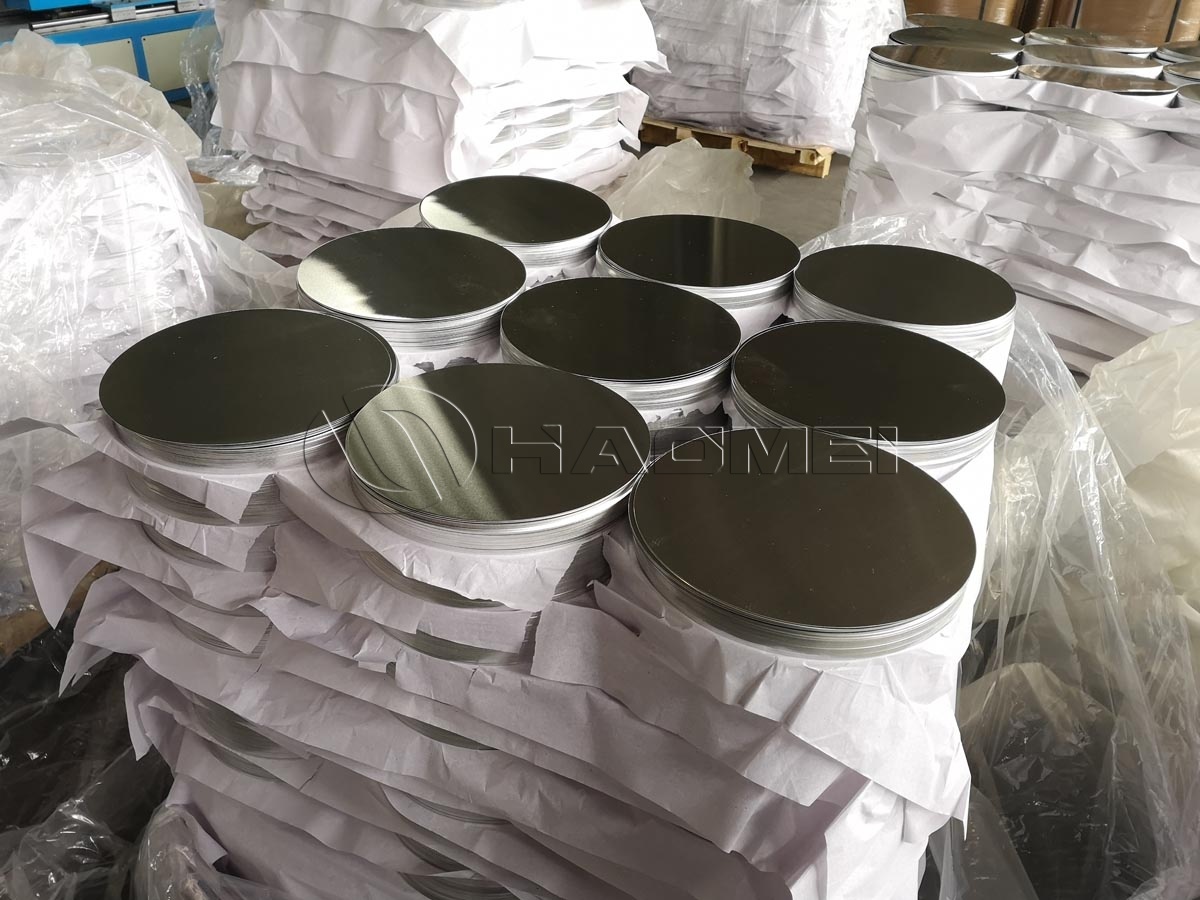
| Packaging | Paper interleaving, export pallet, moisture protection | Packaging can be adjusted for container shipment and warehouse handling |
Our factory controls the production of cookware aluminum circles from incoming coil selection through finished-disc packaging. Each production stage has a direct effect on final forming performance.
We begin by confirming alloy, temper, thickness, width, and surface requirements. Chemical composition is controlled through approved raw material sources and documented production procedures. For cookware customers with established forming practices, we can align material specifications with their existing process windows.
Coil preparation and blanking are managed to maintain stable disc diameter and minimize edge irregularities. A clean, uniform edge supports smoother material flow during pressing and reduces the risk of localized cracking initiated by burrs or notches.
Disc geometry is especially important for cookware bottoms that will undergo concentric drawing, beading, or spinning. Excessive out-of-roundness can affect centering in automated equipment and lead to uneven wall formation.
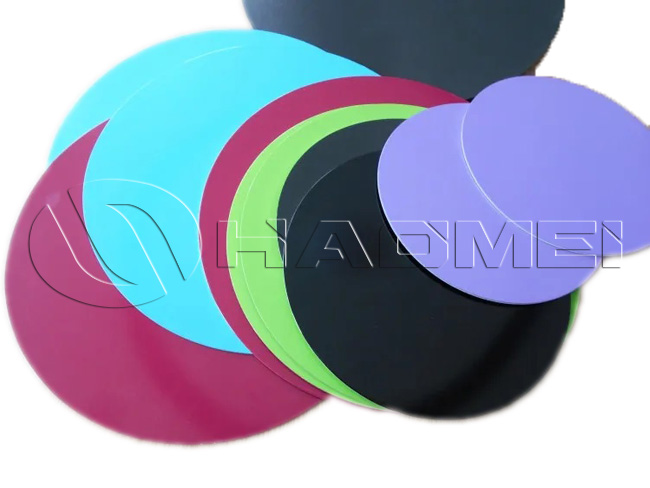
Cookware aluminum discs must arrive with a clean surface suitable for customer processing. We control handling, stacking, and packaging to reduce surface marks, embedded particles, and moisture exposure. For products that will receive non-stick coating, anodizing, polishing, or decorative finishing, surface consistency is an important preparation factor.
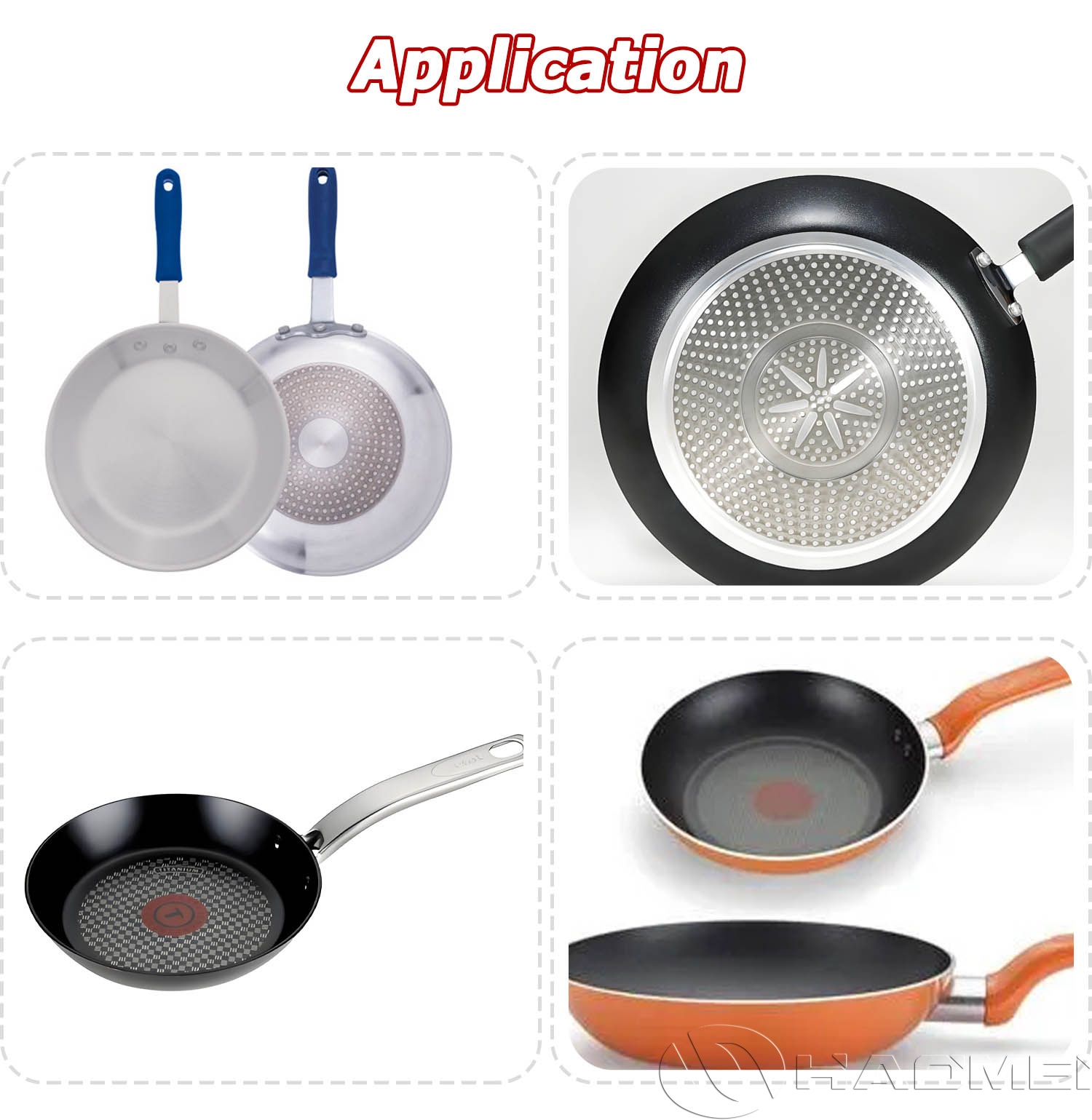
Flat discs support consistent feeder performance and die contact. Poor flatness may create handling issues, double-sheet feeding, uneven pressure distribution, or inconsistent formed geometry. We inspect stack condition and packaging stability before shipment, particularly for large-diameter aluminum circles used in pan and pot production.
Deep drawing aluminum discs requires coordinated control of material, tooling, and lubrication. While the disc supplier controls material quality, the final forming result also depends on press settings and die design at the cookware factory.
Key considerations include the following:
Blank diameter: The initial disc diameter must account for final pan diameter, wall height, trimming allowance, and material flow.
Thickness selection: Thicker discs improve structural rigidity and heat distribution but require higher forming force.
Punch and die radii: Proper radii reduce concentrated stress and help prevent tearing near the bottom corner or sidewall transition.
Blank holder pressure: Excessive pressure can restrict material flow, while insufficient pressure can cause wrinkling.
Lubrication: Suitable drawing lubricant reduces friction, improves surface quality, and supports more stable metal flow.
Draw ratio: The relationship between blank diameter and punch diameter should be evaluated before selecting H14 temper for deeper shapes.
Tool surface condition: Worn or contaminated tooling can mark aluminum surfaces and increase friction during forming.
For cookware bottoms requiring shallow embossing, induction base preparation, or laminated structures, H14 aluminum discs can provide useful rigidity. For products requiring additional deep drawing after bottom forming, manufacturers should review whether an intermediate annealing stage or a softer starting temper is more appropriate.
Our 1050, 1060, and 1100 H14 aluminum discs are supplied to cookware manufacturers for a range of formed products, including:
Frying pan bottoms and shallow pan bodies
Saucepan and stockpot base components
Wok blanks and spun cookware parts
Kettle bottoms and kitchen vessel components
Pressure cookware outer shells and base sections
Camping cookware and lightweight cooking vessels
Multi-layer cookware components before bonding or assembly
For buyers sourcing standard and customized cookware materials, our Aluminum Circles for Cookware range includes disc options developed for pressing, spinning, anodizing, and general kitchenware manufacturing.
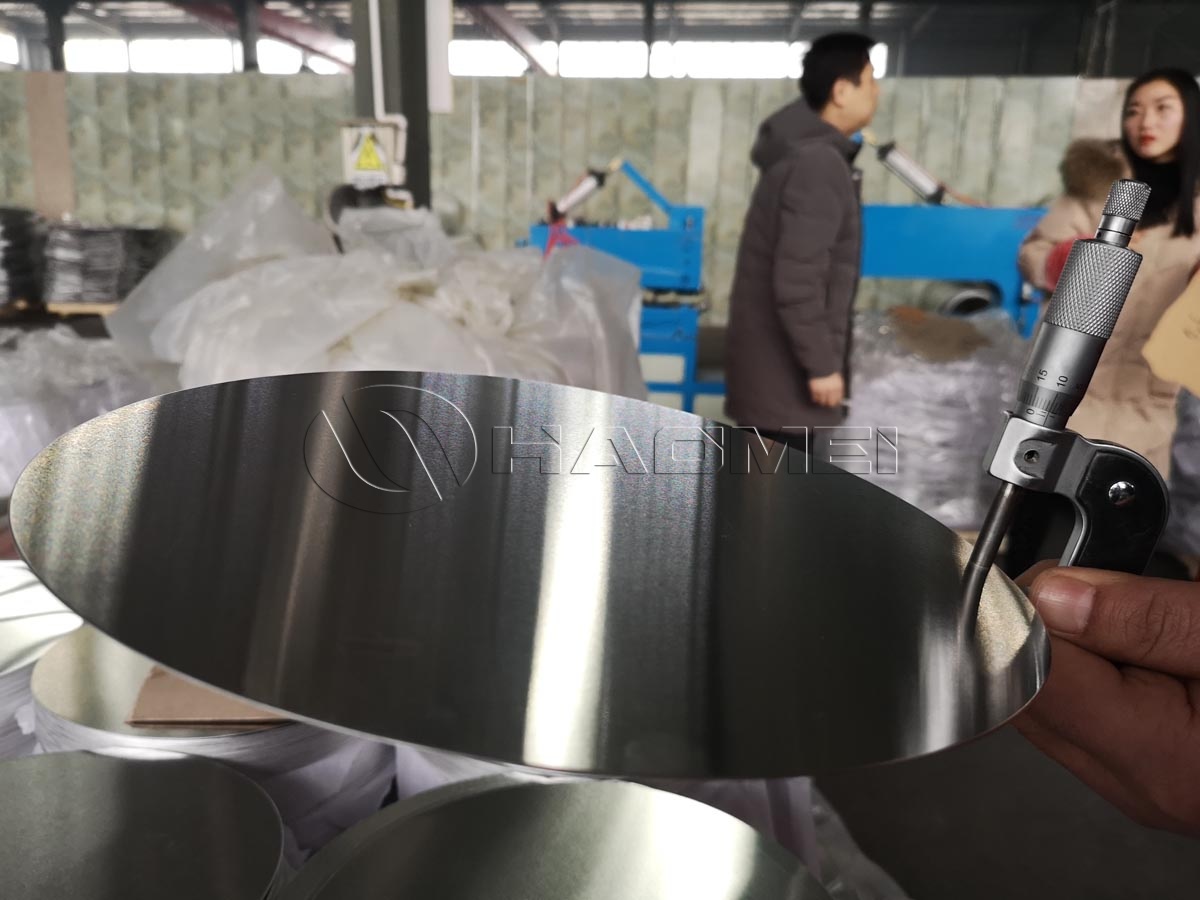
Our inspection process is structured around the requirements that matter in cookware forming operations. Depending on the order specification, we inspect alloy identification, temper documentation, thickness, diameter, surface appearance, burr condition, flatness, and packaging integrity.
We also support customer-specific inspection points when these are defined in technical agreements. For example, some cookware factories require tighter control of thickness variation because their products use automated drawing presses and fixed tooling parameters. Others focus on surface quality because the disc will be polished, coated, or anodized after forming.
Each shipment is packed to protect disc edges and surfaces during export transportation. Interleaving materials, protective wrapping, reinforced pallets, and moisture-resistant measures can be applied according to destination, container loading conditions, and customer handling methods.
To quote and manufacture the correct deep drawing aluminum circle, we recommend providing the alloy, temper, thickness, diameter, intended application, monthly quantity, and forming method. If available, a product drawing or sample also helps us assess the relationship between material condition and cookware design.
For applications that require different tempers, surface finishes, or non-standard dimensions, buyers can also review our Other Aluminum Circle Discs for additional manufacturing options.
By controlling alloy selection, H14 temper, dimensional accuracy, edge quality, and export packaging, we supply 1050, 1060, and 1100 aluminum discs that support stable cookware bottom production. Our role as the manufacturer is to provide material that matches the customer's forming process, quality expectations, and long-term production requirements.

Office Address:
No.14 Waihuan Road, CBD, Zhengzhou, China
Contact Us
HAOMEI Aluminum offer an custom aluminum circle for you!
whatsapp: +86-18703635966
Email: sales@alummc.com
Email: alummc@hotmail.com
Request Free Sample & Quotation
Copyright © 2026 By HAOMEI Aluminum CO., LTD. All Rights Reserved. Sitemap
 +86-18703635966
 sales@alummc.com
 8618703635966
