
 No.14 Waihuan Road, CBD, Zhengzhou, China
 +86-18703635966

No.14 Waihuan Road, CBD, Zhengzhou, China
+86-18703635966
Cookware manufacturers and importers often face recurring quality issues that are difficult to diagnose after production starts: earing during deep drawing, inconsistent wall thickness, surface marks that telegraph through coatings, or uneven heat distribution that leads to hot spots. These problems are frequently linked not only to tooling or process parameters, but to the choice of alloy, temper, and disc quality (surface, cleanliness, and grain/anisotropy control).
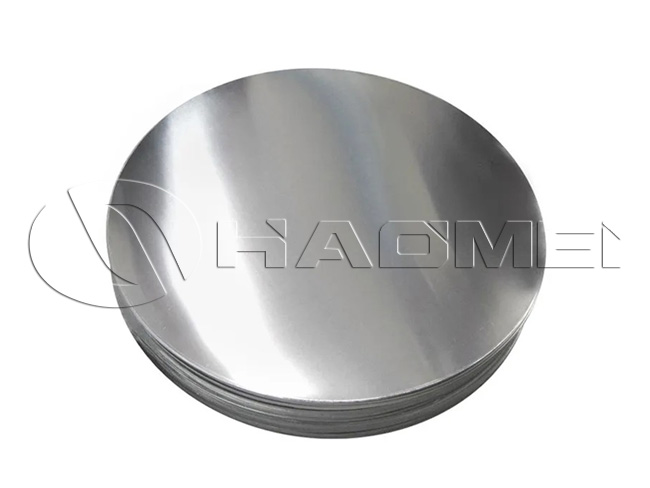
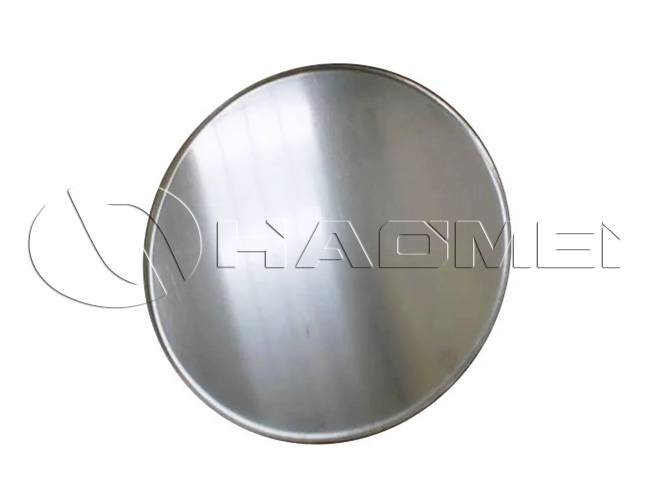
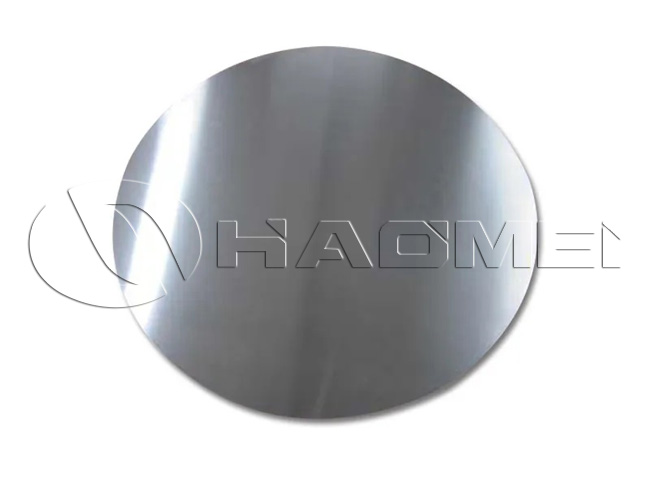
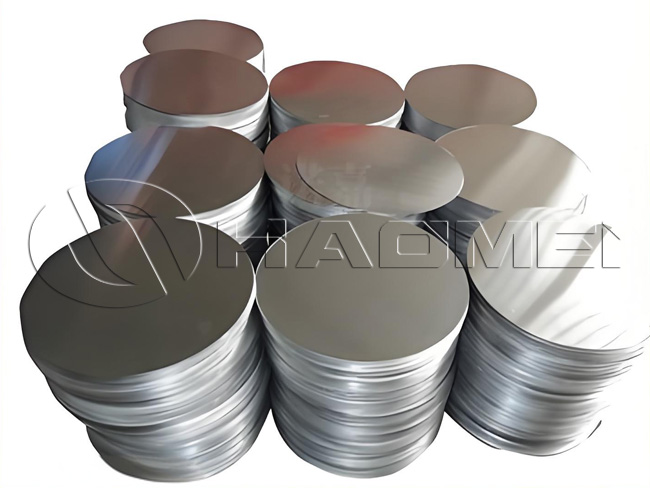
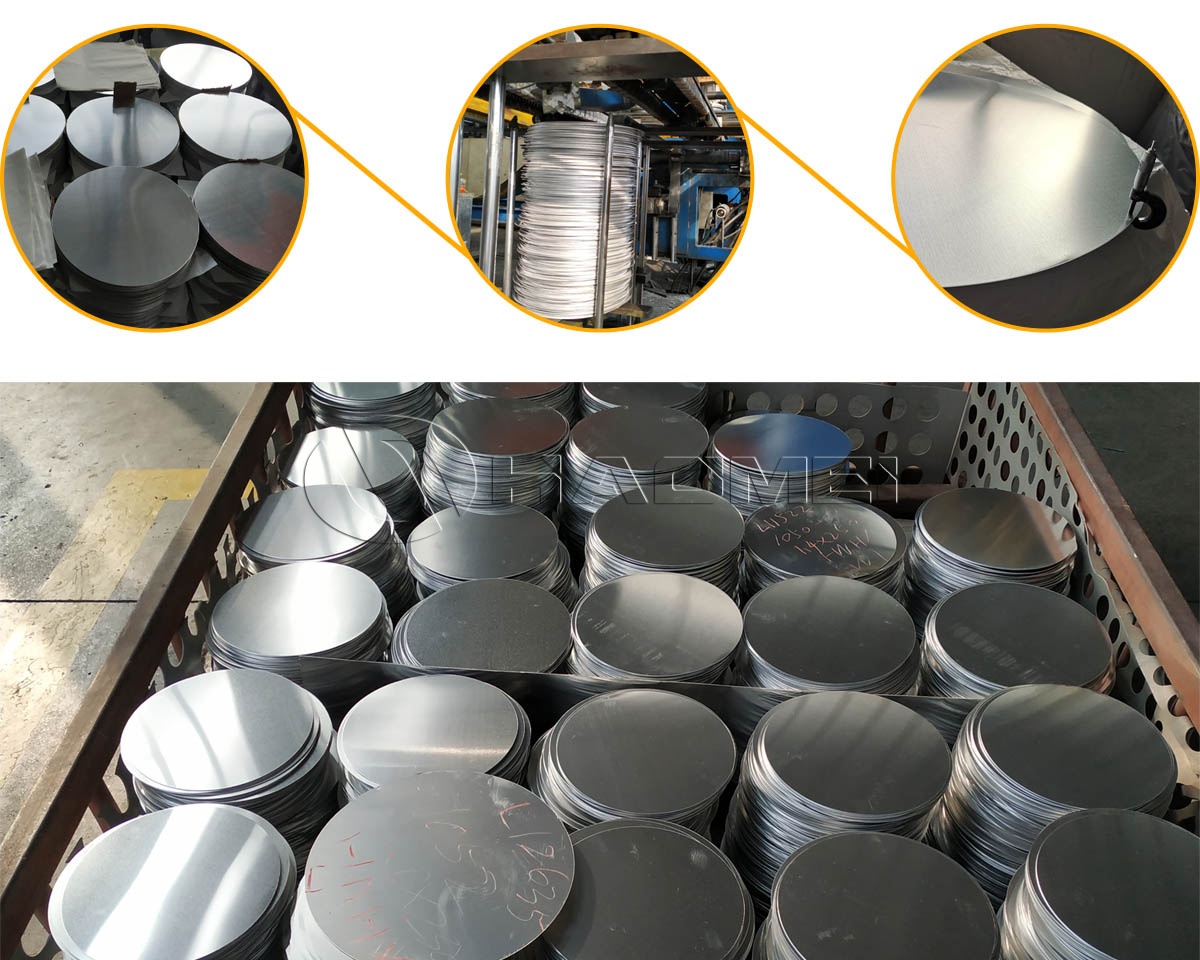
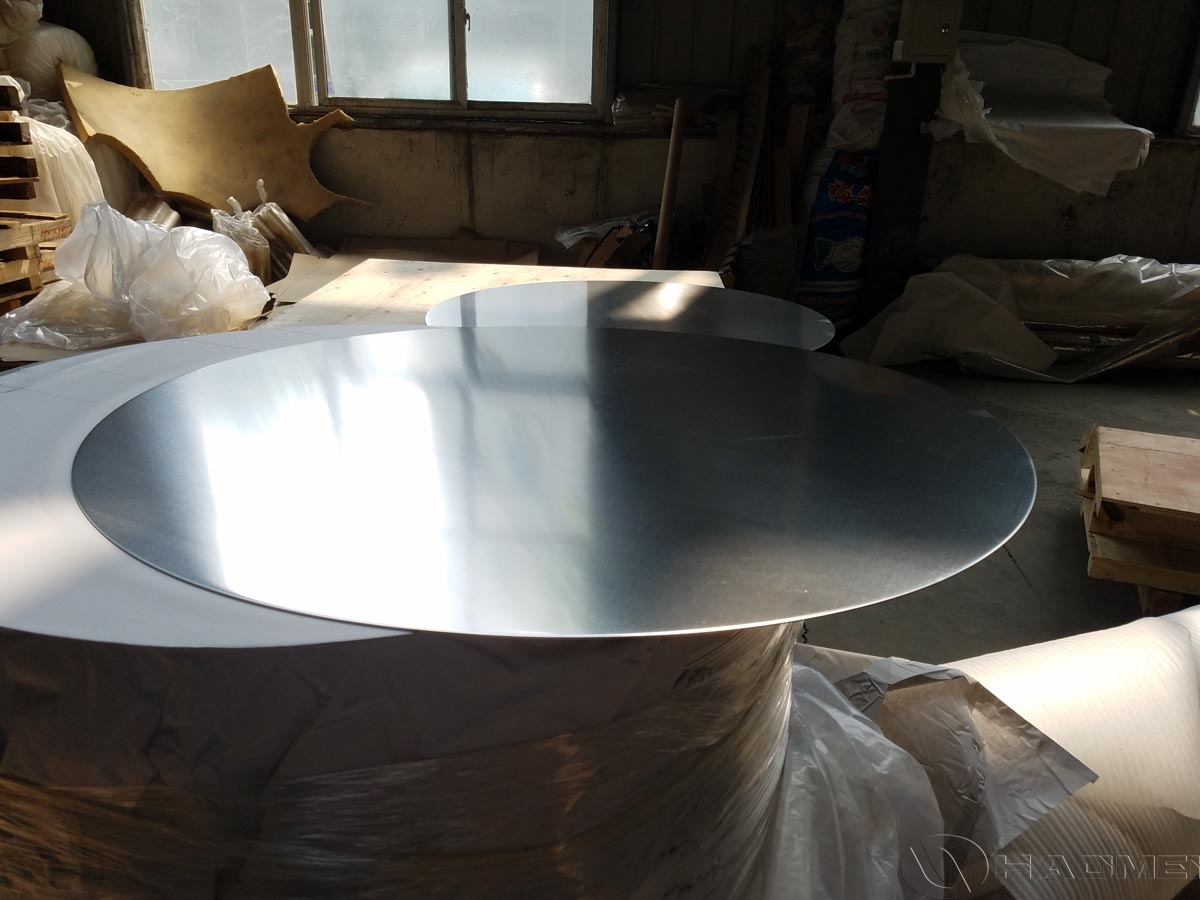
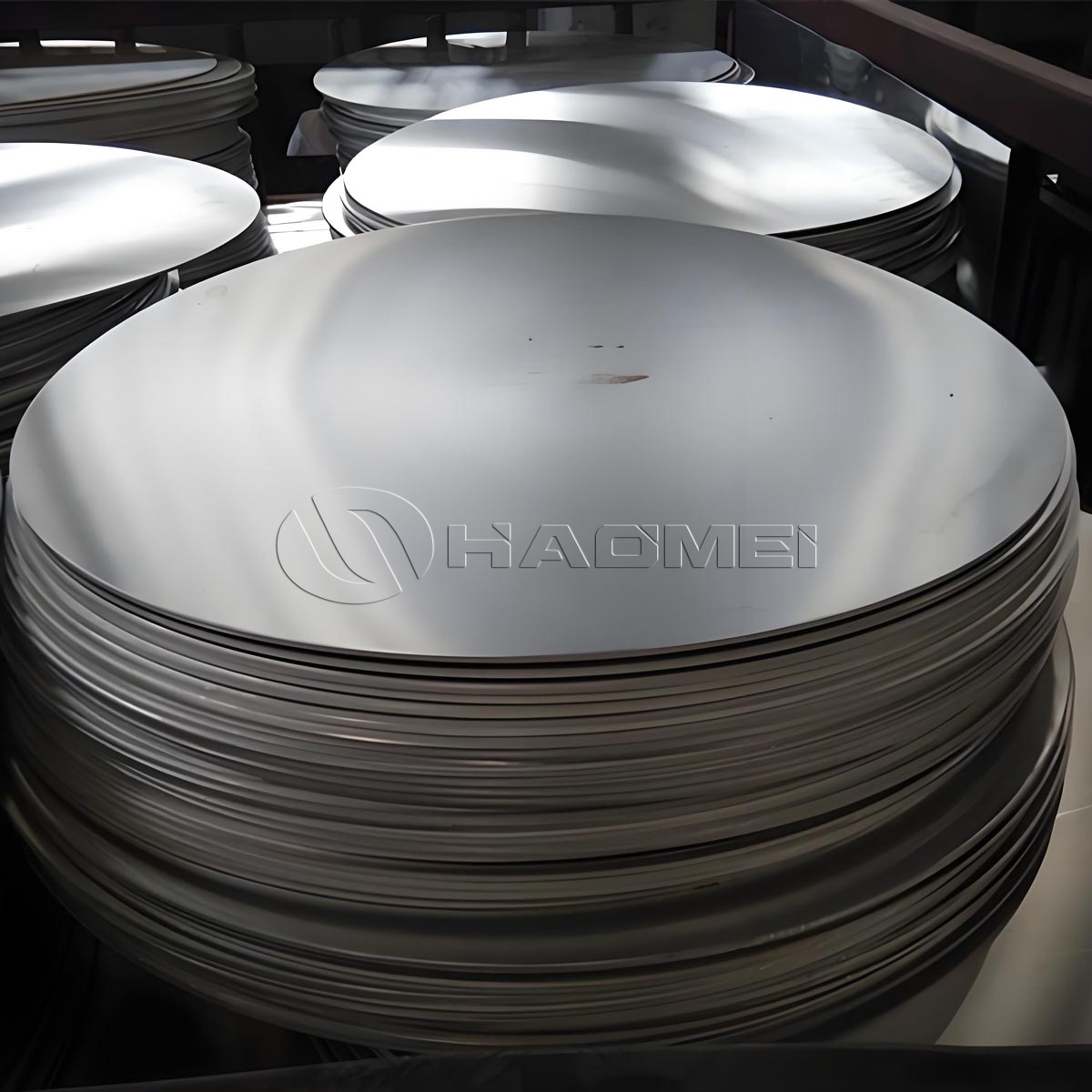
For many cookware designs-especially pressed or spun pots, pans, and lids-1000-series aluminum discs remain a mainstream option because they combine high purity with strong forming performance and reliable heat transfer. Within this category, A1050, A1060, and A1100 aluminum discs in O (annealed) and H14 (half-hard) temper are commonly specified for cookware components where predictable forming and stable surface performance are required.
In cookware production, discs are typically transformed through blanking, deep drawing, stamping, spinning, or flow forming, followed by trimming, polishing, anodizing, painting, or non-stick coating. The alloy and temper must support these operations without introducing defects.
Key material drivers behind the use of A1050/A1060/A1100 include:
Thermal conductivity for even heating: High-purity aluminum provides efficient heat transfer, supporting stable cooking performance in pressed or spun bodies.
Excellent formability (especially in O temper): For deep drawing and complex shapes, annealed temper reduces forming load and helps minimize tearing.
Clean surface for finishing: Cookware requires consistent surface quality to support bright finish, anodizing, or coating adhesion.
Low density and corrosion resistance: Useful for lightweight cookware and daily kitchen environments.
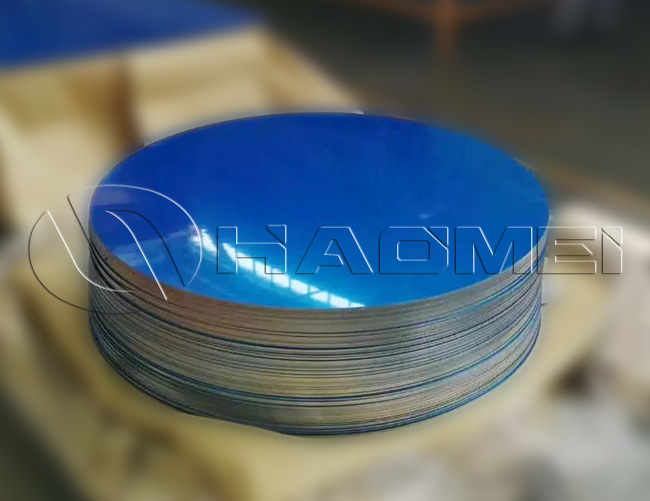
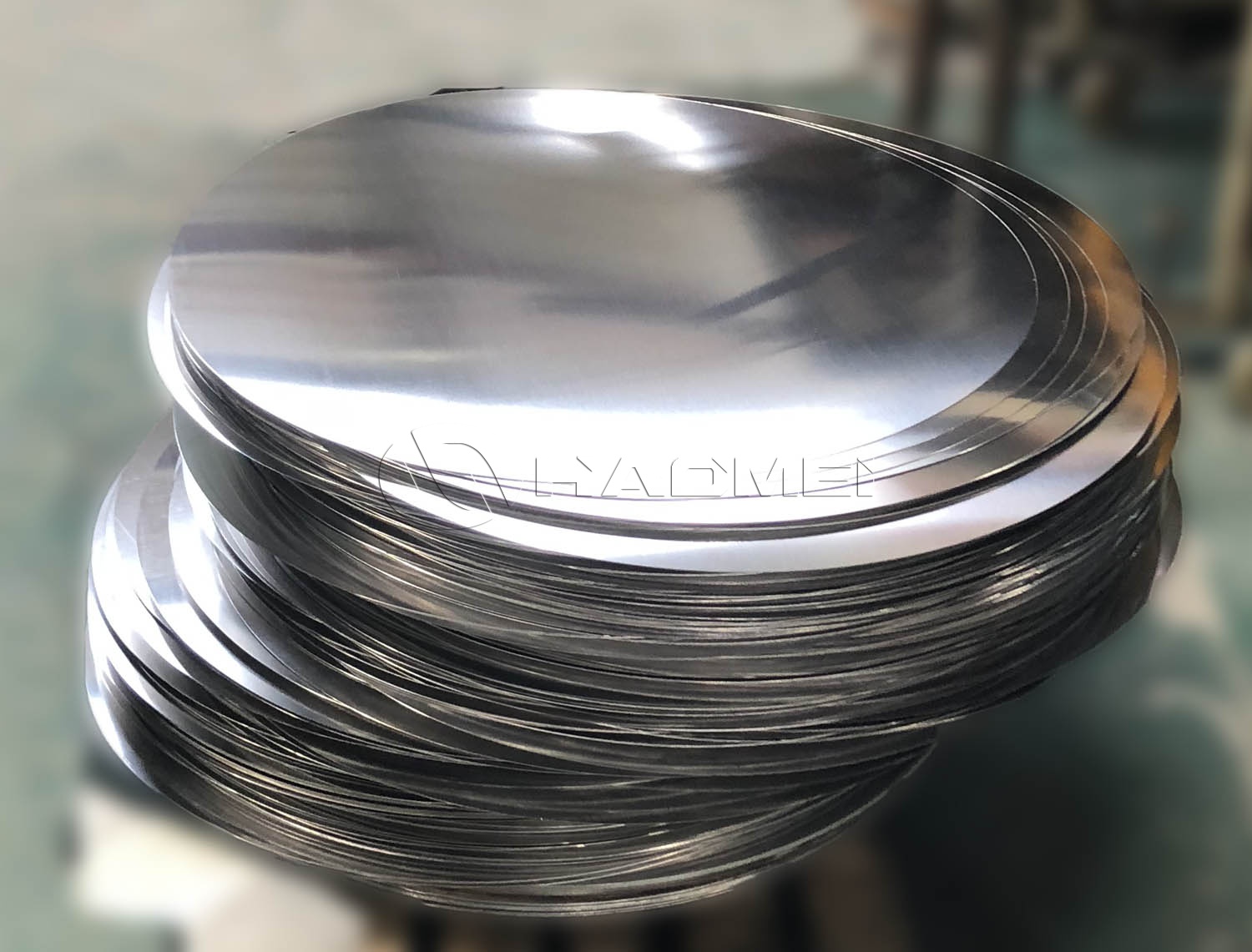
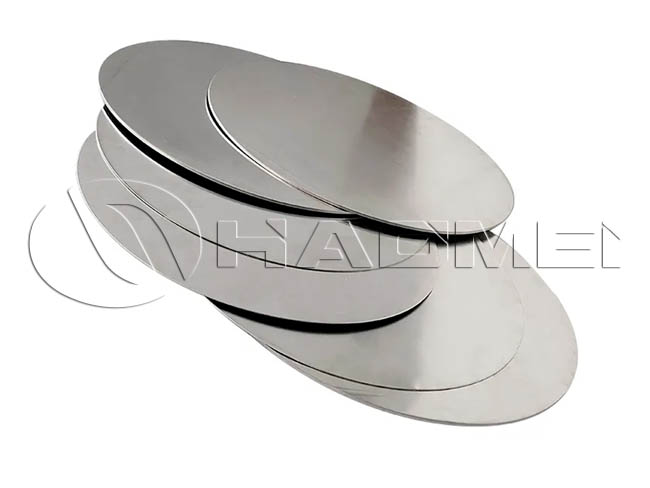
Where buyers need a clear, standard supply route, these alloys are typically sourced as 1000 Series Aluminum circle products with cookware-oriented processing control.
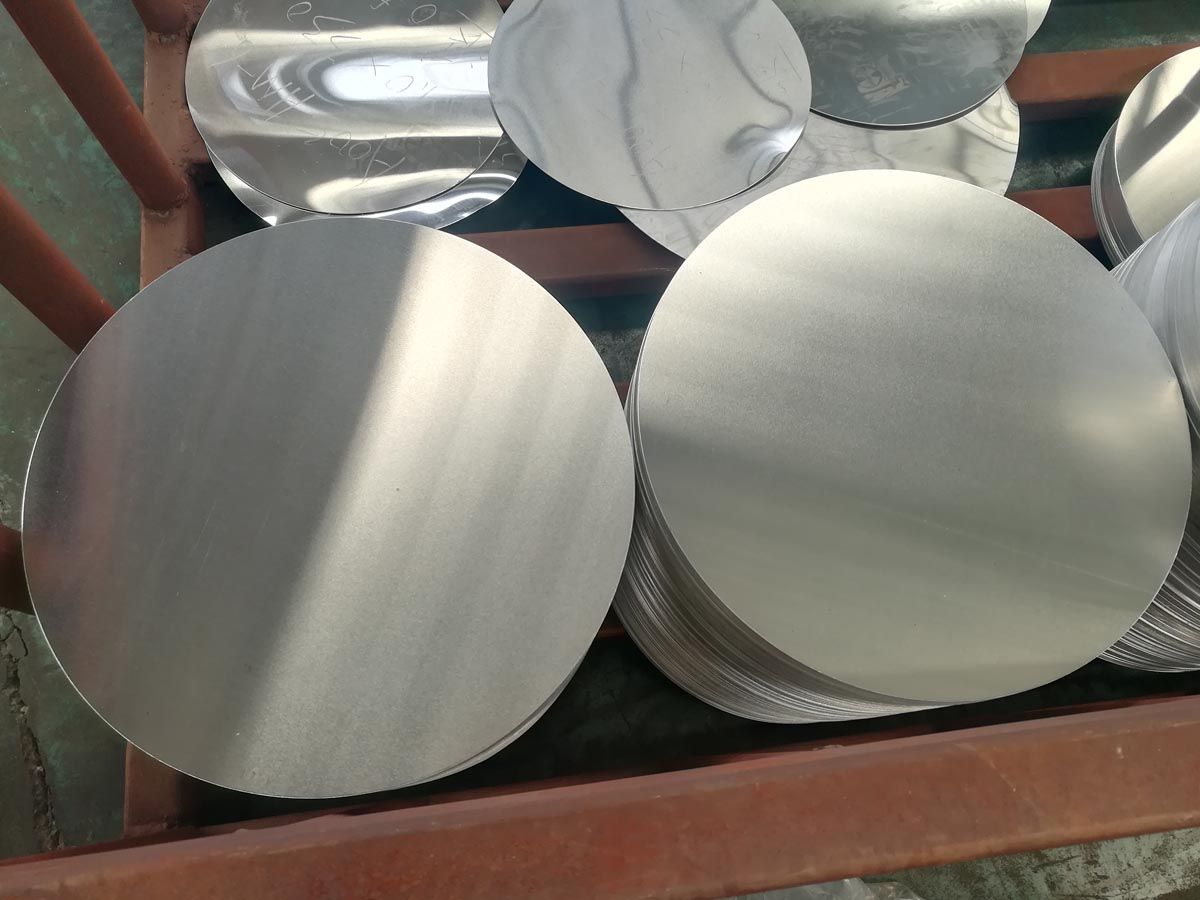
Although all three alloys belong to the commercially pure aluminum family, their typical positioning differs in practice.
A1050 is often selected as a cost-effective baseline for cookware parts requiring good formability and a stable finishing surface. It is widely used for deep drawing and spinning where the geometry is not extremely demanding or where downstream finishing processes are well established.
A1060 generally provides higher purity than A1050, and is commonly used when buyers prioritize surface cleanliness, consistent coating results, and reliable forming behavior. In cookware applications, it is frequently specified for deeper drawn bodies, higher cosmetic requirements, or more sensitive finishing routes.
A1100 is also a widely used cookware alloy and is known for good forming characteristics and corrosion resistance. It is often chosen when production requires stable processing performance across forming and finishing steps, including bright finishing and certain coating systems.
In product selection discussions, buyers may reference dedicated pages such as 1050 Aluminum Circle or 1060 Aluminium Circle when comparing supply specifications and typical manufacturing suitability.
Temper is not a minor detail in cookware discs; it directly influences drawability, springback, hardness, and how the disc behaves under spinning or pressing.
O temper is generally preferred for:
Deep drawing of pots, deep pans, and pressure-cooker bodies
Spinning operations requiring large plastic deformation
Parts where minimizing cracking risk is more important than initial stiffness
Advantages in cookware production:
Lower forming forces and reduced risk of tearing
Better ability to accommodate complex shapes
Typically more forgiving to variations in tool conditions
Practical note: while O temper is highly formable, the final part may require additional process controls (e.g., handling and stacking) to prevent dents or surface damage prior to finishing.
H14 temper is commonly selected for:
Cookware parts requiring higher rigidity (certain lids, shallow formed parts)
Applications where reduced deformation during handling and assembly is important
Designs where forming is moderate and excessive softness is a drawback
Advantages in cookware production:
Improved resistance to handling dents
Better dimensional stability for shallow forming
Suitable when deep drawing severity is limited
In general, when the drawing depth increases and the geometry becomes more demanding, O temper becomes the safer choice. When the part is relatively shallow or must maintain stiffness, H14 can be more appropriate.
Overseas buyers often evaluate discs not only by alloy/temper, but also by processing outcomes. Key performance areas include:
Earing is a common issue in drawn cookware bodies. While tooling and lubrication play roles, disc quality and rolling direction effects can influence anisotropy. Buyers typically seek discs with stable forming behavior to reduce trimming waste and improve consistency.
During spinning, material ductility and surface cleanliness become critical. Discs that are prone to surface pickup or scoring can lead to rework before anodizing or coating.
Cookware finishing-particularly non-stick coatings-demands a stable surface free of defects that can cause coating holidays, pinholes, or adhesion variation. High-purity alloys like A1060 and well-controlled O-temper processing are commonly used when cosmetic and coating stability requirements are strict.
Uniform heating depends on the cookware design and thickness distribution, but base material thermal performance is still a foundational requirement. High-purity aluminum alloys are widely accepted where efficient heat flow is desired.
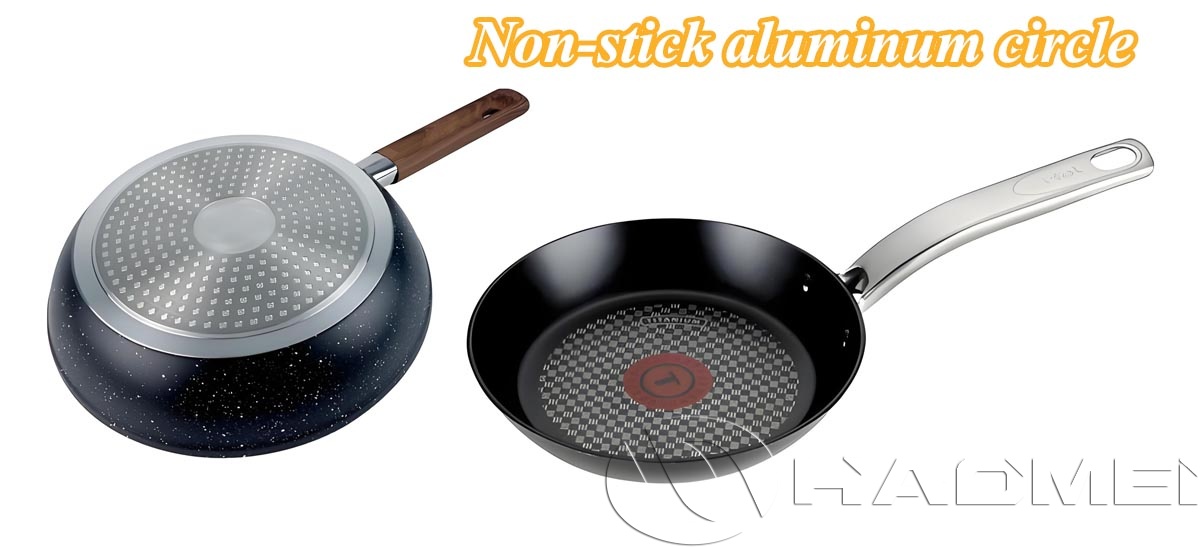
These alloys and tempers are commonly applied to:
Frying pans and saute pans (pressed bodies, bases, shallow forming)
Saucepans and stockpots (deep drawing or multi-step drawing)
Pressure cooker components (often demanding deeper drawing and consistent forming)
Lids and shallow stamped parts (often suitable for H14 depending on design)
Non-stick cookware substrates (requiring stable surface and finishing behavior)
Alloy/temper selection is often aligned with the forming method:
Deep drawn pots: typically O temper for drawability
Spun cookware: frequently O temper for large deformation
Shallow stamped lids: H14 can be suitable where stiffness is beneficial
Different regions and buyers may reference different material standards for aluminum and aluminum alloy sheet/plate that discs are blanked from, as well as temper definitions and test methods. The table below lists commonly referenced standards in global trade; applicability depends on the contract and product scope.
| Item | Commonly Referenced Standard/Framework | Notes (Scope) |
|---|---|---|
| Aluminum & aluminum alloy sheet/plate | ASTM B209 | Widely referenced in international trade for sheet/plate; discs are typically produced by blanking from sheet/coil. |
| Wrought aluminum and aluminum alloys (chemical composition limits) | EN 573 series | Used in Europe for composition designation and limits. |
| Temper definitions / designation system | EN 515 | Defines temper designation system used with EN standards. |
| Aluminum & aluminum alloy sheet/strip (general product requirements) | EN 485 series | European standard family commonly referenced for tolerances and mechanical properties of sheet/strip. |
| Quality management system (company level) | ISO 9001 | Certification depends on supplier; should be confirmed by valid certificate if required. |
Note: The exact applicable standard(s) should be confirmed in purchase documentation. For cookware, buyers often focus on consistent forming performance and surface suitability in addition to compliance with the referenced material standard.
A1050, A1060, and A1100 aluminum discs remain practical choices for cookware manufacturing because they offer high-purity aluminum’s advantages in forming and heat transfer, with tempers that can be aligned to the production route.
O temper is typically selected when deep drawing or spinning demands maximum ductility and process tolerance.
H14 temper is often used where parts are shallow formed or benefit from higher stiffness and dimensional stability.
When sourcing for overseas production lines, aligning alloy and temper with forming severity, surface finishing requirements, and handling conditions is a reliable way to reduce defects such as tearing, earing waste, and coating inconsistencies—issues that directly impact yield and delivery stability.

Office Address:
No.14 Waihuan Road, CBD, Zhengzhou, China
Contact Us
HAOMEI Aluminum offer an custom aluminum circle for you!
whatsapp: +86-18703635966
Email: sales@alummc.com
Email: alummc@hotmail.com
Request Free Sample & Quotation
Copyright © 2026 By HAOMEI Aluminum CO., LTD. All Rights Reserved. Sitemap
 +86-18703635966
 sales@alummc.com
 8618703635966
