
 No.14 Waihuan Road, CBD, Zhengzhou, China
 +86-18703635966

No.14 Waihuan Road, CBD, Zhengzhou, China
+86-18703635966
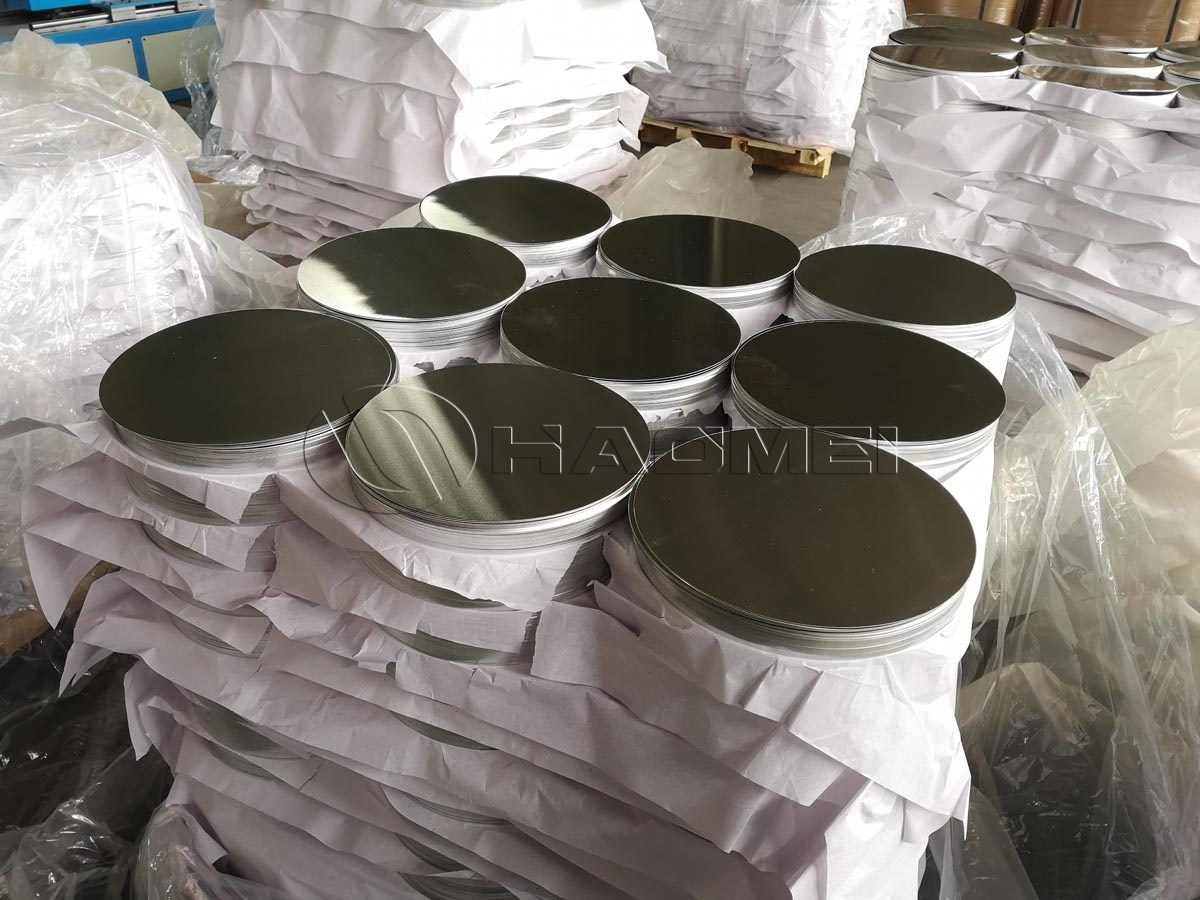
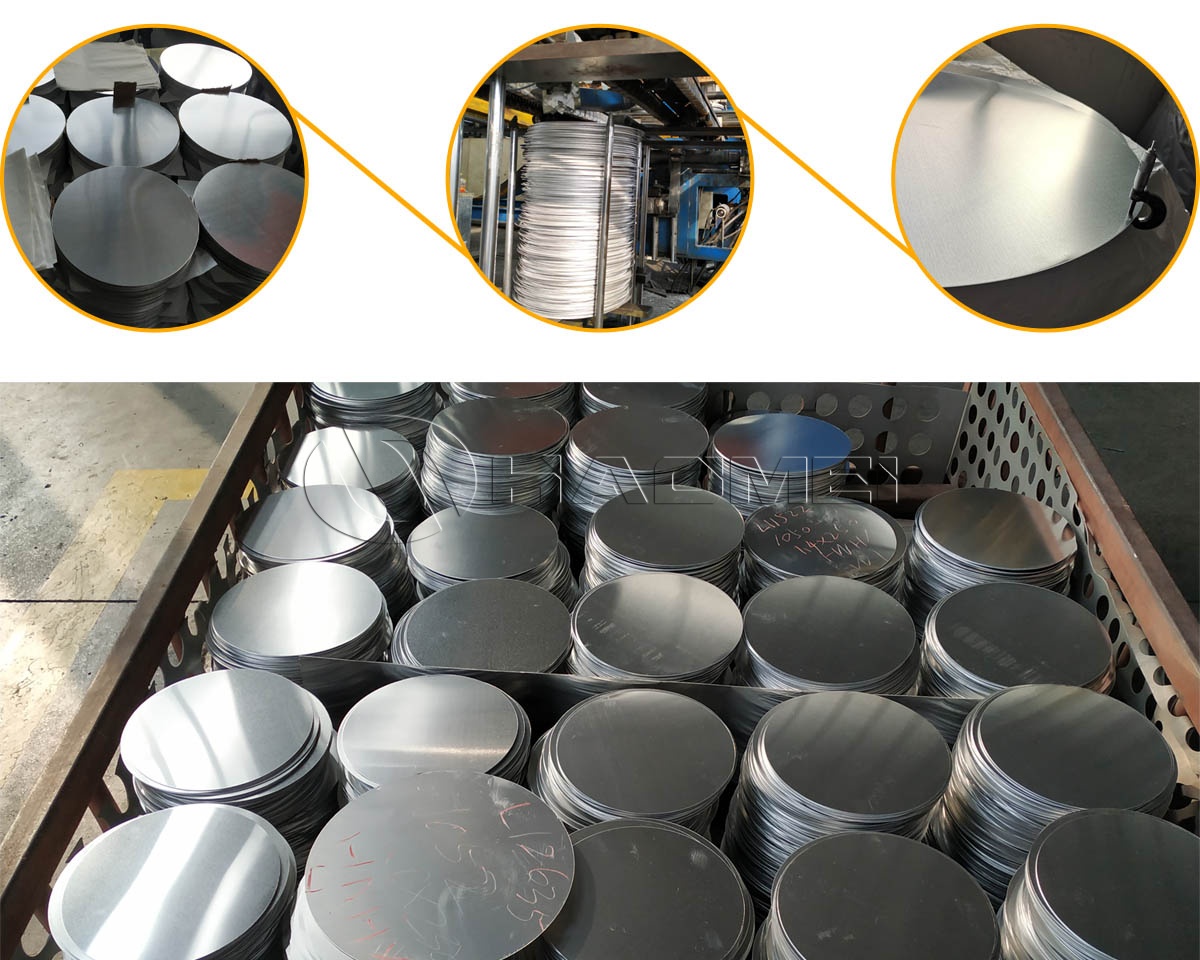
Pizza baking trays demand repeatable heat transfer, dimensional stability after forming, and a surface that can be finished consistently for food-contact applications. As an aluminum circle manufacturer, we supply 3105 aluminum circle and 3105 aluminum disc blanks engineered for stamping, spinning, and deep drawing into pizza pans and baking trays. This article explains why 3105 is widely selected for cookware and bakeware circles, how we manufacture and control quality, and how it compares with other common alloys used for pizza tray production.
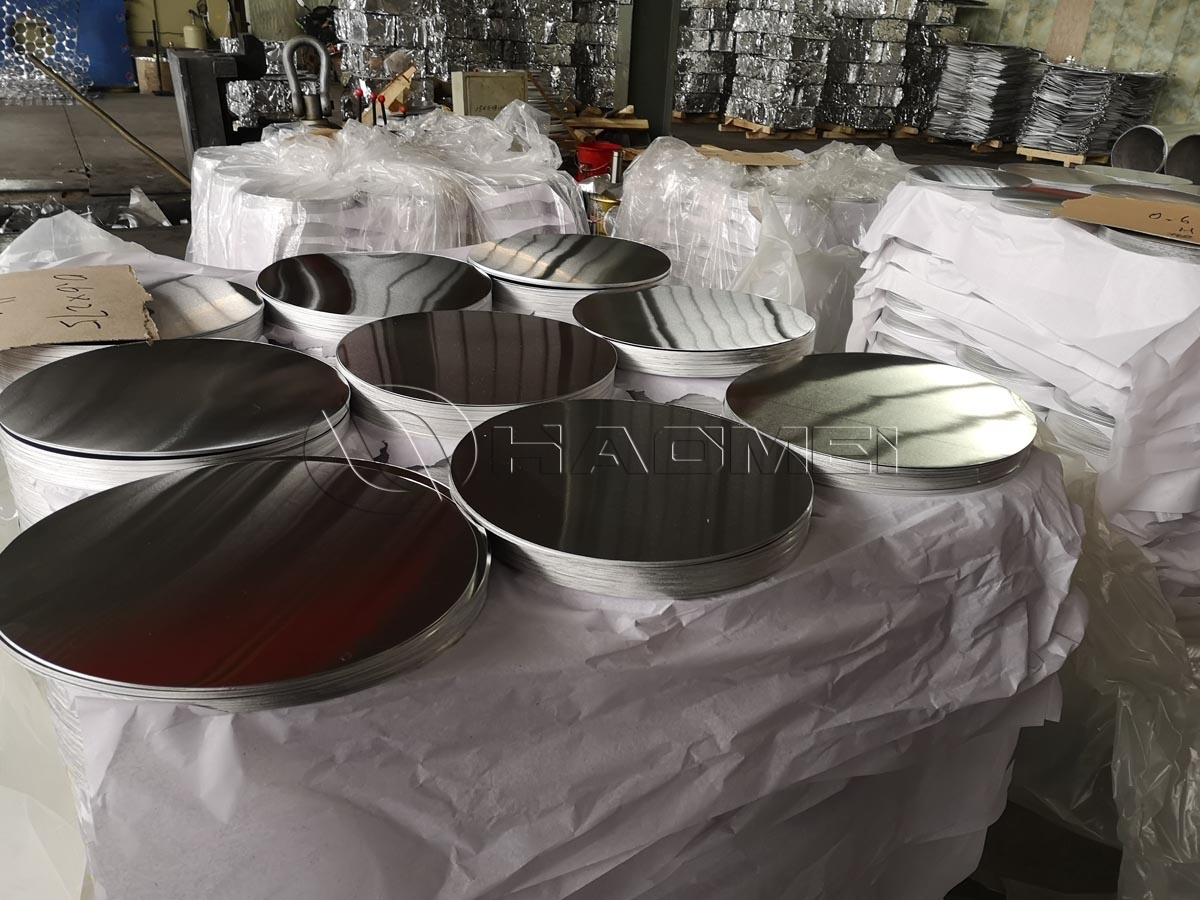
Pizza trays are typically produced from round blanks that are formed into shallow or medium-depth pans, often with rolled rims or pressed profiles. The alloy must tolerate plastic deformation without edge cracking, while maintaining adequate strength to resist distortion in service and during handling.
3105 is an Al-Mn based 3000 series alloy. In practical cookware forming, it offers a balanced combination of:
Formability suitable for stamping and spinning operations used in pizza pans.
Moderate strength, especially in H temper, to help trays keep shape during repeated thermal cycles.
Corrosion resistance for kitchen environments and cleaning processes.
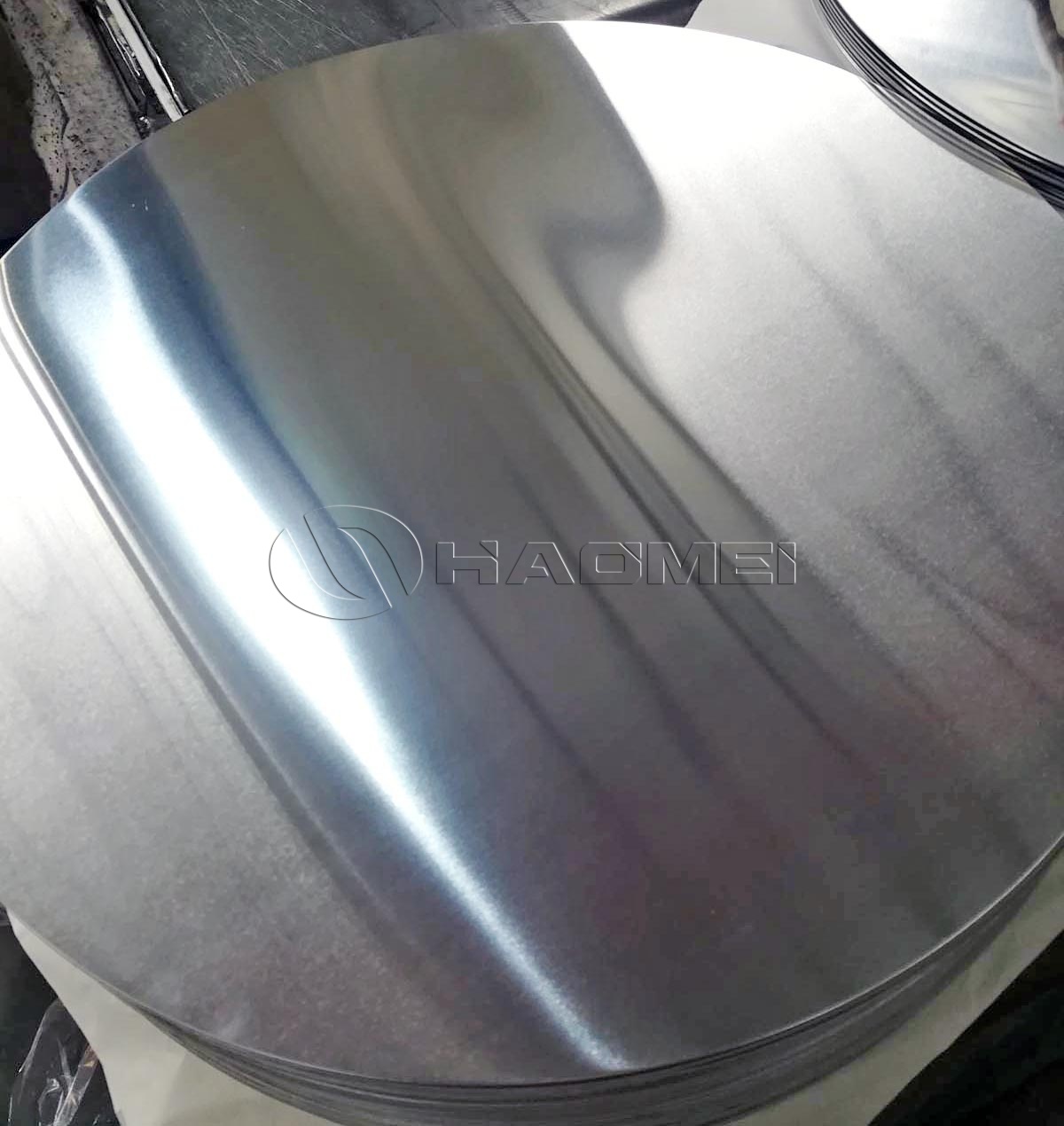
Consistent surface quality to support anodizing, non-stick coating systems, or basic mechanical finishing.
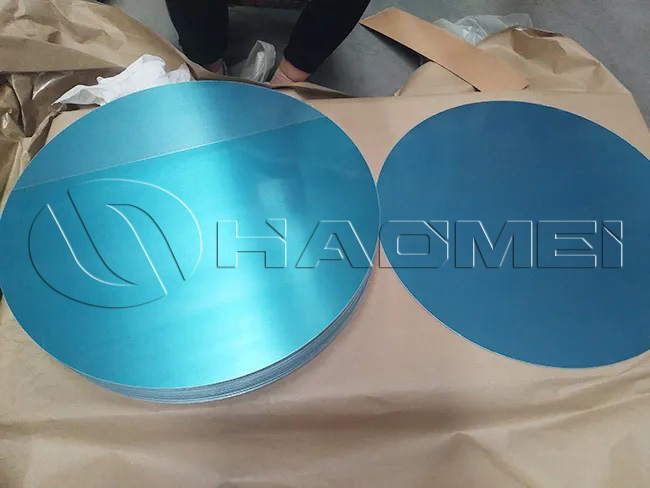
For buyers who want a clear product scope, our 3105 circles are supplied as dedicated cookware blanks with controlled chemistry, grain structure, and flatness to support high-yield tray forming.
In pizza tray production, cracking often initiates at the rim or at tool marks when the blank is not optimized for the forming route. Our 3105 aluminum circle is produced with process controls aimed at stable elongation and uniform deformation, helping reduce:
Earing tendencies in drawn shapes.
Edge cracking during flanging or rim rolling.
Orange peel on large radii and spun surfaces.
Aluminum is selected for bakeware primarily for heat transfer. While alloy selection does not change thermal conductivity as dramatically as thickness and geometry, 3105 is commonly used because it combines good thermal performance with mechanical stability.
Depending on the tray design, customers may require:
Mill finish for basic trays.
Anodized finish for improved surface hardness and appearance.
Coating-grade surface for PTFE or other non-stick systems.
We supply circles suitable for these finishing routes with controlled surface cleanliness and defect limits appropriate for cookware.
The following table lists our typical supply range for pizza baking tray blanks. Exact limits can be tailored based on forming method, coating system, and target pan geometry.
| Item | Typical Range / Option | Notes for Pizza Tray Production |
|---|---|---|
| Alloy | 3105 | 3000 series Al-Mn alloy for cookware forming |
| Temper | O, H12, H14, H16, H18 (by request) | O for deep drawing and spinning, H tempers for stiffness |
| Thickness | 0.5 mm to 4.0 mm | Common pizza trays often 0.8 mm to 2.0 mm |
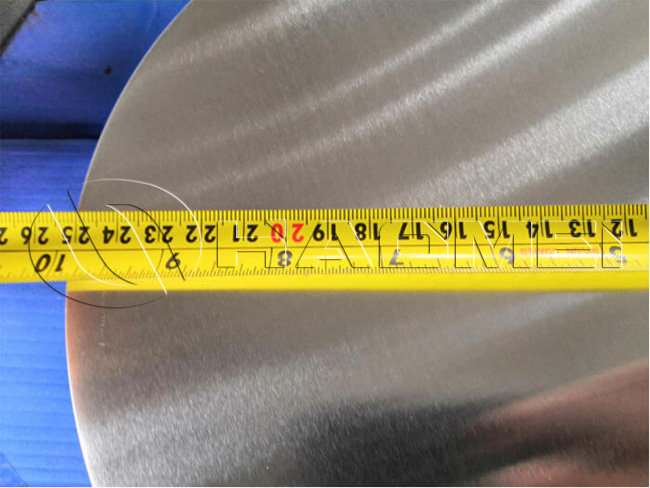
| Diameter | 80 mm to 1200 mm | Customized to tray size and press tooling |
| Diameter tolerance | As agreed (tight tolerance available) | Supports stable rim forming and repeatable press setup |
| Thickness tolerance | As agreed (tight tolerance available) | Helps control final tray stiffness and heat distribution |
| Flatness | Controlled to forming requirement | Important for feeding, blank holding, and coating lines |
| Surface | Mill finish, coating-grade | Defect control for anodizing or non-stick coating |
| Edge condition | Deburred, smooth edges | Reduces handling risk and edge crack initiation |
| Packaging | Export seaworthy, palletized | Paper interleaving and moisture protection available |
1. Good Thermal Conductivity: 3105 aluminum alloy has excellent thermal conductivity, which helps the pizza crust heat evenly, resulting in a crispy exterior and soft interior.
2. Excellent Rust and Corrosion Resistance: As an aluminum-manganese alloy, 3105 has good resistance to atmospheric and humid environments, making it suitable for use in kitchens and other damp environments.
3. Good Machinability: It can be deep-drawn, bent, and formed, facilitating the manufacture of complex-shaped baking pans (such as deep-edged, rolled-edge, etc.).
4. Moderate Strength and Hardness: Tensile strength is 95-140MPa, and hardness is approximately HB45-55, ensuring durability while avoiding excessive weight, which is beneficial for lightweight design.
5. Good Welding and Riveting Performance: Facilitates the connection and assembly of baking pan structural components. 6. Good surface treatment compatibility: It can be used with surface treatment processes such as anodizing and hard anti-sticking film to improve wear resistance, anti-sticking properties and service life.
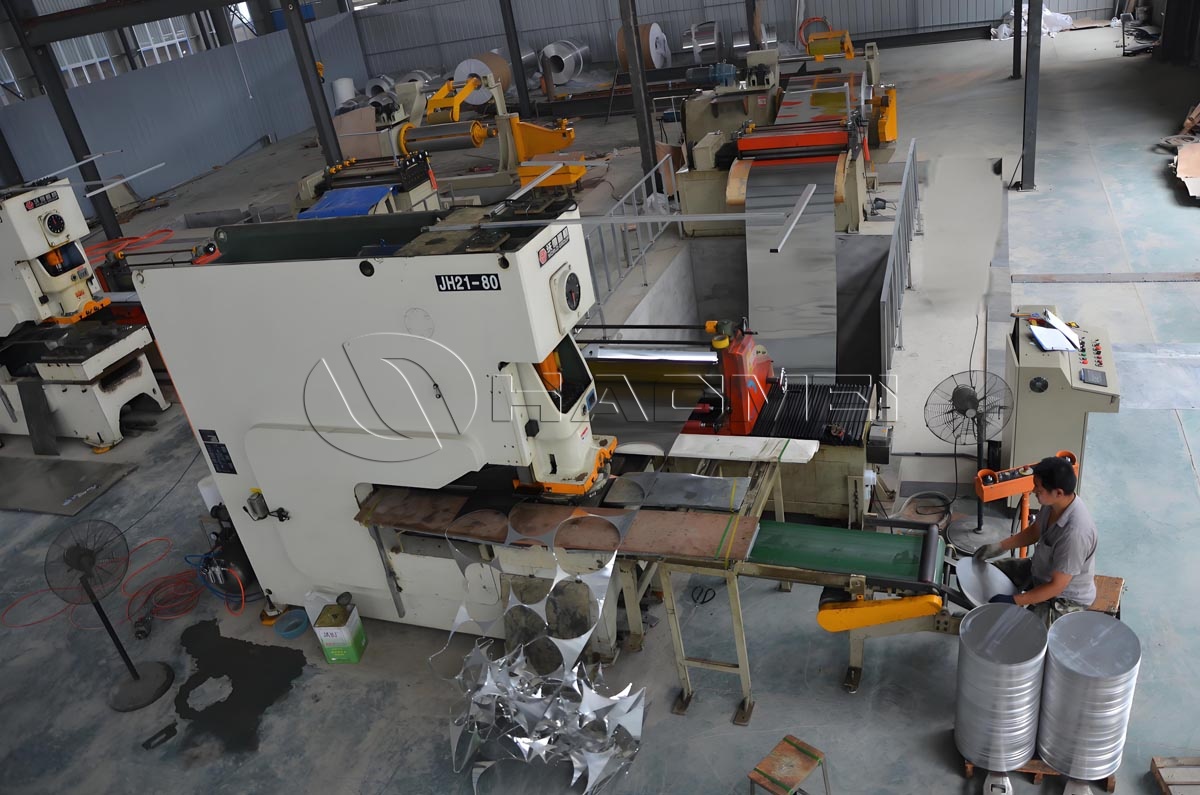
The process from aluminum circles to finished pizza baking pans typically involves the following steps:
Raw Material Preparation: Select standard-compliant 3105 aluminum coils or sheets.
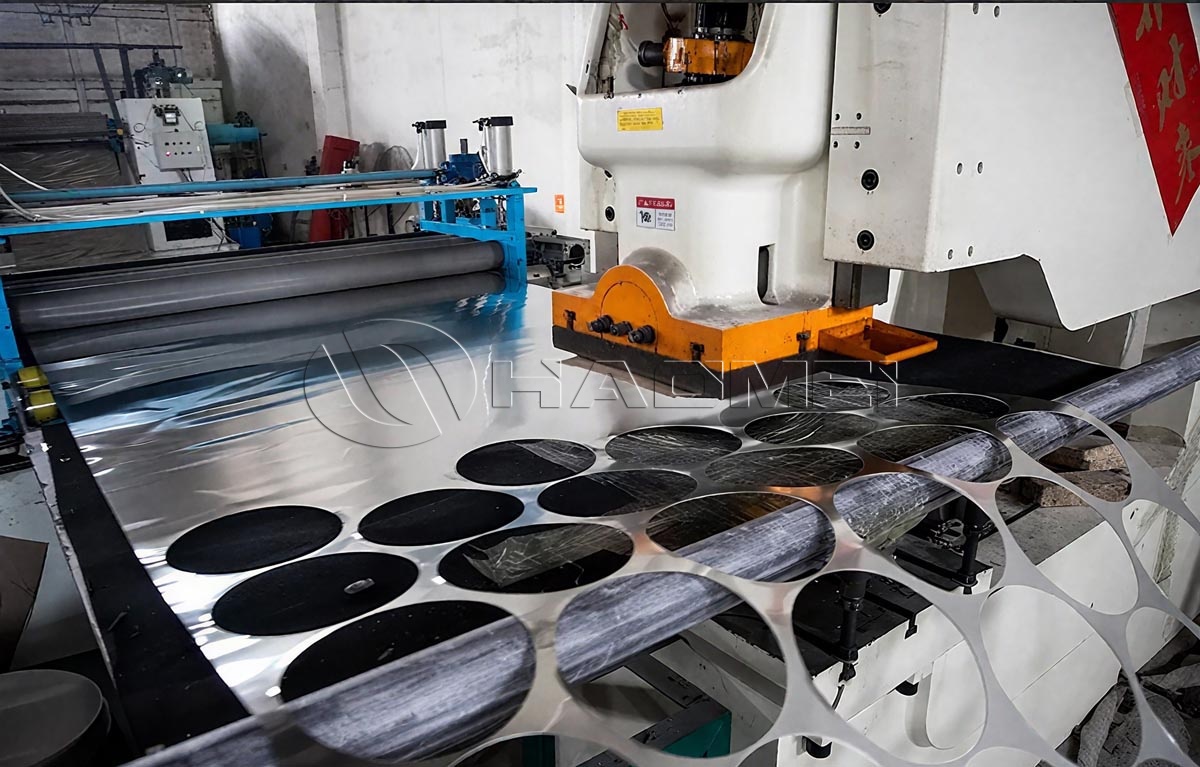
Stamping or Cutting: Process the aluminum sheets into aluminum round sheets of different diameters.
Deep Drawing or Spinning: Shape the round sheets into the pizza baking pan shape.
Edge Trimming and Shaping: Ensure smooth edges and structural stability.
Surface Treatment: Apply a non-stick coating or anodize.
Quality Inspection and Packaging: Ensure product dimensions and surface quality meet standards.
Our 3105 aluminum disc products are used where round blanks are formed into bakeware and related components.
Typical applications include:
Pizza baking trays and pizza pans.
Round baking sheets and shallow baking trays.
Cookware components requiring spinning or stamping.
Light-duty food-service pans where corrosion resistance and consistent finish are required.
Target industries:
Cookware and bakeware manufacturers.
Food-service equipment OEMs.
Non-stick coating and anodizing supply chains requiring stable substrate.
Alloy selection should match forming severity, required stiffness, and finishing method. Below is a practical comparison for pizza tray production.
3003 is a widely used cookware alloy known for very good formability. 3105 typically offers slightly higher strength potential in certain tempers, which can be advantageous for trays that require better stiffness after forming.
If your priority is maximum drawability for deeper shapes, 3003 is often selected. If you want a balance of formability and stiffness for trays with rim rolling and frequent handling, 3105 is commonly preferred.
We supply both options, including 3003 Aluminum Circle, when customers want to qualify multiple alloys for different tray models.
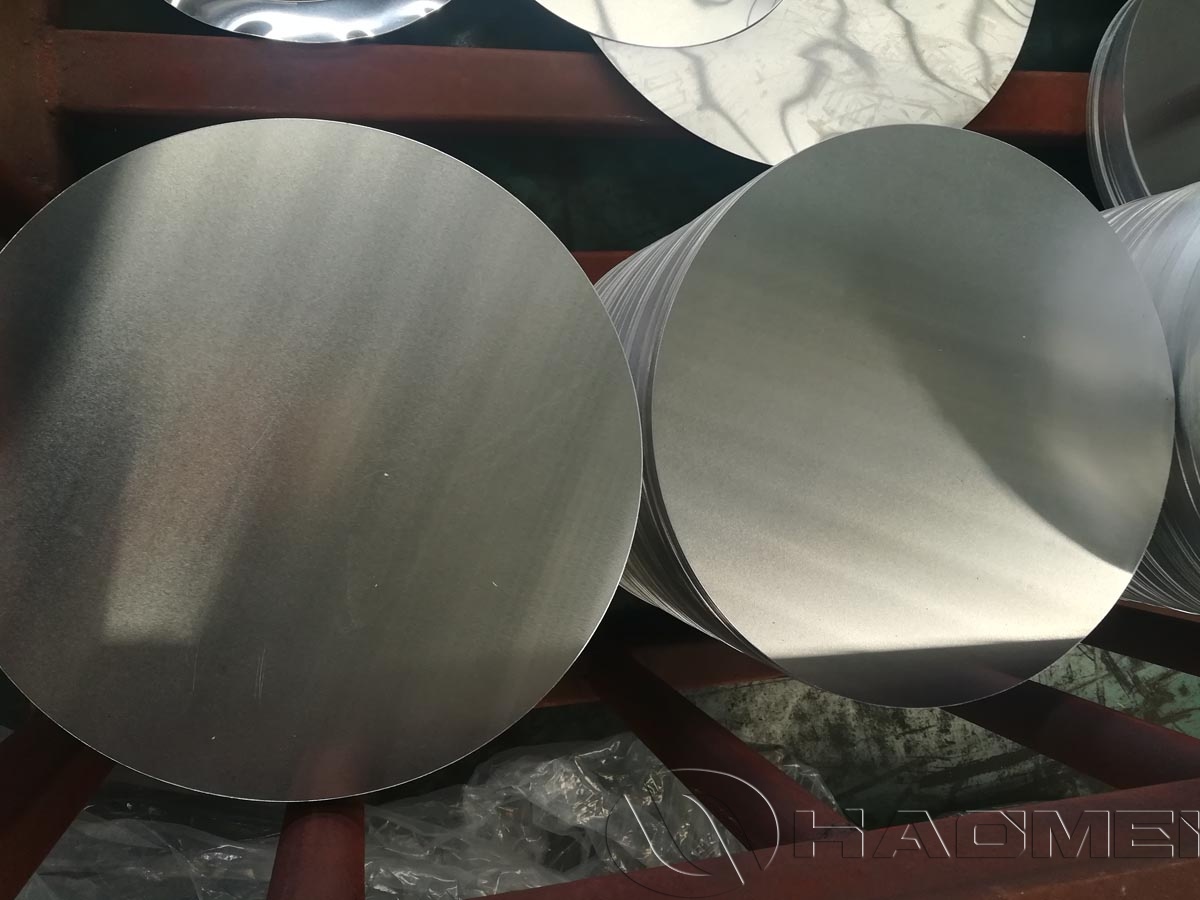
3004 has higher strength than 3003 and is used for applications needing more rigidity. For pizza trays, higher strength can be helpful, but it may reduce forming margin in aggressive operations if process conditions are not optimized. 3105 can be a more forgiving choice for high-yield stamping or spinning while still supporting good stiffness.
1000 series aluminum offers excellent conductivity and very high ductility, but it is softer and can be more prone to distortion in handling or service unless thickness is increased. For commercial tray production where thickness is cost-sensitive and rigidity matters, 3105 is often selected for better mechanical stability.
To match 3105 aluminum circles to your pizza baking tray line, we recommend confirming:
Forming method: stamping, spinning, or combined forming.
Target pan depth and rim geometry.
Finishing method: mill finish, anodized, or non-stick coating.
Incoming inspection criteria: tolerances, flatness, surface class, edge quality.
Packaging and logistics needs for your warehouse environment.
These inputs allow us to propose a stable blank specification that supports your press settings and reduces variation across lots.
As a manufacturer of 3105 aluminum circle products for pizza baking trays, our focus is repeatable forming performance, controlled surface quality, and reliable delivery for export and OEM production. We support customers with alloy and temper selection, tolerance planning for automated lines, and documentation suitable for industrial quality systems.
For ongoing programs, we offer stable supply planning, batch traceability, and technical coordination to help you maintain consistent tray quality across production cycles. If you are qualifying a new pizza pan design or optimizing yield on an existing model, we can provide trial lots and specification alignment to support long-term cooperation.


Office Address:
No.14 Waihuan Road, CBD, Zhengzhou, China
Contact Us
HAOMEI Aluminum offer an custom aluminum circle for you!
whatsapp: +86-18703635966
Email: sales@alummc.com
Email: alummc@hotmail.com
Request Free Sample & Quotation
Copyright © 2026 By HAOMEI Aluminum CO., LTD. All Rights Reserved. Sitemap
 +86-18703635966
 sales@alummc.com
 8618703635966
