
 No.14 Waihuan Road, CBD, Zhengzhou, China
 +86-18703635966

No.14 Waihuan Road, CBD, Zhengzhou, China
+86-18703635966
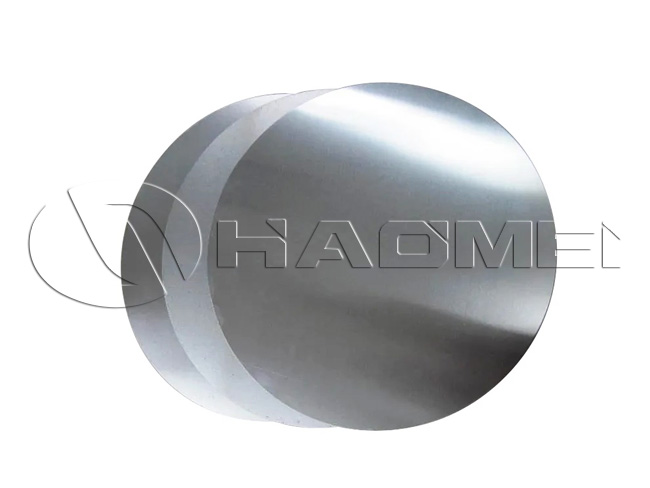
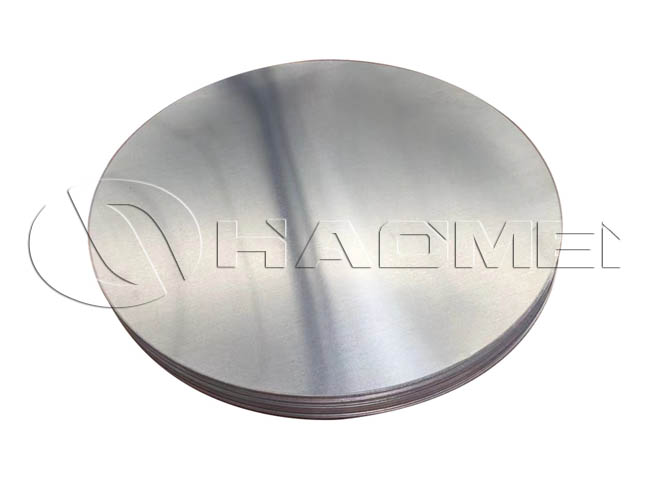
As a manufacturer of aluminum circles for cookware production, we supply 3105 aluminum circle for gas stove pans requiring dependable forming performance, structural stability, and consistent surface quality. Gas stove pan bodies are commonly produced by deep drawing, spinning, stamping, or multi-stage forming. The aluminum blank must therefore maintain uniform thickness, controlled hardness, clean edges, and reliable behavior during subsequent coating and assembly processes.
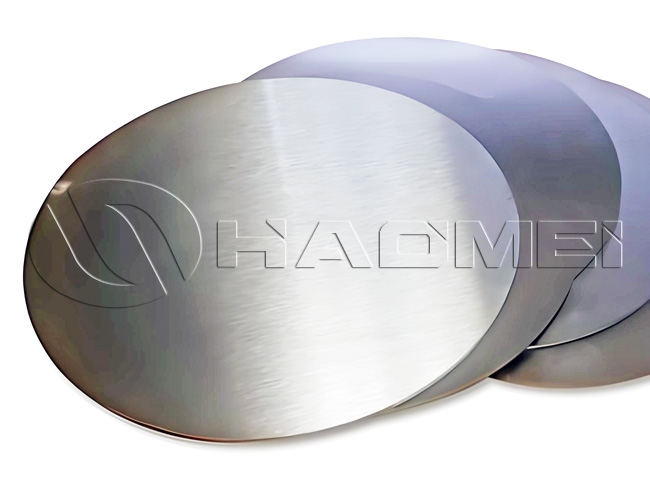
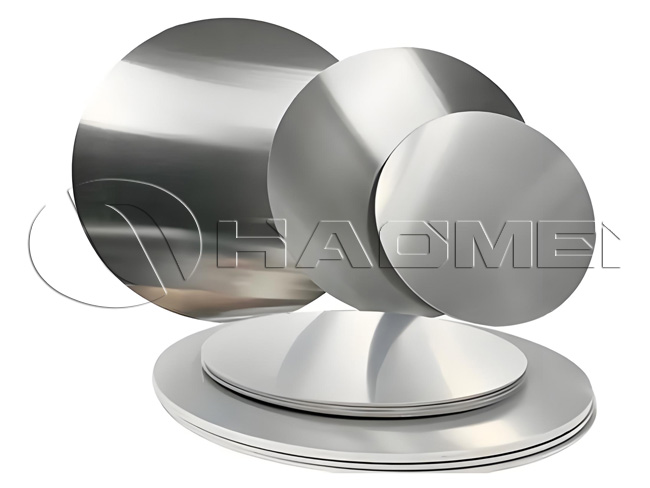
Our 3105 aluminum discs are produced from controlled 3105 aluminum coil and processed through slitting, blanking, annealing, leveling, inspection, and packaging. We manufacture round blanks according to the actual forming method, pan geometry, thickness requirement, and customer quality specification. This production approach helps cookware manufacturers reduce forming defects and maintain stable batch-to-batch processing.
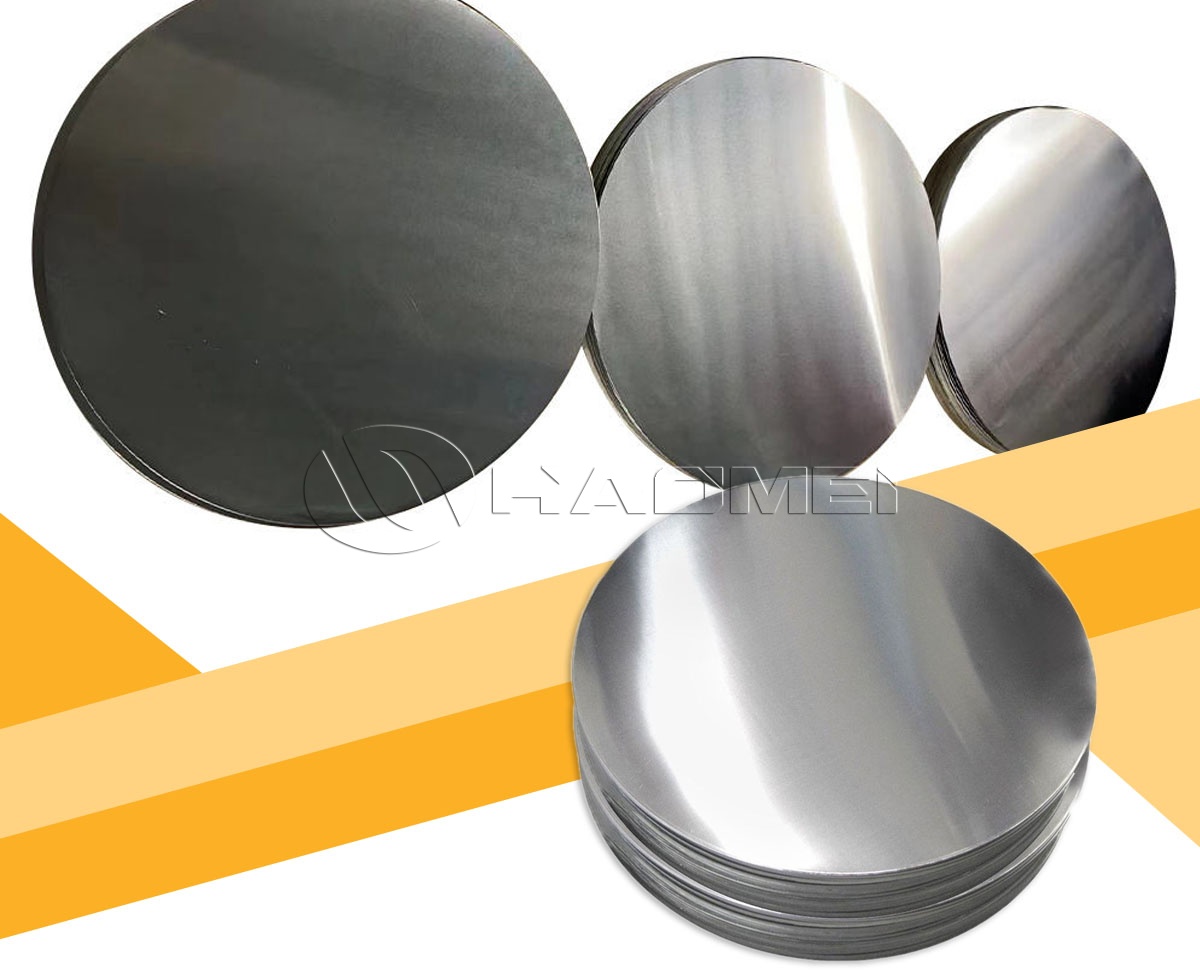
3105 is an aluminum-manganese alloy in the 3000 series. It provides a useful balance of moderate strength, workability, corrosion resistance, and thermal conductivity. Compared with commercially pure aluminum, 3105 offers improved strength while retaining the ductility required for cookware forming operations.
For gas stove pans, the material is typically used as a pan body blank before drawing, shaping, surface treatment, non-stick coating, anodizing, or bottom assembly. It is particularly suitable for products where the pan body requires a stable shape and sufficient mechanical support during regular kitchen use.
The selection of a 3105 aluminum circle for gas stove pans depends on more than alloy designation. Temper, thickness consistency, grain structure, surface condition, burr control, and blank flatness all affect the final result. As a factory, we control these factors from incoming coil preparation through final dimensional inspection.
Key advantages of our 3105 aluminum disc production include:
Good deep drawing and spinning capability in suitable annealed tempers.
Higher strength than 1xxx series aluminum for improved pan body rigidity.
Good corrosion resistance for cookware manufacturing and surface finishing.
Uniform thickness to support consistent heat distribution and forming depth.
Clean, controlled edges to reduce cracking and tool wear during stamping.
Stable surface condition for coating, polishing, anodizing, or painting processes.
The chemical composition of 3105 aluminum alloy is controlled in accordance with applicable material standards and customer-agreed specifications. Exact requirements can be confirmed before production, particularly when the circles will be used for deep drawing, coating, or induction-compatible cookware assembly.
| Element | Typical 3105 Alloy Requirement, % by Weight |
|---|---|
| Aluminum | Balance |
| Manganese, Mn | 0.30 - 0.80 |
| Magnesium, Mg | 0.20 - 0.80 |
| Silicon, Si | 0.60 max |
| Iron, Fe | 0.70 max |
| Copper, Cu | 0.30 max |
| Zinc, Zn | 0.40 max |
| Other elements, each | 0.05 max |
| Other elements, total | 0.15 max |
The following table shows common supply options for 3105 aluminum circle production. Final values are determined by diameter, thickness, temper, processing method, and the forming requirements of the finished gas stove pan.
| Parameter | Standard Manufacturing Range | Notes |
|---|---|---|
| Alloy | 3105 | Aluminum-manganese alloy |
| Temper | O, H12, H14, H16, H18 | O temper is commonly selected for deep drawing |
| Thickness | 0.50 - 6.00 mm | Common cookware applications often use 1.00 - 3.50 mm |
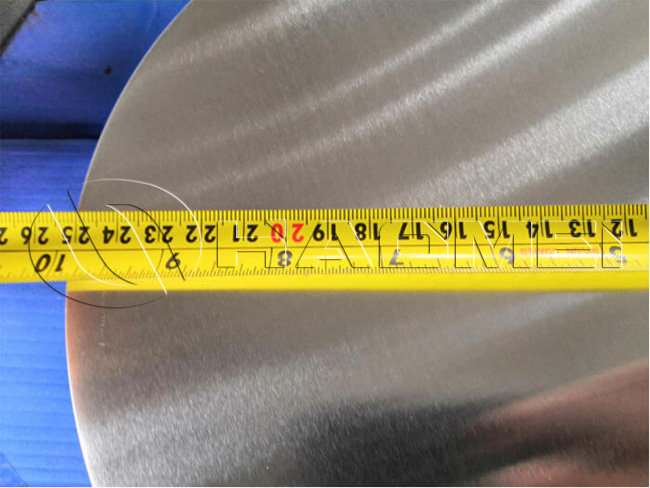
| Diameter | 100 - 1,000 mm | Custom diameters can be produced based on tooling requirements |
| Surface | Mill finish, polished, coated-ready | Surface condition can be defined by application |
| Edge condition | Smooth blanked edge, low burr | Important for stamping and drawing efficiency |
| Flatness | Controlled according to size and thickness | Confirmed during final inspection |
| Tensile strength | According to temper and thickness | Mechanical properties follow agreed standards |
| Elongation | According to temper and thickness | Critical for deep drawing performance |
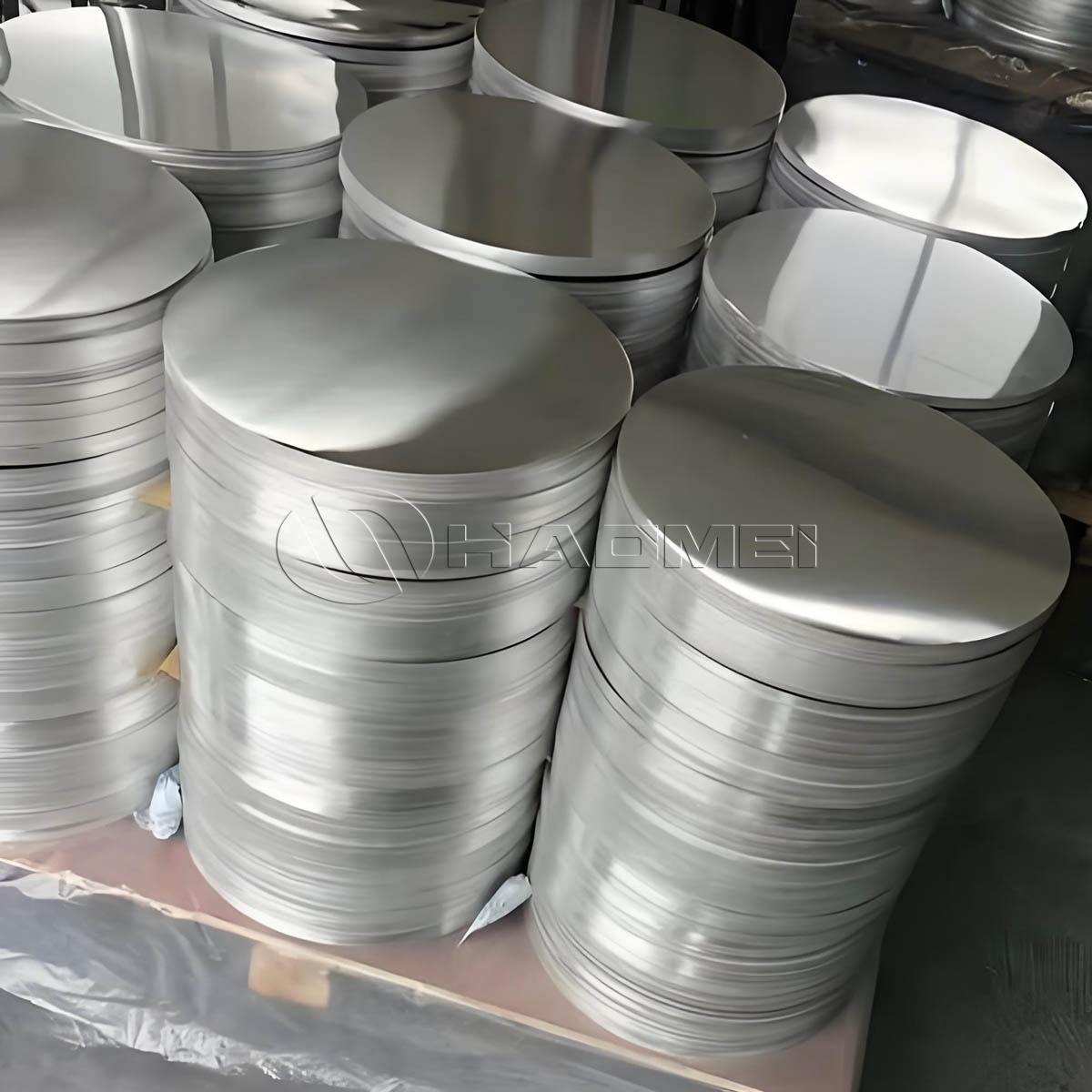
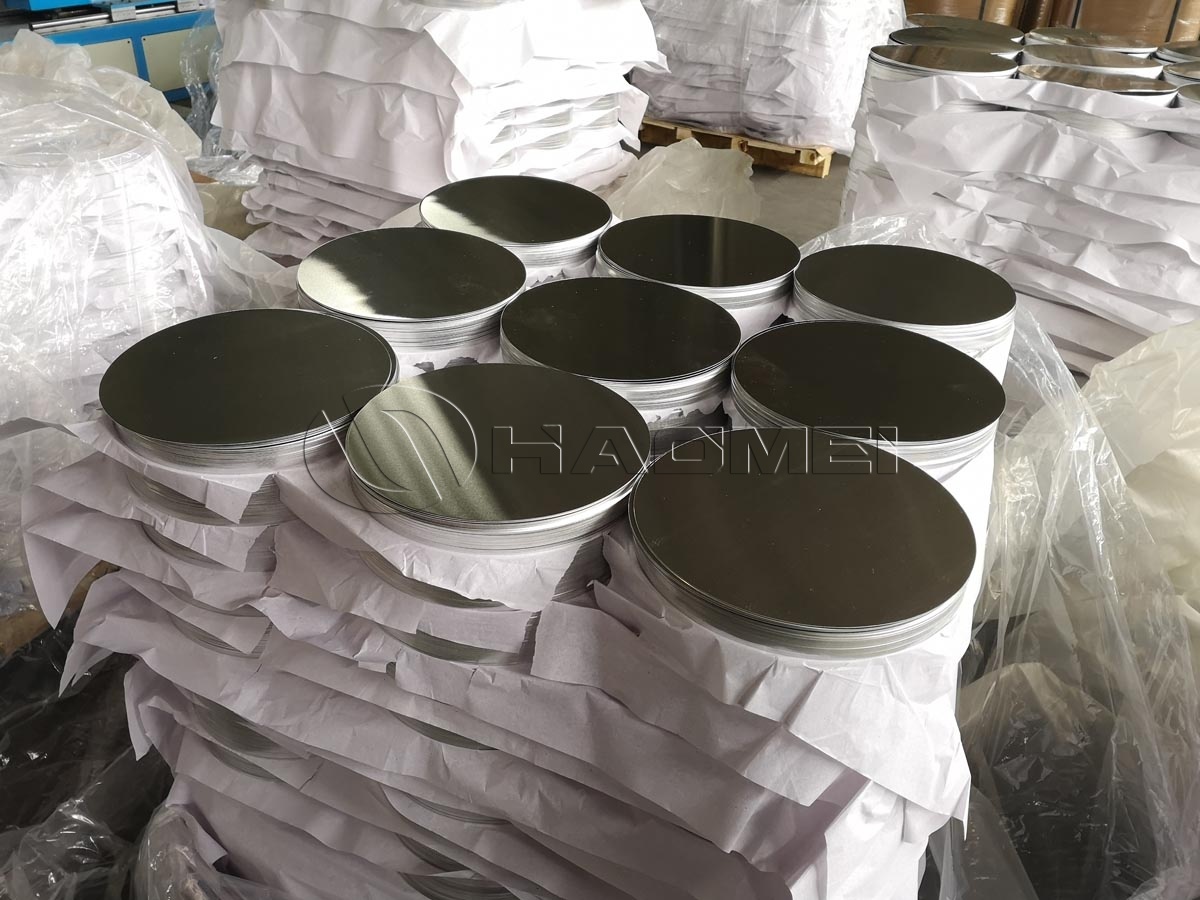
| Packaging | Export pallets, paper interleaving, protective wrapping | Designed for container and warehouse handling |
Temper selection is a critical step when ordering a cookware aluminum circle. For deep-drawn gas stove pans, O temper is often preferred because it provides high ductility and supports significant deformation without excessive risk of cracking. It is suitable for deeper pan shapes, curved sidewalls, and products requiring multiple drawing steps.
H12 or H14 tempers may be selected when the pan design requires greater initial rigidity or when the forming depth is relatively limited. These tempers can be appropriate for shallow frying pans, flat cookware components, lids, or parts produced through pressing and spinning. However, a harder temper is not automatically better. If the material is too hard for the drawing ratio, edge cracking, uneven stretching, or shape instability may occur.
Our technical team evaluates the pan diameter, wall height, bottom geometry, drawing depth, tooling conditions, and planned surface treatment before recommending a suitable temper. This is especially important for customers converting from another alloy or using high-speed automated press lines.
We manufacture 3105 aluminum circles through a controlled process designed for cookware blank consistency. Production begins with alloy verification and coil preparation. The coil is processed to the required thickness and mechanical condition, then slit to an appropriate width for efficient blanking.
The circles are punched or blanked using maintained tooling to obtain consistent diameter and edge quality. For deep drawing grades, annealing is controlled to achieve the intended softness and grain condition. We also conduct surface checks to identify scratches, oil marks, laminations, dents, and other defects that could affect forming or coating.
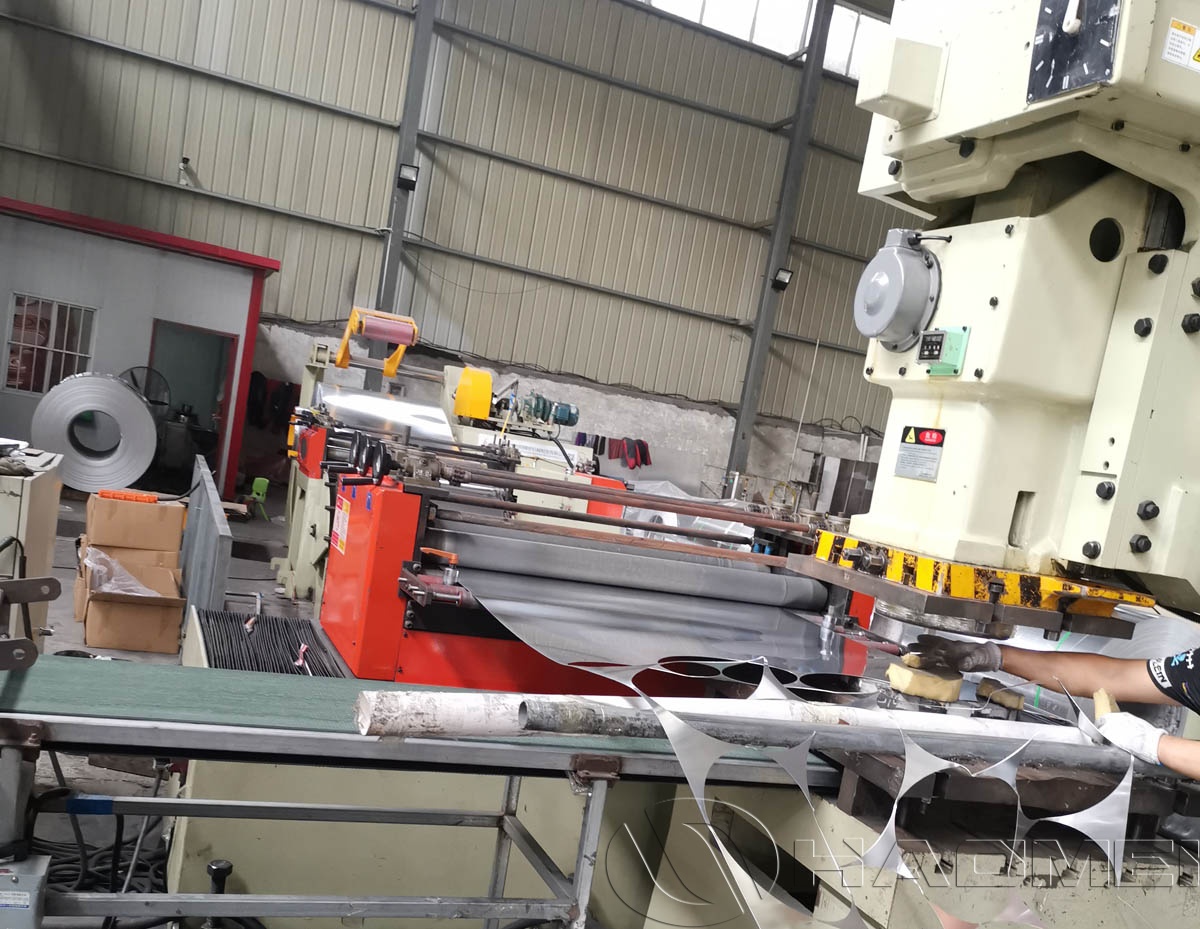
Our standard process includes:
Raw material and alloy documentation review.
Coil thickness and surface inspection.
Slitting according to blanking requirements.
Precision stamping or blanking of aluminum discs.
Annealing where required for O temper material.
Deburring and edge condition control.
Diameter, thickness, flatness, and surface inspection.
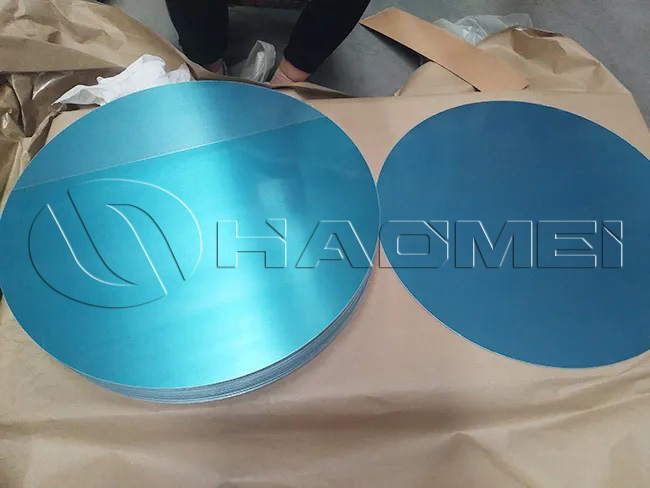
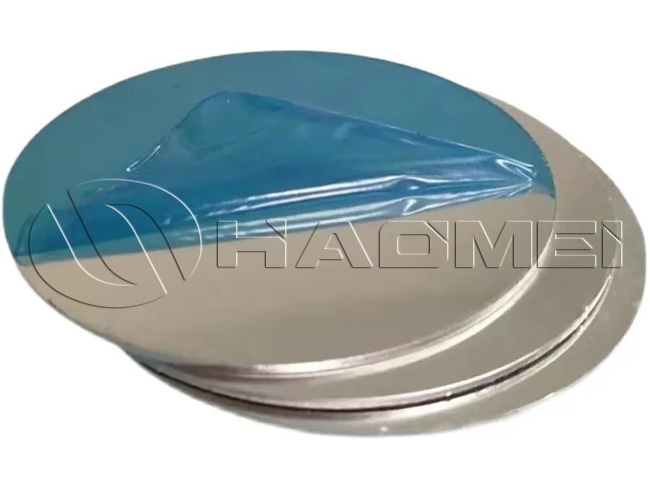
Interleaved, moisture-protected export packaging.
For customers sourcing several 3xxx alloy options, our 3000 Series Aluminum circle manufacturing program also includes alloys selected for different strength, forming, and cookware performance requirements.
Gas stove pans frequently require non-stick coating, ceramic coating, anodizing, painting, polishing, or decorative treatment. For this reason, surface quality must be considered from the beginning of material selection. A visually clean surface alone is not sufficient. The blank also needs to be free from defects that may become more visible after drawing, polishing, or coating.
We supply 3105 aluminum discs with controlled mill finish and can align surface expectations with the intended finishing route. For coated cookware, customers may specify low oil residue, smooth surface condition, and protective interleaving. For polished or decorative items, requirements for surface uniformity and scratch control should be confirmed during quotation.
It is also important to match lubricant removal and pretreatment procedures to the coating system. We provide material information needed to support the customer's cleaning, conversion coating, and curing processes, while the final coating validation remains the responsibility of the cookware processor.
A gas stove pan production line depends on repeatable blank dimensions. Variations in diameter or thickness can affect material flow during drawing, final wall thickness, rim formation, and tool alignment. Excessive burr may damage dies, while poor flatness can interfere with automatic feeding equipment.
We inspect each production lot using appropriate measuring instruments and sampling plans. Diameter, thickness, edge condition, surface quality, and packaging condition are checked before shipment. For high-volume cookware orders, we can establish customer-specific control points and inspection reporting requirements.
| Inspection Item | Typical Control Purpose |
|---|---|
| Diameter | Ensures compatibility with stamping and drawing tooling |
| Thickness | Supports repeatable forming and thermal performance |
| Flatness | Helps automatic feeding and press stability |
| Burr height | Reduces tool damage and edge-related forming defects |
| Surface quality | Supports coating, polishing, and visual appearance |
| Temper verification | Confirms suitability for the intended forming process |
| Packing integrity | Protects circles during export transport and storage |
Our 3105 aluminum circle for gas stove pans can be used for a range of cookware products, including frying pans, saute pans, shallow pans, saucepans, wok-style pans, grill pans, and specialty cooking vessels. The aluminum circle is normally formed into the pan body and may later be combined with handles, stainless steel induction bases, rivets, or other components.
For conventional gas stove cookware, aluminum provides efficient heat transfer across the pan body. Pan thickness, shape, and bottom design should be selected according to the intended cooking performance and product positioning. Where induction compatibility is required, the aluminum pan body may need a bonded or attached ferromagnetic base. Our factory can supply the aluminum circle blank to the dimensions needed for these downstream manufacturing routes.
For customers requiring a dedicated product specification, our 3105 Aluminum Circle can be supplied with customized diameter, thickness, temper, surface condition, and packaging configuration.
To prepare an accurate quotation and production plan, we recommend providing the following information: alloy, temper, diameter, thickness, required quantity, finished pan application, forming method, surface requirement, acceptable tolerances, packaging preference, destination port, and any required material or inspection documents.
For new projects, sample evaluation is recommended before mass production. The sample stage allows the buyer to verify drawing performance, coating compatibility, dimensional fit, and finished pan appearance under actual production conditions. Once the parameters are approved, we maintain the agreed manufacturing specification for repeat orders.
3105 aluminum circle is a practical material choice for gas stove pans that require a balanced combination of formability, strength, corrosion resistance, and controlled surface quality. The final cookware result depends on selecting the proper temper, thickness, and blank dimensions for the forming process.
As a 3105 aluminum circle manufacturer, we produce cookware blanks with process control from coil preparation to final inspection and export packaging. By aligning alloy condition, dimensional tolerance, and surface requirements with the pan design, we help cookware producers obtain stable and repeatable raw material for gas stove pan manufacturing.


Office Address:
No.14 Waihuan Road, CBD, Zhengzhou, China
Contact Us
HAOMEI Aluminum offer an custom aluminum circle for you!
whatsapp: +86-18703635966
Email: sales@alummc.com
Email: alummc@hotmail.com
Request Free Sample & Quotation
Copyright © 2026 By HAOMEI Aluminum CO., LTD. All Rights Reserved. Sitemap
 +86-18703635966
 sales@alummc.com
 8618703635966
