
 No.14 Waihuan Road, CBD, Zhengzhou, China
 +86-18703635966

No.14 Waihuan Road, CBD, Zhengzhou, China
+86-18703635966
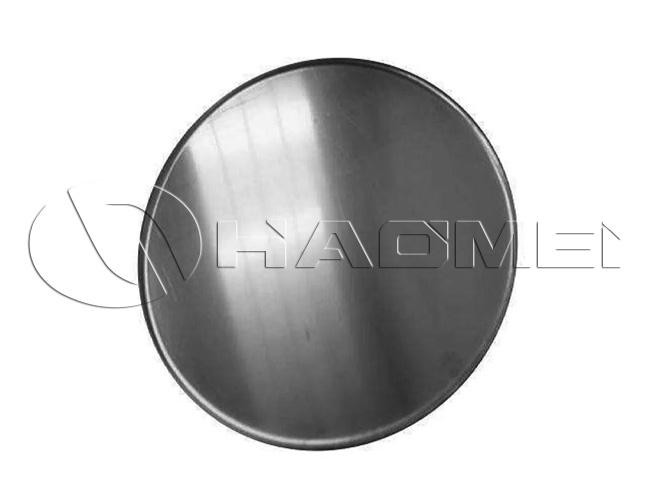
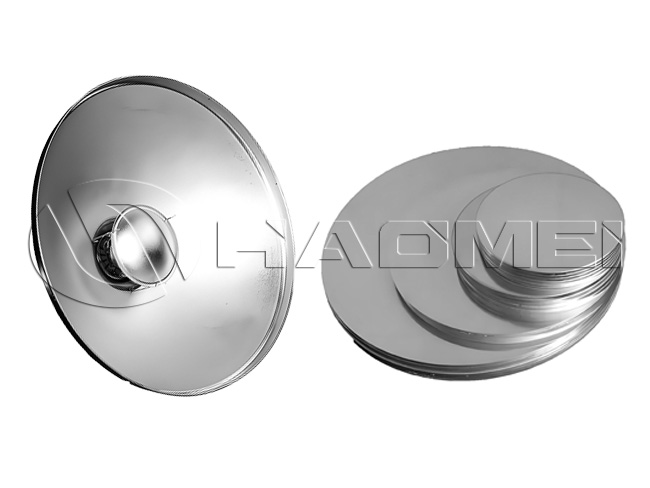
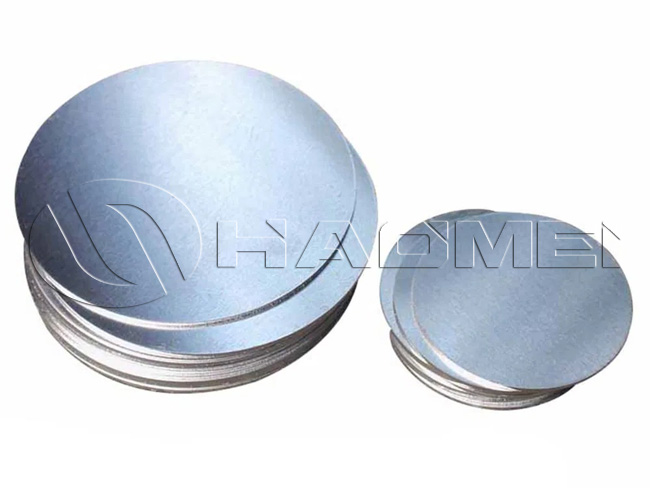
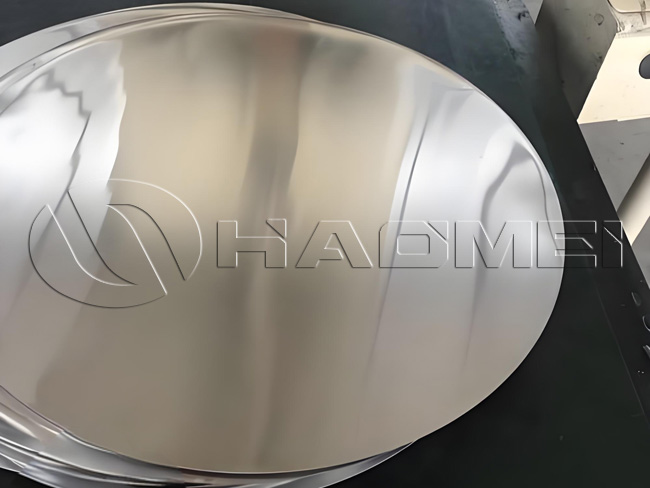
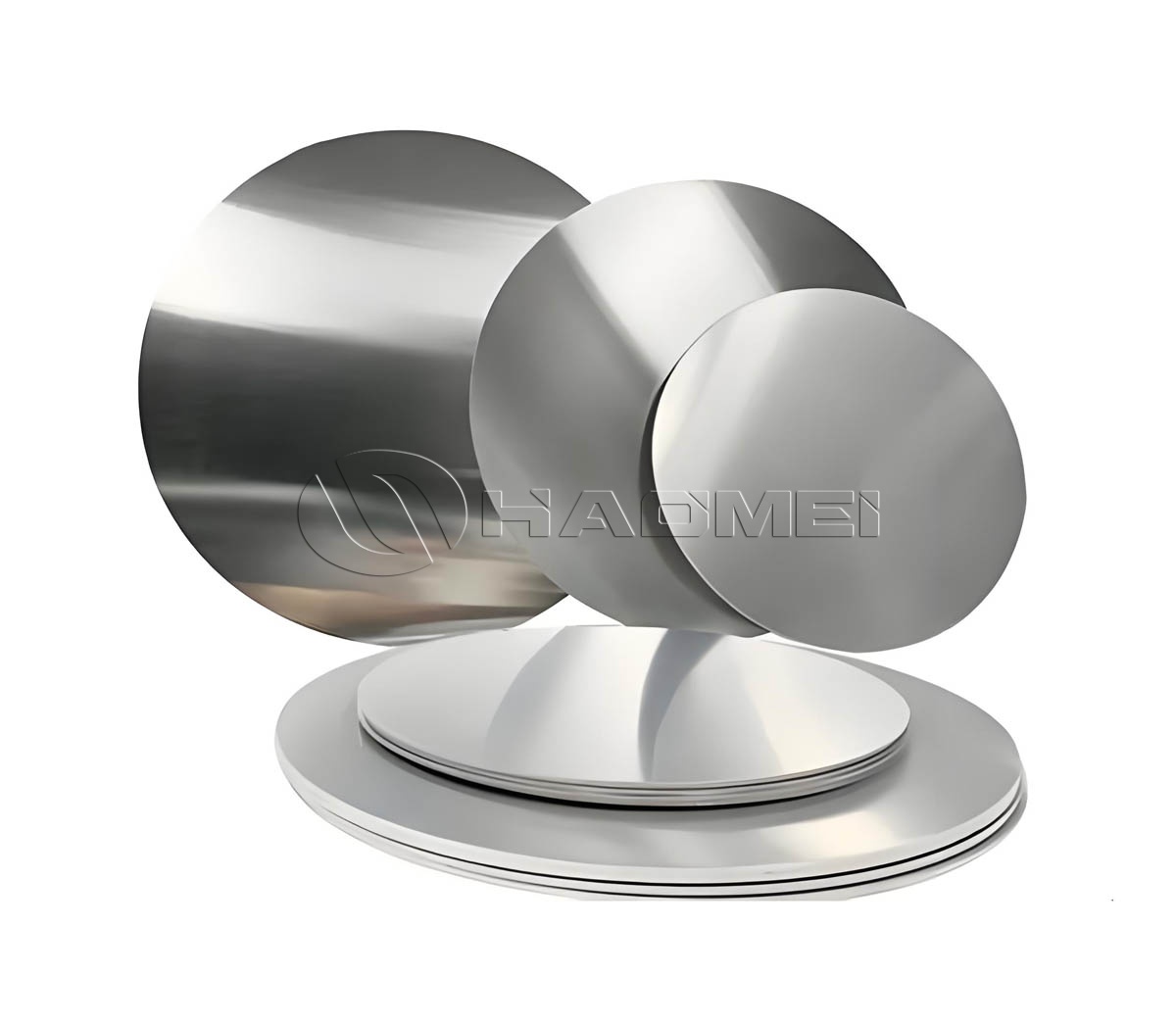
As a manufacturer of aluminum circles and aluminum sheet products, we produce 1050, 1060, and 1100 metal aluminum discs for cookware manufacturers, metal stamping plants, and kitchenware processing companies. These aluminum discs are designed for forming cookware bodies, frying pans, saucepans, stockpots, pizza pans, pressure cooker components, and other drawn or spun products.
Cookware production requires more than a standard round aluminum sheet. Material consistency, surface cleanliness, grain structure, elongation, edge quality, and flatness directly affect deep drawing performance and finished-product appearance. Our factory controls these factors from aluminum coil selection through rolling, annealing, blanking, inspection, and packing. This manufacturing approach allows us to provide cost-effective aluminum discs while maintaining stable processing performance for industrial buyers.
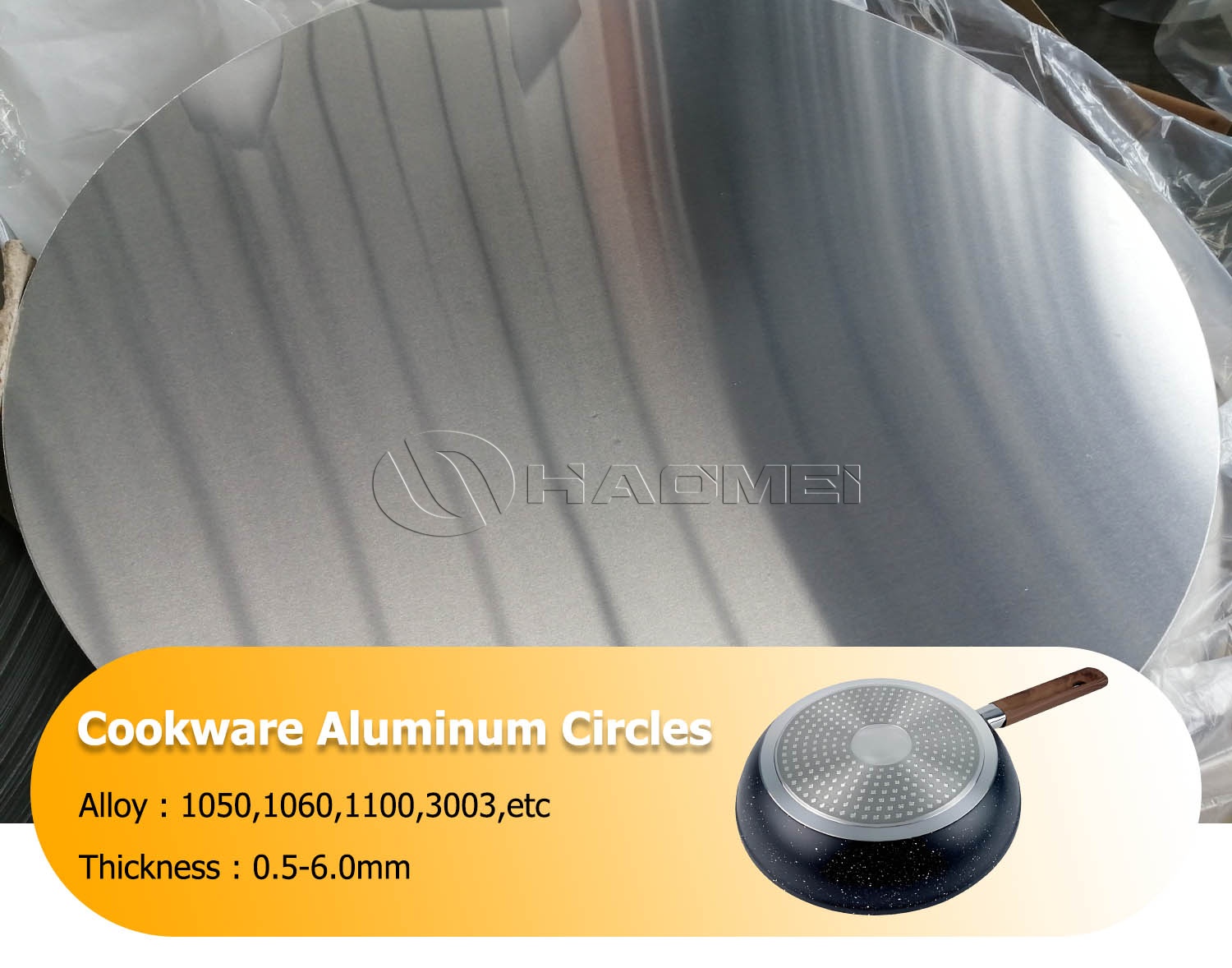
1050, 1060, and 1100 are commercially pure aluminum grades with high aluminum content, good ductility, thermal conductivity, and corrosion resistance. These characteristics make them suitable for cookware applications where the material must be stamped, deep drawn, spun, or pressed into circular and hollow shapes.
Compared with higher-strength aluminum alloys, pure aluminum grades are easier to form into cookware bodies with reduced risk of cracking during processing. They also provide efficient heat transfer, which is important for cookware that requires uniform heating. The final selection between 1050, 1060, and 1100 aluminum discs depends on the required forming depth, product thickness, surface requirements, and buyer cost target.
Our 1050 aluminum discs are frequently selected for standard cookware and general stamping applications. 1060 aluminum discs offer high aluminum purity and strong workability for deep drawing and spinning operations. 1100 aluminum discs are widely used where stable formability, clean surface quality, and reliable processing are required for cookware and industrial components.
For buyers seeking dedicated product options, our Aluminum Circles for Cookware are produced with controlled temper, diameter tolerance, and surface quality according to forming requirements.
The following table presents common production ranges for our cookware aluminum circles. Final specifications can be adjusted based on drawings, forming methods, and order quantity.
| Item | Standard Range | Notes |
|---|---|---|
| Alloy | 1050, 1060, 1100 | Other aluminum grades available upon request |
| Temper | O, H12, H14, H16, H18 | O temper is commonly used for deep drawing |
| Thickness | 0.30 mm to 6.00 mm | Thicker gauges available for specific applications |
| Diameter | 80 mm to 1,400 mm | Customized diameters available |
| Aluminum content | 99.5% minimum for 1050, 99.6% minimum for 1060, 99.0% minimum for 1100 | Based on applicable alloy standards |
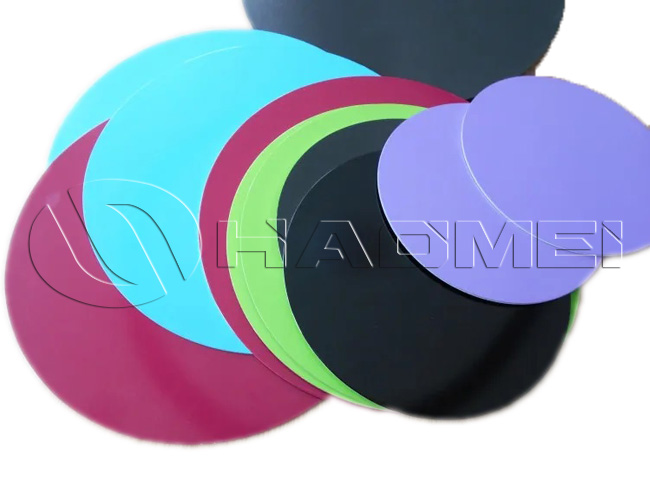
| Surface | Mill finish, bright finish, polished, coated | Selected according to end-product requirements |
| Edge condition | Smooth blanked edge, burr-controlled edge | Important for safe handling and stable forming |
| Production method | Cold rolled or hot rolled | Selected by thickness and forming demand |
| Packaging | Export seaworthy packing | Pallets, wooden cases, or customized packing |
Selecting the proper alloy and temper is essential for controlling production efficiency and reducing scrap. Our technical team evaluates the intended fabrication route before confirming the material specification.
Deep drawing is used to manufacture saucepans, cooking pots, bowls, pressure cooker bodies, and deep vessels. For this process, O temper aluminum discs are generally preferred because the fully annealed condition provides high elongation and lower forming resistance. A deep drawing aluminum disc must have uniform mechanical properties across the full diameter to avoid uneven wall thickness, wrinkling, or edge cracking.
For deep drawing projects, we commonly recommend 1050-O, 1060-O, or 1100-O aluminum discs. The appropriate choice depends on the draw ratio, product geometry, tooling condition, lubricant, and surface finish requirement.
Metal spinning is commonly used for frying pans, pizza pans, shallow cookware, lamp components, and round industrial parts. Aluminum discs for spinning require a clean surface, stable thickness, and reliable ductility. Our factory produces discs with controlled flatness to help reduce vibration and instability during high-speed spinning.
For shallow press forming and standard cookware stamping, H12 or H14 tempers may be selected when moderate rigidity is required before final processing. We can supply temper recommendations based on the customer's production method and finished item design.
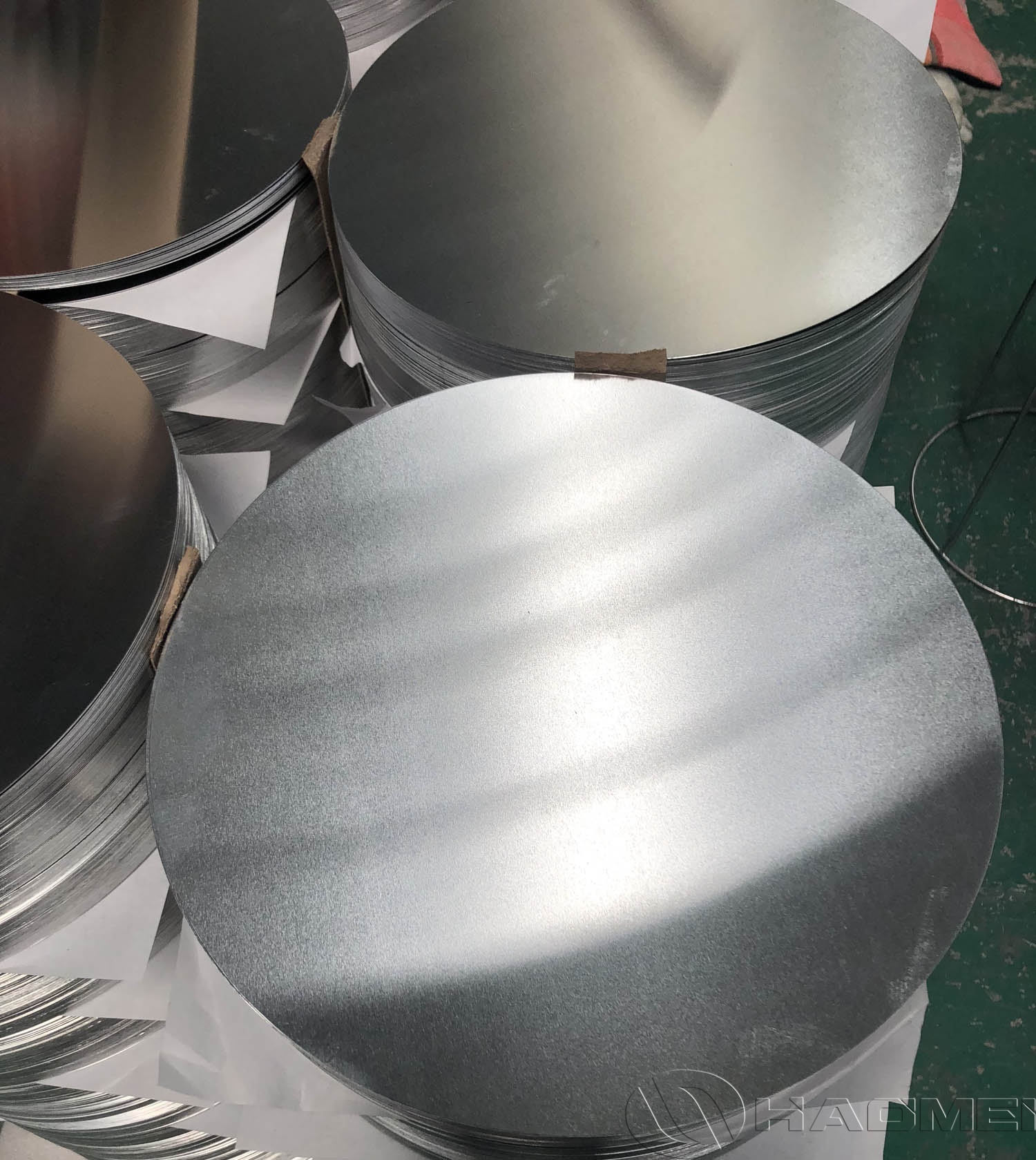
1. Excellent Thermal Conductivity: Aluminum conducts heat rapidly and distributes it evenly, which helps shorten cooking times and improve heating efficiency.
2. Good Formability: With excellent ductility and deep-drawing properties, aluminum is well-suited for stamping, stretching, and spinning processes—ideal for manufacturing pots, frying pans, and cookware bases.
3. Lightweight: Due to its low density, aluminum makes for lightweight cookware that is easy to handle and convenient for daily use.
4. Good Corrosion Resistance: The surface can be treated—for example, through anodizing or coating—to further enhance its resistance to corrosion.
5. Superior Surface Quality: The discs feature a smooth surface and uniform thickness, facilitating subsequent processing and ensuring consistent product appearance.
6. Flexible Customization: Specifications—including alloy composition, thickness, diameter, and temper—can be tailored to meet specific cookware manufacturing requirements.
We manufacture cookware aluminum circles through a controlled production process rather than purchasing finished blanks from outside sources. This allows us to manage quality consistency and provide traceable material data for export customers.
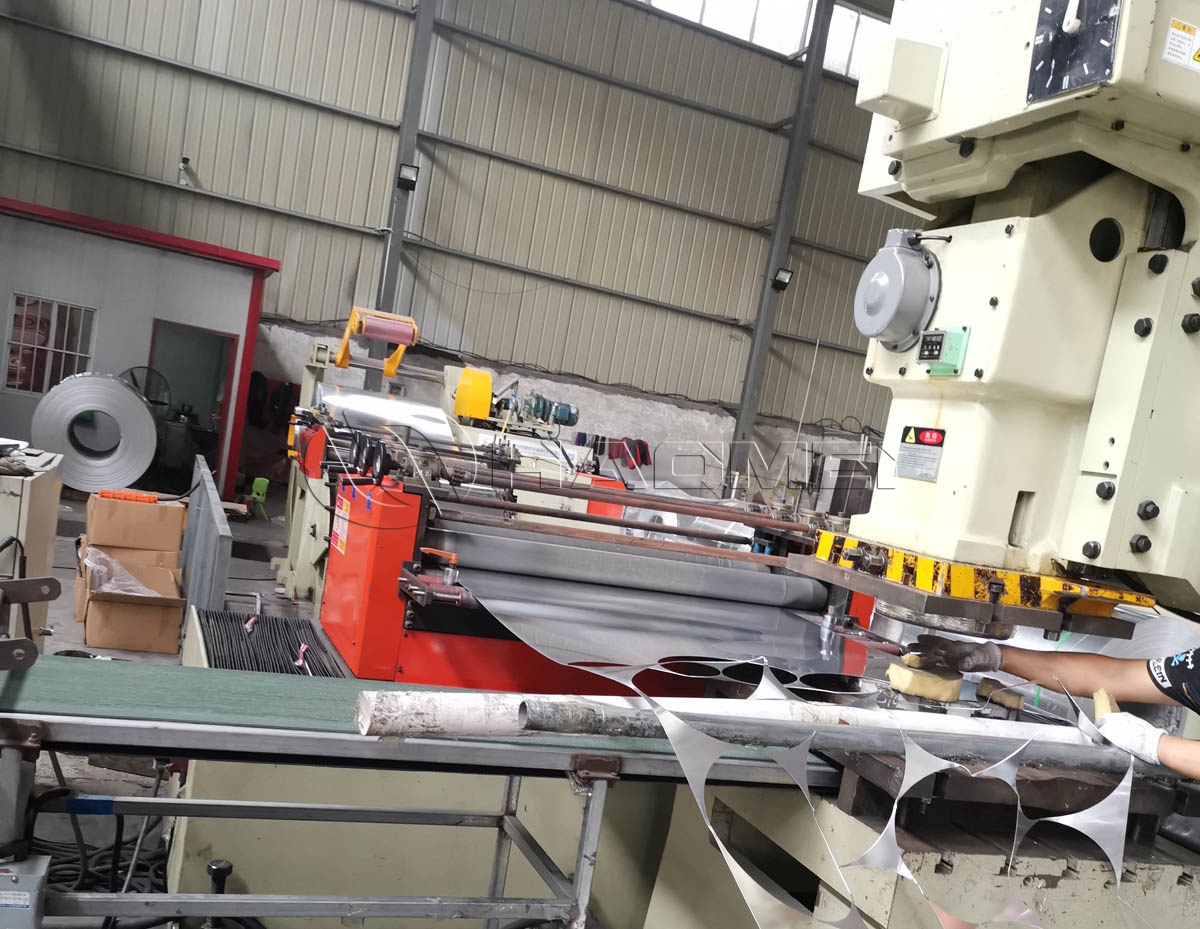
The process begins with qualified aluminum ingots and aluminum coils. After melting, casting, hot rolling or cold rolling, the material is processed to the required thickness. For deep drawing aluminum discs, annealing is performed to achieve the required O temper and forming performance. The coil or sheet is then blanked into round discs using precision tooling.
After blanking, each batch is inspected for diameter, thickness, burr level, surface condition, flatness, and packing quality. We also monitor edge finish because rough edges can damage tooling or create defects during subsequent drawing and spinning processes.
Our standard manufacturing steps include:
Raw material verification and chemical composition control.
Rolling to the specified thickness and surface condition.
Annealing for O temper or other required tempers.
Precision blanking into aluminum circle discs.
Dimensional inspection and surface quality examination.
Protective interleaving, moisture protection, and export packing.
For customers requiring increased ductility in thicker material, a Hot Rolled Aluminum Circle can be considered for applications involving demanding forming operations.
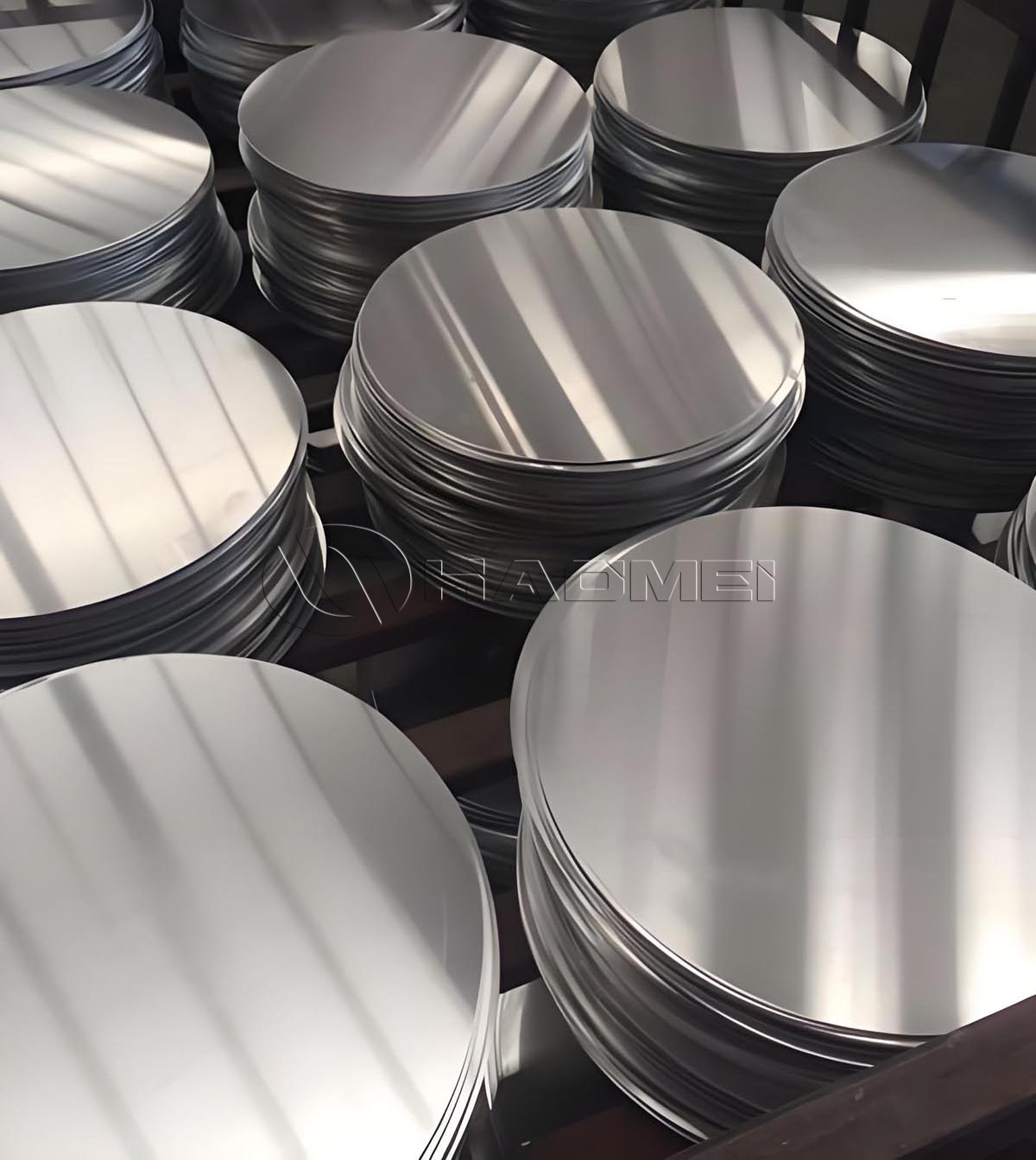
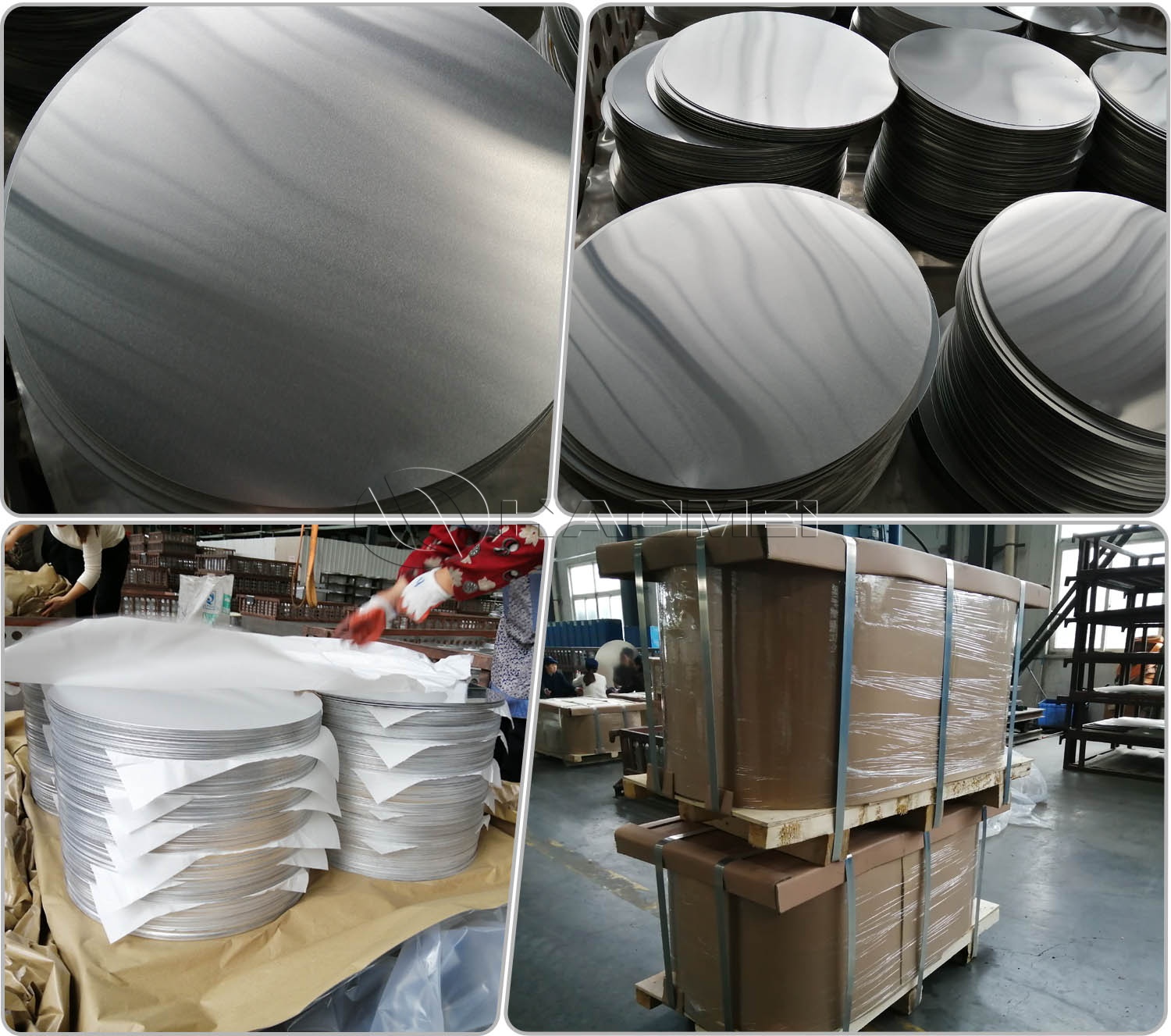
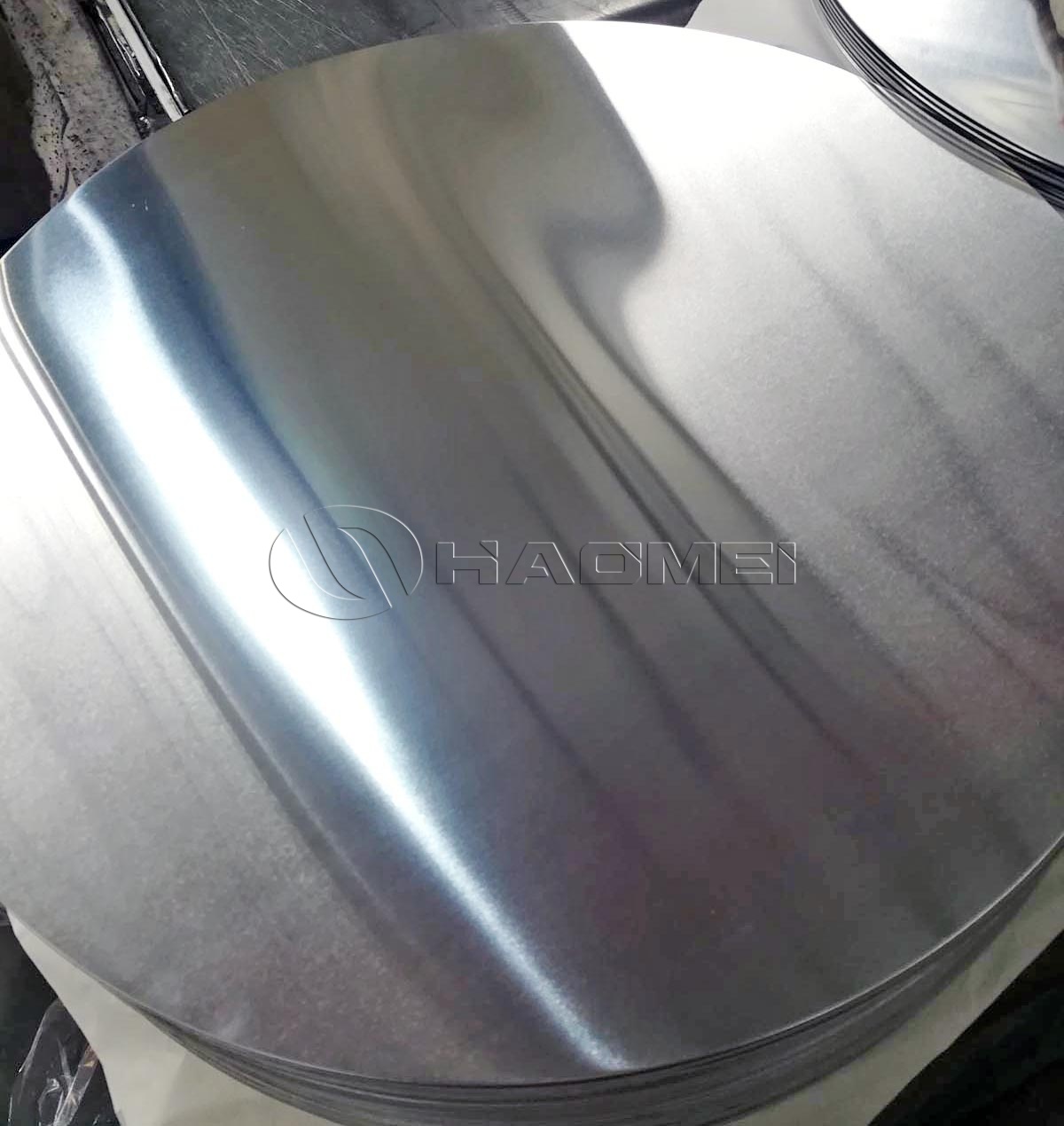
The surface condition of cookware aluminum discs affects both production performance and the appearance of finished pans or pots. Our standard mill finish aluminum circles are clean and free from serious defects that may interfere with drawing, spinning, polishing, coating, or anodizing.
Depending on the order specification, we can control or inspect for oil marks, scratches, oxidation spots, roller marks, dents, inclusions, and black lines. The acceptable level of surface variation should be defined according to whether the finished cookware will be painted, non-stick coated, polished, anodized, or used as a substrate for clad construction.
Edge quality is equally important. Burrs can cause handling injuries, interfere with die positioning, and increase the risk of cracks during forming. Our blanking process is adjusted according to thickness and temper to provide a smooth, controlled edge suitable for automated or manual cookware production lines.
A cost-effective aluminum disc price should not be evaluated only by the initial price per metric ton. For cookware manufacturers, the actual production cost also includes material yield, drawing success rate, tooling wear, handling efficiency, and rejection losses. Inconsistent aluminum circles may appear less expensive at purchase, but they can create higher costs through cracking, uneven forming, surface defects, or excessive scrap.
As an aluminum disc manufacturer, we optimize cost through stable raw material sourcing, in-house rolling coordination, efficient blanking layouts, and batch-based production planning. We recommend disc diameter and thickness combinations that support better material utilization while meeting cookware design requirements.
The final price of 1050, 1060, or 1100 aluminum discs is influenced by several factors:
Current aluminum ingot market price.
Alloy grade and requested temper.
Diameter and thickness tolerance.
Surface finish and inspection requirement.
Order volume and production schedule.
Packaging method and destination port.
Whether custom blanking or special processing is required.
For accurate quotation, buyers should provide the alloy, temper, thickness, diameter, application, quantity, and destination. If a drawing or sample is available, we can assess the forming requirement more precisely.
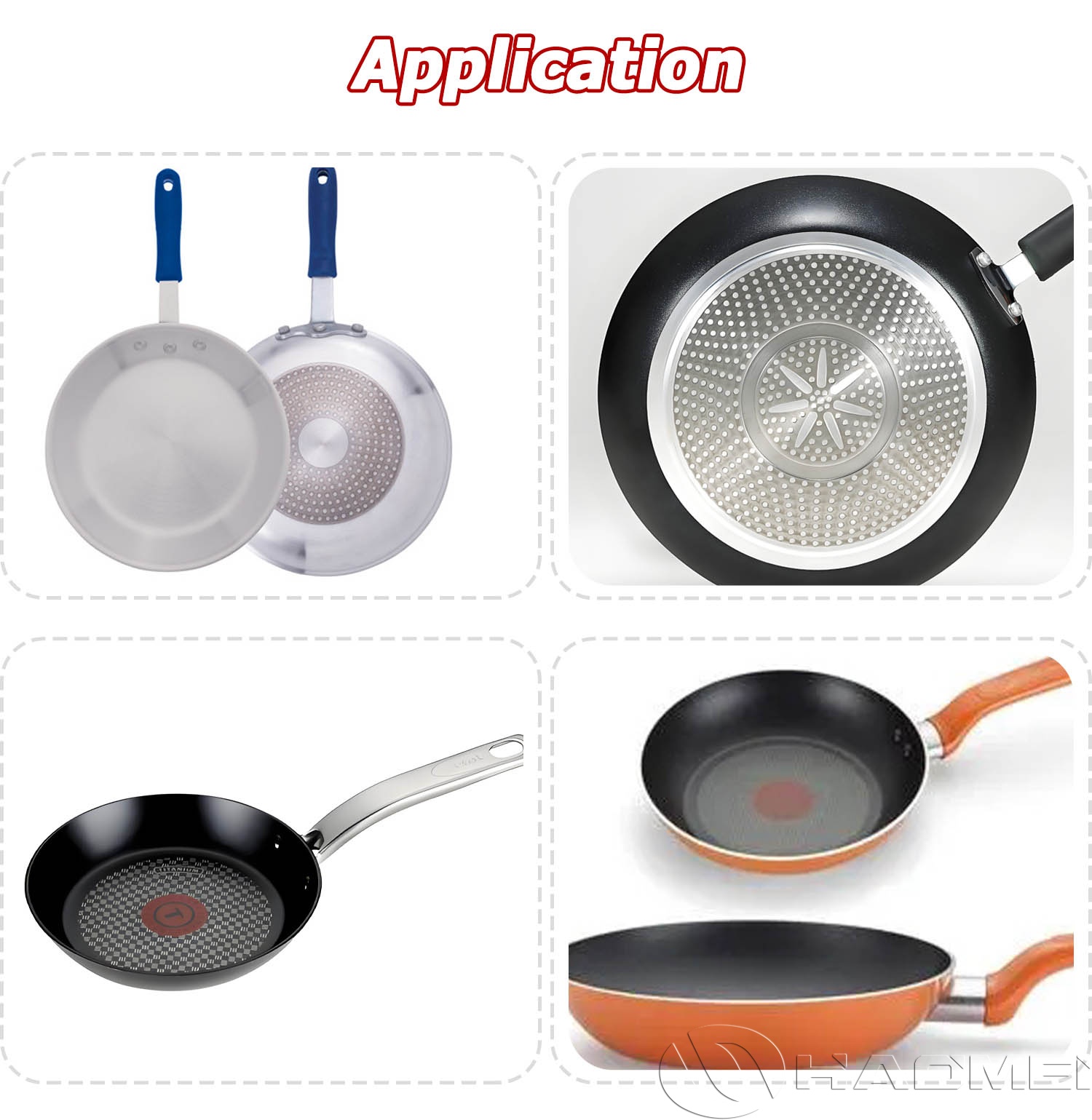
Our cookware aluminum circles are used as base materials for a broad range of products:
Frying pans and non-stick cookware.
Saucepan and stockpot bodies.
Pizza pans and baking trays.
Pressure cooker components.
Woks and shallow cooking vessels.
Kettles, bowls, and kitchen accessories.
Spun aluminum industrial parts.
Lighting and decorative metal components.
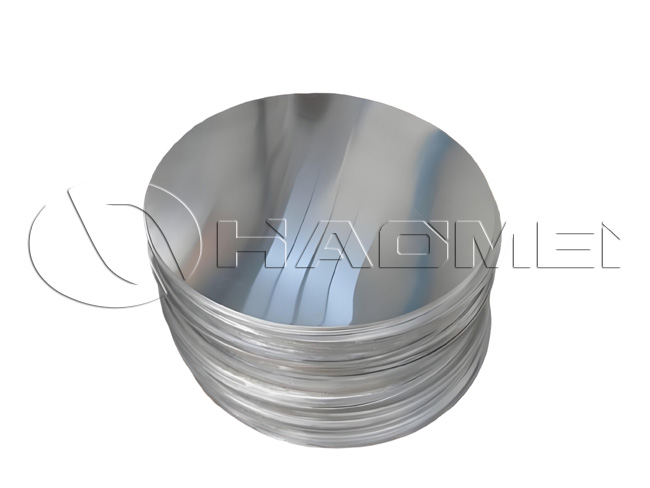
We apply batch inspection procedures before shipment to confirm compliance with the purchase specification. Typical checks include alloy identification, thickness measurement, diameter measurement, temper verification where required, visual surface inspection, flatness review, and packing inspection.
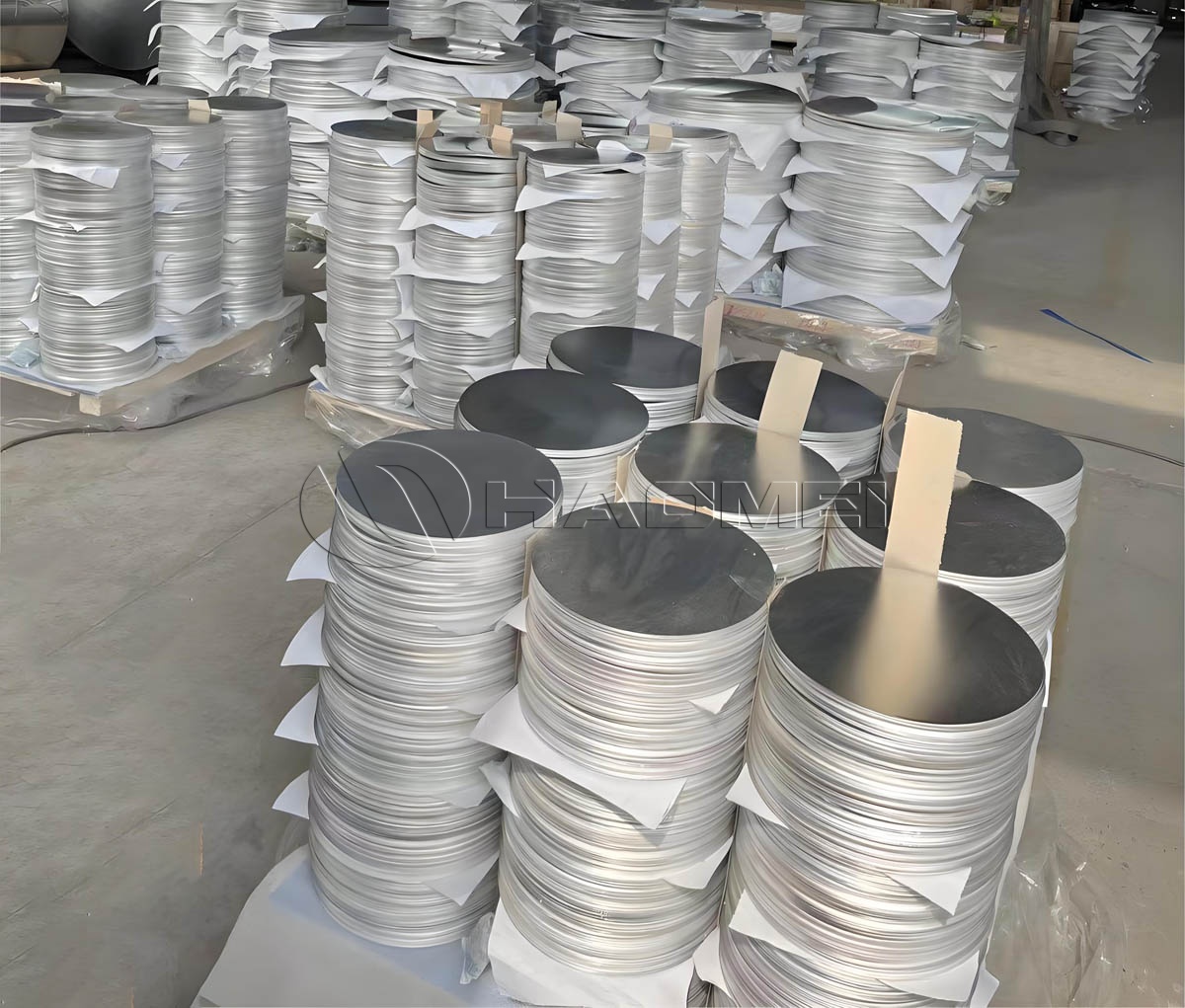
For export shipments, aluminum discs are separated with paper or protective material as required. The discs are packed on reinforced pallets or in wooden cases to reduce movement during transportation. Moisture-resistant wrapping is used for sea freight to help protect the material from humidity and oxidation risks.
Material test certificates and packing documentation can be provided according to contract requirements. For repeat cookware production programs, we maintain consistent specifications to support stable customer processing and predictable purchasing plans.
1050, 1060, and 1100 aluminum discs remain practical materials for cookware manufacturers because they combine formability, thermal conductivity, corrosion resistance, and competitive material cost. The best option depends on the required cookware design and the selected fabrication process.
As a direct factory, we supply aluminum circle discs according to thickness, diameter, temper, surface, edge, and packaging requirements. Send us your technical specification, annual demand, or sample details, and we will recommend a suitable cookware aluminum circle solution with a clear and cost-effective quotation.

Office Address:
No.14 Waihuan Road, CBD, Zhengzhou, China
Contact Us
HAOMEI Aluminum offer an custom aluminum circle for you!
whatsapp: +86-18703635966
Email: sales@alummc.com
Email: alummc@hotmail.com
Request Free Sample & Quotation
Copyright © 2026 By HAOMEI Aluminum CO., LTD. All Rights Reserved. Sitemap
 +86-18703635966
 sales@alummc.com
 8618703635966
