
 No.14 Waihuan Road, CBD, Zhengzhou, China
 +86-18703635966

No.14 Waihuan Road, CBD, Zhengzhou, China
+86-18703635966
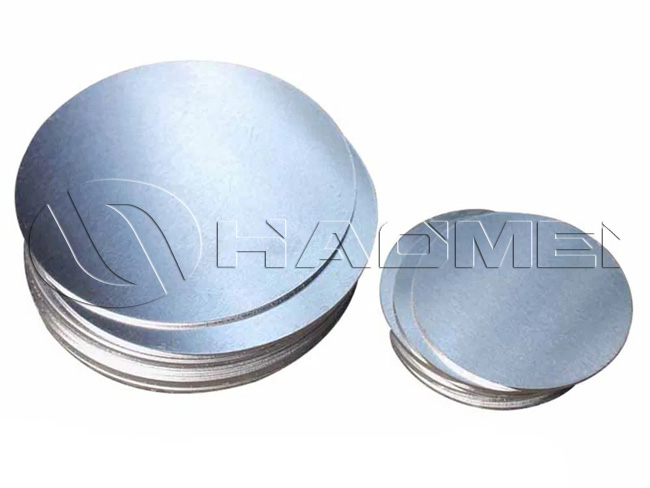
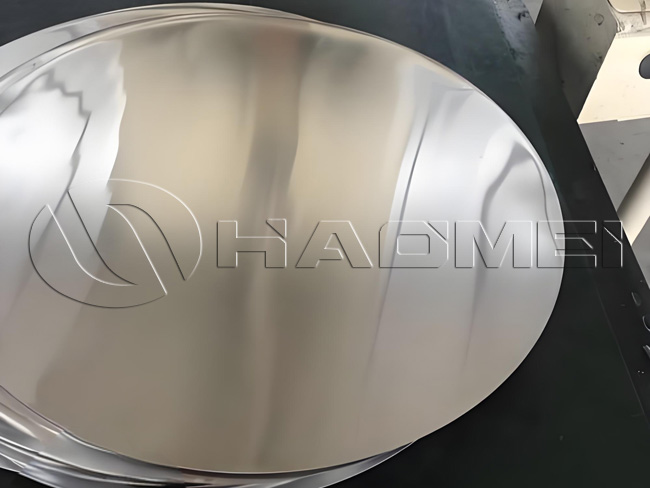
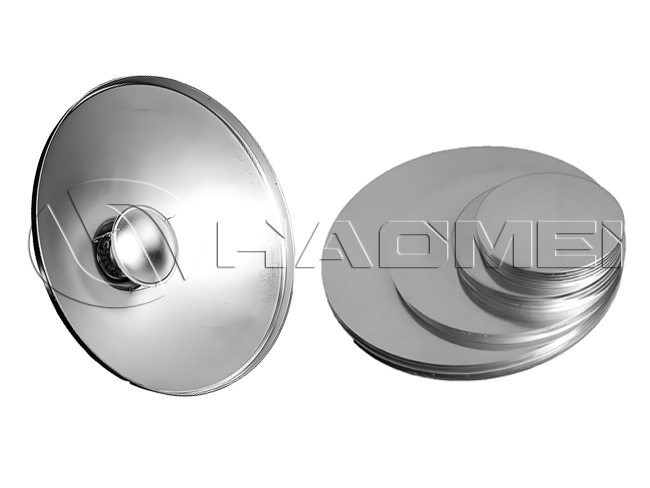
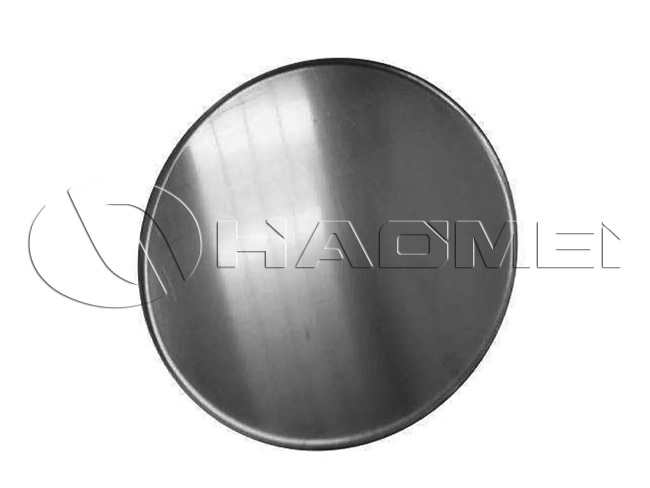
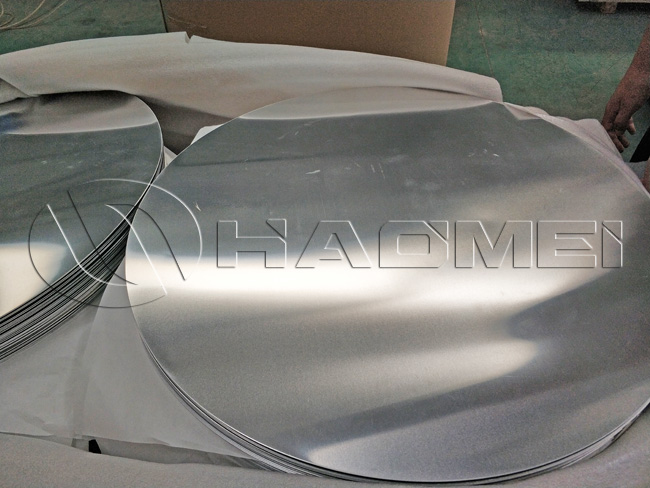
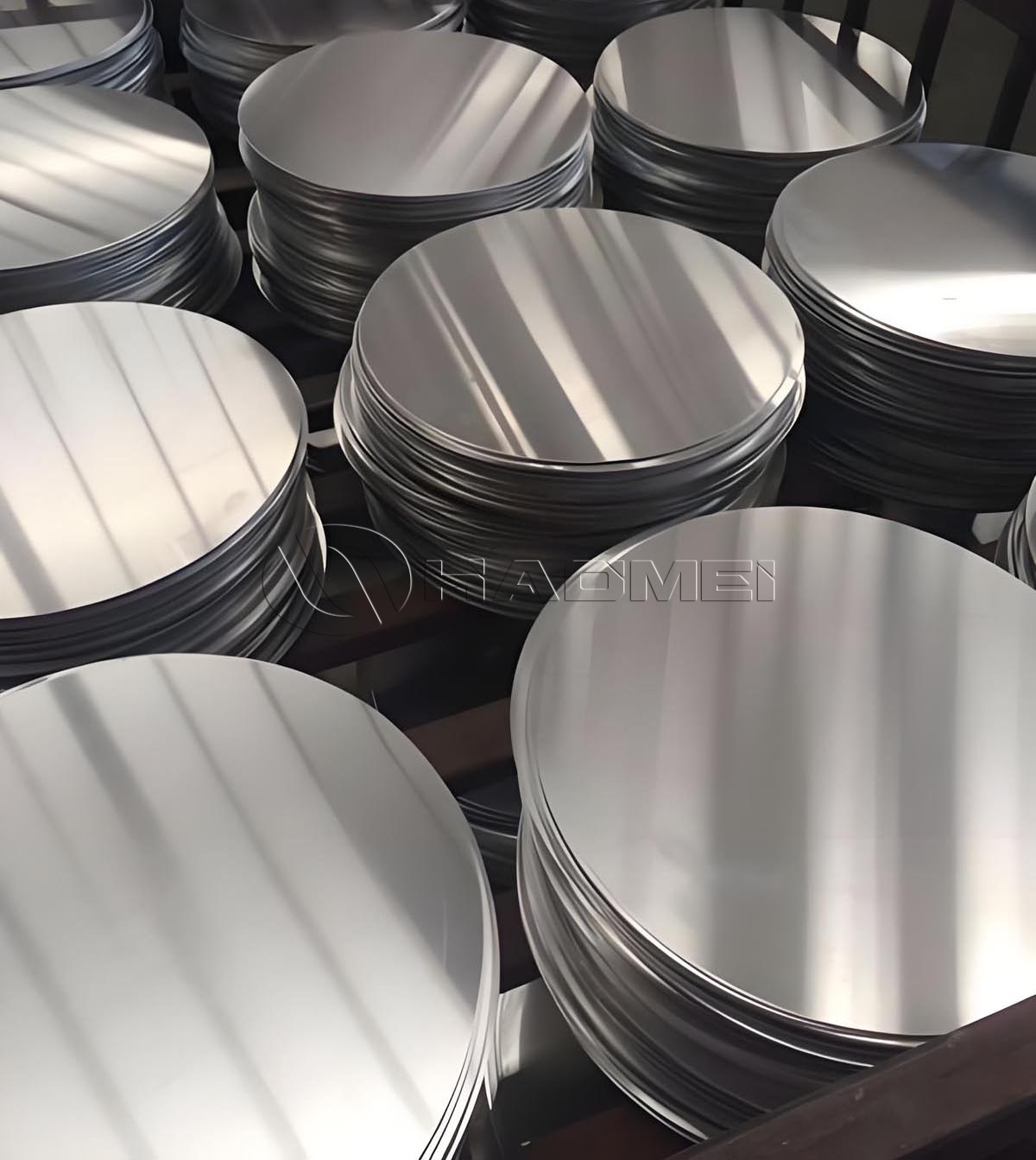
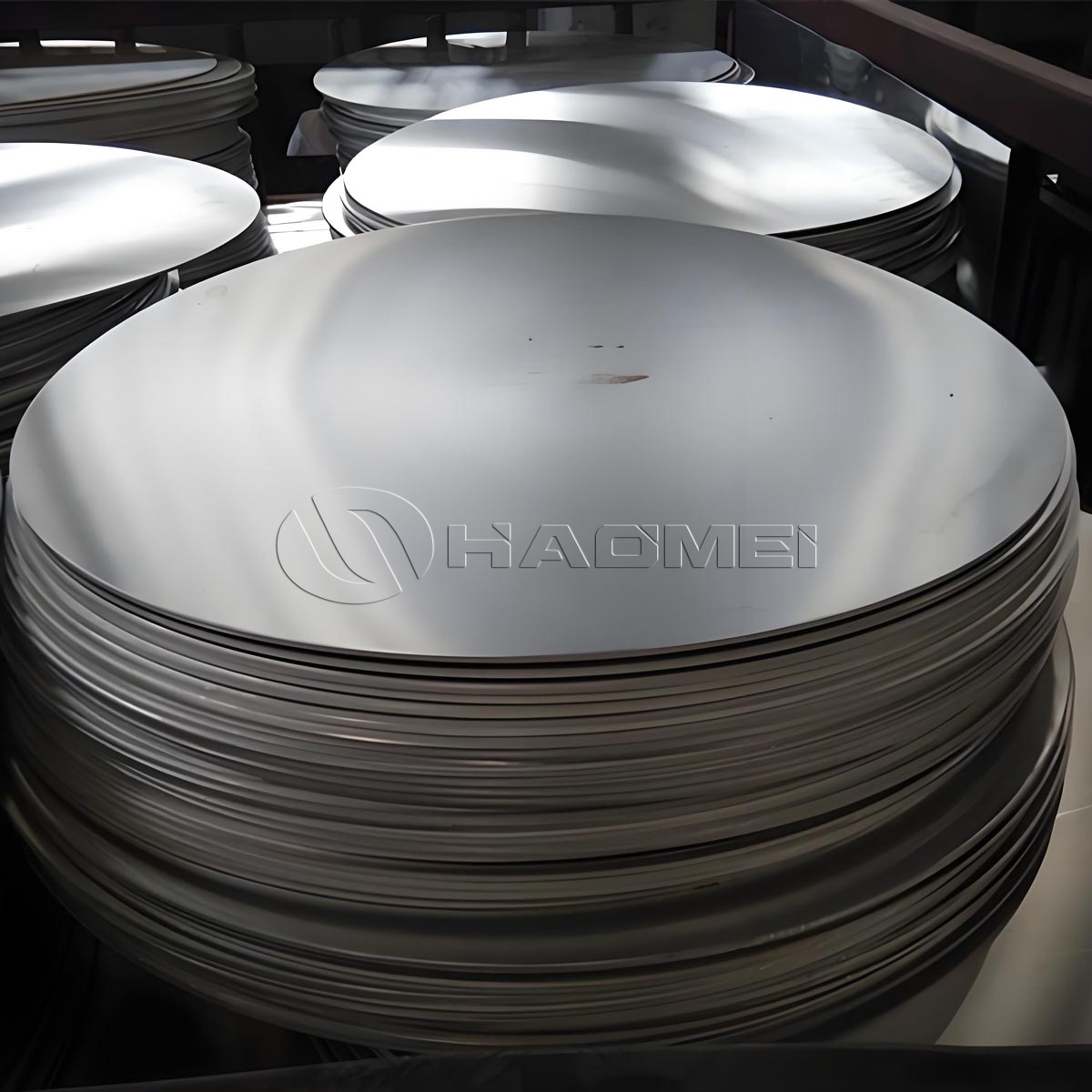
As a manufacturer of aluminum circle discs, we produce cold rolled aluminum circle disc materials for cookware, frying pans, saucepans, stockpots, pressure cookers, and other deep-drawn kitchenware. Our production process is designed to provide stable thickness, controlled temper, consistent surface quality, and reliable forming performance for cookware factories.
A cold rolled aluminum circle is made from aluminum coil that has undergone controlled rolling, annealing, leveling, and blanking processes. Compared with general-purpose aluminum sheet, cookware aluminum circles require closer management of grain structure, hardness, edge quality, and surface cleanliness. These characteristics directly affect deep drawing, spinning, stamping, polishing, coating, and final pan performance.
For frying pan production, the aluminum disc must form smoothly without excessive wrinkling, cracking, orange peel, or uneven wall thickness. We therefore select suitable alloys and tempers according to the forming method, cookware design, and downstream finishing requirements.
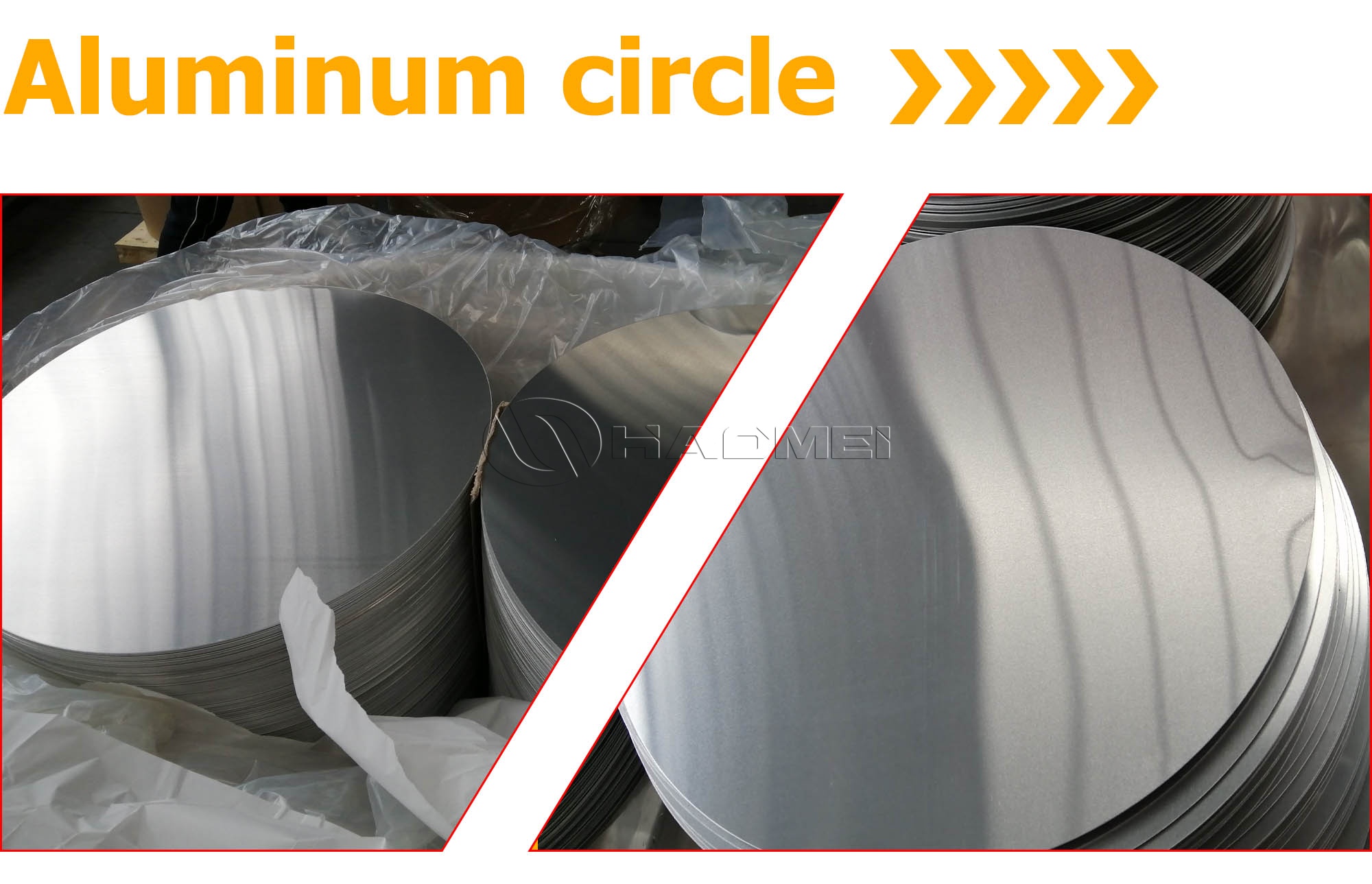
Cold rolled aluminum circle discs are widely used in cookware manufacturing because they combine good formability with accurate dimensional control. The rolling process improves thickness consistency and surface uniformity, which are essential when producing high-volume cookware with repeatable forming results.
For cookware and frying pan applications, the main requirements usually include the following:
Stable thickness across the complete disc diameter.
Suitable softness and elongation for deep drawing or spinning.
Clean surface for polishing, anodizing, non-stick coating, or painting.
Burr-controlled edges to reduce tool wear and improve production safety.
Flat disc geometry for efficient stacking, feeding, and automatic stamping.
Consistent material properties between batches.
Our Aluminum Circles for Cookware are manufactured with these processing requirements in mind. We work from aluminum coil selection through final inspection to help cookware producers maintain stable press performance and finished-product quality.
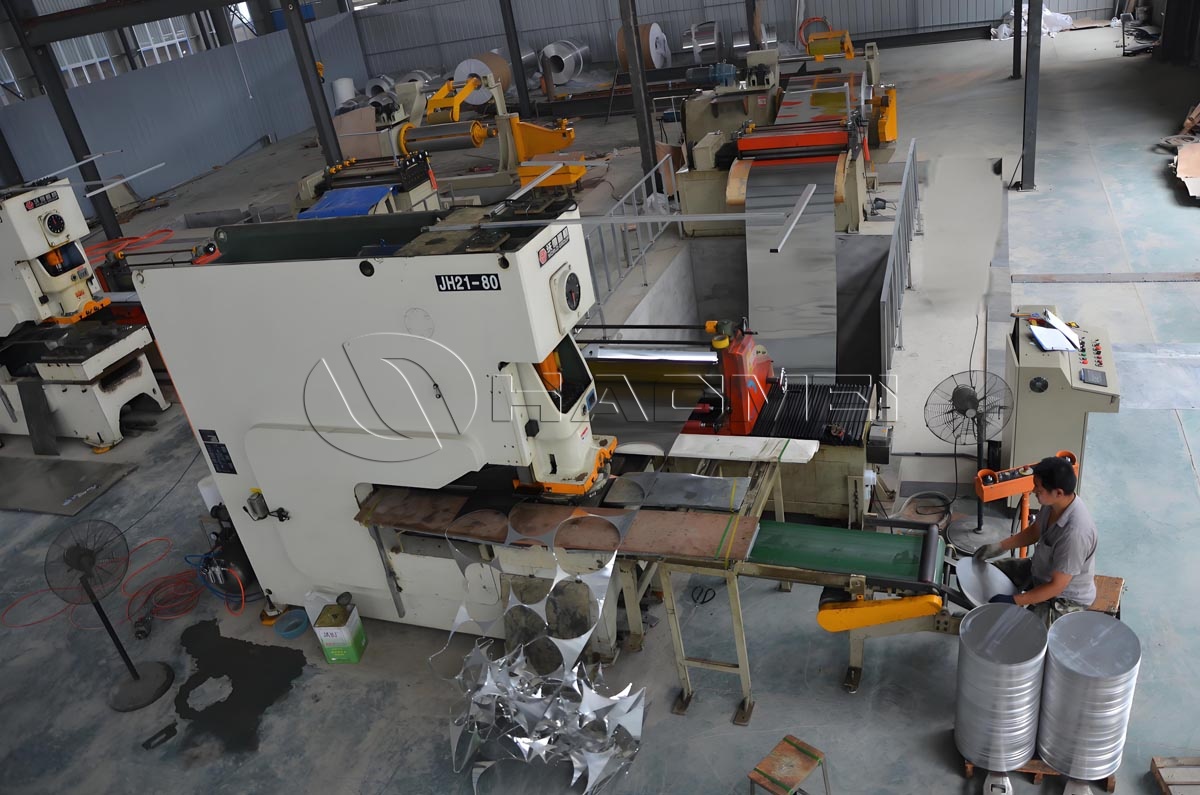
The quality of a cold rolled aluminum circle disc begins with coil preparation. We use qualified aluminum coil and control each major stage of processing within our manufacturing system.
First, aluminum slabs are rolled into coil through hot rolling and cold rolling operations. Cold rolling reduces the coil to the required thickness while improving gauge precision and surface quality. Depending on the requested temper and application, the coil may then be annealed to restore ductility for deep drawing or spinning.
After annealing, the coil is leveled and slit or fed directly to blanking equipment. We use appropriate blanking tools and process settings to produce round aluminum disc blanks with controlled diameter tolerance and minimized edge burr. Finished discs are inspected, protected, and packed according to the customer's production and shipping requirements.
For high-forming cookware products, we pay particular attention to annealing consistency. Uneven annealing can cause variable hardness within a batch, leading to inconsistent draw depth, cracking, or deformation during pan forming. Our process control focuses on maintaining stable mechanical properties from coil to finished aluminum circle disc.
The following table shows typical supply parameters for our cookware aluminum circles. Final specifications can be adjusted according to the drawing process, cookware shape, and technical agreement.
| Parameter | Typical Range or Option | Application Notes |
|---|---|---|
| Alloy | 1050, 1060, 1070, 1100, 3003 | 1xxx alloys offer high formability; 3003 provides higher strength |
| Temper | O, H12, H14, H16, H18 | O temper is commonly selected for deep drawing and spinning |
| Thickness | 0.50 mm to 6.00 mm | Selected according to cookware size, wall design, and forming method |
| Diameter | 100 mm to 1,200 mm | Custom diameters are available based on tooling requirements |
| Diameter Tolerance | Typically +/-0.5 mm to +/-1.0 mm | Depends on disc size and customer specification |
| Surface Finish | Mill finish, bright finish, polished-ready | Suitable for coating, anodizing, polishing, or decoration |
| Edge Condition | Smooth, burr-controlled blanked edge | Supports safe handling and stable press feeding |
| Forming Methods | Deep drawing, spinning, stamping, pressing | Material is matched to the intended manufacturing process |
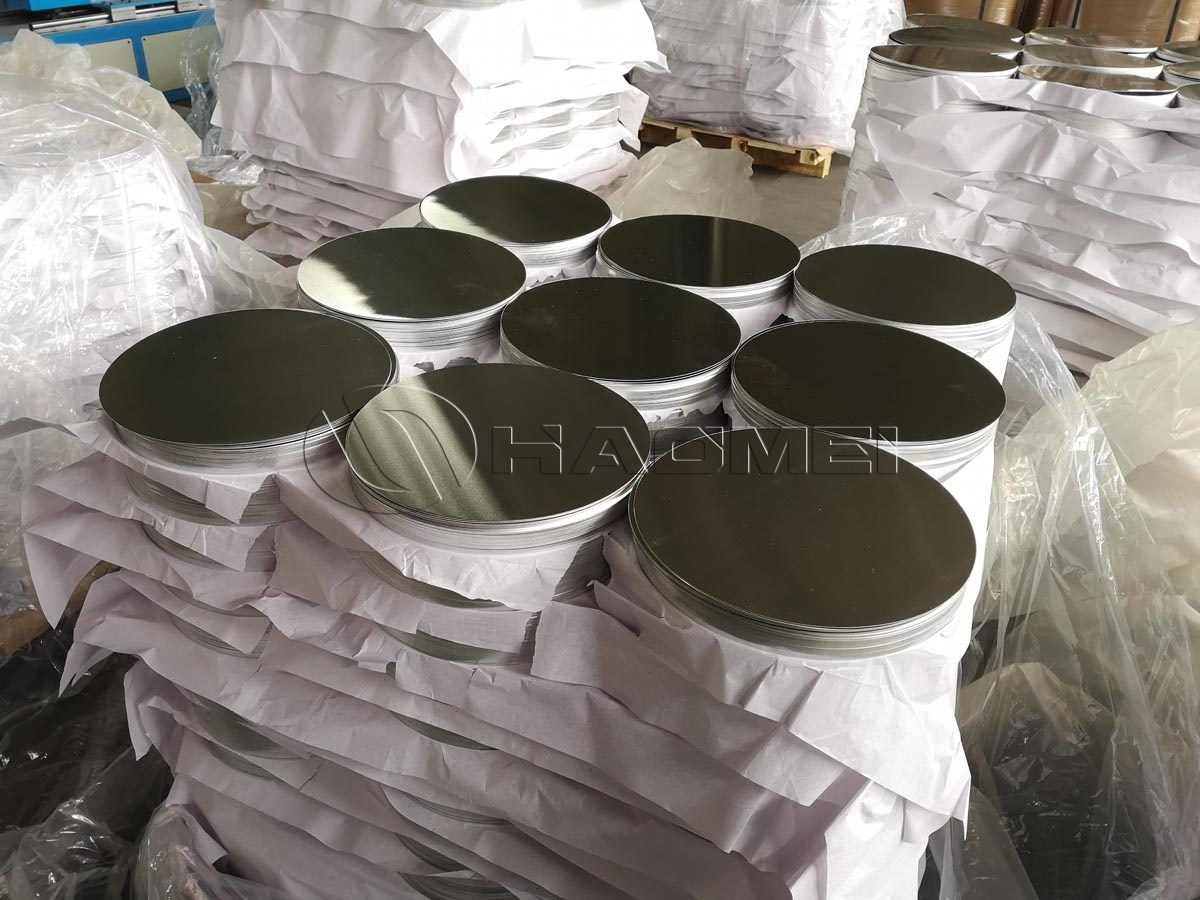
| Packaging | Pallets, wooden cases, paper interleaving | Protection is selected for export transportation and storage |
The most appropriate alloy depends on the cookware design and the production method. As a factory, we recommend material based on forming depth, required hardness, final surface treatment, and expected cooking performance.
1050 and 1060 aluminum are widely used for lightweight cookware because of their high aluminum content, good thermal conductivity, and excellent formability. In O temper, these alloys are suitable for deep-drawn pots, pans, bowls, and kitchen utensils. They are also commonly used where a clean surface is required before polishing or non-stick coating.
For standard frying pan bodies, a 1050 or 1060 aluminum circle can provide an economical and practical material solution when high-strength requirements are limited.
1100 aluminum offers good workability and corrosion resistance. It is suitable for cookware parts requiring spinning, pressing, or general fabrication. Its soft condition supports smooth deformation during forming, especially for products with rounded edges or moderate draw depth.
3003 aluminum contains manganese and provides higher strength than common 1xxx series alloys. It is often selected for cookware requiring improved rigidity, better resistance to deformation, or more demanding service conditions. Although 3003 has lower electrical and thermal conductivity than pure aluminum grades, it remains a practical material for many cookware bodies and structural components.
Deep drawing is one of the most important processes in cookware manufacturing. During drawing, the aluminum disc is forced into a die to create the pan body, pot wall, or container shape. The disc must elongate evenly while retaining sufficient strength to avoid tearing.
For deep drawing aluminum circle applications, O temper is generally preferred because it provides lower hardness and higher elongation. A properly annealed aluminum circle disc can flow more evenly during forming, reducing the risk of cracks around the pan wall, rim, or transition area.
Key material factors affecting deep drawing performance include:
Alloy composition and metallurgical cleanliness.
Grain size and grain distribution after annealing.
Thickness uniformity across the disc.
Surface lubrication compatibility.
Edge smoothness after blanking.
Temper stability during storage and transport.
We can provide test samples for customers who need to verify drawability on their own press lines. This is particularly important for frying pans with deep walls, shaped bottoms, reinforced rims, or multi-stage drawing operations.
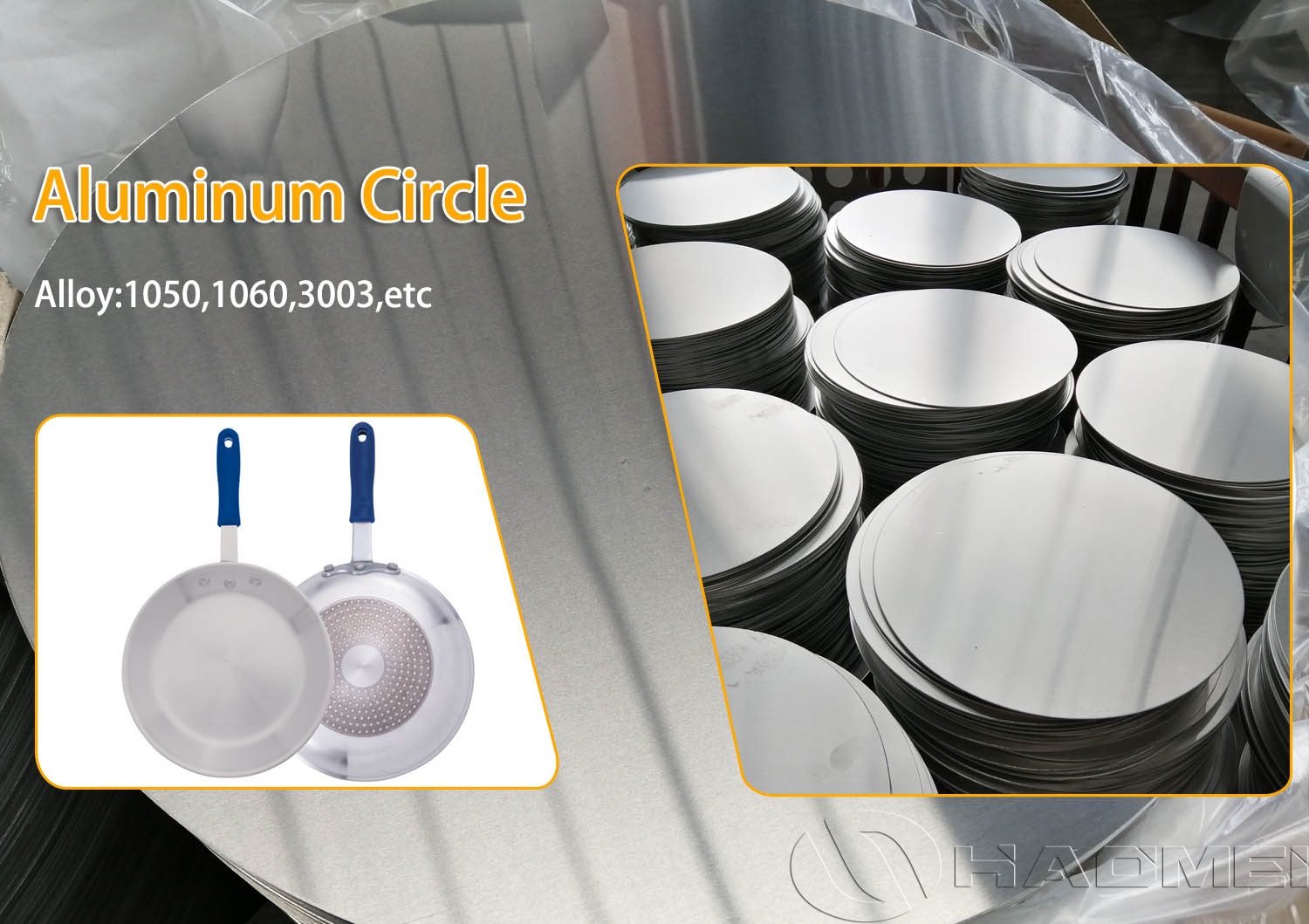
The surface of an aluminum circle for cookware affects both production efficiency and final appearance. Frying pan manufacturers may use non-stick coatings, ceramic coatings, anodized finishes, polished surfaces, painted exteriors, or laminated constructions. Each finishing process requires a suitable base surface.
Our cold rolled aluminum circle discs are produced with attention to surface cleanliness and uniformity. We control handling and packaging to minimize scratches, oil marks, embedded particles, and oxidation exposure. For coated cookware, a consistent substrate supports more uniform pretreatment and coating adhesion. For polished cookware, a smooth mill finish helps reduce downstream polishing time.
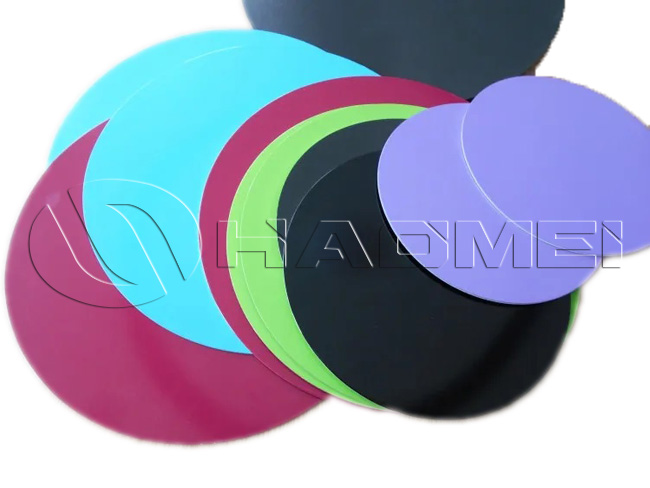
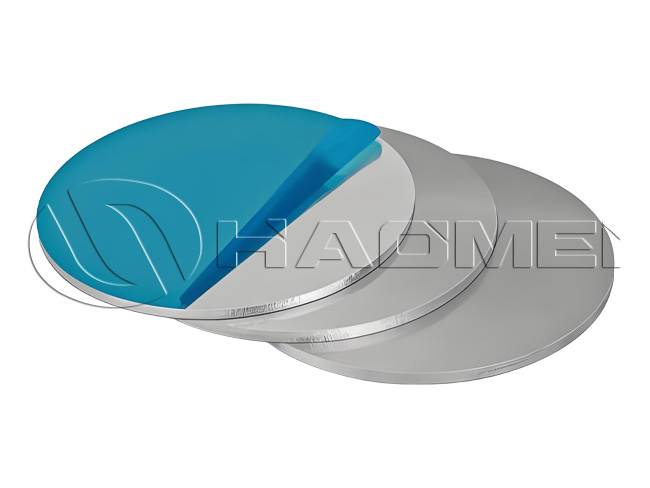
Customers requiring decorative surfaces may also consider a Color Coated Aluminum Circle for applications where pre-finished material is suitable for the product design.
We inspect cold rolled aluminum circle discs throughout production rather than relying only on final inspection. Our quality control process covers incoming coil verification, rolling condition review, annealing control, diameter measurement, thickness testing, surface inspection, edge inspection, and packaging checks.
Typical inspection items include:
| Inspection Item | Control Purpose |
|---|---|
| Alloy verification | Confirms that the supplied material matches the ordered grade |
| Thickness measurement | Maintains forming consistency and cookware wall design requirements |
| Diameter measurement | Supports correct die fit and automated feeding performance |
| Temper and hardness review | Confirms suitability for deep drawing, spinning, or stamping |
| Surface inspection | Identifies scratches, stains, dents, inclusions, and oxidation marks |
| Edge inspection | Controls burrs and irregular edges that can affect forming tools |
| Flatness check | Helps ensure stable stacking and press-line feeding |
| Packaging inspection | Protects discs from moisture, friction, and deformation during export |
For export orders, we can provide mill test certificates, packing lists, commercial documents, and inspection records according to the confirmed order requirements.
When sourcing a frying pan aluminum disc, buyers should provide more than diameter and thickness. The intended cookware process is equally important. A disc used for shallow stamping may require a different temper from one used for deep drawing or metal spinning.
To recommend the appropriate cold rolled aluminum circle disc, we normally confirm the following information:
Required alloy and temper, if already specified.
Disc diameter and thickness.
Final cookware type, such as frying pan, wok, saucepan, or stockpot.
Forming method and estimated drawing depth.
Required surface finish and coating process.
Quantity per size and expected purchasing schedule.
Packaging, labeling, and export destination requirements.
With complete technical information, our manufacturing team can select the suitable coil condition, blanking process, and packaging method for the application.
As an aluminum circle disc manufacturer, we support cookware producers with material consistency, flexible specifications, and production-oriented technical communication. Our objective is to supply aluminum disc blanks that integrate efficiently into customer stamping, drawing, spinning, coating, and assembly lines.
Cold rolled aluminum circle discs remain a dependable base material for cookware and frying pan manufacturing because they offer accurate dimensions, efficient formability, and adaptable finishing performance. By matching alloy, temper, thickness, and surface condition to the final product, cookware manufacturers can improve forming stability and maintain consistent product quality.

Office Address:
No.14 Waihuan Road, CBD, Zhengzhou, China
Contact Us
HAOMEI Aluminum offer an custom aluminum circle for you!
whatsapp: +86-18703635966
Email: sales@alummc.com
Email: alummc@hotmail.com
Request Free Sample & Quotation
Copyright © 2026 By HAOMEI Aluminum CO., LTD. All Rights Reserved. Sitemap
 +86-18703635966
 sales@alummc.com
 8618703635966
