
 No.14 Waihuan Road, CBD, Zhengzhou, China
 +86-18703635966

No.14 Waihuan Road, CBD, Zhengzhou, China
+86-18703635966
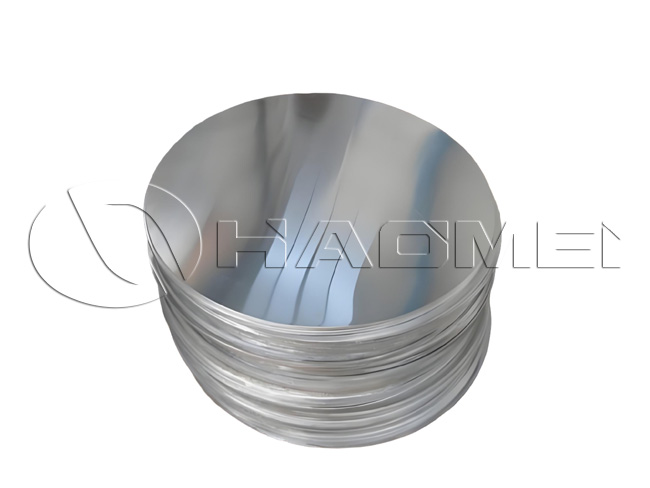
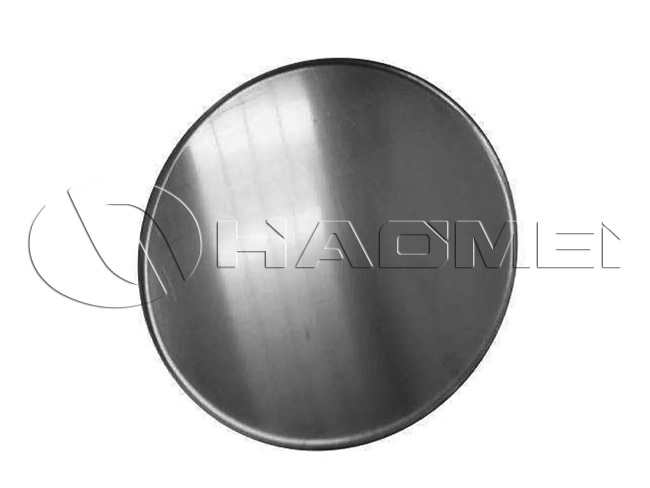
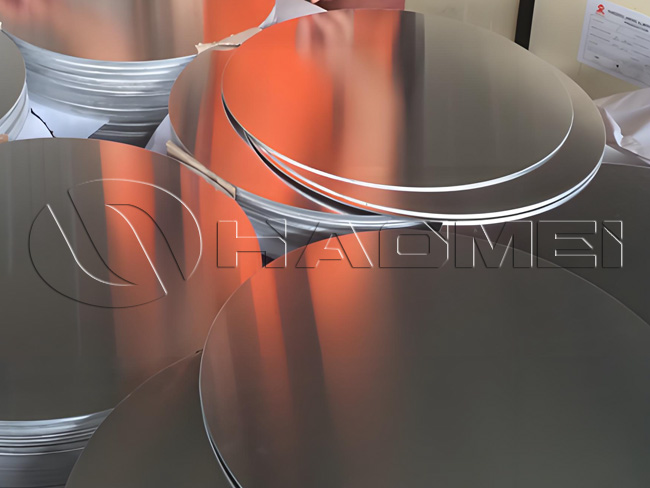
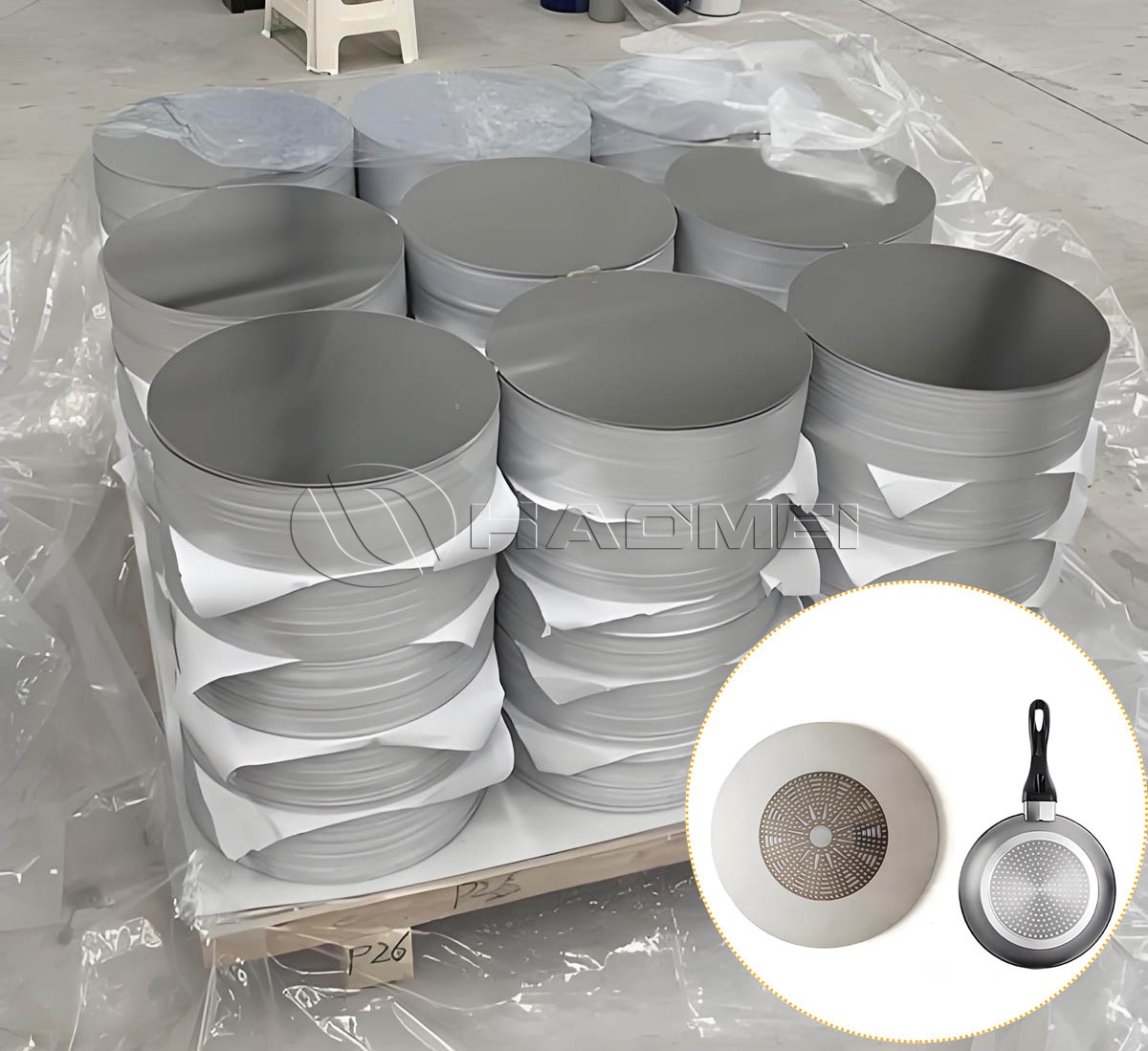
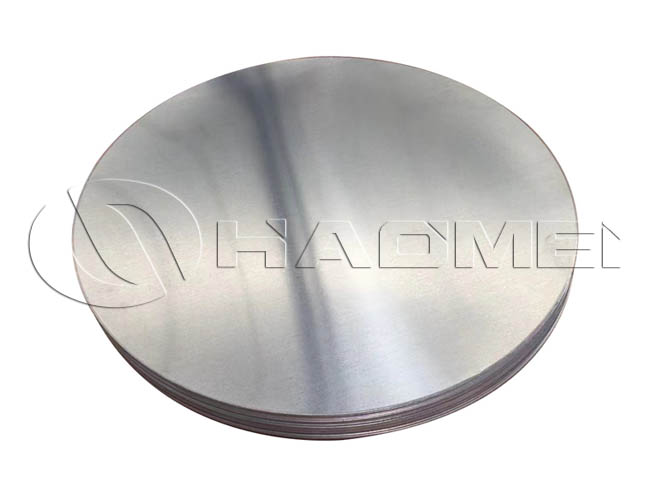
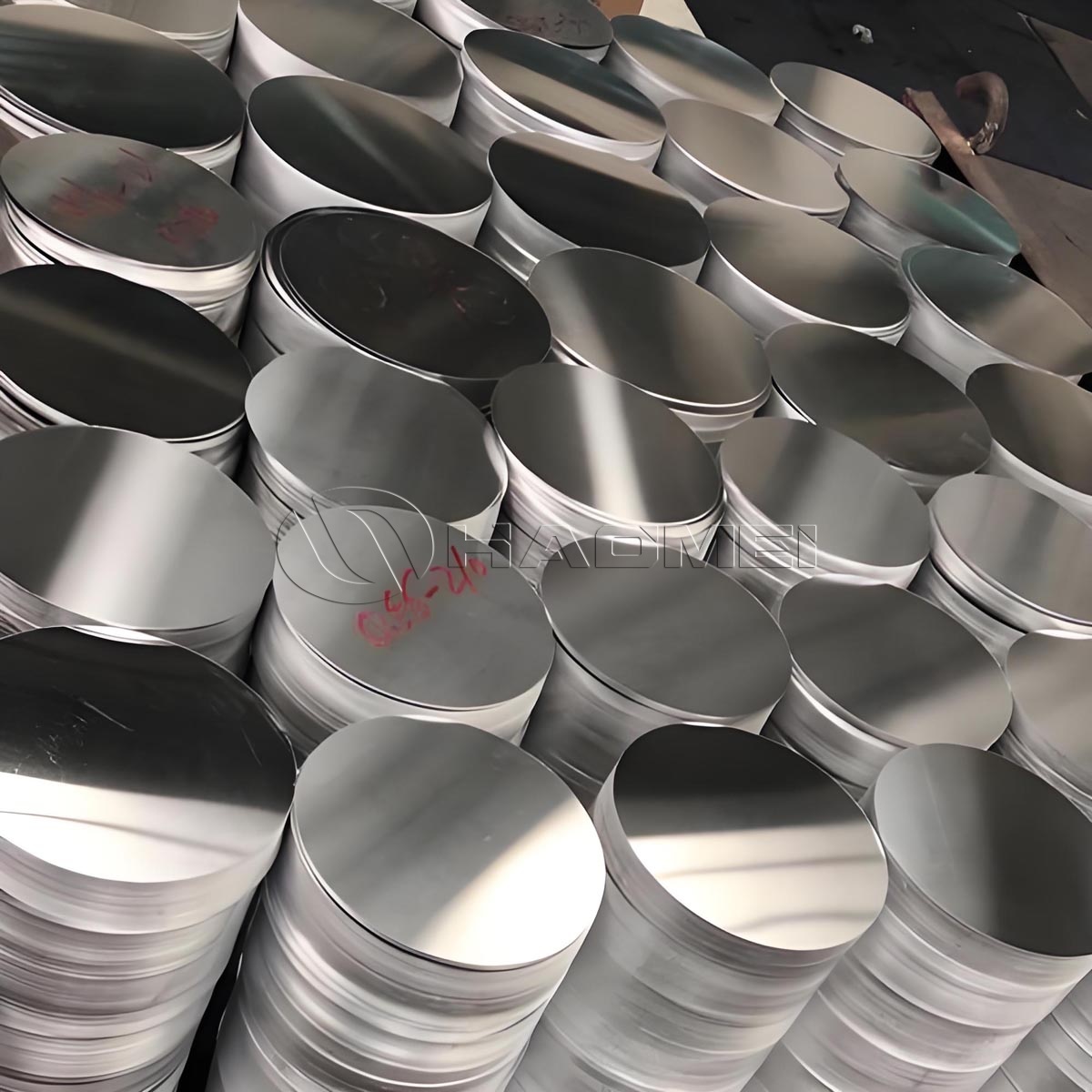
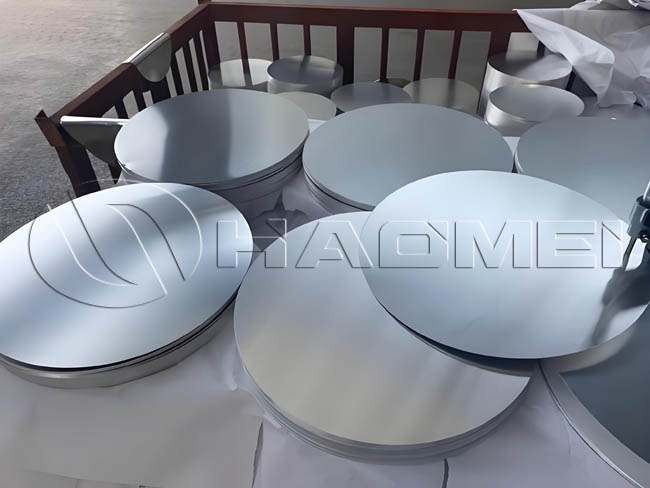
An aluminum circle for cookware is a round aluminum blank designed for further processing into frying pans, saucepans, stockpots, pressure cookers, baking pans, and other formed kitchen products. As a manufacturer of aluminum circle discs, we produce material with controlled chemical composition, thickness tolerance, surface condition, grain structure, and mechanical properties to support stable downstream forming.
The selection of a cookware aluminum circle affects more than the appearance of the final product. It directly influences deep drawing performance, heat distribution, anodizing response, non-stick coating adhesion, polishing quality, and production yield. For cookware factories, selecting the correct alloy, temper, diameter, and surface finish is essential for reducing cracking, wrinkling, orange peel, and material waste during forming.
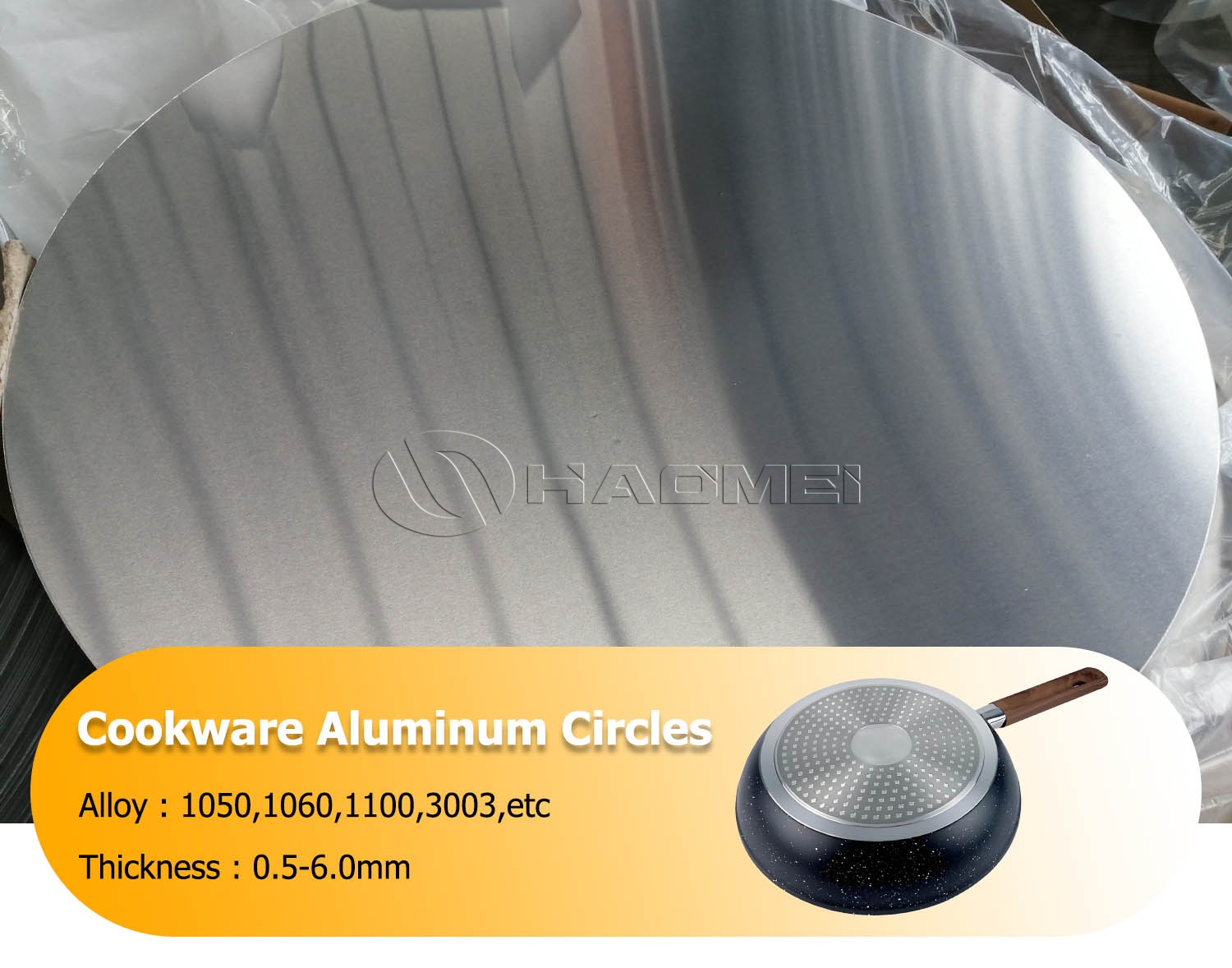
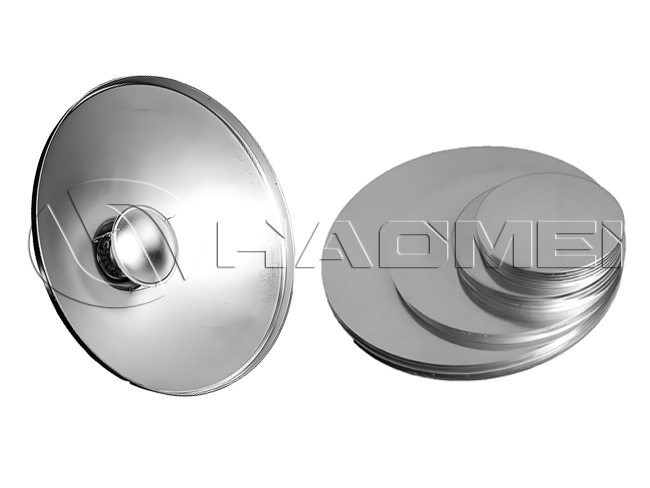
An aluminum circle disc for cookware is typically produced from aluminum coil or sheet through precision blanking. The circle is then deep drawn, spun, stamped, forged, or pressed into a cookware body. Depending on the manufacturing route, the blank may be supplied in hot rolled or cold rolled condition.
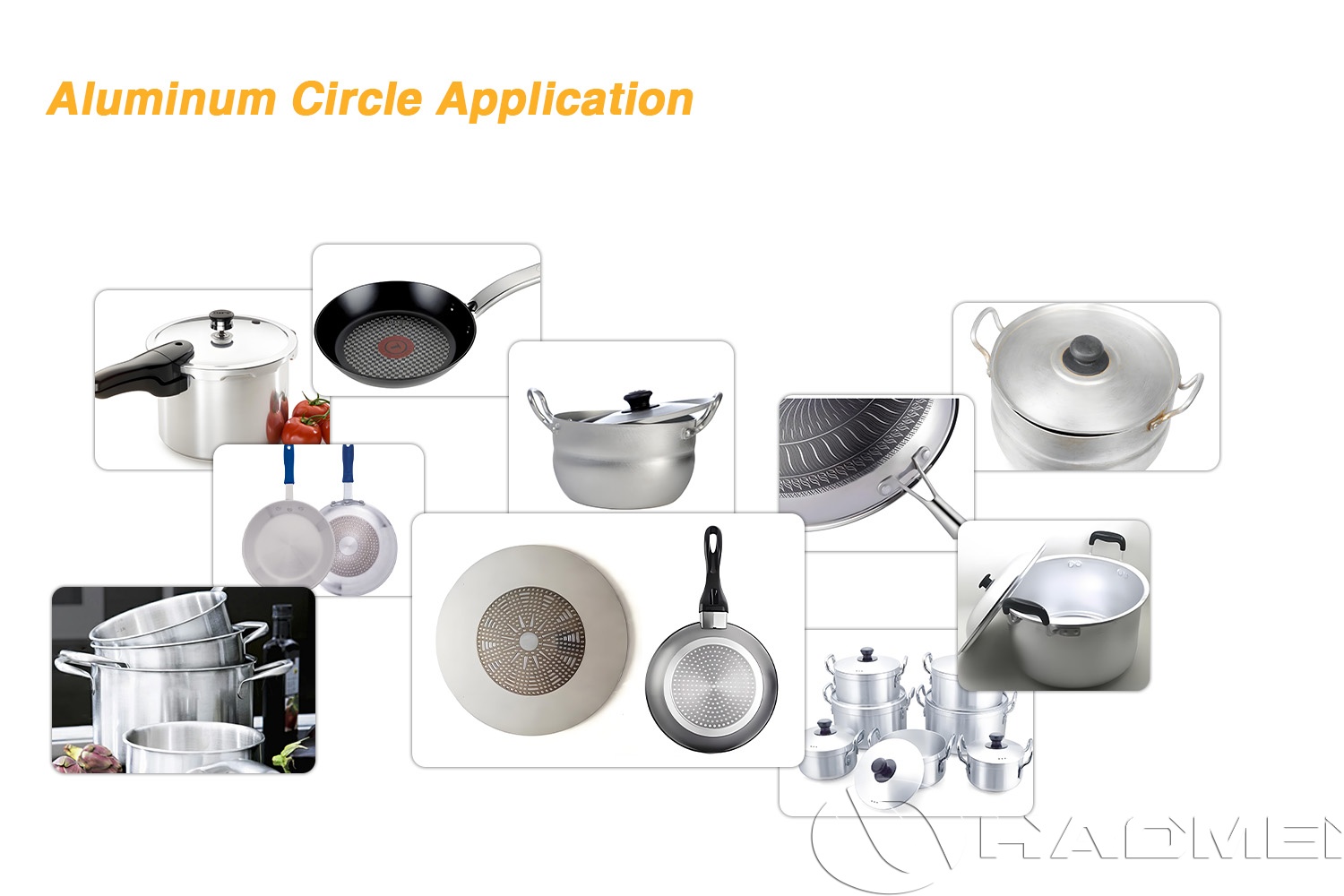
Our aluminum circles for cookware are manufactured for applications that require good elongation and stable formability. The most common products include blank aluminum discs for non-stick pans, anodized cookware, induction-ready cookware bases, kitchen utensils, and pressure cooker components.
Compared with rectangular sheet, a pre-cut aluminum disc helps cookware manufacturers improve material utilization and simplify feeding in automatic pressing lines. A correctly specified aluminum circle also reduces trimming requirements after deep drawing.
For product specifications developed specifically for cookware forming, see our Aluminum Circles for Cookware range.
The alloy is selected according to the cookware type, forming depth, required strength, surface treatment, and thermal performance. In our production, 1xxx and 3xxx series alloys are the main choices for aluminum cookware circles.
| Alloy | Main Characteristics | Typical Cookware Applications | Forming Performance |
|---|---|---|---|
| 1050 | High aluminum purity, excellent thermal conductivity, good anodizing response | Light-duty pans, baking utensils, kitchenware | Excellent |
| 1060 | High conductivity, good ductility, clean surface quality | Frying pans, saucepans, stamped cookware | Excellent |
| 1070 | Very high aluminum content, suitable for applications requiring conductivity and brightness | Specialized cookware and utensils | Excellent |
| 1100 | Good corrosion resistance and workability | General cookware, cookware components | Very good |
| 3003 | Higher strength than 1xxx series, good corrosion resistance | Deep drawn pots, pressure cookers, heavy-duty pans | Very good |
| 3004 | Improved strength and forming capability for demanding applications | Deep cookware bodies and formed kitchen products | Very good |
A 1050 aluminum circle or 1060 aluminum disc is widely used for ordinary cookware because of its high aluminum content and reliable forming behavior. These alloys have good thermal conductivity, allowing cookware to transfer heat efficiently from the base to the cooking surface. They are also suitable for anodizing, polishing, and coating operations.
For shallow drawing or stamping, 1050 and 1060 alloys provide a practical balance between cost, formability, and surface quality. When the cookware design requires a deeper draw, we recommend selecting a soft temper and confirming the drawing ratio with the forming process.
A 3003 aluminum circle contains manganese, which provides higher strength than pure aluminum grades. This alloy is commonly selected for cookware that requires improved rigidity, deeper drawing, or stronger resistance to deformation during use.
3003 aluminum circles are suitable for pressure cooker bodies, stockpots, thicker cookware, and applications where the blank must tolerate more demanding forming conditions. Its corrosion resistance also supports long-term kitchen use when proper surface treatment is applied.
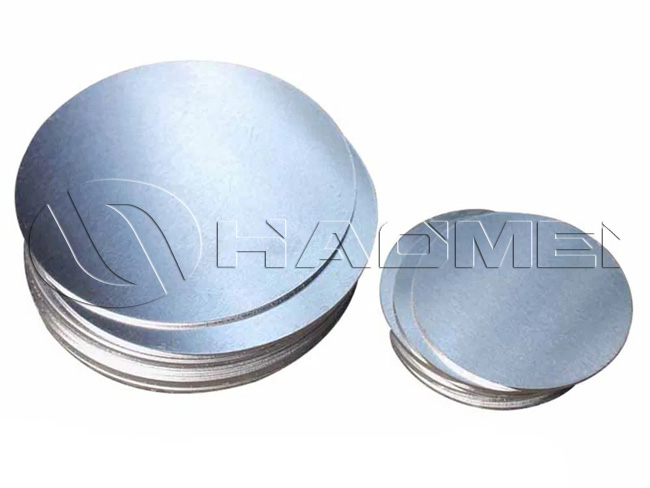
We manufacture aluminum circle discs according to customer drawings, forming methods, and end-use requirements. Diameter and thickness should be considered together because they determine the material volume available for drawing and the stiffness of the finished cookware body.
| Parameter | Standard Production Range | Custom Options | Notes |
|---|---|---|---|
| Alloy | 1050, 1060, 1070, 1100, 3003, 3004 | Available on request | Selected by forming and performance requirements |
| Diameter | 100 mm to 1,200 mm | Larger diameters available by assessment | Common cookware sizes are 180 mm to 600 mm |
| Thickness | 0.40 mm to 6.00 mm | Custom thickness available | Depends on pan type and forming route |
| Temper | O, H12, H14, H16, H18 | Customized temper control | O temper is common for deep drawing |
| Diameter Tolerance | Typically +/- 0.5 mm to +/- 1.0 mm | Based on diameter and order requirements | Supports automated stamping operations |
| Thickness Tolerance | Controlled according to applicable standards | Tighter tolerance available | Important for consistent forming |
| Surface | Mill finish, polished, brushed, coated | Protective film available | Surface selected for final finishing process |
| Edge Condition | Smooth, burr-controlled edge | Customized blanking requirements | Helps prevent feeding and forming issues |
For cookware producers using high-volume press lines, stable dimensional control is particularly important. Diameter variation can affect centering and die alignment, while thickness variation can change drawing force and the final wall thickness of the pot or pan.
Temper is one of the most important specifications for an aluminum disc for cookware. It describes the material condition after rolling and annealing. For deep drawing and spinning, soft material is generally preferred because it provides higher elongation.
| Temper | Material Condition | Recommended Use |
|---|---|---|
| O | Fully annealed, soft | Deep drawing, spinning, complex cookware shapes |
| H12 | Light strain hardened | Light stamping and shallow forming |
| H14 | Half hard | Flat cookware components and moderate forming |
| H16 | Three-quarter hard | Parts requiring higher rigidity with limited forming |
| H18 | Full hard | Flat discs, lids, decorative or non-drawn components |
For deep drawn cookware, O temper aluminum circles are commonly used because they allow the material to flow more evenly into the die. This reduces the risk of edge cracking during the first and subsequent drawing stages. The appropriate temper must still be matched with the selected alloy, thickness, lubrication system, die radius, and draw depth.
Aluminum has high thermal conductivity, making it an effective material for cookware bodies. A well-made aluminum circle distributes heat more evenly than many heavier metals, helping reduce localized hot spots during cooking. Alloy selection and thickness determine the final balance between heating response and heat retention.
Cookware manufacturing often involves deep drawing, spinning, stamping, and trimming. Our deep drawing aluminum circle products are processed with controlled annealing and surface quality to support these operations. Good formability helps cookware manufacturers produce smooth side walls, stable bottom geometry, and consistent rim profiles.
Using round blanks for round cookware minimizes scrap compared with cutting circles from standard rectangular sheets at the cookware factory. Circle blanking at our manufacturing facility allows customers to receive material prepared for their press and tooling dimensions.
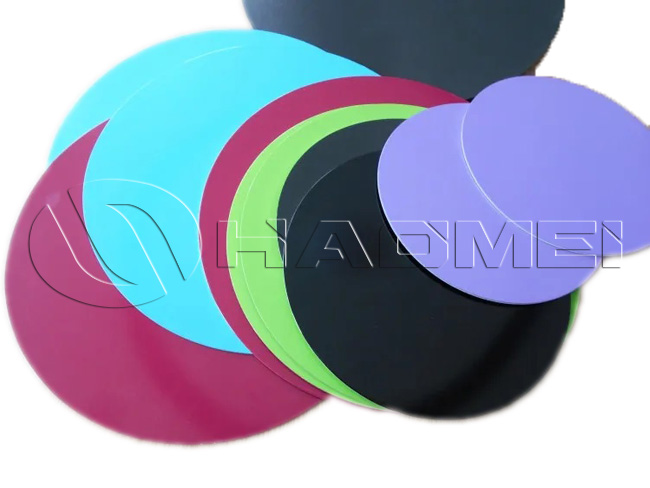
Aluminum cookware circles can be anodized, polished, brushed, painted, or coated with non-stick systems. The surface must be clean and uniform before these processes begin. We inspect coil and circle surfaces to minimize defects such as scratches, oil contamination, roller marks, pinholes, and excessive burrs that may affect coating or finishing quality.
Aluminum naturally forms a protective oxide layer. With suitable finishing and proper product design, aluminum cookware offers useful corrosion resistance in normal kitchen environments. Its low density also enables manufacturers to produce cookware that is easier to handle than many steel-based alternatives.
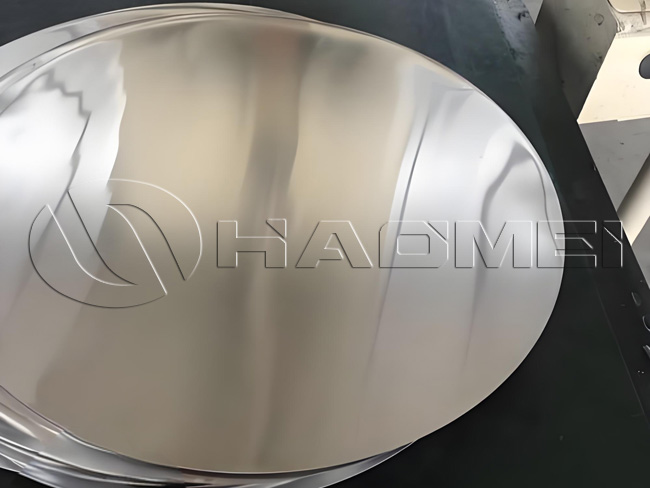
Our factory production process begins with alloy-controlled aluminum coil or sheet. The material is rolled to the specified thickness, annealed when required, leveled, and inspected before blanking. We then use appropriate circle cutting equipment to produce discs with controlled diameter and edge quality.
The general production sequence is as follows:
Raw material selection according to alloy and temper requirements.
Rolling and thickness control for the required gauge.
Annealing for soft temper and deep drawing performance.
Surface cleaning and inspection.
Precision blanking into aluminum circle discs.
Burr inspection, dimensional verification, and surface quality checks.
Protective packaging for transport and storage.
For applications requiring improved grain structure and enhanced deep drawing properties, a Hot Rolled Aluminum Circle may be the suitable option. Hot rolled material is often considered for thicker gauges and demanding cookware forming operations.
When submitting an inquiry, cookware manufacturers should provide the final product drawing or the key process conditions. The following information helps us recommend the appropriate aluminum circle specification:
Cookware type, such as frying pan, stockpot, pressure cooker, or baking pan.
Required finished diameter and wall height.
Blank diameter and thickness.
Alloy and temper preference.
Forming method, including stamping, deep drawing, spinning, or forging.
Surface finish requirement.
Non-stick coating, anodizing, polishing, or painting process.
Required mechanical properties and applicable quality standards.
Packaging requirements for automatic feeding or manual handling.
For example, a shallow non-stick frying pan may use a 1050 or 1060 O temper aluminum circle, while a deeper pot may require 3003 O temper material with a thickness selected to maintain wall strength after drawing. Final selection should be validated through production trials using the customer's tooling and process parameters.
As a manufacturer, we control quality at material, process, and finished-product stages. Typical inspections include chemical composition verification, thickness measurement, diameter measurement, surface inspection, edge burr assessment, temper confirmation, and packaging inspection.
We also focus on practical requirements that affect cookware production. These include consistent blank flatness, clean surfaces, stable coil-to-coil properties, and controlled annealing. A circle disc that meets nominal dimensions but has inconsistent hardness or poor edge quality can still create problems during drawing. Therefore, process consistency is as important as the basic specification.
An aluminum circle for cookware is the starting material for efficient, reliable cookware manufacturing. Choosing the correct alloy, temper, thickness, diameter, and surface condition supports stable forming, effective heat transfer, and suitable finishing performance. Common choices include 1050, 1060, and 3003 aluminum circles, with O temper being widely used for deep drawn cookware.
Our factory supplies aluminum circle discs based on the actual production requirements of cookware manufacturers. By matching material parameters to drawing depth, tooling design, coating process, and finished-product performance, we help customers establish a more consistent and efficient cookware production process.


Office Address:
No.14 Waihuan Road, CBD, Zhengzhou, China
Contact Us
HAOMEI Aluminum offer an custom aluminum circle for you!
whatsapp: +86-18703635966
Email: sales@alummc.com
Email: alummc@hotmail.com
Request Free Sample & Quotation
Copyright © 2026 By HAOMEI Aluminum CO., LTD. All Rights Reserved. Sitemap
 +86-18703635966
 sales@alummc.com
 8618703635966
