
 No.14 Waihuan Road, CBD, Zhengzhou, China
 +86-18703635966

No.14 Waihuan Road, CBD, Zhengzhou, China
+86-18703635966
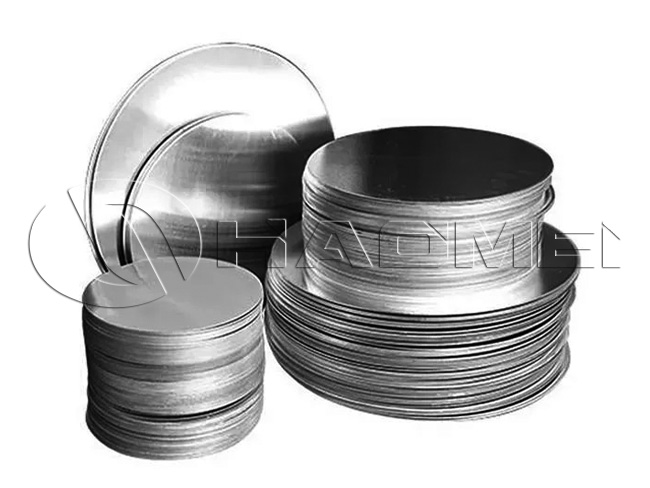
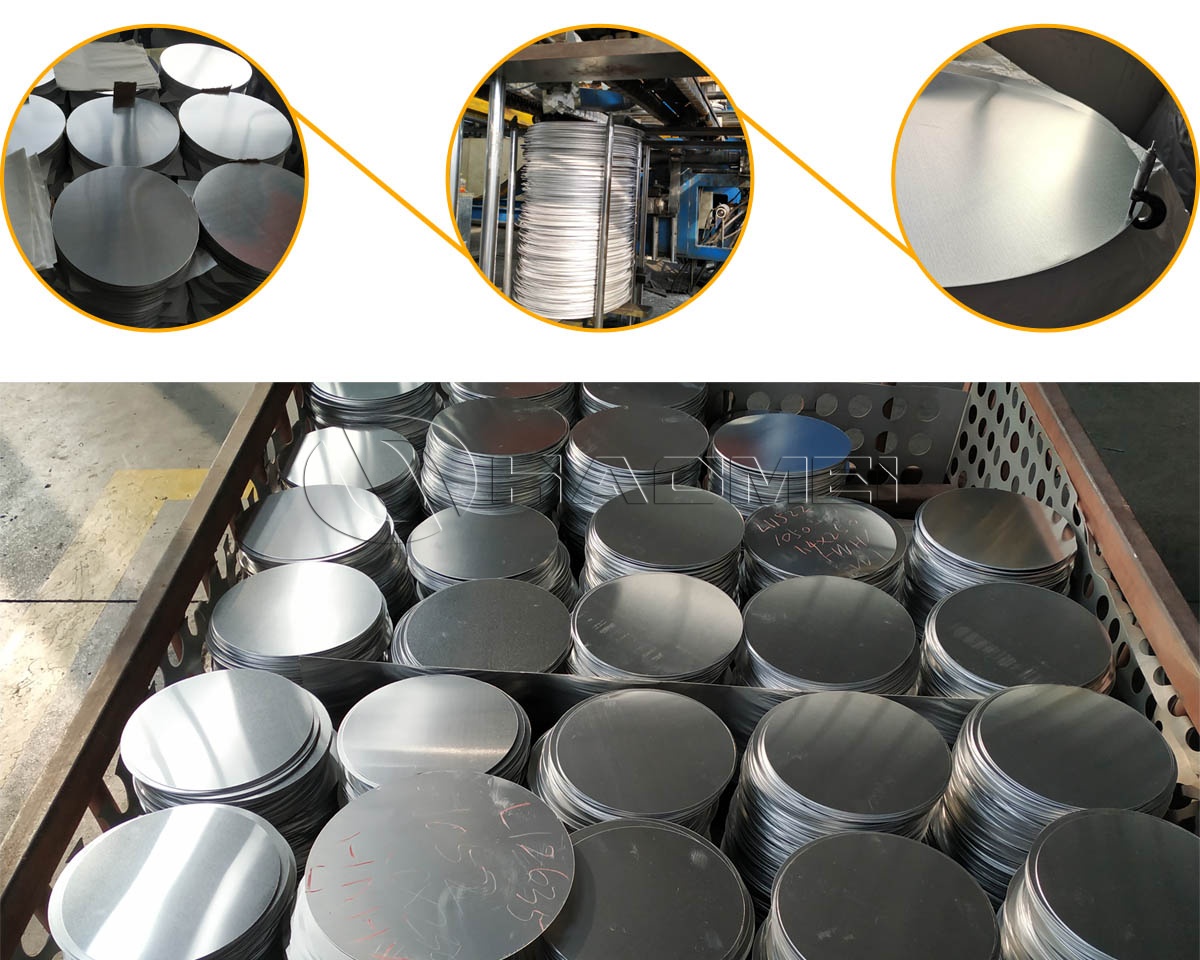
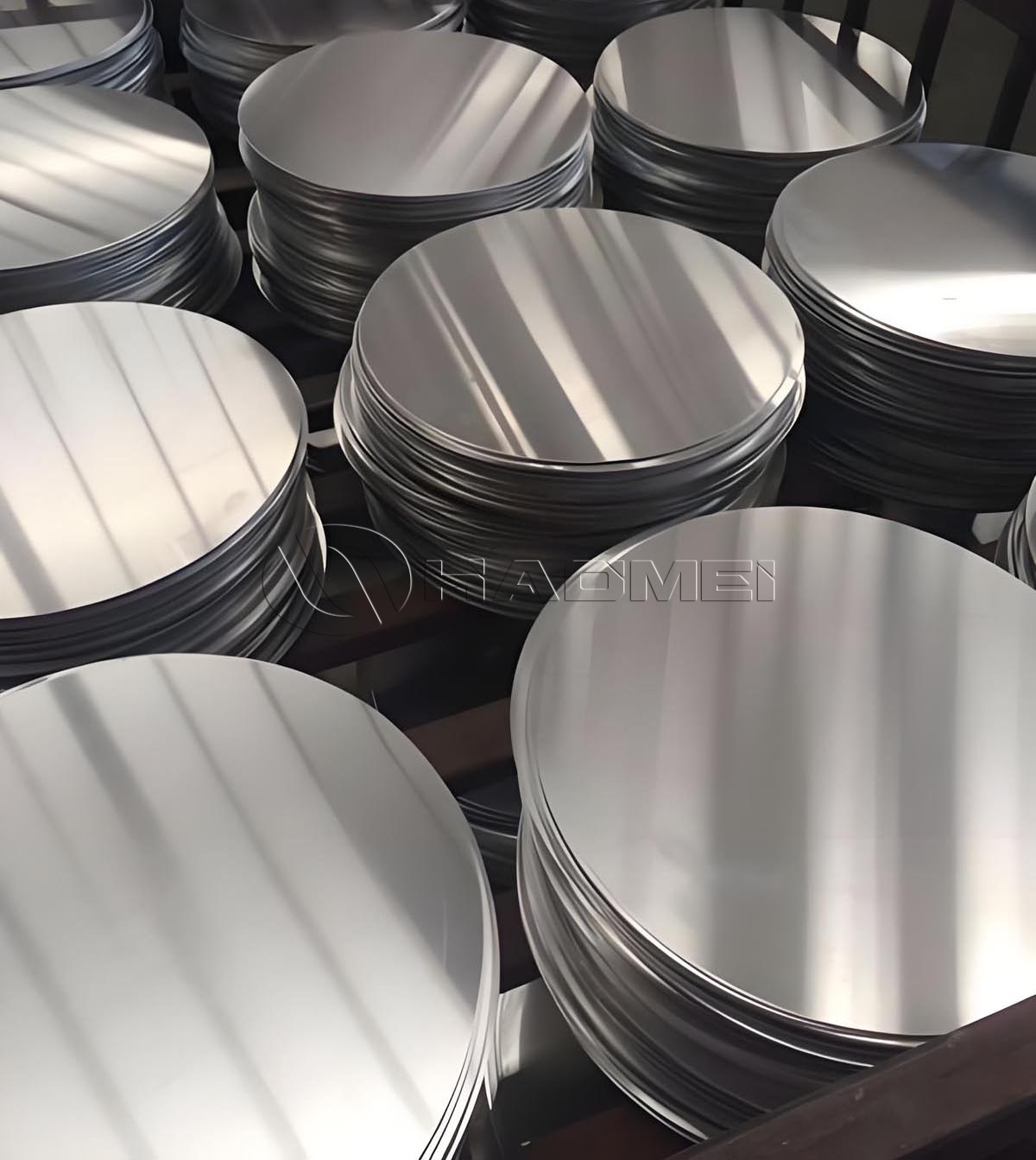
Deep drawing is a forming process that converts a flat blank into a cup or shell through controlled plastic deformation. The success of deep drawing depends heavily on blank consistency, grain structure, surface condition, lubrication response, and earing behavior. As a manufacturer of aluminum circles, we supply 3105 aluminum circle for deep draw to customers who require reliable formability for cookware, housings, and general stamped or drawn components.
3105 alloy belongs to the Al-Mn-Mg series (aluminum-manganese-magnesium). In deep drawing, it is widely used to manufacture lampshades, kitchenware, traffic signs, and various containers. Compared to the common 1050 or 3003 alloys, 3105 has higher strength and better corrosion resistance.
Material Temper Selection
Deep drawing is very sensitive to the temper:
O temper (Annealed): Best suited for deep drawing. The material is the softest, with the best plasticity, suitable for manufacturing deep cylindrical or irregularly shaped parts.
H14/H24 temper: Semi-hard temper, with higher strength, suitable for shallow drawing or containers requiring a certain degree of rigidity.
Consistent deep draw behavior through controlled recrystallization and uniform grain size.
Reduced earing tendency by managing texture development during rolling and intermediate anneals.
Clean surface for forming and post-processing, such as coating, painting, or light anodizing.
Tight thickness and diameter control to improve blank holding stability and reduce scrap.
Edge quality suitable for progressive stamping and drawing operations.
3105 aluminum is strengthened primarily by solid solution and work hardening. For deep drawing, temper selection is critical:
Softer tempers (O) provide maximum ductility for severe draws and multi-step operations.
Strain-hardened tempers (H24, H14) are used when parts require higher stiffness or dent resistance after forming, provided the draw depth is moderate.
From a forming perspective, the objective is to balance yield strength, elongation, and planar anisotropy (Delta R) to limit earing while keeping punch forces manageable.
The parameters below reflect our standard production capability for 3105 aluminum circle for deep draw. Final values can be tailored based on your drawing ratio, tooling, and finished-part requirements.
| Alloy | 3105 | Al-Mn-Mg series |
| Temper | O, H14, H24 | O for severe draw, Hxx for moderate draw with higher strength |
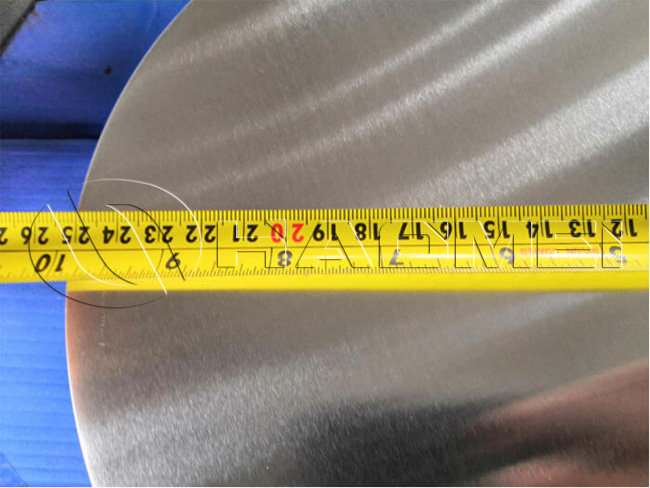
| Thickness | 0.30 mm to 6.00 mm | Cookware often 0.8 mm to 3.0 mm |
| Diameter | 80 mm to 1200 mm | Larger sizes available with evaluation |
| Diameter tolerance | As agreed (commonly tight control) | Aligned to die clearance and blanking tool |
| Thickness tolerance | As agreed (commonly tight control) | Supports stable drawing force |
| Surface finish | Mill finish, bright finish options | Selected based on decoration or coating |
| Edge condition | Deburred, smooth sheared edge | Reduces crack initiation during draw |
| Flatness | Controlled per application | Important for blank holder stability |
| Grain control | Recrystallized structure available | For deep draw stability and reduced orange peel |
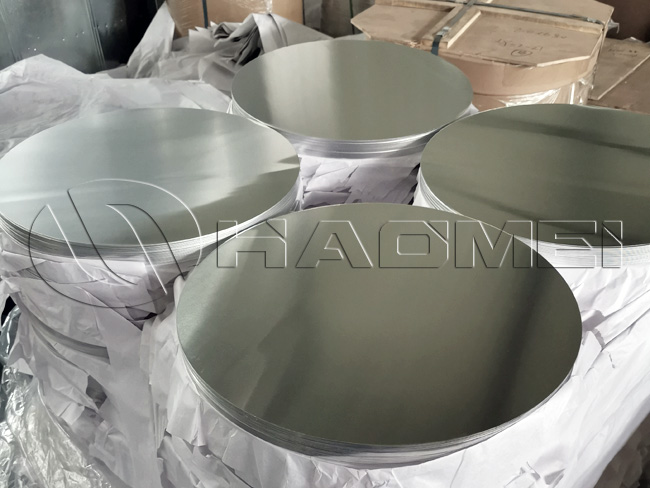
| Packaging | Export seaworthy | Anti-moisture measures available |
Note: If you require post-forming finishing (for example, coating, painting, or anodizing), please specify the surface appearance targets and acceptance criteria. We can align surface inspection levels and process routing accordingly.
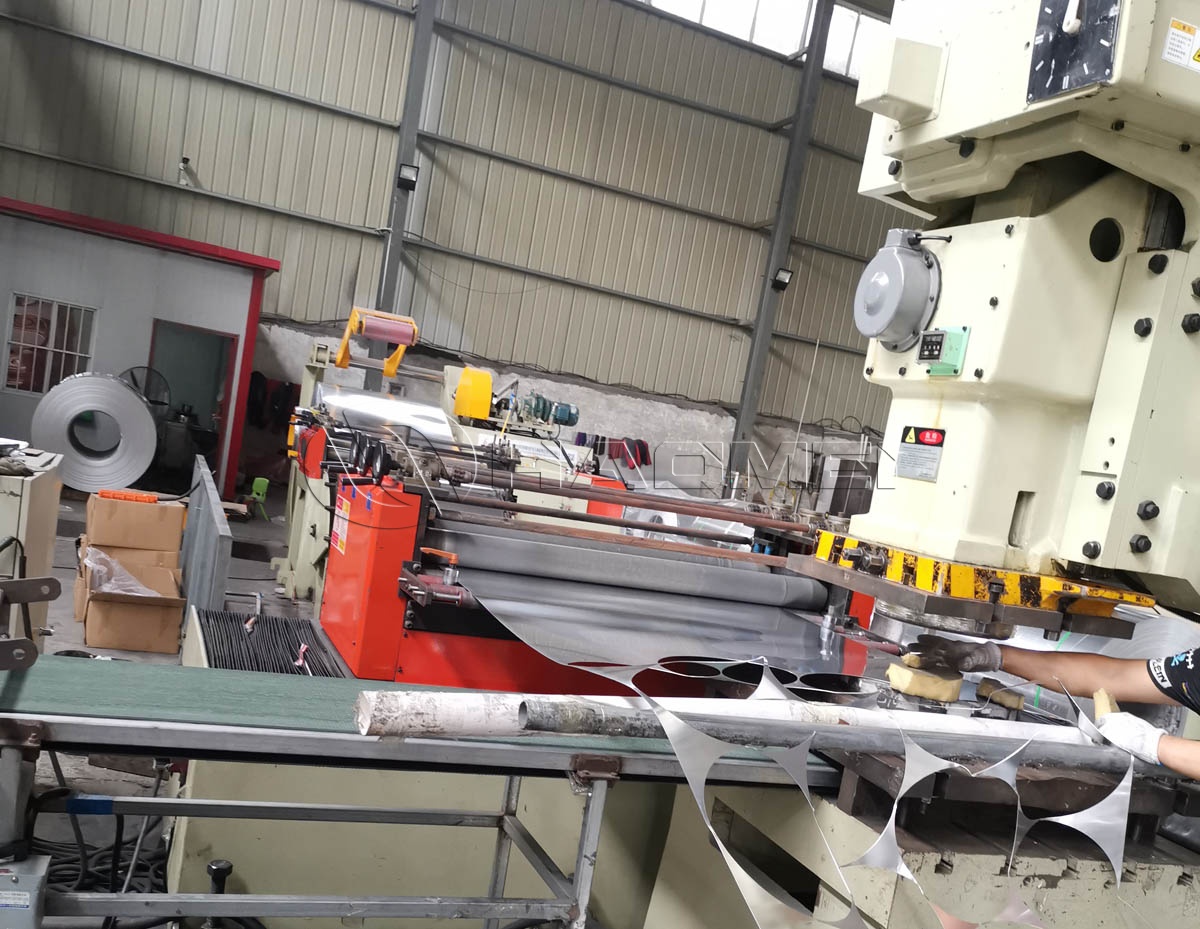
As a factory, we produce circles by integrating coil selection, rolling process control, annealing, blanking, and inspection. Our deep-draw-focused route typically includes:
Coil qualification: chemical composition verification and incoming surface inspection.
Rolling and intermediate annealing control: managing reduction ratios and thermal cycles to achieve stable texture and grain size.
Final annealing (for O temper) or final rolling (for H tempers): tuned to match your forming severity.
Circle blanking: high-precision stamping from coil with controlled burr and edge condition.
Deburring and surface cleaning: to minimize edge-triggered cracking and improve lubrication response.
Lot traceability: coil-to-circle traceability to support ongoing process optimization.
For customers sourcing multiple alloys, we also supply 3000 Series Aluminum circle products under the same process discipline, simplifying qualification across your forming portfolio.
Deep drawing failures usually trace back to inconsistency in mechanical response, poor surface, or edge defects. Our QC plan is designed around these risk points:
Chemical composition checks per lot, with documented certificates.
Mechanical property testing based on agreed temper and sampling plan.
Thickness and diameter measurement with calibrated instruments.
Surface inspection for scratches, roll marks, and embedded particles.
Edge inspection for burr height, cracks, and slivers.
Optional earing evaluation trials for new projects or when tight earing limits are specified.
Deep drawing performance depends on your die radius, lubrication system, draw ratio, and redraw steps. We support customization for:
Temper selection: O for maximum drawability; H14 or H24 for balanced formability and strength.
Grain size targets: reducing orange peel risk on visible surfaces.
Surface requirements: mill finish vs. brighter appearance to suit polishing or coating.
Blank geometry: diameter, thickness, and tolerances aligned to your tooling.
Edge specification: tighter burr control for challenging draws.
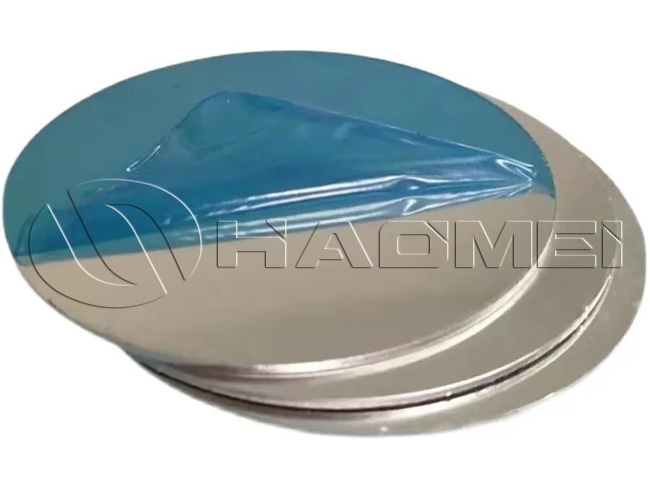
Packaging: interleaf paper, protective film (as agreed), moisture control, and pallet configuration.
For customers standardizing on this alloy, we also offer a dedicated product page for 3105 Aluminum Circle to streamline repeat orders and specification alignment.
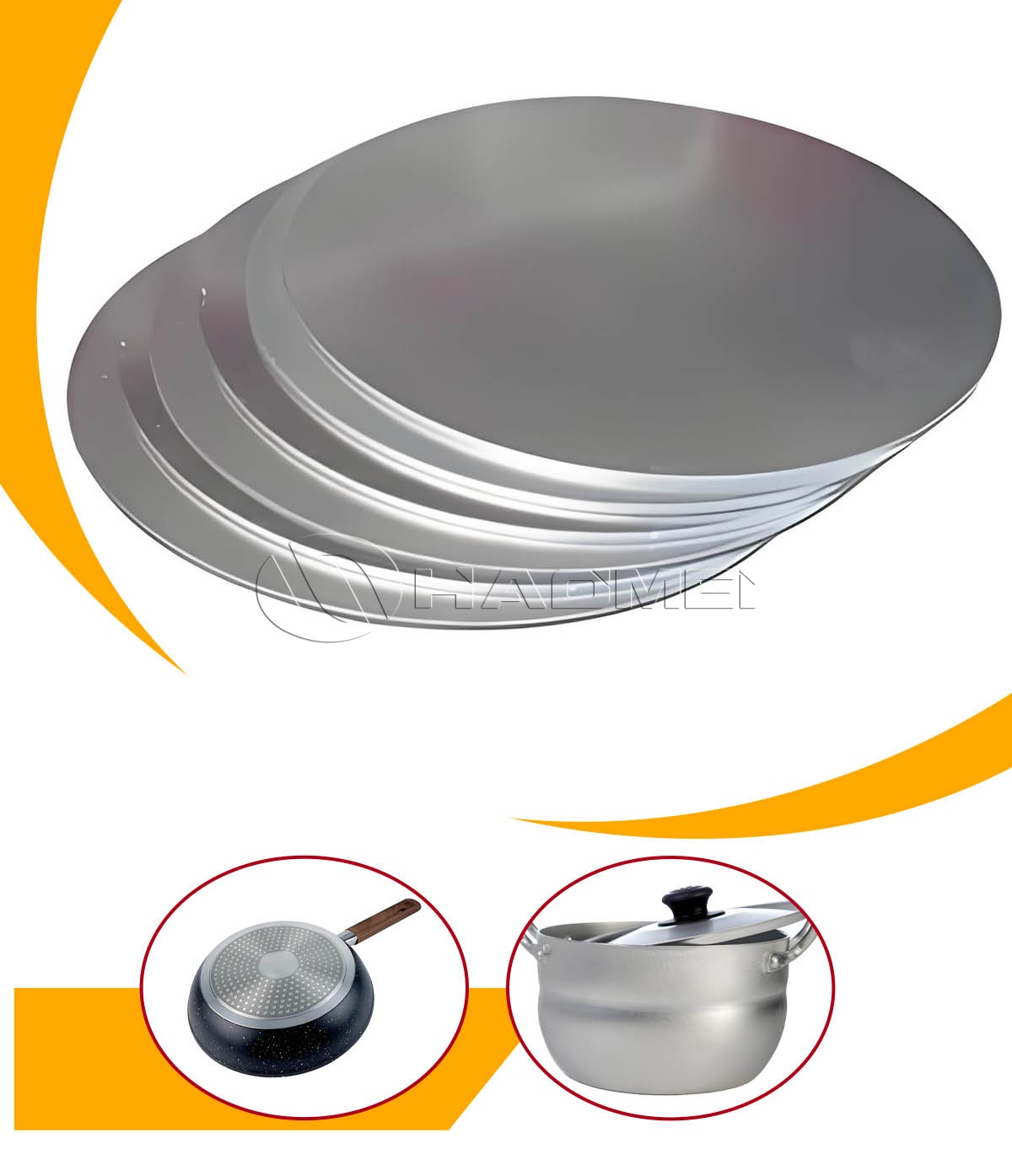
3105 aluminum circle for deep draw is widely used for:
Pots and pans
Pressure cooker components (depending on design)
Kettles and deep drawn vessels
Lids and accessory parts
The alloy supports a practical balance of formability and post-forming stiffness. For cookware, we pay close attention to surface cleanliness and consistent forming response to reduce polishing workload and appearance variation.
For certain lighting parts, circles may be drawn and then mechanically finished or coated. When reflectivity is a priority, surface control becomes critical.
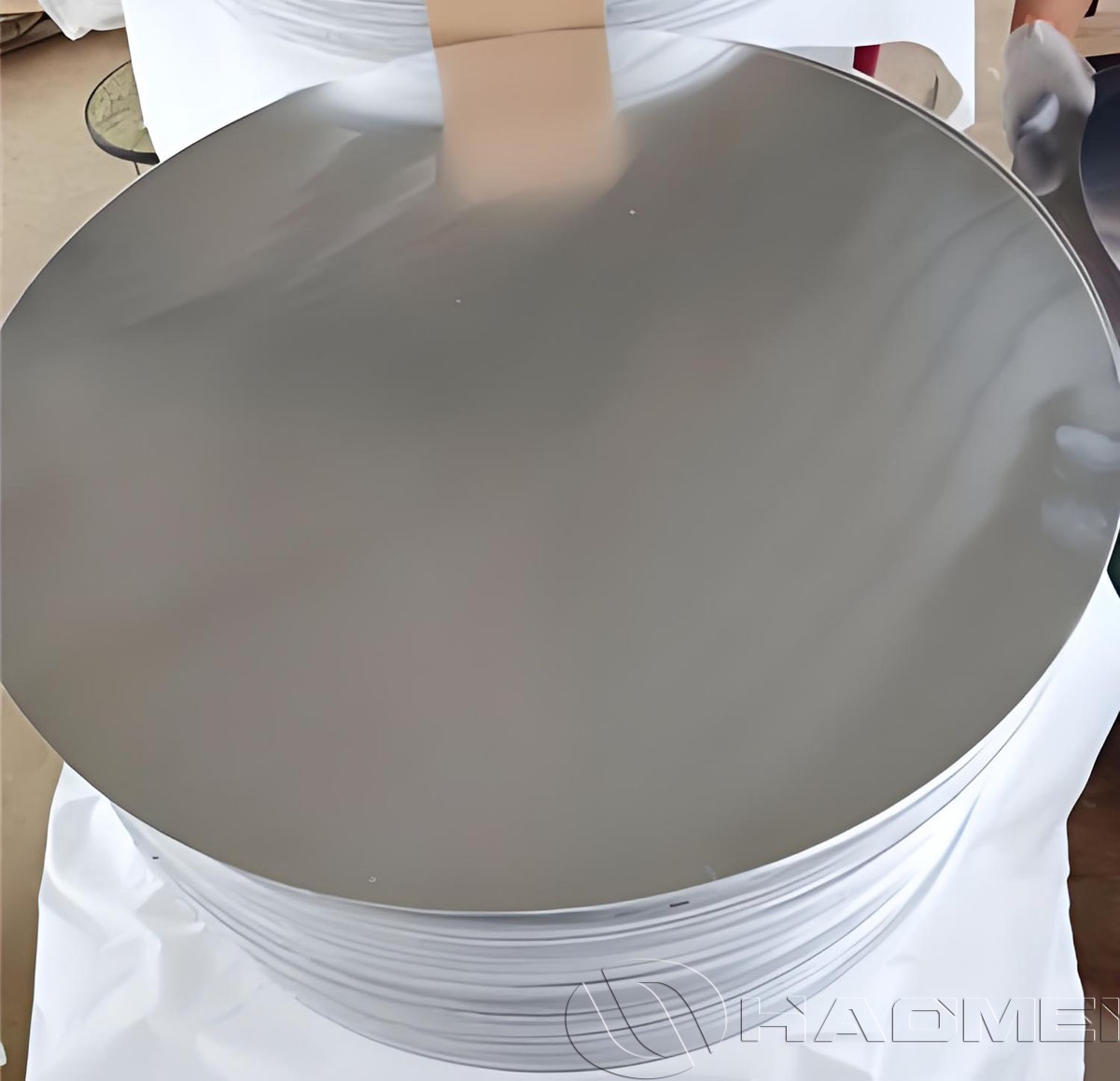
3105 aluminum discs are also used for:
Protective covers and housings
Caps, shells, and can-like parts
Formed components that require moderate strength with stable forming
Selecting the right alloy is a technical decision based on draw severity, surface expectations, and cost-performance balance.
Formability: high purity alloys generally offer excellent ductility for extreme draws.
Strength: 3105 provides higher strength, which can improve dent resistance and rigidity.
Process stability: 3105 requires tighter control of texture and temper to manage earing, but when controlled, it performs consistently in production.
Deep draw behavior: 3003 is a common benchmark for deep drawing due to its stable forming characteristics.
Strength: 3105 can offer slightly higher strength in comparable tempers.
Application choice: 3105 is often chosen where additional strength and cost balance are needed, while 3003 is selected when maximum forming robustness is the primary goal.
Strength: 3004 typically offers higher strength than 3105.
Formability: 3004 can be more demanding for deep draws depending on temper and thickness.
Typical use: 3004 is often used where higher strength is required after forming; 3105 is favored for broader drawability with practical strength.
In short, 3105 sits in a useful middle ground: stronger than high-purity grades and competitive with 3003/3004 depending on the forming window and target properties.
To match your deep drawing process, we typically request:
Finished part drawing or target draw depth and diameter
Number of draw steps and redraw plan
Preferred temper (or allow us to recommend)
Thickness, diameter, and tolerance requirements
Surface acceptance criteria (appearance side, allowable defects)
Planned finishing (coating, anodizing, polishing)
Annual volume and packaging constraints
With these inputs, we can propose a specification that reduces forming risk and supports stable mass production.
As a direct manufacturer, we supply 3105 aluminum circle for deep draw with controlled temper, grain structure, and edge quality aimed at minimizing variation in high-volume forming. Our capability covers standard cookware gauges through thicker industrial circles, with traceability and QC aligned to deep drawing failure modes.
For ongoing programs, we support long-term cooperation through stable production routing, lot-to-lot consistency, and technical coordination on temper selection, earing control, and forming feedback. If your product is transitioning from prototype tooling to mass production, we can provide pre-production sampling and specification locking to help you reach a repeatable process window.


Office Address:
No.14 Waihuan Road, CBD, Zhengzhou, China
Contact Us
HAOMEI Aluminum offer an custom aluminum circle for you!
whatsapp: +86-18703635966
Email: sales@alummc.com
Email: alummc@hotmail.com
Request Free Sample & Quotation
Copyright © 2026 By HAOMEI Aluminum CO., LTD. All Rights Reserved. Sitemap
 +86-18703635966
 sales@alummc.com
 8618703635966
