
 No.14 Waihuan Road, CBD, Zhengzhou, China
 +86-18703635966

No.14 Waihuan Road, CBD, Zhengzhou, China
+86-18703635966
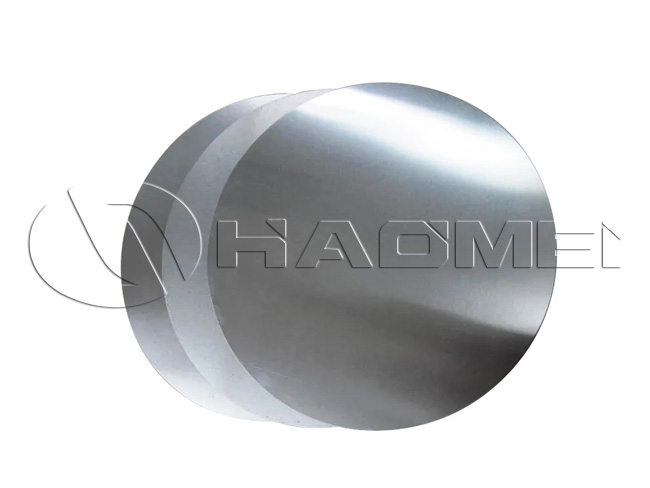
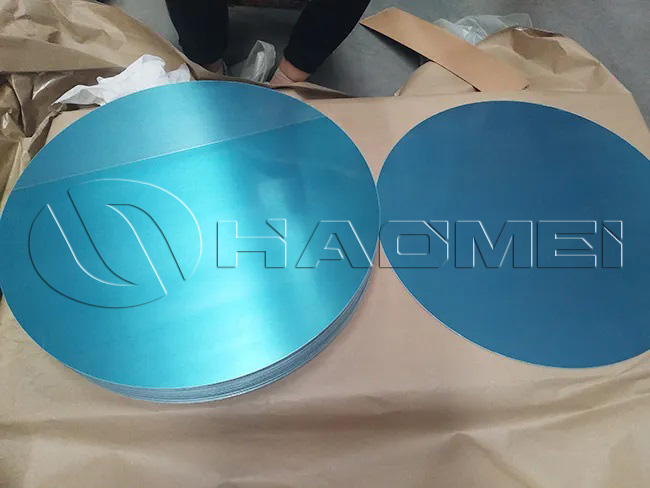
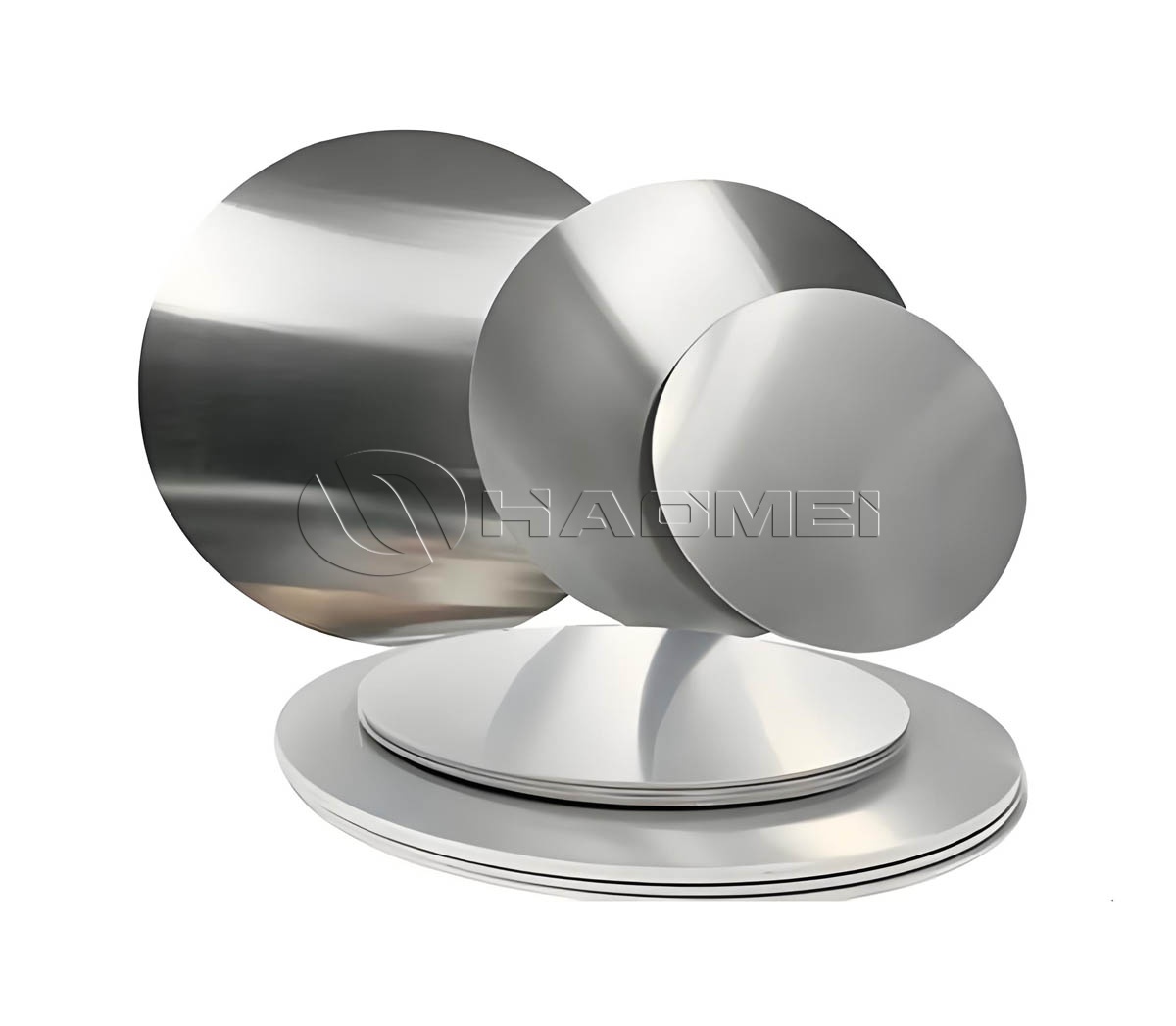
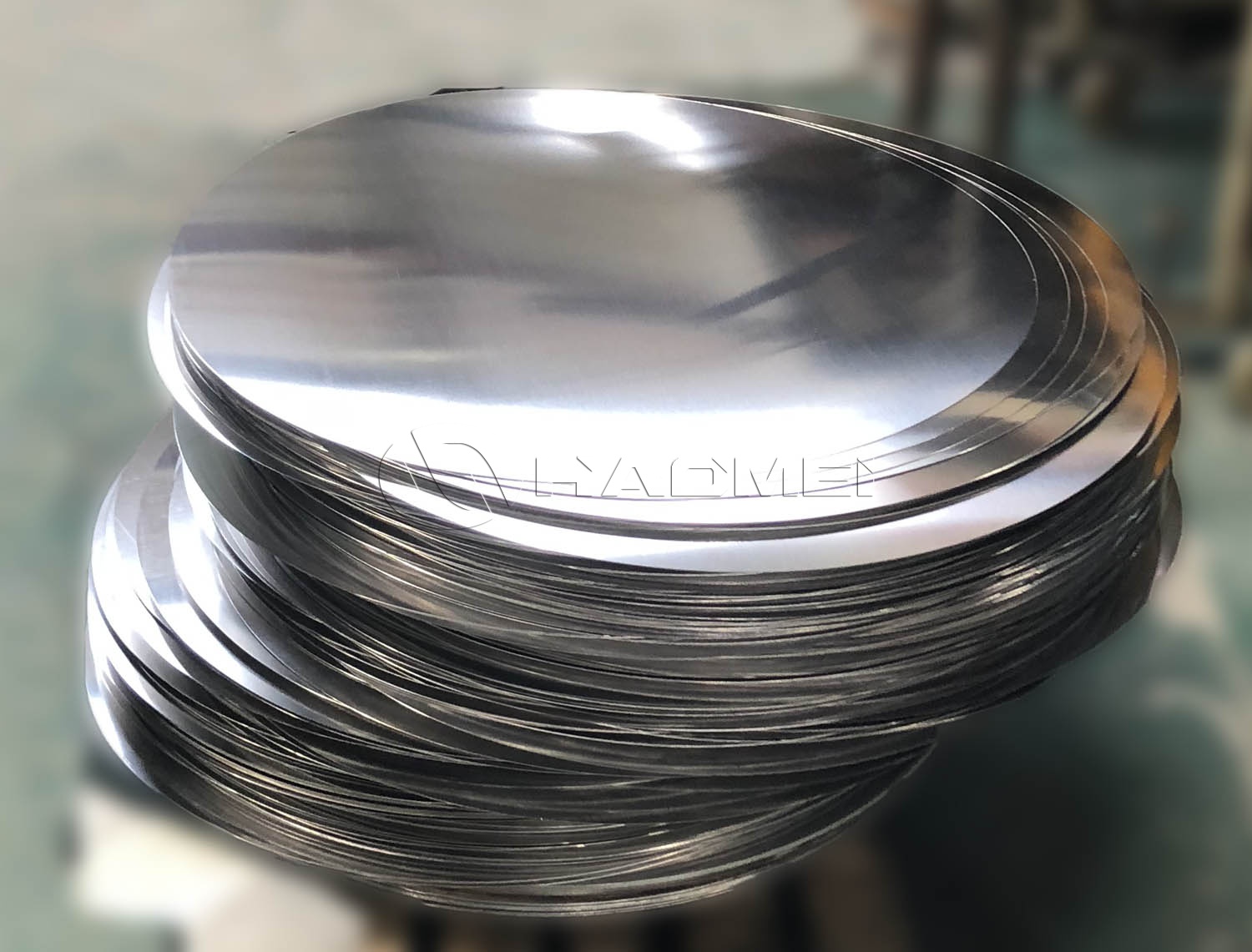
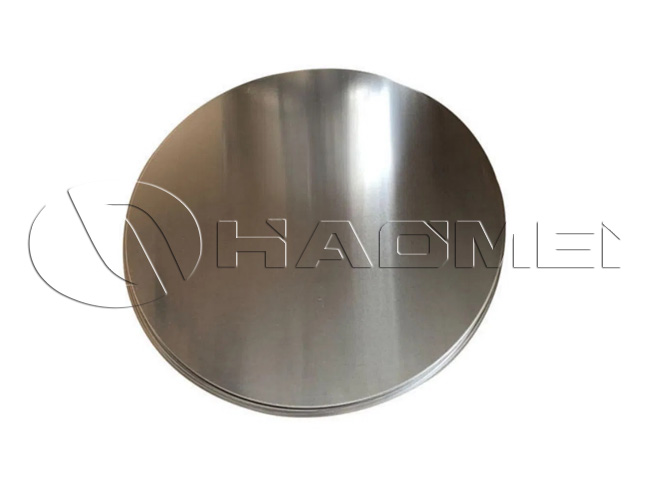
As a manufacturer of aluminum circles and stamped aluminum discs, we produce 3003 aluminum circle for road signs where stable dimensions, surface consistency, and reliable forming behavior are required. Circular aluminum blanks are widely used for regulatory signs, speed limit signs, prohibition signs, warning signs, temporary traffic signs, and other reflective road sign applications.
3003 aluminum alloy is an aluminum-manganese alloy with higher strength than 1050 and 1060 aluminum. It maintains good corrosion resistance, workable ductility, and a stable surface suitable for conversion treatment, painting, screen printing, and reflective sheeting lamination. For road sign fabricators, these characteristics help support consistent downstream processing and long service performance in outdoor environments.
Our 3003 aluminum discs are supplied from controlled aluminum coil, processed through slitting, blanking, deburring, inspection, and protective packing. We manufacture standard and custom road sign aluminum blanks according to required diameter, thickness, temper, edge condition, and surface requirements.
Road signs must remain flat, visible, and structurally stable during fabrication, installation, and field service. The selected aluminum substrate should also accommodate operations such as hole punching, edge finishing, embossing, coating, and the application of retroreflective films.
Compared with pure aluminum grades, 3003 aluminum circle provides improved mechanical strength through its manganese content. This makes it appropriate for road sign blanks that require better resistance to handling deformation while retaining practical forming properties. The alloy also offers natural corrosion resistance, which is important for signs exposed to moisture, road salt, changing temperatures, and outdoor pollutants.
We recommend 3003 alloy when the sign design requires a stronger aluminum circle than 1000 series material, while still requiring a smooth and clean surface for reflective sheeting or painted graphics. For projects requiring alternative 3000 series alloys, our 3000 Series Aluminum circle range can be evaluated based on sign size, mounting method, and required rigidity.
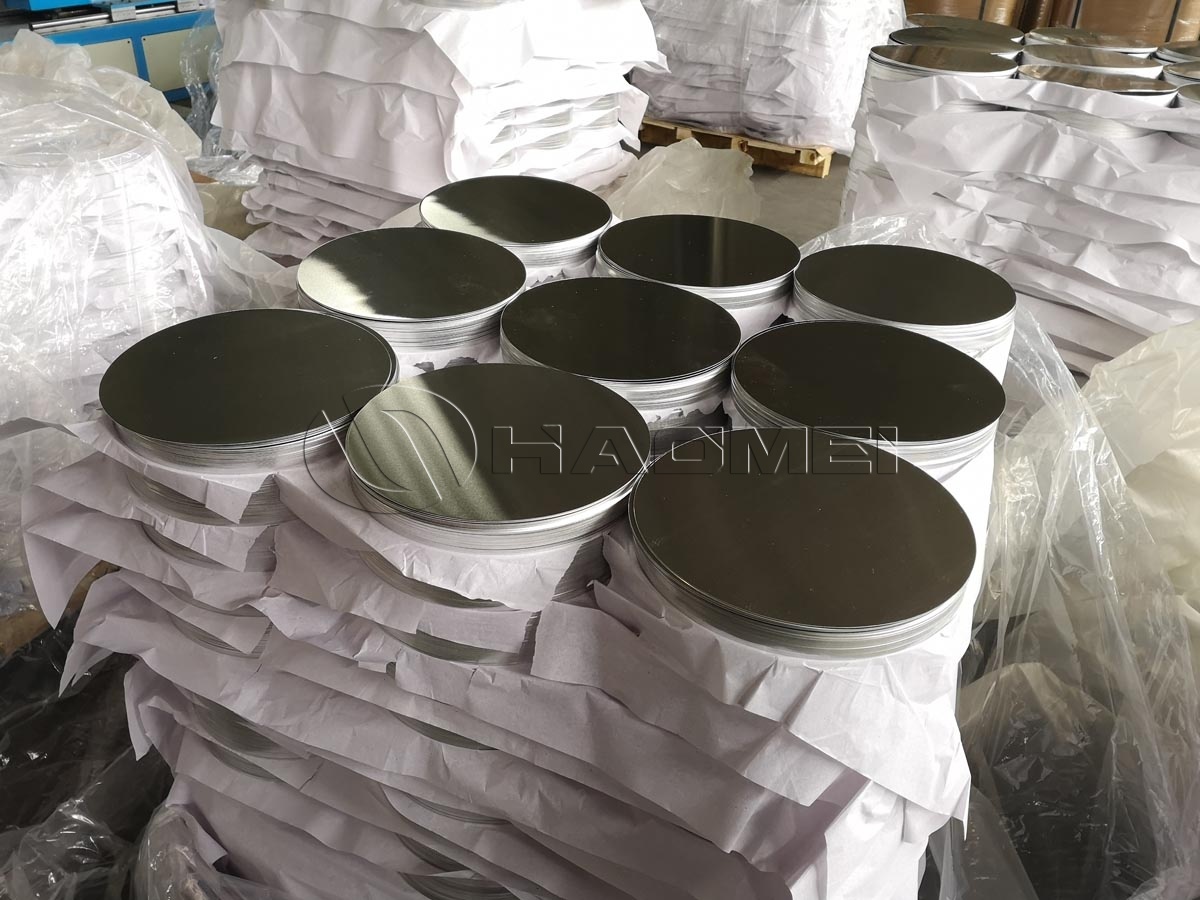
The following table presents typical manufacturing parameters for our 3003 aluminum circle and aluminum disc products. Final values, tolerances, and inspection requirements are confirmed against the purchase order and applicable project specification.
| Parameter | Typical Specification | Notes |
|---|---|---|
| Alloy | 3003 | Aluminum-manganese alloy |
| Temper | O, H12, H14, H16, H18 | H14 and H16 are commonly selected for road sign blanks |
| Thickness | 0.50 mm to 3.00 mm | Custom thickness available upon review |
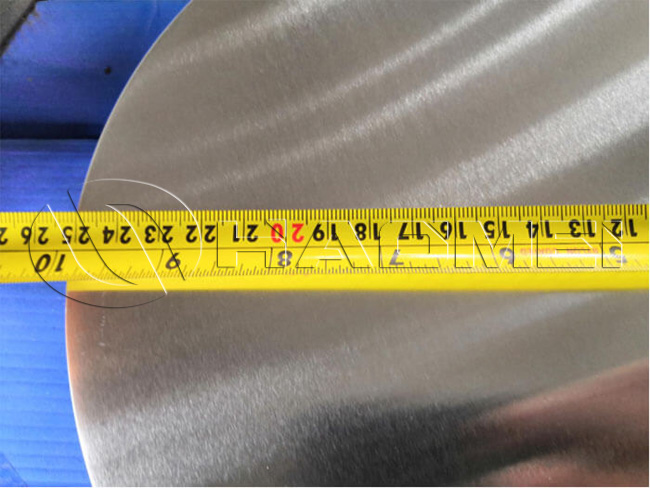
| Diameter | 100 mm to 1,200 mm | Custom diameters and blank shapes available |
| Surface | Mill finish, cleaned surface, brushed surface on request | Suitable for further coating or reflective film application |
| Edge condition | Deburred, smooth edge | Designed to reduce handling and processing issues |
| Flatness | Controlled according to diameter and thickness | Important for sign printing and film lamination |
| Diameter tolerance | According to agreed specification | Controlled through blanking tooling and inspection |
| Tensile strength | Typically 110 to 160 MPa | Depends on temper and supplied condition |
| Elongation | Typically 3% to 15% | Depends on thickness and temper |
| Main alloying element | Manganese, 1.0% to 1.5% | Supports improved strength over pure aluminum |
| Corrosion resistance | Good | Suitable for outdoor sign substrate use with proper finishing |
Typical chemical composition limits for 3003 alloy include manganese at 1.0% to 1.5%, copper at 0.05% to 0.20%, iron maximum 0.70%, silicon maximum 0.60%, and aluminum as the balance. Material chemistry can be verified through mill test documentation when required by the customer.
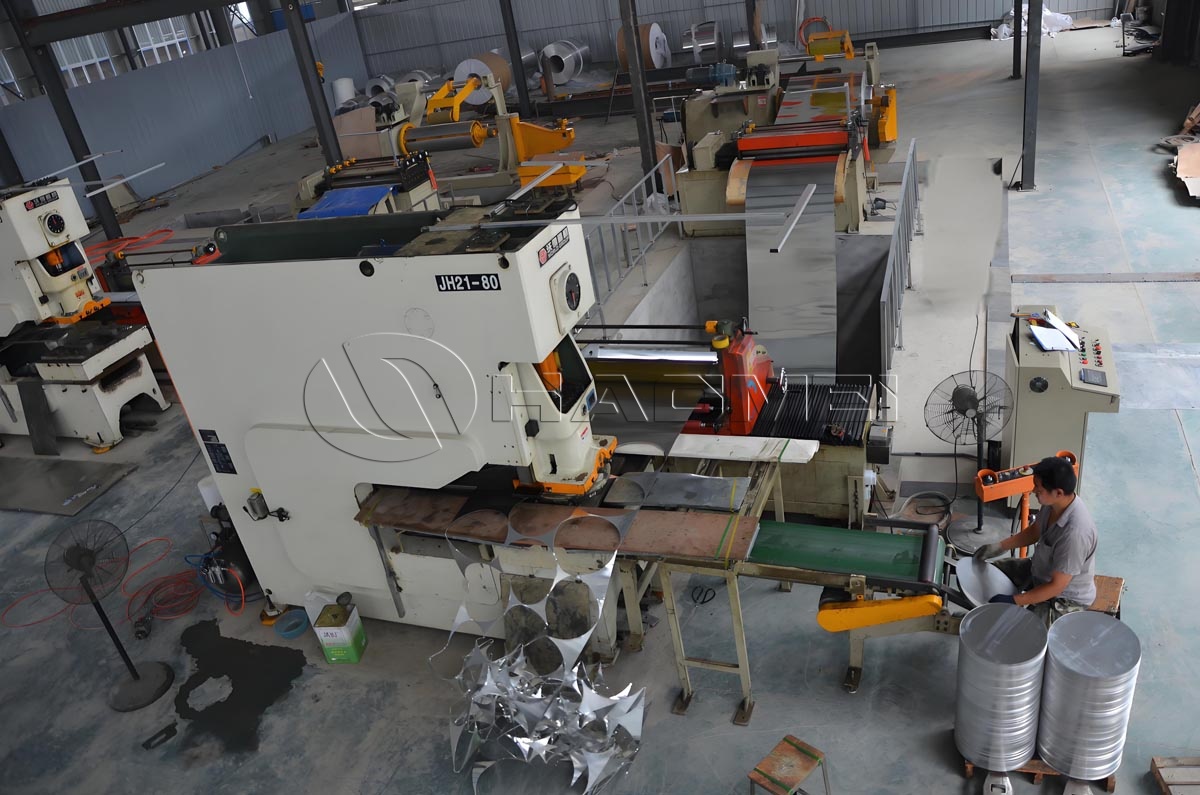
Our production process begins with qualified 3003 aluminum coil. We review the coil surface, thickness consistency, alloy designation, and temper before releasing material for circle blank production. Coil preparation is important because variations in incoming material can affect the flatness and edge quality of finished road sign aluminum discs.
The coil is slit to the required width and fed into precision stamping equipment. Circular blanks are punched using maintained tooling selected for the specified diameter and thickness. Tool clearance is controlled to produce a clean edge with limited burr formation. For road signs, edge quality is especially important because the blank may be handled manually, processed through automated lines, or fitted with mounting hardware.
After stamping, we inspect the aluminum circles for diameter, thickness, surface marks, edge condition, and flatness. Depending on the order requirement, blanks can also be supplied with mounting holes, center holes, or other punched features. Custom shapes, including octagonal and special traffic sign blanks, may be considered based on drawings and tooling requirements.
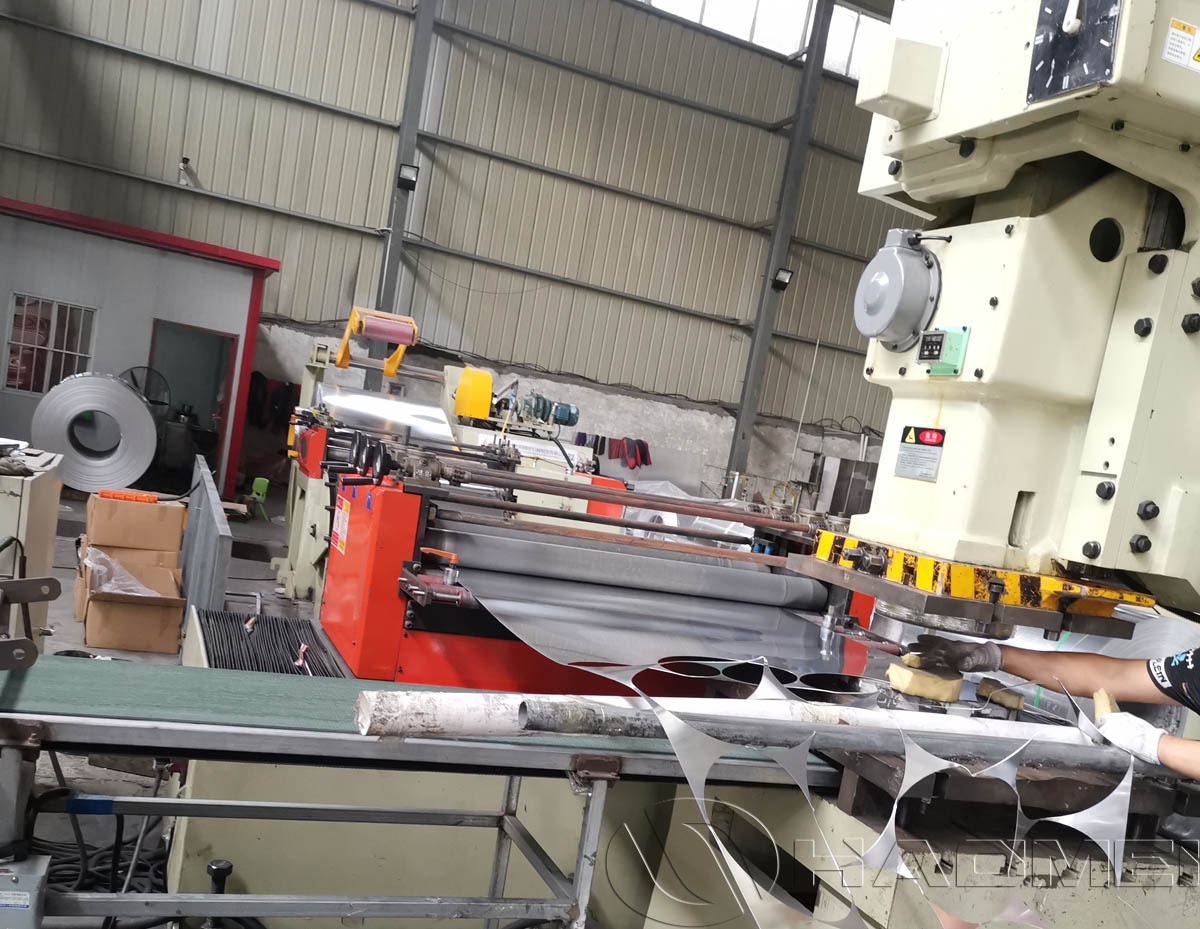
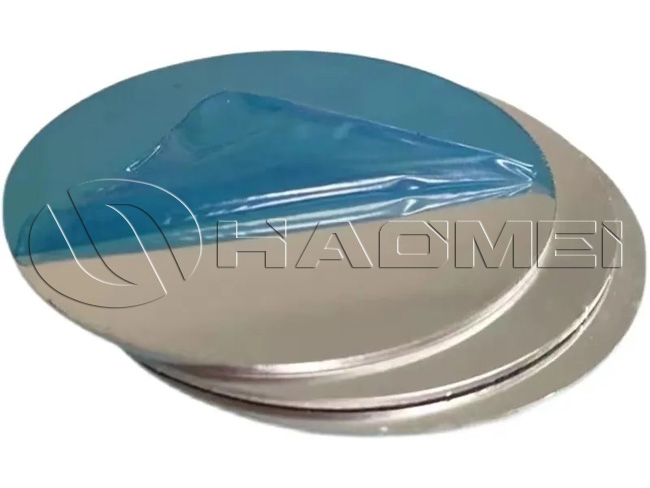
The surface of a 3003 aluminum disc directly affects subsequent sign-making operations. A clean, uniform substrate helps support consistent adhesion of coatings, inks, protective films, and retroreflective sheeting. We control rolling marks, oil residue, scratches, dents, and stamping-related damage during production and packing.
For reflective road sign production, the aluminum circle is normally subject to further processing by the sign fabricator. This may include cleaning, chemical pretreatment, conversion coating, powder coating, liquid coating, or direct application of reflective sheeting. The exact pretreatment system should be selected by the customer according to the reflective film supplier's requirements and the expected service environment.
Mill finish 3003 aluminum circle is commonly supplied where the customer has an established coating or lamination line. For applications requiring a more specific appearance or surface profile, we can discuss brushed, coated, or specially cleaned material. Surface acceptance standards should be defined before production, particularly where high-grade reflective films or printed graphics are used.
Road sign manufacturers require blanks that fit their production equipment and provide consistent finished sign geometry. A variation in disc diameter, thickness, or flatness can affect printing registration, reflective sheet positioning, mounting hole alignment, and stacking efficiency.
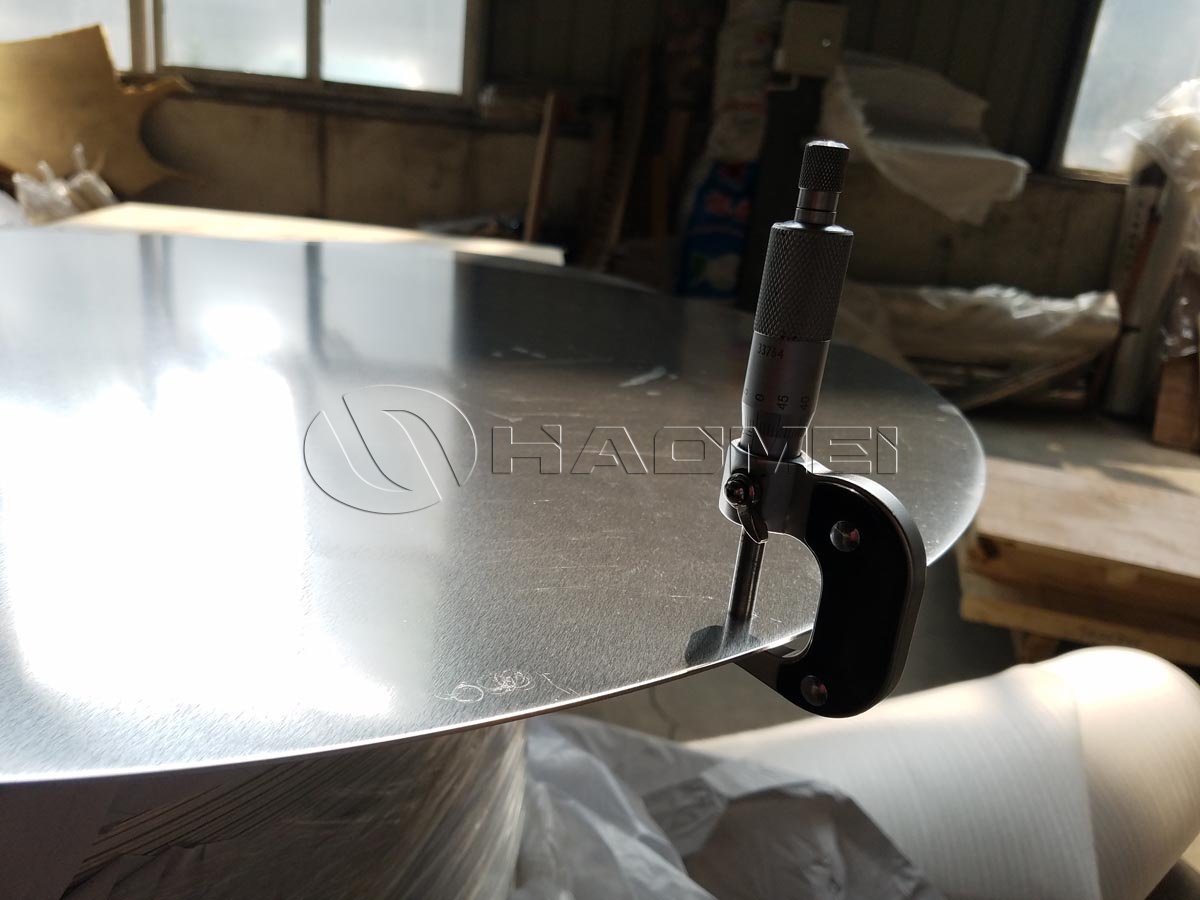
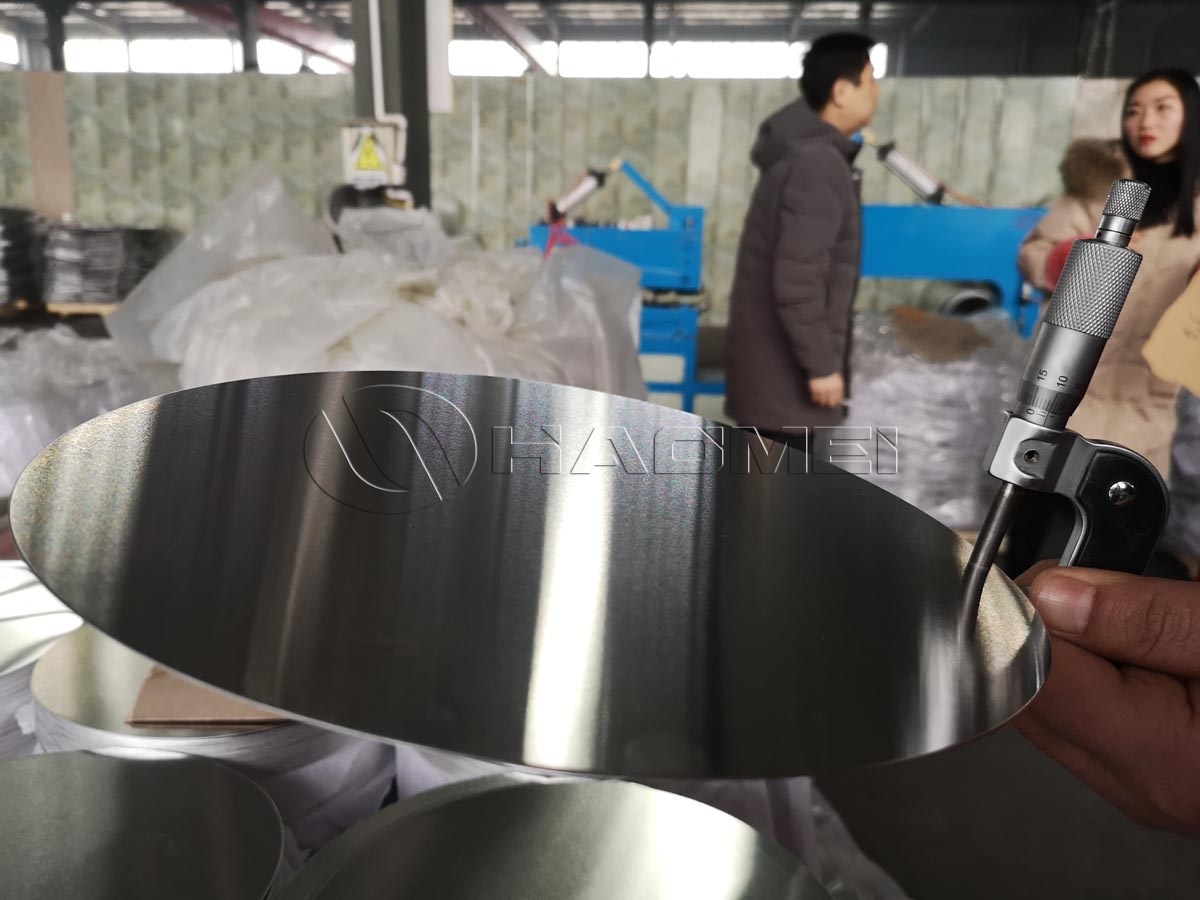
Our quality control procedures include incoming coil checks, in-process sampling, and final inspection. Diameter is measured using calibrated gauges, thickness is checked with micrometers, and surface condition is visually inspected under controlled conditions. We also review edge smoothness and blank flatness according to the agreed product requirement.
For larger diameter road sign aluminum circles, flatness becomes increasingly important. We select appropriate coil condition, stamping parameters, and packaging methods to minimize deformation during manufacture and transport. When a customer requires a defined tolerance for flatness, diameter, or thickness, we confirm the capability before mass production.
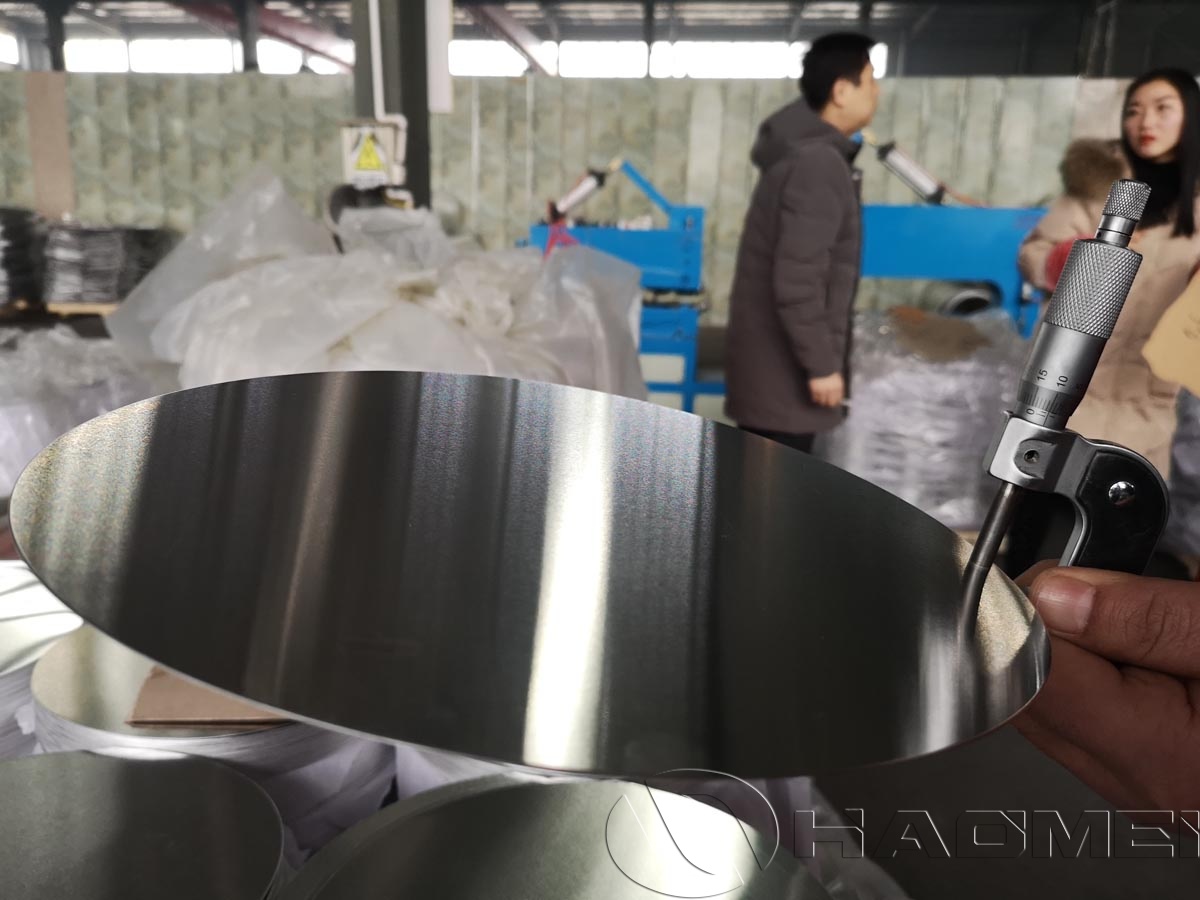
The appropriate thickness and temper depend on the sign diameter, wind load design, mounting arrangement, reinforcement method, local road authority requirements, and downstream fabrication process. There is no single thickness suitable for every traffic sign project.
Smaller circular signs may use thinner aluminum blanks when supported by suitable mounting hardware. Larger signs or signs installed in high-wind locations may require a thicker substrate, stiffening ribs, backing frames, or reinforced mounting systems. The sign fabricator or project engineer should determine the final structural design based on the complete installed sign assembly.
H14 temper is commonly selected because it provides a practical balance of strength and workability. H16 or H18 tempers may be considered where additional rigidity is required, provided that downstream operations do not require extensive forming. O temper offers greater formability but lower strength and is generally selected only when a specific fabrication process requires it.
For customers sourcing regular road sign blanks, our 3003 Aluminum Circle product program can be supplied in recurring dimensions with controlled specifications. For custom projects, we can manufacture according to technical drawings, approved samples, or documented dimensional requirements.
Aluminum circles for road signs should arrive clean, dry, and protected from impact damage. We use interleaving material where required to reduce surface abrasion between blanks. Products are packed in stable stacks, wrapped with protective materials, secured on pallets, and prepared for export handling.
Packaging specifications can be adjusted for container shipment, pallet size limitations, warehouse handling methods, and customer processing needs. For reflective road sign substrates, protection against moisture, dust, and surface scratching is particularly important because these issues can affect later coating and film application.
As a 3003 aluminum circle manufacturer, we support road sign producers with material selection, sample evaluation, dimensional confirmation, and repeat-order production. Our objective is to supply aluminum road sign blanks with consistent alloy chemistry, mechanical condition, surface quality, and packaging protection.
When requesting a quotation, please specify the required diameter, thickness, temper, surface condition, edge requirement, hole pattern if applicable, order quantity, and destination port. This information allows us to recommend a suitable 3003 aluminum disc specification for your road sign manufacturing process.
3003 aluminum circle for road signs is a practical substrate choice where corrosion resistance, moderate strength, clean surface quality, and dependable processability are required. With controlled production and application-specific specifications, it can support efficient fabrication of durable circular traffic signs.

Office Address:
No.14 Waihuan Road, CBD, Zhengzhou, China
Contact Us
HAOMEI Aluminum offer an custom aluminum circle for you!
whatsapp: +86-18703635966
Email: sales@alummc.com
Email: alummc@hotmail.com
Request Free Sample & Quotation
Copyright © 2026 By HAOMEI Aluminum CO., LTD. All Rights Reserved. Sitemap
 +86-18703635966
 sales@alummc.com
 8618703635966
