
 No.14 Waihuan Road, CBD, Zhengzhou, China
 +86-18703635966

No.14 Waihuan Road, CBD, Zhengzhou, China
+86-18703635966
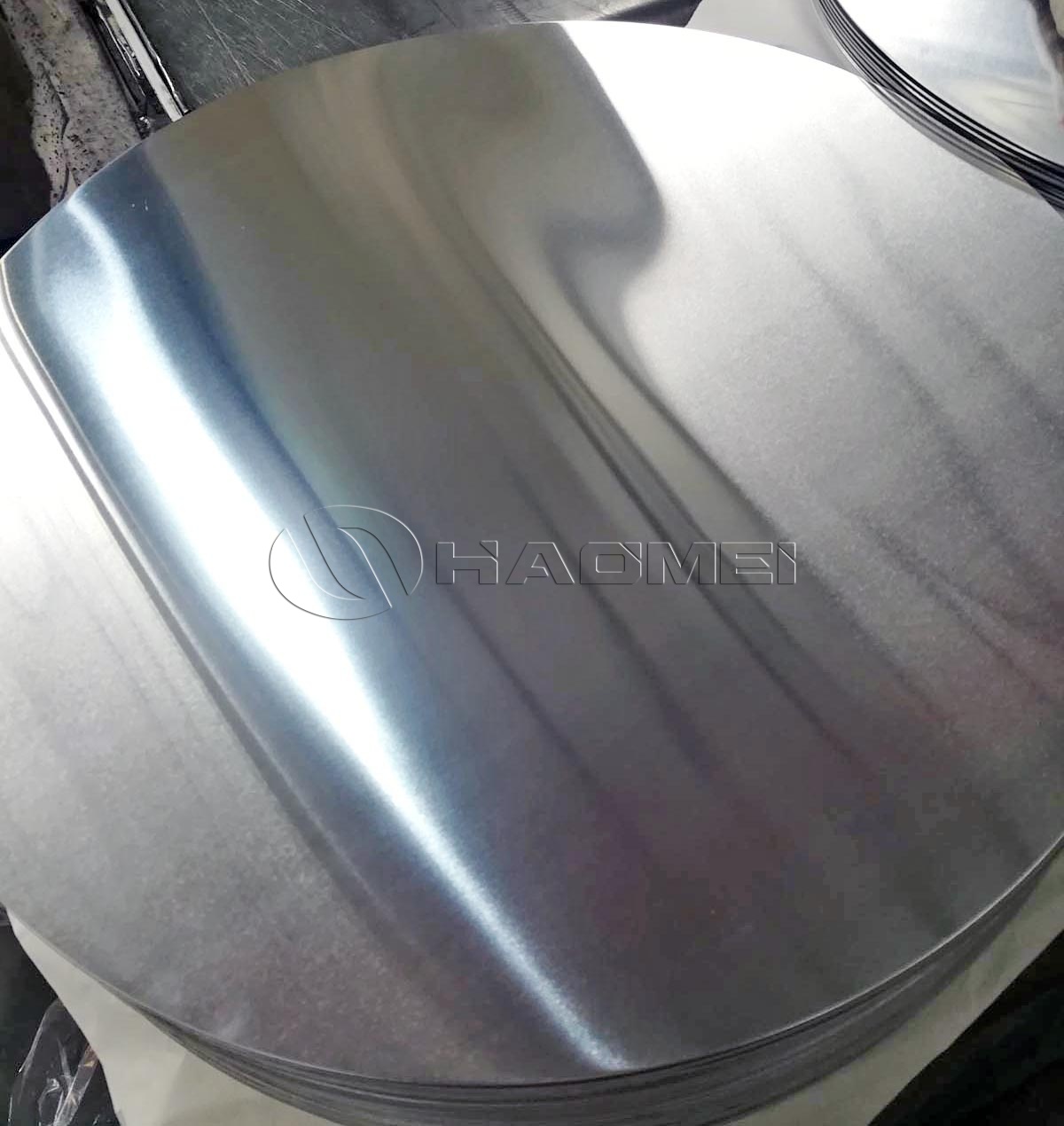
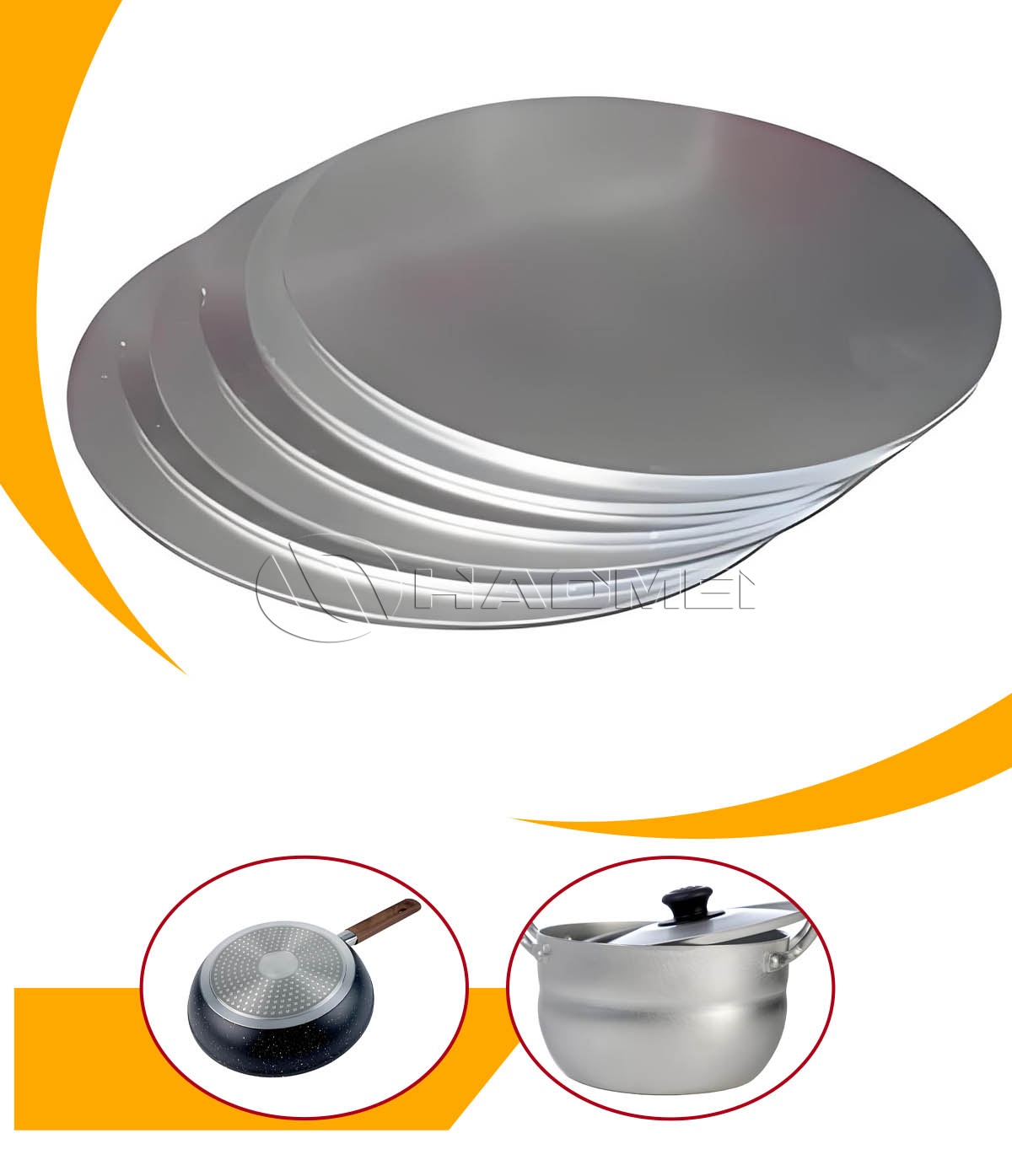
As an aluminum disc manufacturer, we produce polished 5052 aluminum discs and 5083 aluminum circle discs for architectural components that require reliable formability, corrosion resistance, surface consistency, and dimensional control. These products are used as semi-finished blanks for decorative metal parts, lighting reflectors, ventilation covers, facade accessories, ceiling elements, signage components, and specialized architectural hardware.
Architectural projects often combine visual requirements with long service life in indoor, outdoor, coastal, or high-humidity environments. For this reason, alloy selection and surface preparation must be matched to the final fabrication process. Our factory supplies 5052 and 5083 aluminum discs in controlled tempers, sizes, and polished surface conditions according to customer drawings and application requirements.
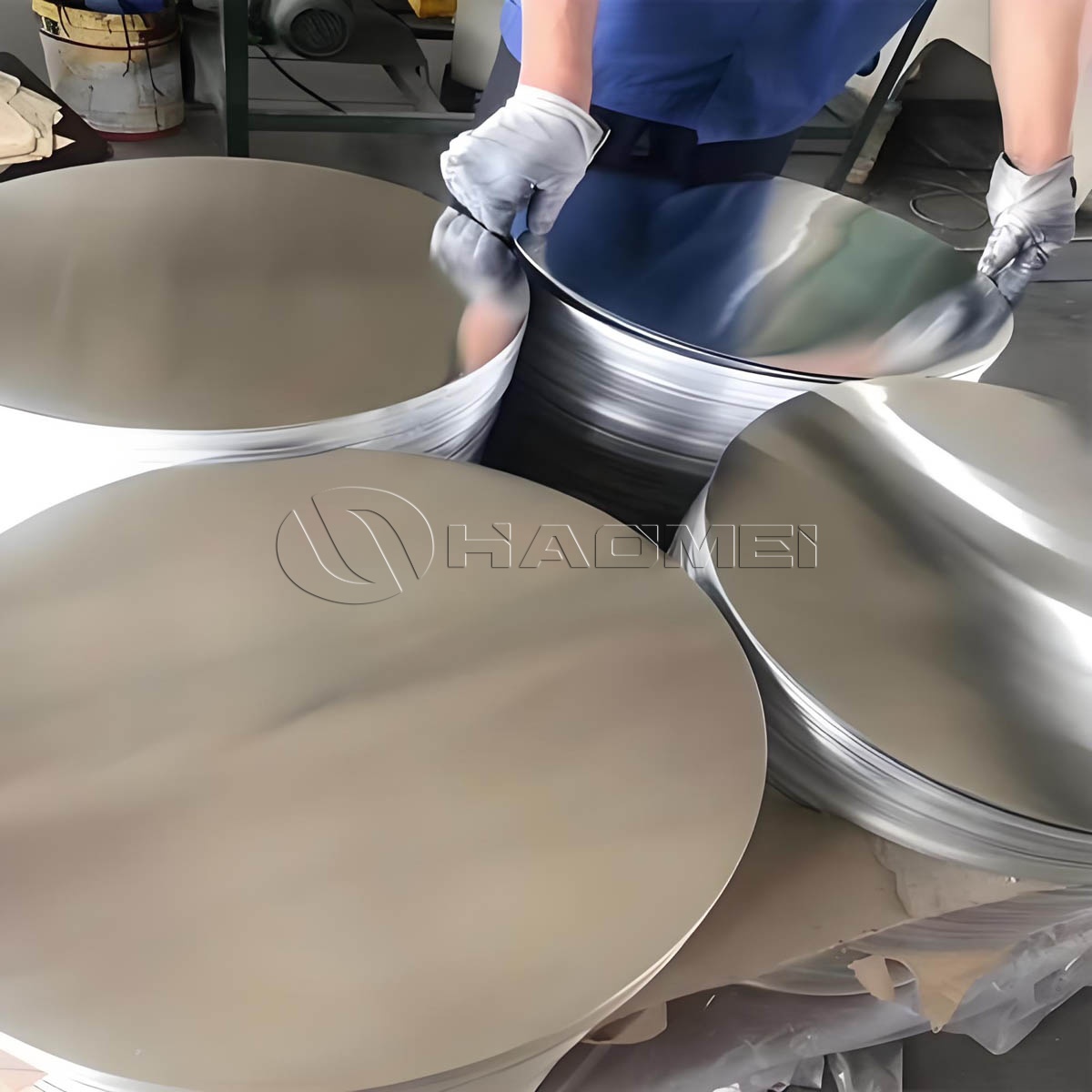
The 5000 series aluminum alloys are aluminum-magnesium alloys valued for their corrosion resistance and practical fabrication performance. Compared with pure aluminum circles, 5052 and 5083 offer higher strength and better suitability for architectural parts exposed to weather, humidity, cleaning agents, or marine-influenced atmospheres.
5052 is widely selected when a balance of forming performance, surface quality, and moderate strength is required. It is suitable for spun, stamped, deep-drawn, or fabricated architectural components. Typical applications include decorative covers, lamp housings, circular trim pieces, equipment enclosures, and interior ceiling accessories.
5083 provides higher mechanical strength and very strong corrosion resistance, especially in demanding outdoor and coastal conditions. While its forming behavior must be evaluated according to thickness and temper, it is an effective material for heavy-duty circular blanks, structural decorative assemblies, marine-adjacent building components, and architectural equipment parts.
Our 5052 Aluminum Circle products are manufactured for stable downstream forming performance. For projects requiring increased strength and corrosion resistance, we also supply 5083 Aluminum Circle Discs in custom specifications.
The following table presents typical production ranges for our polished aluminum discs. Final specifications are confirmed against the purchase order, drawings, applicable standards, and fabrication process.
| Parameter | Polished 5052 Aluminum Discs | Polished 5083 Aluminum Discs |
|---|---|---|
| Alloy designation | 5052 | 5083 |
| Alloy family | Al-Mg | Al-Mg-Mn |
| Common tempers | O, H12, H14, H16, H22, H24, H32 | O, H111, H112, H116, H321 |
| Diameter range | 100 mm to 1500 mm | 100 mm to 1500 mm |
| Thickness range | 0.50 mm to 8.00 mm | 0.80 mm to 12.00 mm |
| Surface options | Mill finish, brushed, polished, protective film | Mill finish, brushed, polished, protective film |
| Edge condition | Smooth trimmed edge, deburred edge | Smooth trimmed edge, deburred edge |
| Diameter tolerance | Available according to order specification | Available according to order specification |
| Flatness control | Evaluated by diameter, thickness, and temper | Evaluated by diameter, thickness, and temper |
| Main forming methods | Stamping, spinning, drawing, bending | Stamping, machining, forming, welding preparation |
| Typical applications | Lighting, decoration, covers, trim, signage | Exterior fixtures, coastal architecture, durable assemblies |
Chemical composition and mechanical property requirements can be supplied in accordance with relevant customer specifications, including EN, ASTM, or other agreed material standards. For polished architectural aluminum discs, we recommend confirming the required temper before production, as temper directly affects hardness, elongation, springback, and surface response during forming.
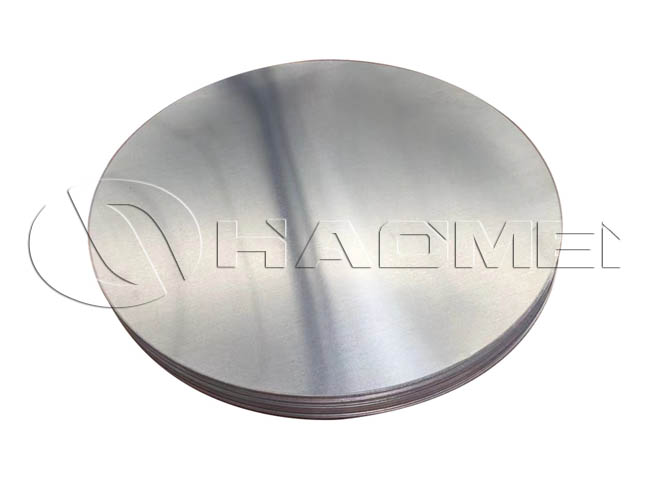
A polished aluminum surface is not defined only by brightness. For architectural materials, it also involves uniform appearance, controlled rolling texture, cleanliness, and consistent performance during secondary processing. Our polishing process is selected according to whether the final disc will be used directly as a visible part or further fabricated, anodized, coated, laminated, or mechanically assembled.
For visible architectural applications, our quality team checks the surface for issues that may affect appearance, including scratches, handling marks, oil residue, roller impressions, edge damage, and uneven gloss. Protective film can be applied when polished aluminum blanks will undergo transportation, storage, laser marking, punching, or assembly operations.
The required surface grade should be specified early in the inquiry stage. For example, a disc intended for deep drawing may need a different surface condition than a decorative blank used for direct installation. We work with customers to define acceptable surface characteristics based on viewing distance, installation location, coating requirements, and forming method.
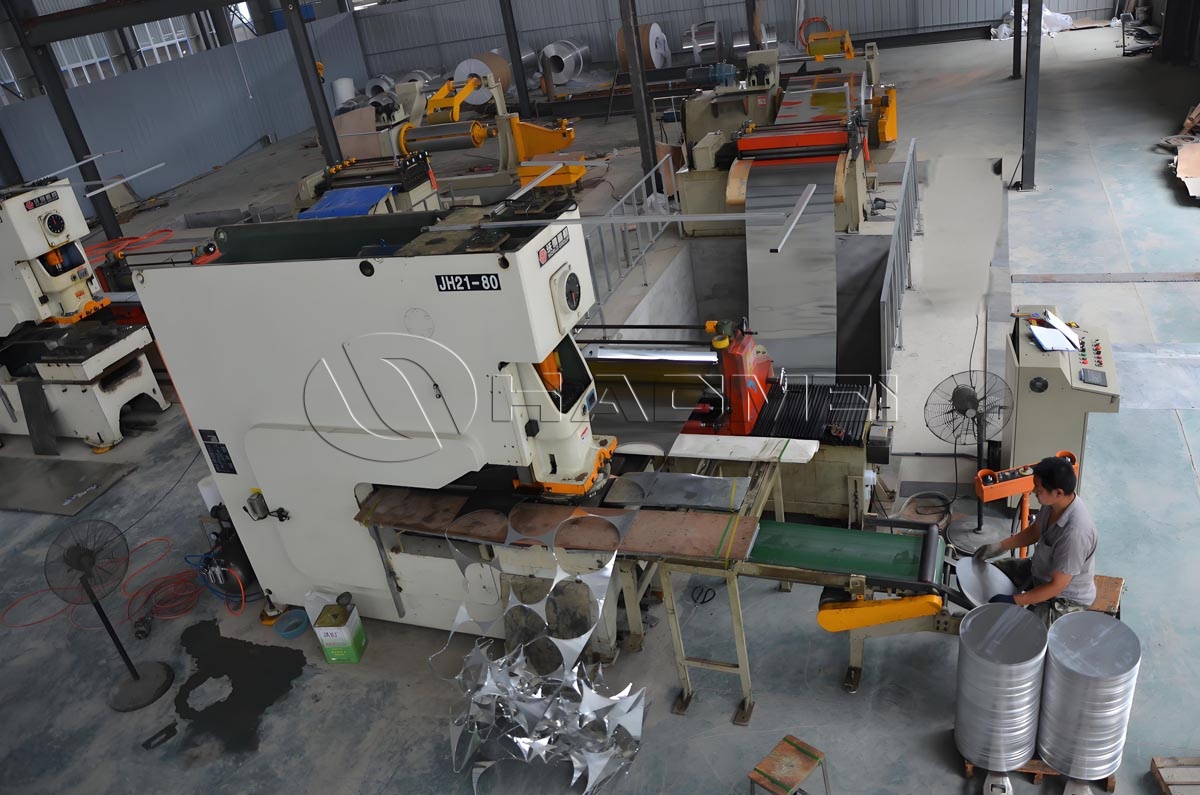
Our production process begins with qualified aluminum coil or sheet selected for the requested alloy, temper, thickness, and surface condition. We control each stage to support repeatable quality for architectural aluminum disc orders.
The incoming aluminum material is verified against the production order. Coil width is selected to improve blanking efficiency and reduce unnecessary material loss. For repeat orders, we maintain process records to help ensure consistency between batches.
We use appropriate blanking methods based on diameter, thickness, order quantity, and edge requirements. Proper die condition and blanking clearance are important for reducing burr formation and maintaining roundness. For larger or thicker 5083 aluminum discs, blanking parameters are adjusted to support stable edge quality.
Architectural components may be exposed to handling during installation and maintenance. Therefore, disc edges must be smooth and safe for subsequent operations. We provide deburring or refined edge treatment when specified, particularly for visible covers, trim parts, and fabricated assemblies.
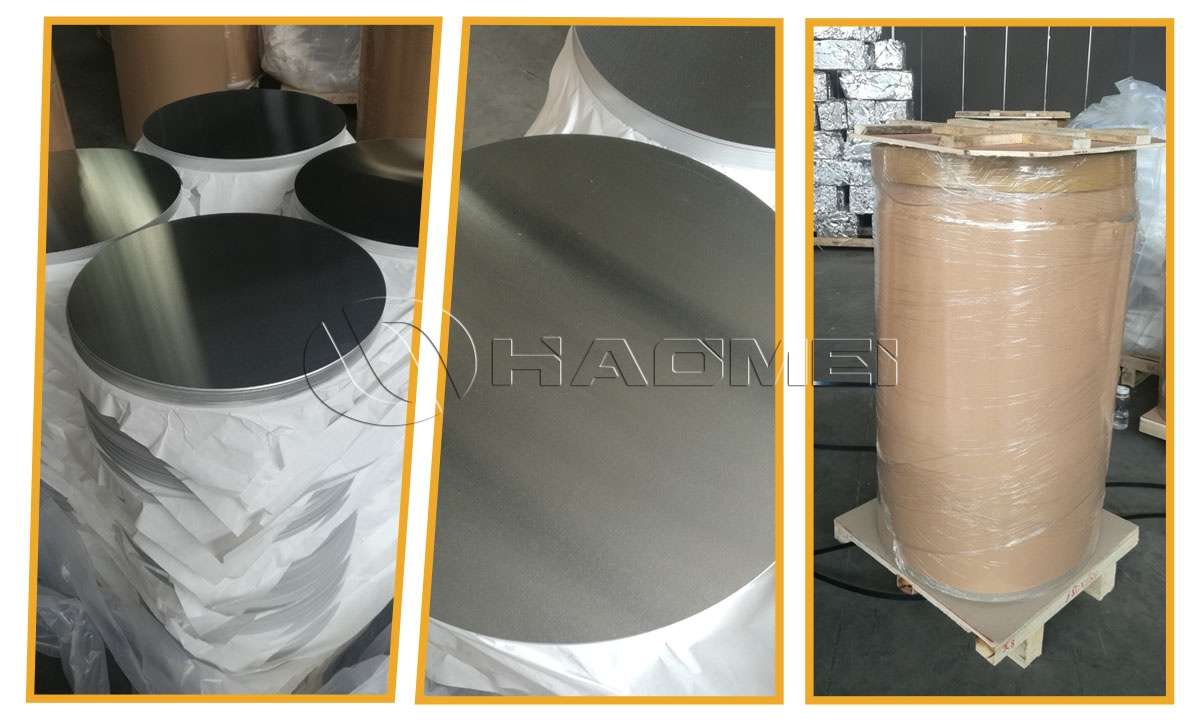
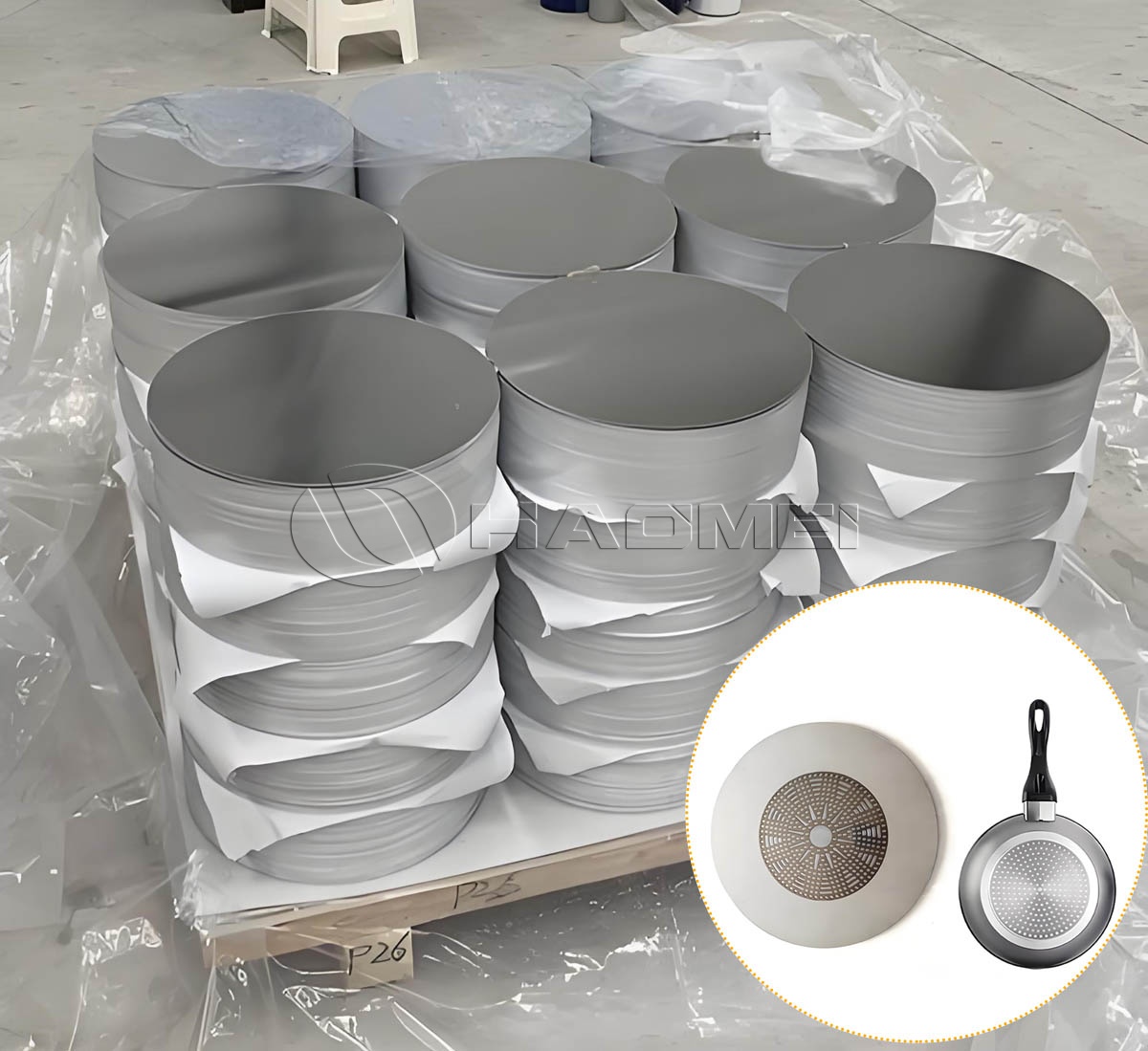
Polishing is performed to achieve the agreed surface appearance. After finishing, discs are handled with controlled procedures to minimize contact marks. Depending on customer requirements, protective interleaving paper, film lamination, or customized packing can be used to protect polished surfaces during export transport.
Before shipment, we inspect dimensions, surface condition, edges, packaging, and labeling according to the approved order requirements. Our export packing is designed to reduce movement, moisture exposure, and surface abrasion during container loading and sea transportation.
The choice between 5052 and 5083 should be based on actual service conditions and downstream processing rather than strength alone.
Choose polished 5052 aluminum discs when the application requires good general corrosion resistance, dependable forming behavior, moderate strength, and a clean decorative surface. It is commonly preferred for architectural lighting, interior design details, decorative circular panels, appliance-related building components, and formed covers.
Choose 5083 aluminum circle discs when the part must withstand higher loads, more aggressive outdoor conditions, or exposure to salt-laden air. It is especially relevant for architectural installations near ports, coastal buildings, transportation facilities, and exterior equipment systems. Customers should consider the final forming method carefully, since 5083 is generally selected for durability and strength rather than maximum deep-drawing performance.
For both alloys, our technical team can review the diameter-to-thickness ratio, temper, forming depth, surface requirement, and final finishing process before production. This review helps reduce the risk of cracking, wrinkling, excess springback, or unacceptable cosmetic variation in finished parts.
Quality control is integrated throughout our manufacturing process. We verify raw material identification, thickness, diameter, roundness, edge condition, and surface appearance. When required, we can also provide material certificates, inspection records, packing photos, and sample confirmation before mass production.
For architectural aluminum discs, the most important quality factors commonly include the following:
Stable alloy and temper for repeatable fabrication.
Uniform thickness for consistent forming and assembly.
Controlled disc diameter and roundness.
Smooth edges with low burr levels.
Clean polished surfaces suitable for visible applications.
Protective packaging appropriate for export handling.
Batch traceability from raw material through shipment.
We recommend that buyers provide drawings, surface samples, acceptable tolerance ranges, and intended fabrication details during the quotation stage. Clear technical communication allows our factory to select the suitable production route and inspection criteria.
Our architectural aluminum discs are processed by customers into a wide range of finished products. Common applications include circular facade accessories, decorative ceiling elements, lighting reflectors, lamp covers, ventilation grilles, wall-mounted equipment covers, signage blanks, door and window hardware components, circular cladding details, and corrosion-resistant exterior assemblies.
Polished 5052 aluminum discs are particularly suitable where visual quality and practical formability are equally important. Polished 5083 discs are typically selected for projects where durability in severe environments is a primary consideration. Both materials can be supplied for subsequent anodizing, powder coating, brushing, machining, drilling, punching, or welding preparation, subject to application-specific process evaluation.
As a manufacturer of aluminum circles and discs, we support custom orders based on diameter, thickness, alloy, temper, surface finish, edge condition, film protection, and packaging requirements. We can arrange sample production for new architectural programs before full-scale manufacturing.
For export customers, we prepare packing suitable for long-distance transport and container shipment. Each order can be marked with alloy, size, temper, batch information, and customer-required identification. Our objective is to provide polished 5052 aluminum discs and 5083 aluminum circle discs that arrive in usable condition and perform consistently in architectural fabrication.
For a quotation, provide the alloy, temper, diameter, thickness, surface requirement, final application, estimated quantity, and destination port. Our factory will evaluate the production feasibility and propose an appropriate specification for your architectural material project.

Office Address:
No.14 Waihuan Road, CBD, Zhengzhou, China
Contact Us
HAOMEI Aluminum offer an custom aluminum circle for you!
whatsapp: +86-18703635966
Email: sales@alummc.com
Email: alummc@hotmail.com
Request Free Sample & Quotation
Copyright © 2026 By HAOMEI Aluminum CO., LTD. All Rights Reserved. Sitemap
 +86-18703635966
 sales@alummc.com
 8618703635966
