
 No.14 Waihuan Road, CBD, Zhengzhou, China
 +86-18703635966

No.14 Waihuan Road, CBD, Zhengzhou, China
+86-18703635966
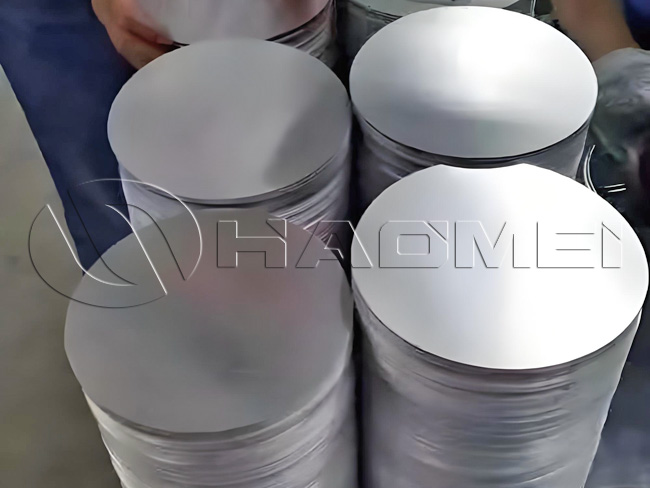
In the manufacturing of cookware, lighting reflectors, sealing caps, pressure vessels, and mechanical components, material selection for aluminum discs is crucial. 3003 and 5052 are the two most widely used aluminum alloys in today's market, each offering distinct advantages.
This article provides a comprehensive aluminum disc comparison to help you choose the best material for your application.
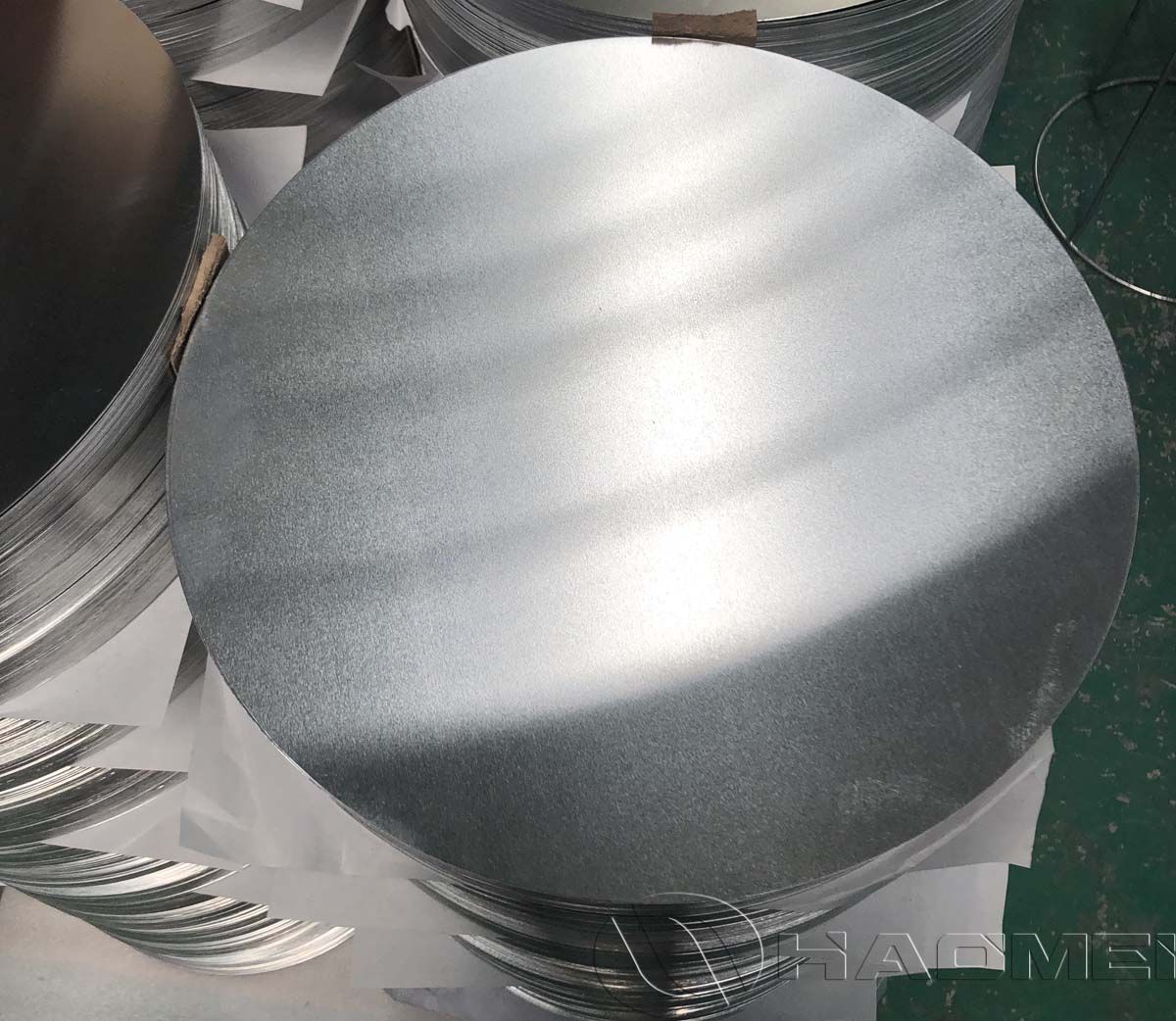
3003 aluminum discs belong to the Al-Mn (aluminum–manganese) alloy family. It is the most widely used anti-rust aluminum alloy on the market. With the addition of manganese (about 1.0-1.5%), its strength is around 10% higher than pure aluminum (1060/1100) while maintaining excellent formability.
Because of its outstanding deep-drawing performance, 3003 is the preferred choice for cookware and household product manufacturers.
Key Characteristics
Corrosion Resistance: Moderate; suitable for daily kitchen environments and mild acidic/alkaline food contact.
Strength: Higher than 1-series aluminum but lower than 5052; suitable for light to moderate load products.
Formability: Excellent; ideal for deep drawing, spinning, and complex forming.
Cost: More economical than 5052, making it attractive for mass-production projects.
Chemical Composition
| Alloy | Si | Fe | Cu | Mn | Mg | Cr | Zn | Ti | Other:Each | Other:Total | Al |
| 3003 | 0.6 | 0.7 | 0.05-0.20 | 1.0-1.5 | - | - | 0.1 | - | 0.05 | 0.15 | remainder |
Typical Applications
Cookware and kitchen utensils
Lighting reflectors
Bottle caps
Nameplates and signage
Home appliance components
5052 aluminum discs belong to the Al-Mg (aluminum-magnesium) series. With a relatively high magnesium content (2.2-2.8%), the alloy provides significantly higher strength and excellent resistance to seawater corrosion.
Its superior weldability and anodizing performance make it suitable for high-end, outdoor, and structural products.
Key Characteristics
Corrosion Resistance: Exceptional, especially in seawater, salt-spray, and industrial environments.
Strength: Higher than 3003; capable of withstanding higher mechanical stress.
Polishing Performance: Excellent; can achieve near-mirror finish after polishing.
Surface Finish: Ideal for anodizing uniform, clear, and bright oxide layer.
Chemical Composition
| Alloy | Si | Fe | Cu | Mn | Mg | Cr | Zn | Ti | Other:Each | Other:Total | Al |
| 5052 | 0.25 | 0.4 | 0.1 | 0.1 | 2.2-2.8 | 0.15-0.35 | 0.1 | - | 0.05 | 0.15 | remainder |
Typical Applications
Marine components
Cookware and high-end kitchenware
Lighting reflectors
Traffic and road signs
Machinery and precision components
1. Chemical Composition
3003 aluminum alloy's main alloying element is manganese (Mn), which slightly improves strength while maintaining ductility.
5052 aluminum alloy's main alloying element is magnesium (Mg), with a small amount of chromium (Cr), which significantly improves strength, hardness, and corrosion resistance.
2. Mechanical Properties
| Performance | 3003 Aluminum Circle | 5052 Aluminum Circle |
| Tensile Strength (MPa) | 140-180 | 210-260 |
| Yield Strength (MPa) | ≈125 | ≈130+ |
| Hardness (HB) | Lower | Higher |
| Elongation (%) | Excellent (25-30%) | Good (20-25%) |
5052 delivers significantly higher strength, while 3003 excels in deep drawing and super-plasticity.
3. Corrosion Resistance
3003 exhibits excellent corrosion resistance in atmospheric, freshwater, and humid environments (such as refrigerators, air conditioners, and ventilation ducts), sufficient for most daily life and general industrial environments.
5052's corrosion resistance is particularly outstanding in chloride-containing environments (such as seawater and salt spray), and it is explicitly classified as "marine-grade aluminum." This makes it the preferred choice for shipbuilding, coastal construction, and chemical containers (such as fuel tanks and pipelines).
4. Formability
3003 exhibits superior formability. It is softer, has a low work hardening rate, and is extremely easy to perform complex forming processes such as deep drawing, stretching, and spinning.
While 5052 also has good formability, its higher strength results in greater springback during bending, requiring more precise mold design and process control.
5. Weldability
Both alloys offer good weldability (TIG/MIG).
5052 performs slightly better due to lower susceptibility to hot cracking and maintains corrosion resistance in the heat-affected zone.
6. Surface Treatment Process Compatibility
This is the dividing line between their applications:
Spraying/Non-stick Coatings: Both are suitable. For Teflon or ceramic coatings, 3003 offers excellent value due to its lower cost.
Anodizing: 5052 is far superior. The manganese in 3003 causes the oxide film to turn black or gray, affecting its appearance; while 5052 produces a superior finish after oxidation, making it the preferred choice for high-end products.
7. Application Fields Comparison
| 3003 Aluminum circle | Daily cookware, pots, pans Can bodies and sealing caps Ceiling panels, interior decorative plates Heat exchangers, condenser fins |
| 5052 Aluminum Circle | Marine products and offshore structures Automotive fuel tanks, oil pipes, bus body parts High-precision equipment housings Hydraulic and pneumatic components |
8. Cost and Economic Performance
5052 is typically $150-$300 per ton more expensive than 3003 (varies by market).
3003 offers better yield in deep-drawing processes and lower risk of orange peel or cracking.
Choose 3003 when your product requires excellent deep drawing or complex forming, is used in mild corrosive environments, and has strict cost control requirements. It is a model of economy and practicality.
Choose 5052 when your product needs to withstand high loads or pressures, is exposed to harsh corrosive environments such as marine or chemical plants for extended periods, and requires a longer service life. It provides assurance of reliability and durability.
Q1: Which alloy is better for deep drawing?
A1: 3003 aluminum discs.
They deliver superior deep-drawing, spinning, and stretching performance.
5052 is suitable for medium-depth forming but is less forgiving due to higher strength.
Q2: Is 3003 suitable for pressure cookers or high-pressure vessels?
A2: Not recommended.
Pressure equipment requires higher strength; 5052 or higher-grade alloys should be used.
Q3: Will 5052 aluminum discs corrode or rust in coastal environments?
A3: No.
5052 offers outstanding resistance to seawater and salt-spray, making it ideal for marine applications.
Q4: Which alloy provides better cost performance?
A4: 3003.
With lower material cost and easier forming, 3003 is more economical for mass-produced consumer products.
Q5: Are both 3003 and 5052 aluminum discs food-safe?
A5: Yes.
Both alloys comply with international food-contact standards (FDA and EU).
The difference lies in physical performance, not safety.


Office Address:
No.14 Waihuan Road, CBD, Zhengzhou, China
Contact Us
HAOMEI Aluminum offer an custom aluminum circle for you!
whatsapp: +86-18703635966
Email: sales@alummc.com
Email: alummc@hotmail.com
Request Free Sample & Quotation
Copyright © 2026 By HAOMEI Aluminum CO., LTD. All Rights Reserved. Sitemap
 +86-18703635966
 sales@alummc.com
 8618703635966
