
 No.14 Waihuan Road, CBD, Zhengzhou, China
 +86-18703635966

No.14 Waihuan Road, CBD, Zhengzhou, China
+86-18703635966
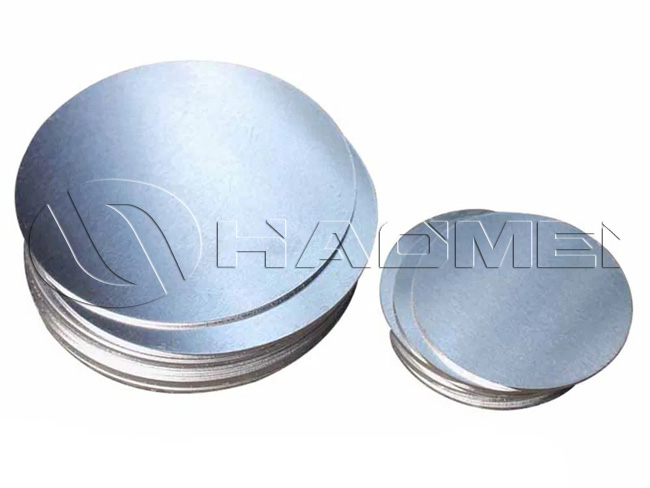
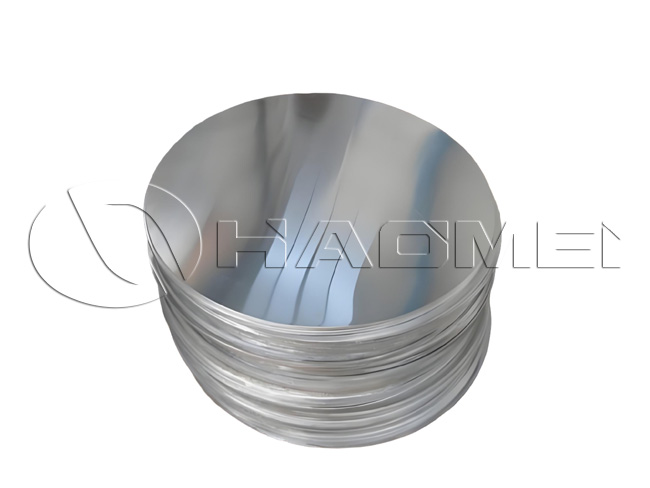
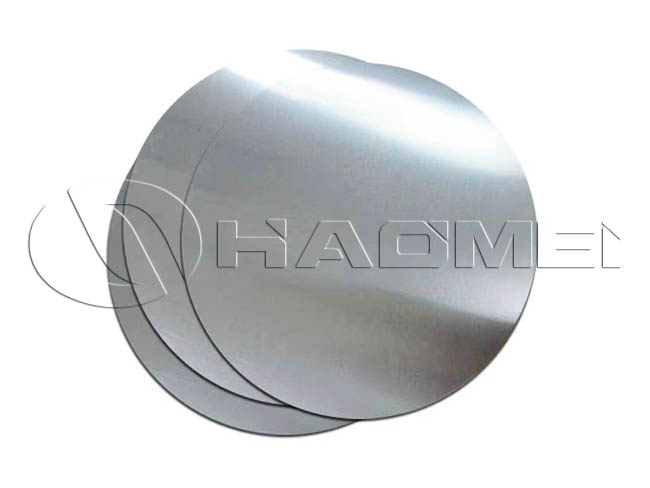
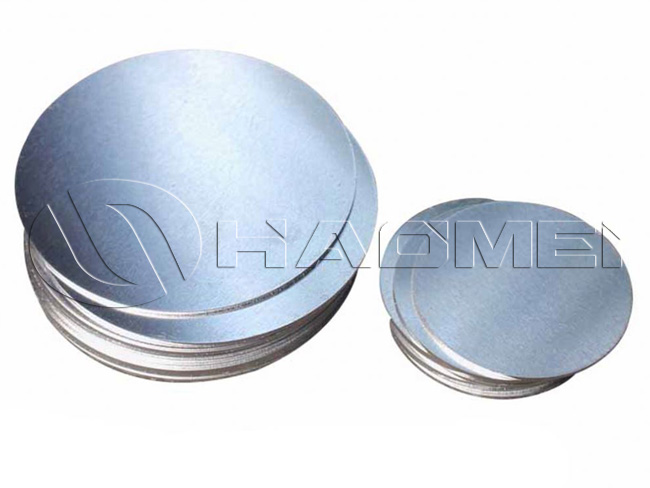
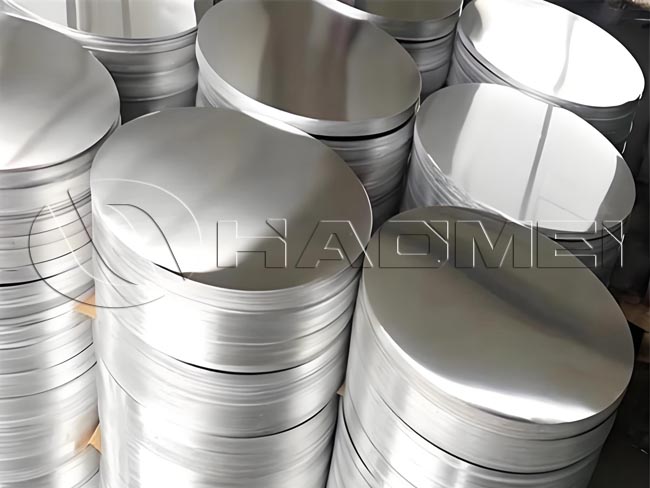
As a manufacturer of aluminum circle discs, we produce food-grade aluminum discs for cookware applications in thicknesses from 0.4 mm to 4.0 mm. Our discs are supplied as round blanks for further deep drawing, spinning, stamping, forging, anodizing, coating, and bottom bonding operations used by cookware factories.
Cookware production requires consistent material properties, clean surfaces, stable dimensions, and reliable forming performance. For this reason, our manufacturing process is designed around controlled alloy selection, temper management, precision blanking, edge inspection, and protective export packing. We can provide standard and custom cut aluminum discs according to the diameter, thickness, temper, surface condition, and packaging requirements of each customer.
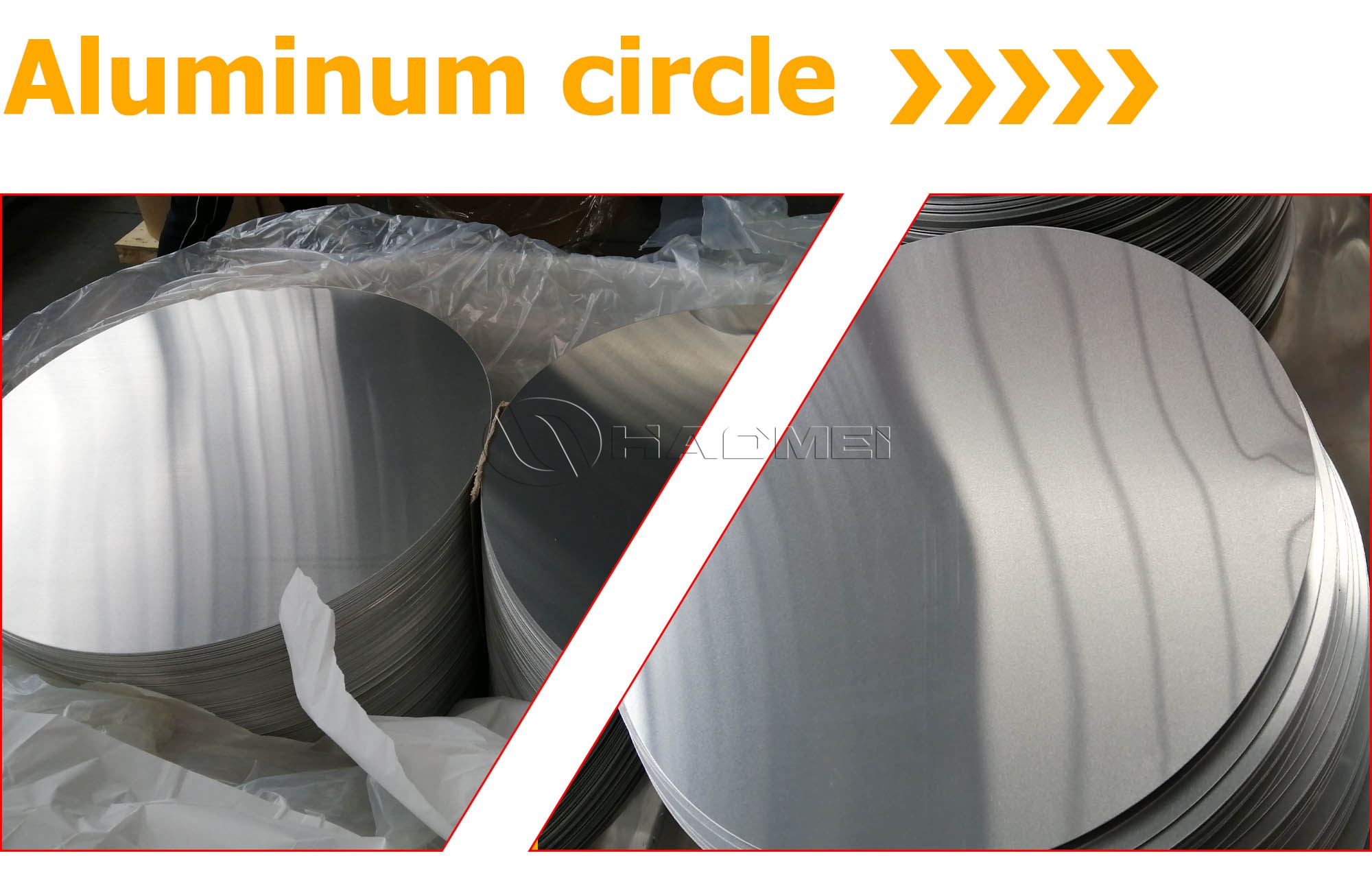
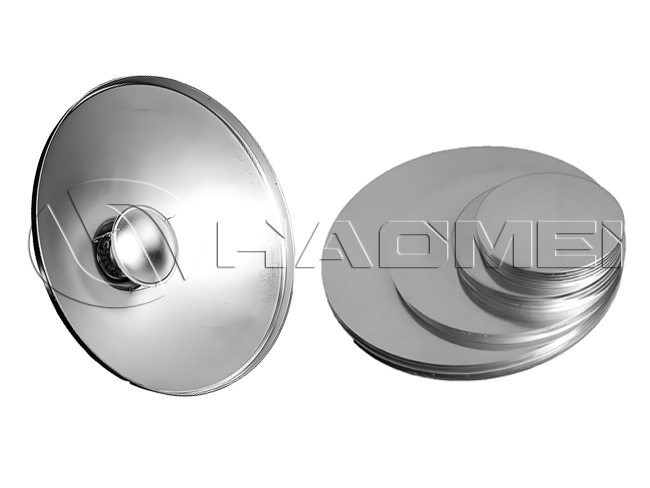
Our cookware aluminum circles are widely used as raw material for frying pans, saucepans, stockpots, pressure cookers, milk pans, pizza pans, baking trays, kettle bases, and other formed kitchenware. Depending on the intended forming method and final product structure, we recommend suitable aluminum alloys and tempers.
For deep-drawn cookware, soft temper aluminum circle discs are commonly selected because they provide good elongation and deformation capability. For applications requiring moderate strength, improved dent resistance, or specific thermal performance, work-hardened tempers and 3003 alloy discs may be more appropriate. Our technical team evaluates the customer's drawing depth, tooling condition, final wall thickness, and surface requirements before confirming the production specification.
We manufacture Aluminum Circles for Cookware for customers that require stable quality across repeat orders, including private-label cookware producers, metal stamping plants, deep-drawing factories, and industrial kitchenware manufacturers.
Safety and Hygiene: Made from aluminum suitable for food contact; the clean surface makes it ideal for manufacturing cookware, tableware, and other food-related products.
Good Corrosion Resistance: A dense oxide layer forms on the aluminum surface, providing excellent resistance to corrosion.
Excellent Thermal Conductivity: Transfers heat quickly and evenly, making it suitable for manufacturing cookware such as pots and frying pans.
Good Deep-Drawing Performance: Features excellent plasticity and elongation, allowing for processes like deep drawing and spinning while minimizing cracking and wrinkling.
Uniform Thickness: High-precision rolling ensures consistent thickness and dimensional stability, enhancing the efficiency of subsequent stamping operations.
Lightweight: Aluminum has low density, allowing for reduced finished-product weight without compromising performance.
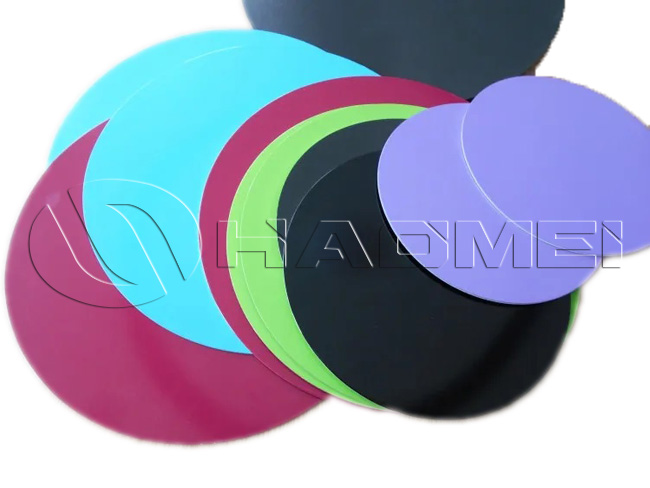
Consistent Surface Quality: Available in various surface finishes—such as mill-finish, bright, or anodized—to meet the specific requirements of different end products.
The following table shows our regular production range for aluminum discs for cookware. Custom specifications can be assessed based on order quantity, alloy availability, processing method, and dimensional tolerances.
| Parameter | Available Specification | Notes |
|---|---|---|
| Product name | Food-grade aluminum disc, aluminum circle, cookware aluminum circle | Round aluminum blank for cookware processing |
| Thickness | 0.4-4.0 mm | Tolerance available according to agreed specification |
| Diameter | 80-1,200 mm | Custom diameters available within production capability |
| Alloys | 1050, 1060, 1070, 1100, 3003 | Alloy selection depends on forming and end-use requirements |
| Temper | O, H12, H14, H16, H18 | O temper is commonly used for deep drawing |
| Surface finish | Mill finish, bright finish, brushed, coated, anodized-ready | Surface can be selected for subsequent processing |
| Circle type | Cold rolled, hot rolled, blanked circle | Hot rolled material is often preferred for demanding deep drawing |
| Edge condition | Smooth edge, burr-controlled edge | Inspected to support safer downstream processing |
| Flatness | Controlled according to thickness and diameter | Important for stamping and spinning performance |
| Coil source | Primary aluminum coil or sheet | Material documentation available upon agreement |
| Packaging | Interleaved paper, protective film, palletized export packing | Designed to reduce handling and transport damage |
The term food-grade aluminum disc generally refers to aluminum material suitable for manufacturing food-contact cookware when processed, finished, and used in accordance with applicable regulations in the destination market. The final compliance of cookware also depends on the complete product design, surface treatment, coating system, rivets, handles, and production process.
As the disc manufacturer, we control the incoming material, alloy identity, thickness, surface condition, and production cleanliness of the aluminum substrate. Upon request, we can provide relevant material documentation and support customers requiring composition verification, traceability information, or documentation for their internal compliance process.
For uncoated cookware, aluminum discs may be anodized or otherwise surface-treated by the cookware producer. For non-stick cookware, the disc is usually subjected to pretreatment and coating after forming. Our role is to supply a consistent aluminum blank that supports these downstream operations without unnecessary surface defects, excessive edge burrs, or unstable mechanical behavior.
Selecting the correct alloy is one of the most important steps in purchasing aluminum circle discs. A lower-cost material is not always suitable for deep drawing or spinning, particularly when the cookware body has a high sidewall, a narrow bottom radius, or a large drawing ratio.
The 1xxx aluminum series is widely used for cookware because of its high aluminum content, good thermal conductivity, corrosion resistance, and formability. These grades are frequently selected for aluminum frying pans, cooking pots, and lightweight kitchen utensils.
O temper 1050 or 1060 aluminum circles are especially suitable where a soft material is required for deep drawing. They can be processed into cookware bodies with controlled tooling and forming parameters. 1070 aluminum discs may also be considered for products requiring higher aluminum purity and thermal conductivity.
3003 aluminum disc material contains manganese and provides higher strength than common 1xxx alloys. It is often used in cookware applications where moderate strength, improved handling resistance, or specific forming characteristics are required. Depending on the pan design, 3003 may be supplied in O temper or selected work-hardened tempers.
Our production team can recommend whether a 1xxx series aluminum circle or 3003 aluminum disc is more appropriate after reviewing the cookware design and forming route.
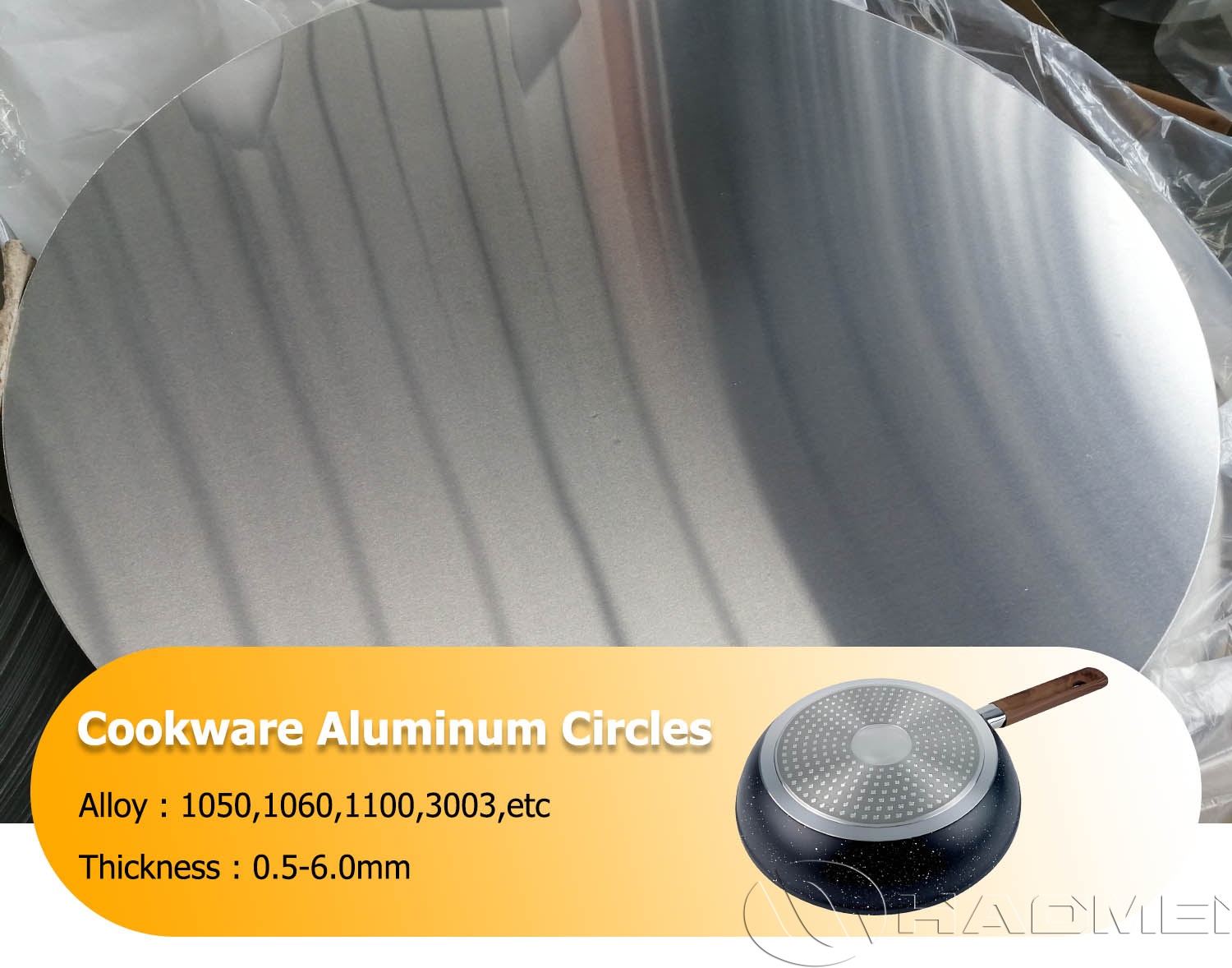
Cookware manufacturers often require non-standard disc diameters to match their existing molds and press tooling. We provide custom cutting service for aluminum discs, allowing customers to order blanks based on their actual production dimensions rather than adapting their tools to limited stock sizes.
Our custom cutting service can be specified by the following requirements:
Disc diameter and allowable dimensional tolerance.
Material thickness from 0.4 mm to 4.0 mm.
Alloy and temper requirement.
Surface finish and protective interleaving requirement.
Edge quality requirement for stamping, drawing, or spinning.
Quantity per bundle, pallet, or export package.
Special inspection or documentation requirements.
For high-volume cookware programs, we establish stable cutting parameters after sample approval. This helps maintain diameter consistency between batches and supports efficient automatic feeding in downstream stamping lines. For new cookware projects, trial quantities may be arranged after the technical specification is confirmed.
In addition to conventional blanking, customers with demanding deep-drawing requirements may consider our Hot Rolled Aluminum Circle options. Hot rolled material can offer favorable grain structure and elongation characteristics for certain complex cookware forming operations.
Our aluminum circle disc production begins with qualified aluminum coil or sheet. The material is slit, leveled when necessary, blanked into circles, inspected, interleaved, and packed according to the agreed order specification. Throughout production, we focus on the characteristics that directly affect cookware manufacturing efficiency.
Key inspection items include:
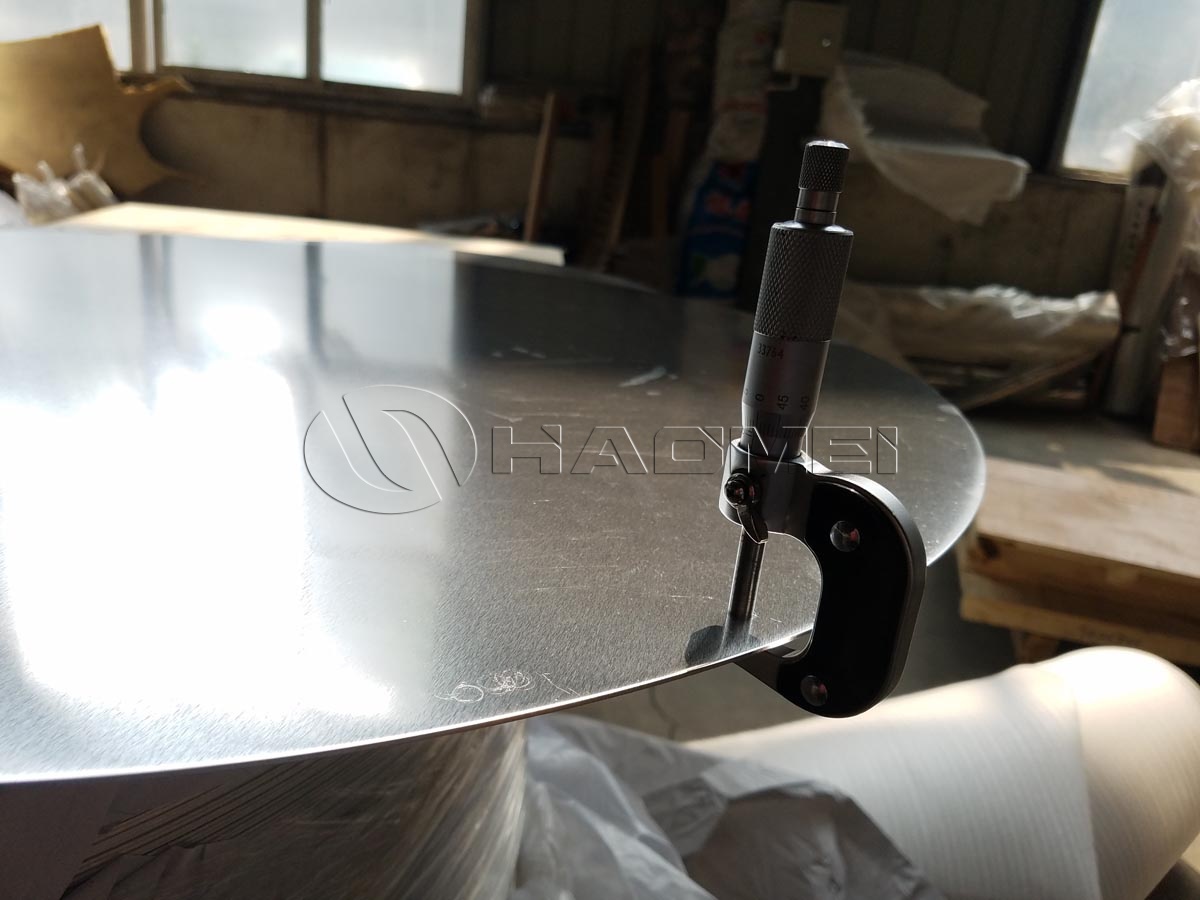
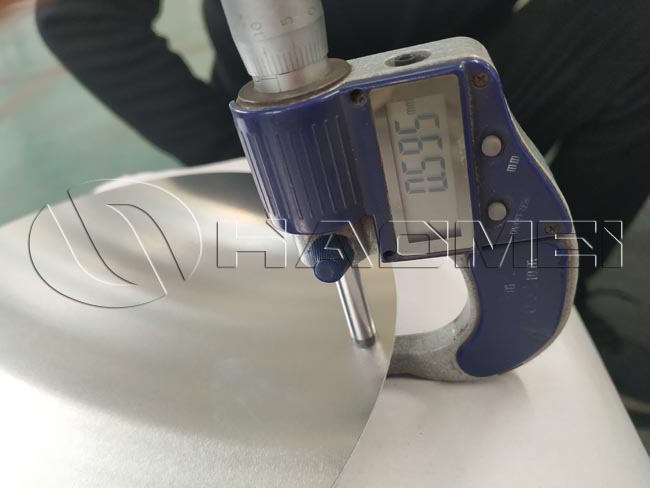
Thickness consistency: We verify thickness at defined locations to support stable drawing and heat distribution in the final cookware body.
Diameter accuracy: Disc diameter is checked against the purchase specification, especially for customers using automated stamping equipment.
Surface condition: We inspect for scratches, oil contamination, dents, oxidation marks, rolling defects, and other conditions that may affect coating, anodizing, or appearance.
Edge quality: Burr control is important for operator safety, tool protection, and smooth material flow during deep drawing.
Flatness: Excessive waviness or distortion can reduce feeding efficiency and cause uneven forming. We monitor flatness according to disc size and thickness.
Material traceability: Batch control supports repeatability and helps customers manage their own incoming material inspection procedures.
Our 0.4-4.0 mm aluminum circle discs are manufactured for a broad range of cookware and kitchenware products. Common applications include:
Non-stick frying pans and saute pans.
Deep-drawn saucepans and stockpots.
Pressure cooker bodies and lids.
Pizza pans and baking molds.
Rice cooker inner pots and appliance components.
Aluminum kettles and camping cookware.
Cookware bases prepared for induction bottom bonding.
Commercial kitchen utensils and formed aluminum containers.
The required thickness depends on the cookware design. Thinner aluminum discs may be used for lightweight utensils, lids, or shallow pans, while thicker discs are generally selected for larger pans, heavy-duty cookware bodies, and products requiring increased rigidity. We work with customers to match thickness and alloy to the intended processing method instead of using a single material specification for all products.
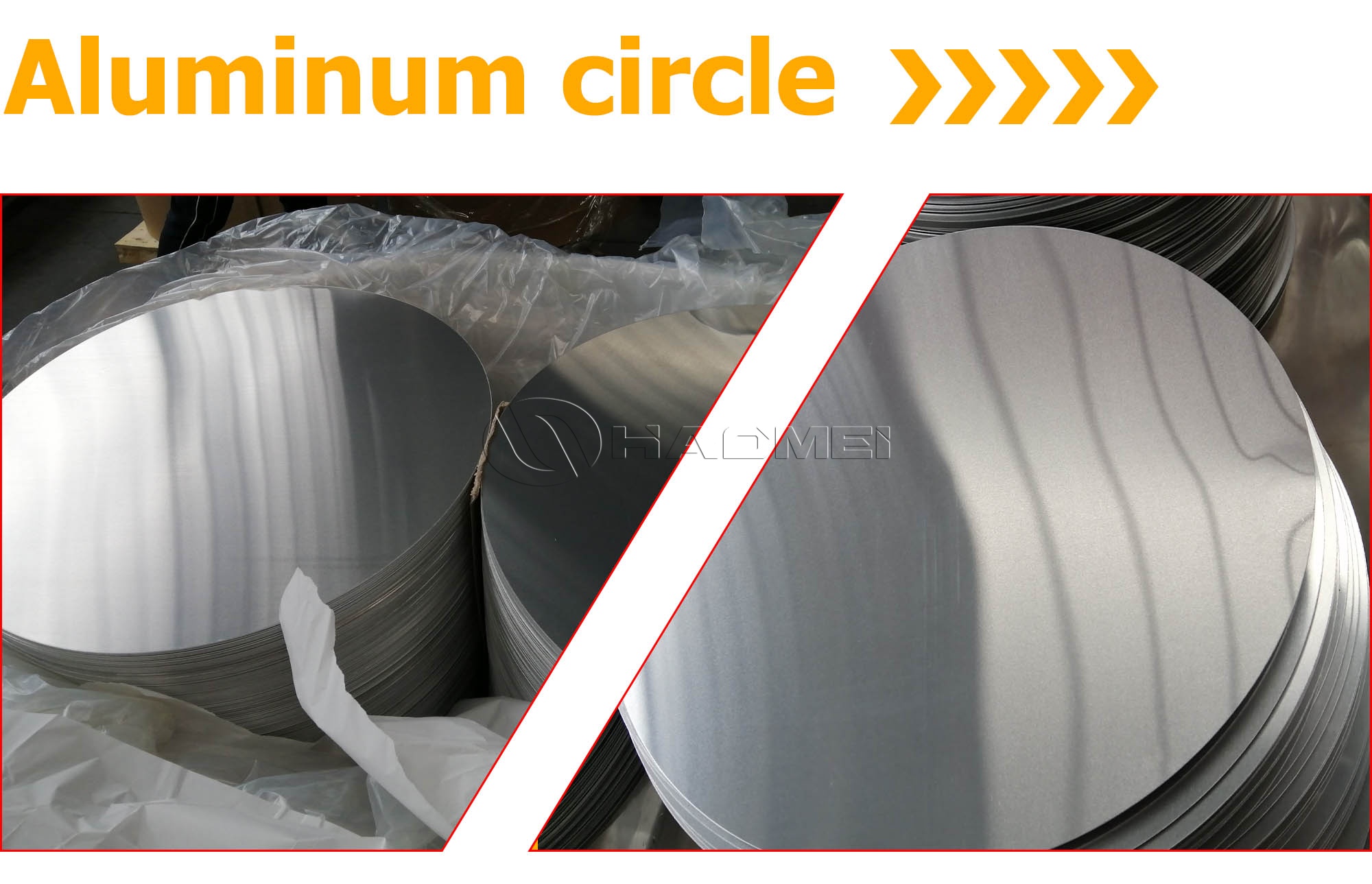
Aluminum circle discs can be damaged by moisture, friction, and impact if packed incorrectly. We use protective packaging methods based on disc surface requirements and transportation conditions. Standard export packing may include paper interleaving, plastic protection, moisture-resistant wrapping, reinforced pallets, steel or plastic strapping, and clear package identification.
For coated, polished, or appearance-sensitive material, additional separation and surface protection can be arranged. Each package can be marked with product information such as alloy, temper, thickness, diameter, batch number, net weight, and customer reference number where required.
As a factory supplying international customers, we also coordinate technical specifications before production to reduce misunderstandings related to nominal thickness, tolerance standards, disc diameter, temper designation, and inspection methods.
When sending an inquiry for food-grade aluminum discs, please provide the alloy, temper, thickness, diameter, intended cookware application, required quantity, and destination market. If the discs will be deep drawn, spun, anodized, coated, or bonded with stainless steel induction bases, this information should also be included.
We manufacture aluminum discs for cookware with controlled specifications from 0.4 mm to 4.0 mm and provide custom cutting support for production-oriented orders. By confirming the material and processing requirements at the beginning of the project, we help cookware manufacturers obtain aluminum circle discs that are suitable for efficient, repeatable downstream production.

Office Address:
No.14 Waihuan Road, CBD, Zhengzhou, China
Contact Us
HAOMEI Aluminum offer an custom aluminum circle for you!
whatsapp: +86-18703635966
Email: sales@alummc.com
Email: alummc@hotmail.com
Request Free Sample & Quotation
Copyright © 2026 By HAOMEI Aluminum CO., LTD. All Rights Reserved. Sitemap
 +86-18703635966
 sales@alummc.com
 8618703635966
