
 No.14 Waihuan Road, CBD, Zhengzhou, China
 +86-18703635966

No.14 Waihuan Road, CBD, Zhengzhou, China
+86-18703635966
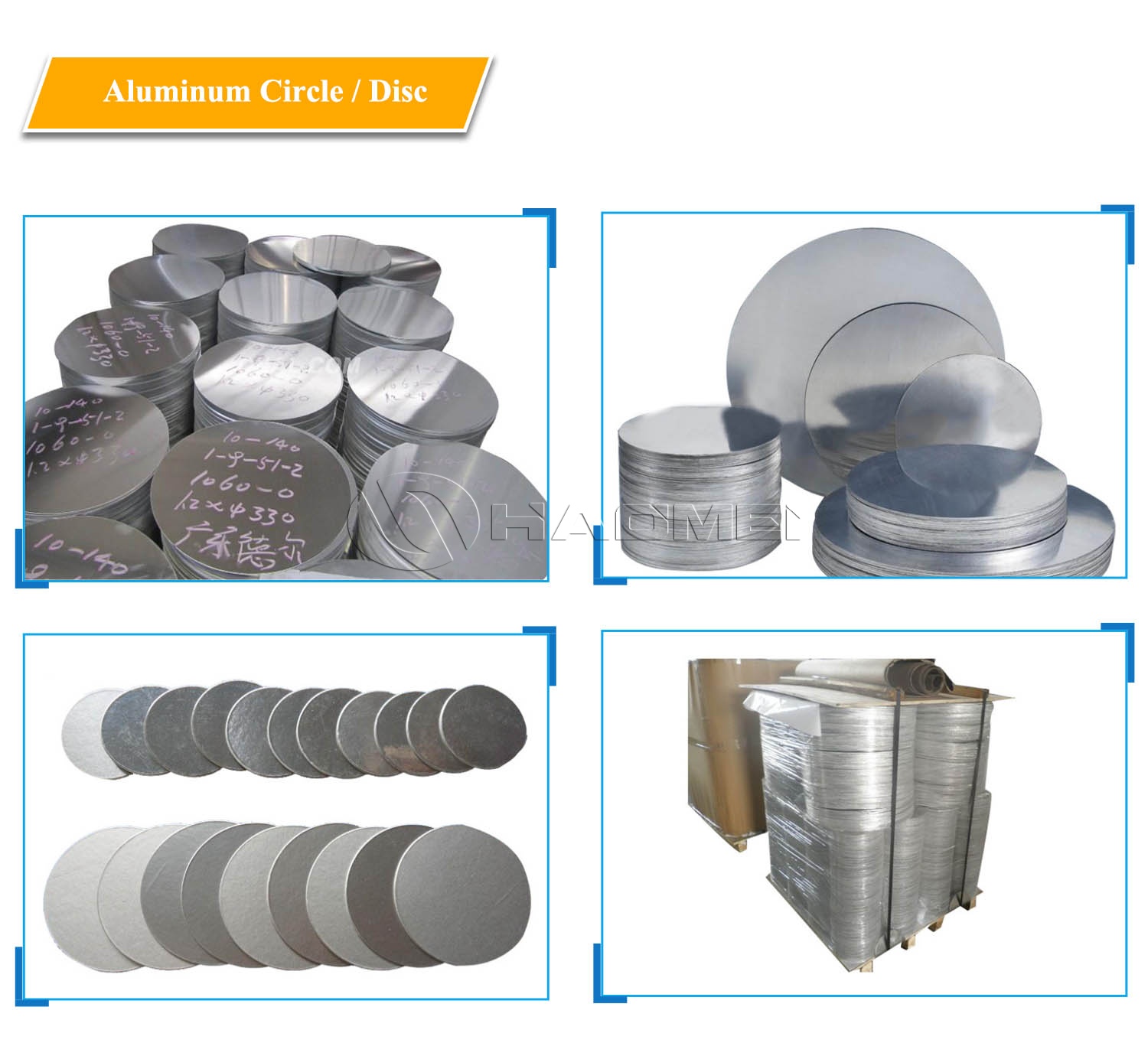
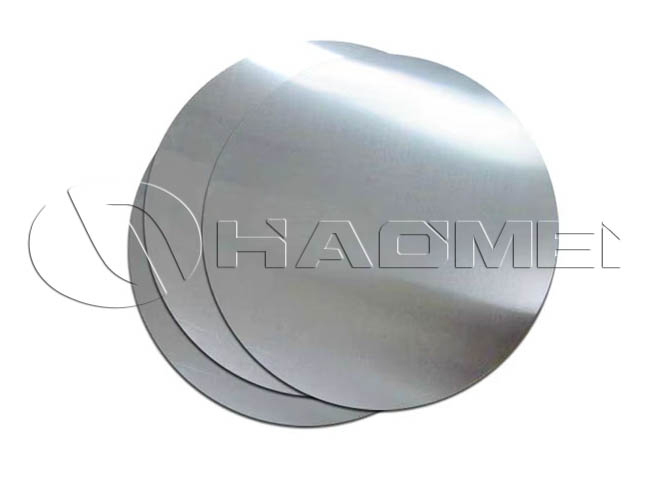
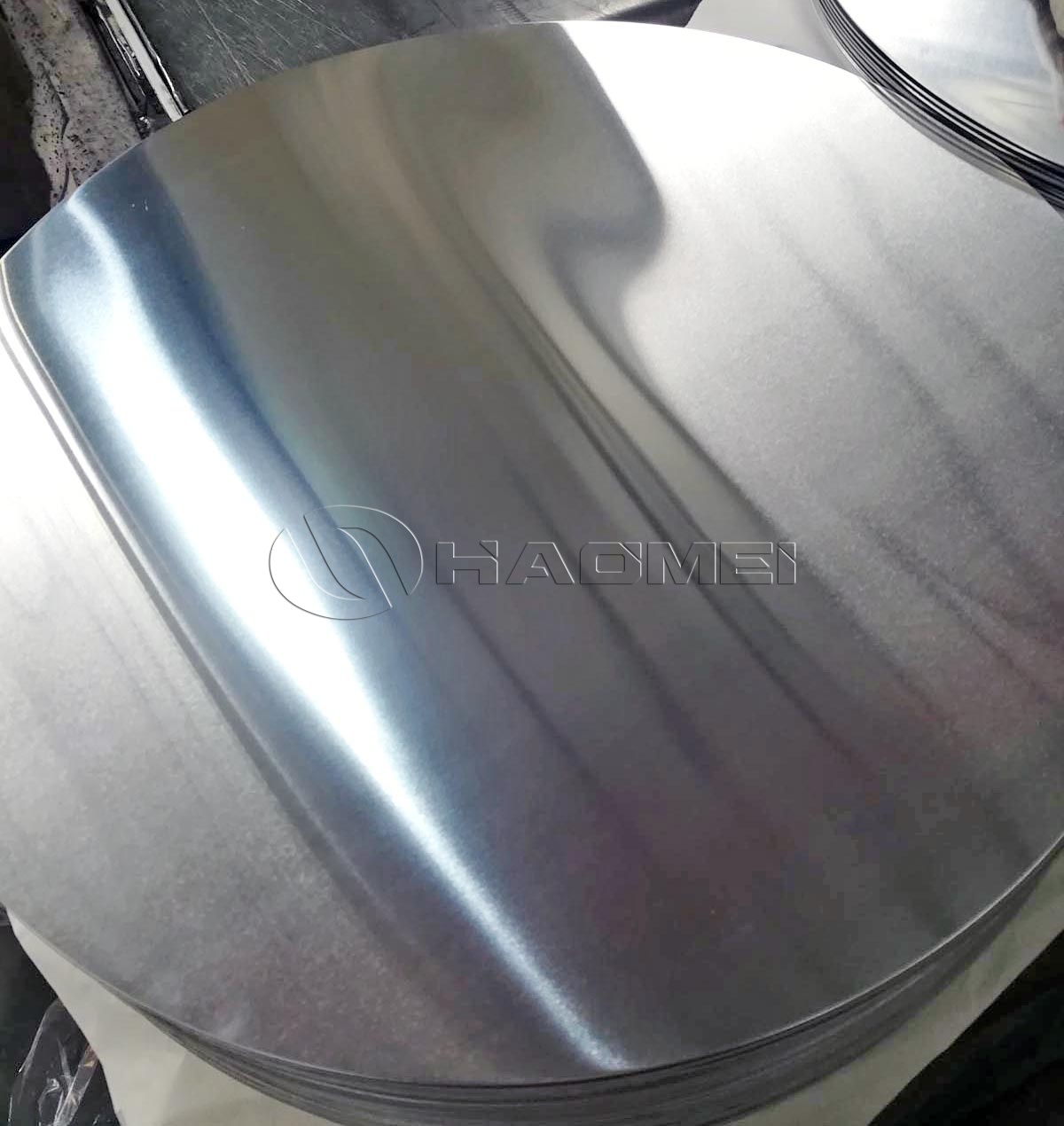
As an aluminum circle manufacturer, we produce 8011 aluminum circles for cookware factories that require stable forming performance, clean surfaces, and consistent dimensional accuracy. 8011 alloy is widely used in aluminum discs for cookware because it combines moderate strength, good ductility, reliable corrosion resistance, and excellent compatibility with common cookware processes such as deep drawing, spinning, polishing, anodizing, and non-stick coating.
For cookware manufacturers, the quality of the aluminum blank directly affects the final product. A circle with poor flatness, unstable hardness, edge burrs, or surface contamination can cause cracking, orange peel, coating defects, uneven heating, or production loss. Our manufacturing focus is therefore not only on cutting round blanks, but also on controlling alloy composition, rolling process, annealing condition, surface cleanliness, and packaging protection.
8011 aluminum is an Al-Fe-Si alloy in the 8000 series. Compared with some pure aluminum grades, 8011 provides better strength while still maintaining good formability. This makes it suitable for cookware components that need a balance between shapeability and service performance.
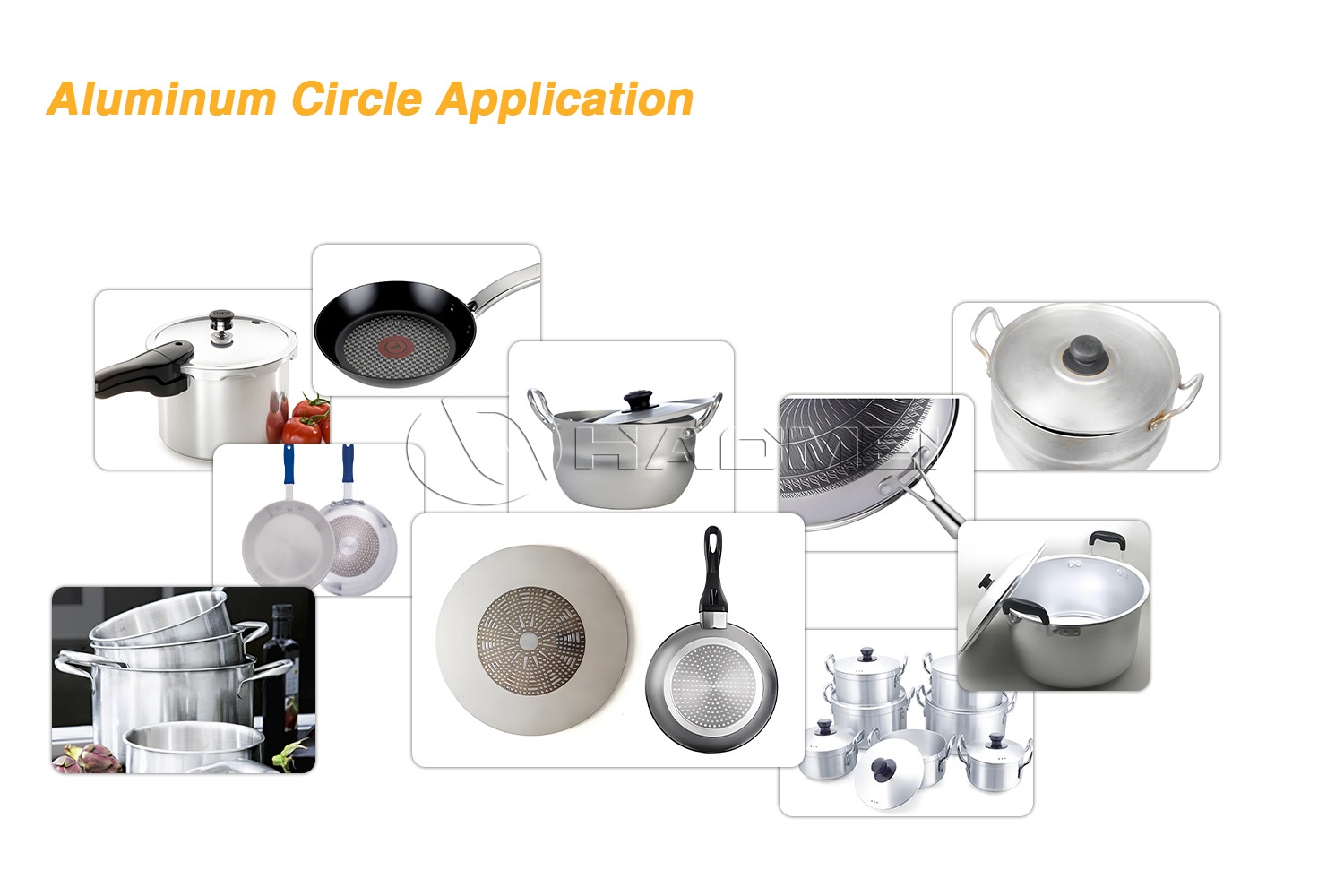
In cookware production, 8011 aluminum circles are commonly used for frying pans, saucepans, stock pots, pressure cooker parts, lids, non-stick pan substrates, and general kitchenware bodies. The alloy can be supplied in soft or semi-hard tempers depending on the forming depth, equipment type, and final product design.
For deep drawn cookware, a softer temper is often selected to reduce the risk of cracking during forming. For shallow drawn or spun cookware parts, a harder temper may be used when the customer needs better rigidity after forming. As a factory, we evaluate these requirements before production so that each batch of 8011 aluminum discs matches the actual cookware process.
The performance of aluminum circles for cookware must be assessed from several manufacturing angles. 8011 alloy offers practical advantages for industrial cookware production.
First, it has good thermal conductivity. Cookware made from aluminum blanks heats quickly and distributes heat efficiently across the base and side wall, helping the finished pan or pot achieve stable cooking performance.
Second, 8011 aluminum circles have good forming ability. When supplied with proper annealing and grain control, the material can withstand drawing, spinning, and stretching operations with reduced risk of tearing.
Third, the surface can be prepared for various finishing processes. Many cookware manufacturers require polishing, brushing, anodizing, ceramic coating, or PTFE non-stick coating. A clean, oil-controlled, and defect-free aluminum circle improves the stability of these downstream treatments.
Fourth, the alloy provides good corrosion resistance for normal kitchen environments. When combined with anodizing or coating, it can further support the durability requirements of household and commercial cookware.
The following table lists typical production parameters for our 8011 aluminum circle supply. Specifications can be customized according to cookware drawings, forming process, and purchasing standards.
| Item | Typical Specification |
|---|---|
| Product | 8011 aluminum circles, 8011 aluminum discs |
| Alloy | 8011 |
| Temper | O, H12, H14, H16, H18, customized temper available |
| Thickness | 0.4 mm to 6.0 mm |
| Diameter | 80 mm to 1200 mm |
| Diameter tolerance | Typically +/-0.5 mm to +/-2.0 mm, depending on size |
| Thickness tolerance | According to order standard and rolling specification |
| Surface | Mill finish, bright finish, degreased surface available |
| Edge condition | Burr-controlled, smooth edge, suitable for forming |
| Processing method | Rolling, leveling, blanking, annealing, inspection, packing |
| Common use | Frying pans, saucepans, pressure cookers, lids, non-stick pans |
| Packaging | Wooden pallets or cases, moisture-proof paper, plastic film |
| Standards | ASTM, EN, GB, or customer technical agreement |
These parameters are not fixed limits. For cookware buyers with special drawing ratios, coating requirements, or automatic feeding equipment, we can adjust tolerance control, surface treatment, and packaging method.
Our production begins with aluminum coil selection. The chemical composition of 8011 alloy is checked to ensure it meets the required range for cookware aluminum circle production. Rolling and annealing conditions are then controlled to obtain the target mechanical properties.
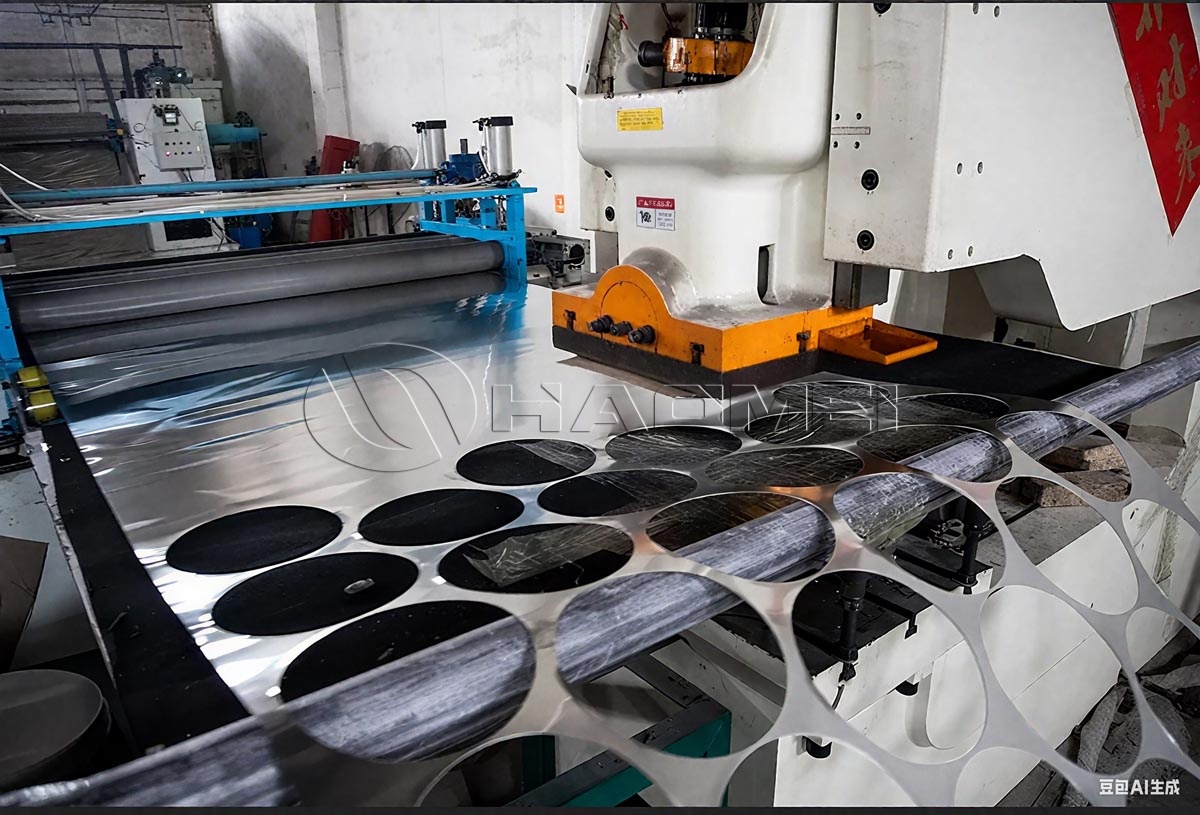
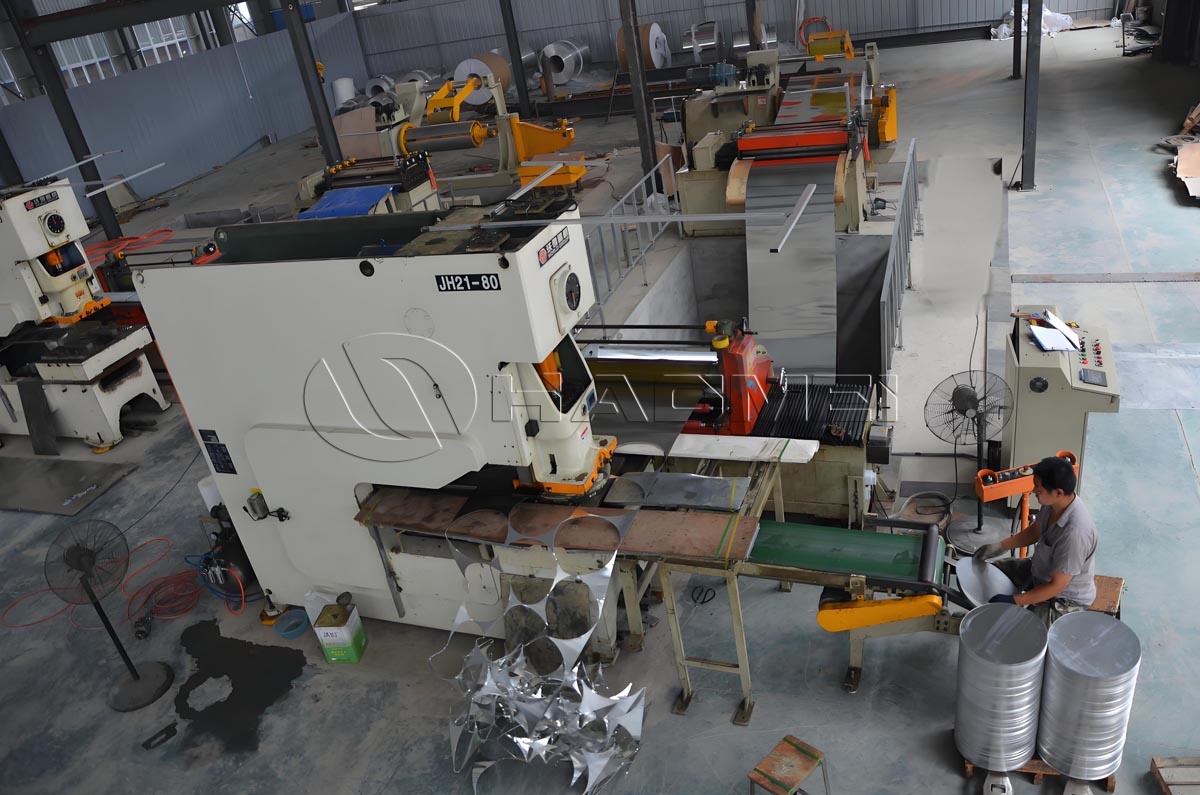
During blanking, the coil is leveled before it enters the circle cutting equipment. Proper leveling reduces internal stress and improves circle flatness. For cookware factories using automatic presses, consistent flatness is important because warped blanks can affect feeding accuracy and forming stability.
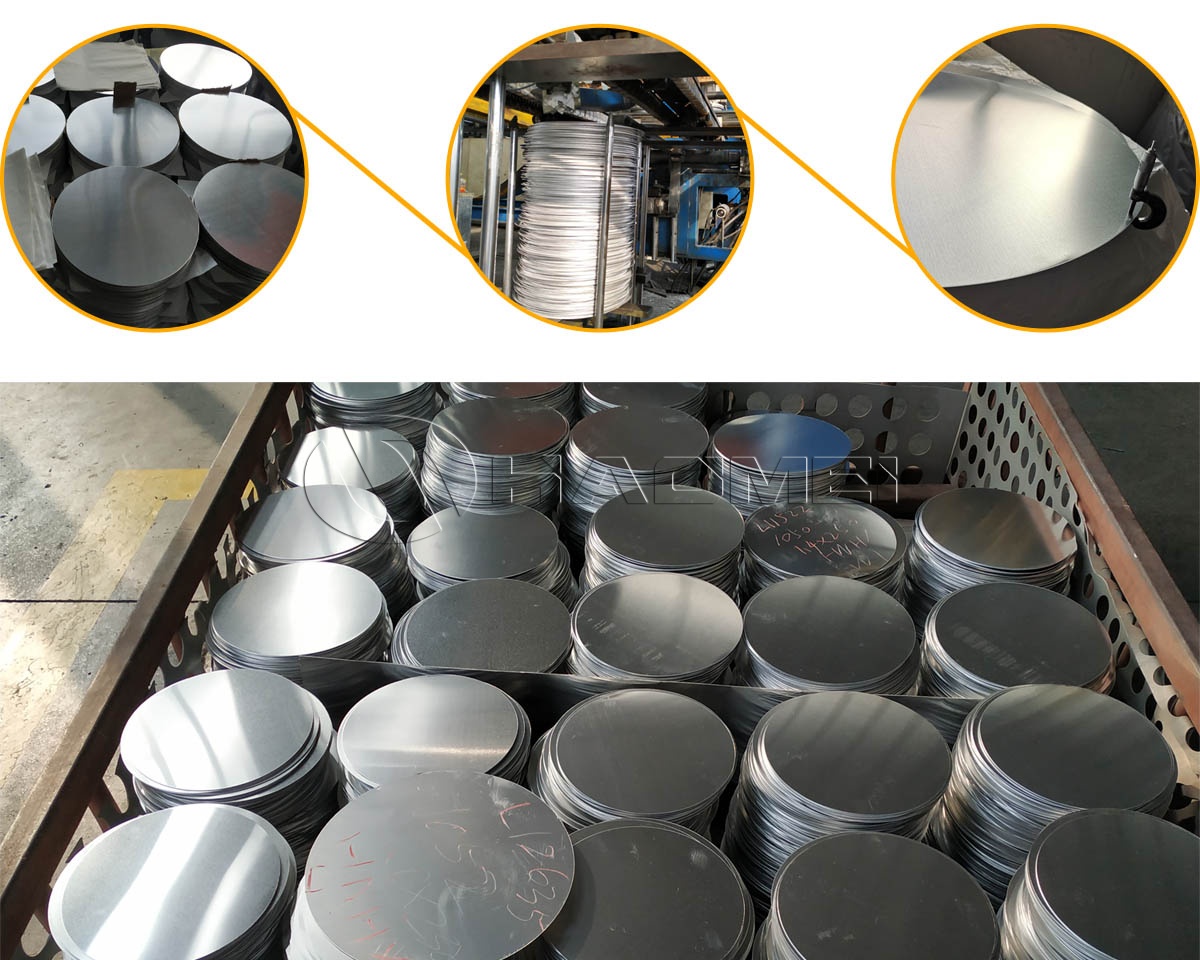
Edge quality is another major control point. Excessive burrs may scratch molds, affect coating uniformity, or create safety risks in manual handling. Our aluminum disc production line controls cutting clearance and tool condition to achieve smooth, clean edges.
After blanking, the circles are inspected for diameter, thickness, surface defects, edge condition, and batch traceability. For orders requiring soft temper, annealing is arranged according to the final mechanical property requirements. This process helps ensure that 8011 Aluminum Circle products have stable performance in cookware forming lines.
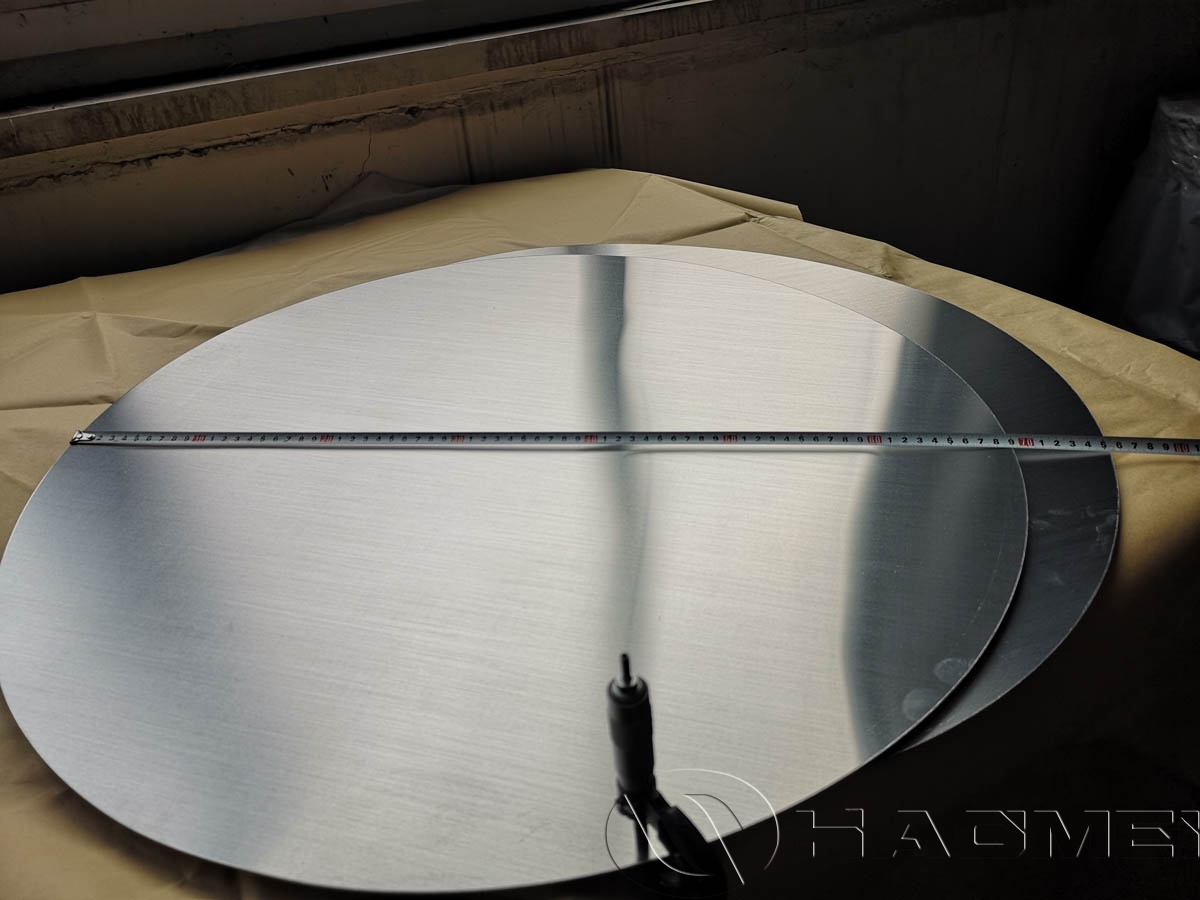
For non-stick cookware, the aluminum substrate surface must be carefully controlled. Oil stains, scratches, rolling marks, oxidation spots, or embedded particles may reduce coating adhesion and lead to appearance defects after baking.
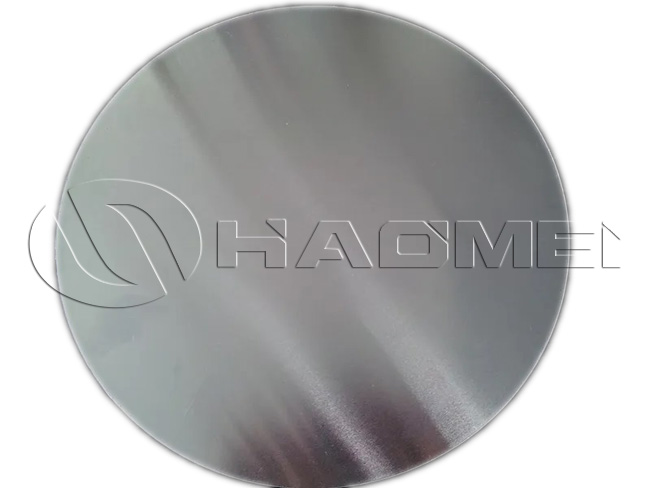
We can supply 8011 aluminum circles with a mill finish surface for general cookware forming, or with controlled surface cleanliness for coating processes. If the customer requires degreasing before delivery, this can be arranged according to the order specification. For cookware that will be polished or brushed, surface uniformity is also important because defects may become more visible after mechanical finishing.
It is important for buyers to define the finishing process at the inquiry stage. A circle used for a common pot lid may not require the same surface standard as a premium non-stick frying pan. By confirming the end use, we can recommend a more suitable surface quality level and avoid unnecessary cost.
Temper selection has a direct influence on forming behavior. For deep drawing cookware, 8011-O aluminum circles are commonly used because the soft condition provides higher elongation and better resistance to cracking. This is suitable for deep pots, pressure cooker components, and cookware bodies with larger deformation.
For spinning or shallow forming, H12 or H14 may be selected when moderate hardness is needed. These tempers can help maintain shape stability while still allowing forming under suitable equipment settings.
For applications where rigidity is more important than deep formability, harder tempers such as H16 or H18 may be considered. However, these tempers are not suitable for every cookware design. We recommend that customers provide drawing depth, finished diameter, wall height, corner radius, and forming method before confirming the temper.
As an experienced aluminum disc manufacturer, we do not recommend selecting temper only by price or inventory availability. A proper temper reduces scrap rate, protects tooling, and improves the consistency of finished cookware.
Cookware manufacturers may also use 1050, 1060, 1070, 3003, or other aluminum alloys. Each alloy has its own position. Pure aluminum grades offer excellent thermal conductivity and high ductility. 3003 provides higher strength and good corrosion resistance. 8011 is valued because it offers a balanced combination of formability, strength, and surface process suitability.
For many cookware projects, 8011 aluminum circles are selected when the buyer needs better mechanical stability than pure aluminum while maintaining good forming performance. It is especially practical for medium and large batch cookware production where consistent properties and efficient processing are required.
Our factory can also produce related 8000 Series Aluminum Circle products when customers need alternative specifications within the same alloy series.
Before shipment, we inspect 8011 aluminum discs according to the confirmed purchase specification. Typical inspection items include chemical composition, thickness, diameter, surface appearance, edge burrs, flatness, hardness or tensile properties, and packaging condition.
For export orders, packaging must protect the circles during long-distance transportation. We use moisture-proof paper, plastic film, pallet protection, and reinforced wooden cases or pallets according to the size and weight of the goods. The packing method is designed to reduce movement, abrasion, oxidation, and moisture damage during sea or land transport.
Batch labels and traceability documents can be provided according to customer requirements. For long-term cookware manufacturers, stable batch records are useful for quality tracking and process improvement.
To provide an accurate quotation and production recommendation, we usually need the following information from cookware buyers:
Alloy and temper, such as 8011-O or 8011-H14
Thickness and diameter of the aluminum circle
Quantity and delivery schedule
Surface requirement, such as mill finish, bright finish, or degreased surface
Final cookware application, such as frying pan, saucepan, pressure cooker, or lid
Forming process, such as deep drawing, spinning, or pressing
Tolerance requirement and inspection standard
Packaging and shipping requirements
With this information, our engineering and production teams can evaluate the most suitable route for the order. This helps ensure that the delivered aluminum circles meet both dimensional requirements and actual cookware manufacturing needs.
8011 aluminum circles are a practical and reliable material choice for cookware manufacturing. Their balanced strength, formability, thermal performance, and surface compatibility make them suitable for frying pans, saucepans, pressure cooker parts, lids, and non-stick cookware substrates.
As a factory, our responsibility is to supply cookware aluminum circles with controlled alloy quality, stable temper, accurate dimensions, clean surfaces, and secure export packaging. By matching the material specification with the forming and finishing process, we help cookware manufacturers reduce production risk and maintain consistent finished product quality.

Office Address:
No.14 Waihuan Road, CBD, Zhengzhou, China
Contact Us
HAOMEI Aluminum offer an custom aluminum circle for you!
whatsapp: +86-18703635966
Email: sales@alummc.com
Email: alummc@hotmail.com
Request Free Sample & Quotation
Copyright © 2026 By HAOMEI Aluminum CO., LTD. All Rights Reserved. Sitemap
 +86-18703635966
 sales@alummc.com
 8618703635966
